


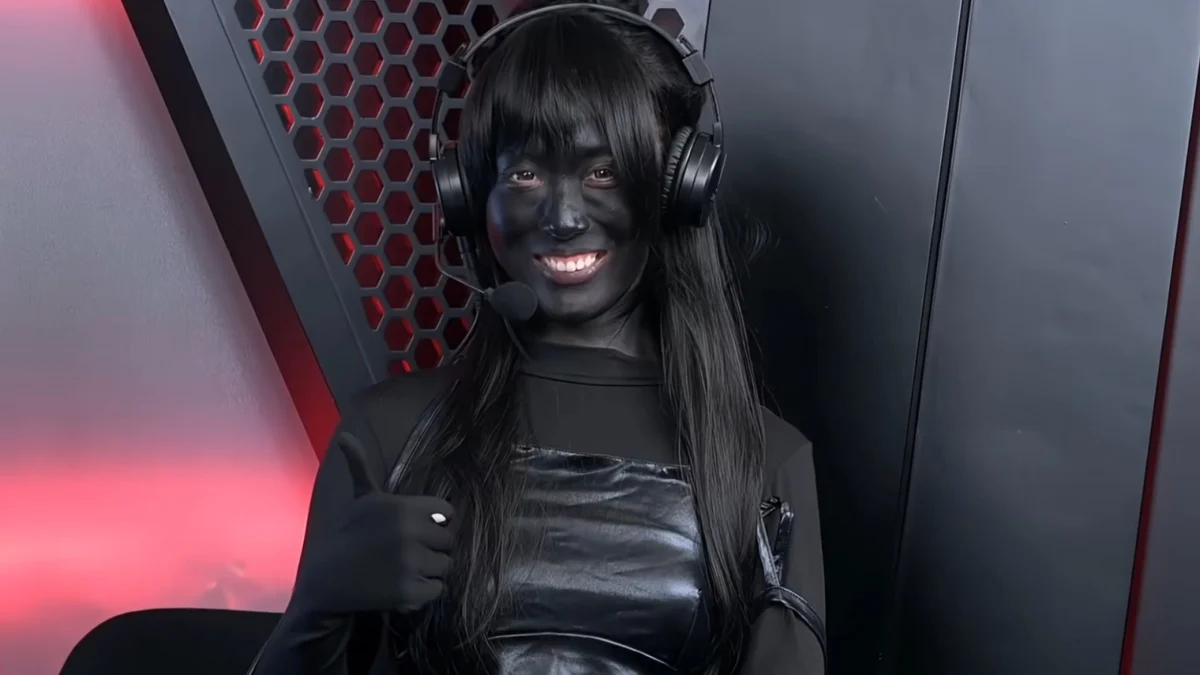
A prominent esports host in China, known by her online moniker Zhazha, has become the subject of widespread online discussion and viral attention following a bold and satirical response to criticism regarding her on-air attire. The controversy ignited after Zhazha appeared in a short skirt during a recent broadcast of the popular battle royale title, Naraka: Bladepoint. This choice of dress drew a significant backlash from a segment of the viewership, prompting Zhazha to adopt an extreme and attention-grabbing ensemble for her subsequent broadcast, effectively turning the tables on her critics and sparking a broader conversation about professional presentation in esports.
The initial controversy stemmed from Zhazha’s appearance during a Naraka: Bladepoint esports event. While specific details regarding the exact date of the broadcast have not been widely disseminated, the ensuing online discourse indicates it occurred within the last few weeks, leading to the viral sensation. Critics, primarily on Chinese social media platforms like Weibo, accused Zhazha of deliberately dressing in a revealing manner to garner attention from a male-dominated audience. Some commentary also ventured into speculation, suggesting that the esports organizers themselves might have influenced or mandated such attire in an attempt to boost viewership figures through controversial means. These accusations, amplified across social media channels, created a palpable tension surrounding the host and her professional conduct.
In a decisive and artistically charged move, Zhazha directly addressed the criticism during her next broadcast. Appearing alongside her male co-hosts, she was clad from head to toe in an all-black outfit. This ensemble was not merely a change of clothing; it was a complete visual transformation. The outfit covered her entirely, from her neck down to her ankles and wrists, a stark contrast to the attire that had drawn criticism. Adding another layer to her statement, Zhazha also applied face paint, further obscuring her features and creating a visually striking, almost anonymous, presence. This dramatic shift in appearance was intended as a deliberate and potent form of satire, a visual retort designed to highlight the absurdity of the accusations leveled against her.
Chronology of the Controversy and Response
The sequence of events, as pieced together from online discussions and Zhazha’s own statements, provides a clear timeline of the unfolding situation.
- Initial Broadcast: Zhazha appears on a Naraka: Bladepoint esports broadcast wearing a short skirt.
- Viewer Backlash: A segment of the audience expresses criticism and makes accusations regarding her attire, primarily on Weibo. These criticisms range from claims of seeking male attention to suggestions of organizer pressure.
- Zhazha’s Statement (Pre-Satire): Prior to her radical costume change, Zhazha reportedly shared statements on Weibo asserting her autonomy in choosing her outfits and denying any external pressure from organizers. She indicated her intention to present a "better on-camera look for viewers."
- Satirical Broadcast: Zhazha appears in a full black outfit with face paint, a direct and symbolic response to the criticism.
- Explanation of Satire: Following the viral broadcast of her satirical outfit, Zhazha further elaborates on her intentions via Weibo, framing her all-black ensemble as an "extreme choice" and a form of satire.
- Call for Rationality: Zhazha appeals to viewers to refrain from taking comments out of context and to maintain reasonable discourse, emphasizing her role as a professional focused on commentary.
Zhazha’s Defense and the Nuance of Professionalism
In translated statements shared on Weibo, Zhazha articulated her position with clarity and conviction. She emphatically denied any form of coercion from event organizers. "No one has ever arranged for me to wear a short skirt," she stated. "As a commentator, my outfits have always been chosen by myself." This assertion directly refutes the speculative claims that the broadcaster dictated her wardrobe.
Furthermore, Zhazha addressed the broader implications of the criticism, pushing back against what she perceived as unfair generalizations about female casters. She elaborated on her initial choice of a short skirt, explaining that it was an effort to "present a better on-camera look for viewers." This statement suggests a consideration for visual presentation within the context of broadcast entertainment, a common practice in many media professions. However, she also made it clear that this was a personal decision aimed at aesthetic appeal, not an obligation or a strategy to deliberately provoke.
The subsequent all-black attire was explicitly framed as a deliberate artistic and intellectual response. Zhazha explained, "I have never opposed so-called clothing freedom or the idea of women dressing more revealingly. The outfit I wore on today’s broadcast was an extreme choice meant as a form of satire in response to those comments." This highlights her intent to use the situation to make a point about how criticism is framed and the double standards that can exist. Her approach was not to concede to the criticism by covering up entirely out of shame, but rather to satirize the very act of being scrutinized and judged for her clothing choices by adopting an exaggeratedly "covered" persona.
The Power of Satire in Digital Discourse
Zhazha’s use of satire is a potent example of how individuals can navigate and respond to online harassment and criticism in the digital age. By adopting an extreme visual representation of modesty, she effectively parodied the accusations of immodesty. The face paint and the complete obscuring of her form served to strip away any perceived "sex appeal" that critics had attributed to her previous attire, thereby rendering the accusations themselves appear, from her perspective, as baseless or misdirected. This tactic allowed her to regain control of the narrative and to provoke reflection rather than simply defend herself.

This strategy of satirical response is not uncommon in online activism and personal branding. It allows for a creative and memorable way to address sensitive issues. In the context of esports, where visual presentation and audience engagement are paramount, Zhazha’s bold move generated significant discussion about the boundaries of professional attire, viewer expectations, and the pressures faced by female personalities in the industry.
Broader Implications for Esports Broadcasting and Representation
The incident involving Zhazha brings to the forefront several critical issues within the esports industry, particularly concerning the representation of women. The accusations leveled against her, while dismissed by Zhazha herself, reflect a persistent undercurrent of scrutiny that female casters and hosts often face. This scrutiny can manifest in debates about their clothing, their perceived attractiveness, and whether their presence is solely for the benefit of a male audience.
Supporting Data and Industry Context:
While specific viewership data for the Naraka: Bladepoint broadcast in question is not publicly available, the general growth of esports viewership worldwide provides a backdrop to these discussions. According to Statista, the global esports audience was projected to reach over 640 million viewers by the end of 2023, a figure that continues to grow year over year. This massive audience naturally encompasses a diverse range of viewers with varying expectations and sensitivities.
The esports industry, while maturing, still grapples with establishing clear professional standards for on-air talent. Unlike traditional sports broadcasting, which has decades of established norms, esports is a relatively newer field with a more fluid understanding of professional presentation. This can lead to situations where individual tastes and interpretations of "appropriate" attire become points of contention.
Furthermore, the economic model of esports broadcasting often relies heavily on sponsorships and advertising. This can create an environment where organizers might be tempted to prioritize visual elements that they believe will attract a broader or more engaged audience, potentially leading to pressure on talent to conform to certain aesthetic expectations, whether overt or subtle. Zhazha’s denial of such pressure, however, suggests that in her case, personal style was the driving factor, a detail that complicates the narrative often assumed by critics.
Analysis of Implications:
- Increased Scrutiny of Female Talent: The incident highlights the disproportionate scrutiny that female personalities in the public eye, including in esports, often endure regarding their appearance. Zhazha’s response, while satirical, also served to draw attention to this pervasive issue.
- Debate on Professional Attire: The controversy has reignited discussions about what constitutes professional attire for esports hosts and casters. While some argue for a more relaxed approach, reflecting the gaming culture, others emphasize the need for a standardized level of professionalism akin to traditional broadcast media.
- The Role of Social Media: Social media platforms like Weibo act as powerful amplifiers for both criticism and support. The viral nature of the incident underscores the immediate and widespread impact of online discourse on individuals working in the public sphere.
- Empowerment Through Satire: Zhazha’s strategy demonstrates a potentially empowering way for individuals to respond to online criticism. By using satire, she not only defended herself but also made a broader statement about the nature of the criticism itself, encouraging her audience to think critically about their own judgments.
- Organizational Responsibility: While Zhazha asserted her autonomy, the incident also implicitly raises questions about the responsibility of esports organizations to provide a safe and supportive environment for their talent, free from undue pressure regarding appearance and protected from excessive online harassment.
Zhazha’s Appeal for Rationality and Professional Focus
In her concluding remarks, Zhazha made a fervent plea for a more measured and rational approach from her audience. She urged viewers to "look at this rationally" and to "please don’t take things out of context or stir up unnecessary controversy." This indicates a desire to move beyond the sensationalism and return to the core of her professional role.
"I also hope comments remain reasonable," she added. "I am just a regular staff member who wants to focus on commentary and do my job well. Thank you all for your understanding." This statement reinforces her identity as a professional dedicated to her craft, rather than a figure whose primary purpose is to provoke or titillate. Her appeal is for viewers to acknowledge her professional contributions and to engage with her work on its merits, rather than getting sidetracked by discussions about her personal style.
The viral nature of Zhazha’s satirical response has undoubtedly placed her and the issues she represents under a brighter spotlight. While the immediate controversy may subside, the underlying questions about professionalism, representation, and the impact of online discourse in the esports landscape will likely continue to be debated. Zhazha’s bold and intelligent use of satire has ensured that her voice, and the issues she has raised, will not be easily forgotten.