


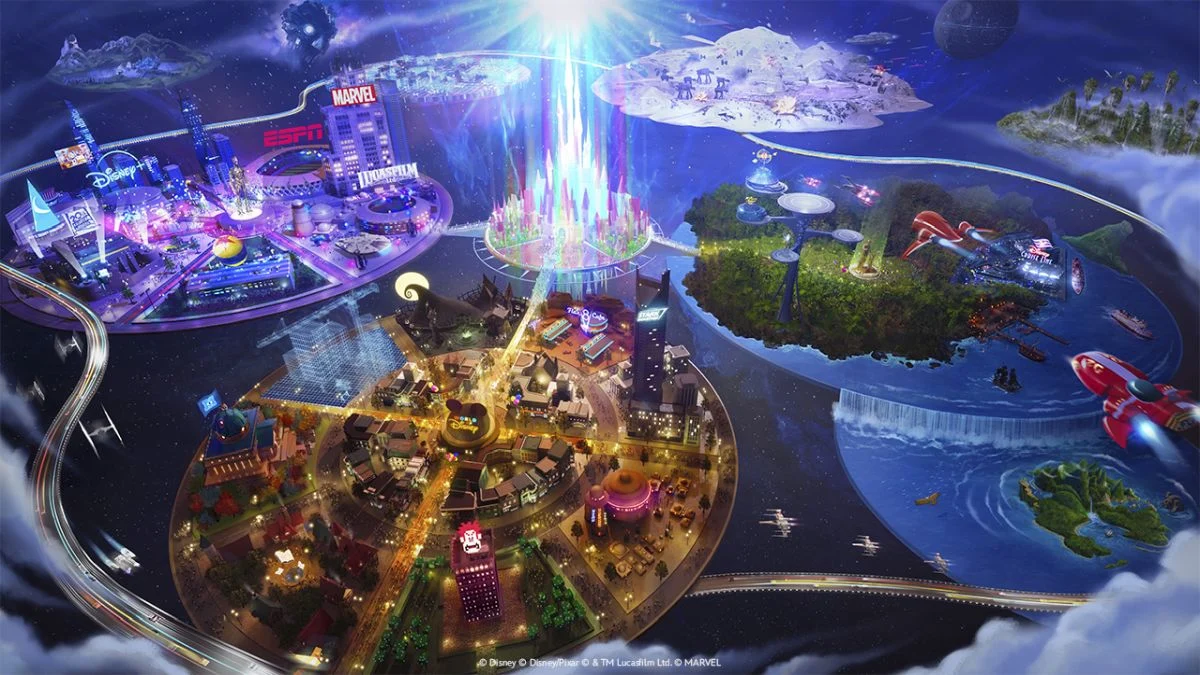
The Walt Disney Corporation has made a monumental investment, injecting $1.5 billion into Epic Games to collaboratively construct a groundbreaking new universe of interactive entertainment. This strategic alliance, announced today, signifies Disney’s most substantial foray into the gaming sector to date and aims to leverage the immense popularity of Epic’s flagship title, Fortnite, to create a persistent, interconnected digital realm.
This ambitious undertaking, detailed in an official announcement from Disney, is slated to be a multiyear project. The core objective is to develop a "world-class" gaming experience that seamlessly integrates with Fortnite‘s existing framework, a platform renowned for its ability to blend diverse pop culture elements. The envisioned universe will offer consumers unprecedented opportunities to "play, watch, shop, and engage" with an expansive array of Disney’s most cherished franchises. This includes beloved properties from Disney and Pixar animation, the Marvel Cinematic Universe, the Star Wars saga, and even the visually stunning worlds of James Cameron’s Avatar. The entire initiative will be powered by Epic Games’ cutting-edge Unreal Engine technology, a testament to the technical prowess underpinning this collaborative effort. The completion of this significant deal is, as is customary for such large-scale transactions, subject to regulatory approvals.
Disney CEO Bob Iger articulated his enthusiasm for the partnership, stating, "Our exciting new relationship with Epic Games will bring together Disney’s beloved brands and franchises with the hugely popular Fortnite in a transformational new games and entertainment universe. This marks Disney’s biggest entry ever into the world of games and offers significant opportunities for growth and expansion. We can’t wait for fans to experience the Disney stories and worlds they love in groundbreaking new ways." This sentiment underscores the strategic importance of this investment for Disney, signaling a deliberate pivot towards a more deeply integrated digital presence.
A History of Convergence and Escalating Ambitions
The collaboration between Disney and Epic Games, and specifically with Fortnite, is not entirely unprecedented. Fortnite‘s expansive in-game ecosystem has previously welcomed elements from various Disney properties, most notably through Marvel and Star Wars-themed skins, weaponry, and special events. These past integrations, while popular with players, served as precursors to a far more ambitious and comprehensive partnership.
Disney’s own engagement with the video game industry has been on a noticeable upward trajectory in recent years. Titles such as Disney Dreamlight Valley, a life simulation game that has garnered significant player attention, exemplify this renewed focus. Furthermore, other Disney-backed or licensed games like Disney Illusion Island, the collectible card game Marvel Snap, and the critically acclaimed action-adventure Star Wars Jedi: Survivor, have all made notable impacts within their respective genres, showcasing Disney’s expanding footprint in interactive entertainment.
Epic Games, meanwhile, has been navigating a dynamic and sometimes challenging landscape. The company has consistently delivered new content and updates for Fortnite, and more recently, has been aggressively expanding the platform’s capabilities beyond its core battle royale mode. The introduction of experiences like Fortnite Festival and Rocket Racing points towards a strategic vision of transforming Fortnite into a broader entertainment hub. This expansion, however, has occurred amidst significant industry headwinds. In the preceding year, Epic Games underwent substantial workforce reductions, laying off 16% of its employees, a move that reflected broader trends of consolidation and cost-cutting within the global gaming industry. The company has also been engaged in protracted legal battles with major tech giants like Apple and Google over their app store policies, highlighting Epic’s commitment to an open and competitive digital marketplace.
Epic CEO Tim Sweeney provided his perspective on the alliance: "Disney was one of the first companies to believe in the potential of bringing their worlds together with ours in Fortnite, and they use Unreal Engine across their portfolio. Now we’re collaborating on something entirely new to build a persistent, open and interoperable ecosystem that will bring together the Disney and Fortnite communities." Sweeney’s remarks emphasize a shared vision for an integrated digital future and highlight the technical synergy offered by Unreal Engine, a tool that Disney already utilizes extensively across its diverse creative endeavors.
Strategic Underpinnings and Future Implications
The $1.5 billion investment represents a significant commitment from Disney, underscoring the perceived long-term value and potential of this partnership. The creation of a "persistent, open and interoperable ecosystem" suggests a move beyond episodic content or limited-time integrations. Instead, the focus appears to be on building a living, evolving digital world where players can engage with Disney’s intellectual property in dynamic and ongoing ways.
The interoperability with Fortnite is a key strategic element. Fortnite has cultivated a massive and diverse player base, estimated to be in the hundreds of millions, and has proven adept at fostering a sense of community and shared experience. By integrating Disney’s vast IP into this existing ecosystem, the partnership aims to tap into this established audience while simultaneously expanding the appeal of both Fortnite and Disney’s franchises to new demographics. The ability for users to "play, watch, shop, and engage" indicates a multifaceted approach, encompassing not just gaming but also potentially immersive viewing experiences, digital commerce, and social interaction.
Data and Market Context
The gaming industry, particularly the sector encompassing user-generated content and persistent online worlds, has experienced exponential growth. The global games market was valued at approximately $184.3 billion in 2023, with projections indicating continued expansion. The metaverse, while still in its nascent stages, represents a significant area of investment and innovation for major entertainment and technology companies. Disney’s substantial investment in Epic Games positions it to be a key player in this evolving digital landscape.
Fortnite‘s continued success is a crucial data point. Despite the increasing competition in the battle royale genre, Fortnite has maintained a dominant position, evolving into a platform for social interaction and diverse gaming experiences. Its revenue streams, which include in-game purchases of cosmetic items and battle passes, have consistently generated billions of dollars annually. Epic Games, as the developer and operator of Fortnite, possesses invaluable expertise in managing large-scale online communities and monetizing virtual goods.
Disney’s own revenue from its various media and entertainment segments, which includes consumer products and interactive entertainment, also provides context for the scale of this investment. In fiscal year 2023, Disney reported total revenue of $88.9 billion. This new venture represents a strategic allocation of capital to capture a larger share of the growing digital entertainment market.
Analysis of Broader Impact
The implications of this Disney-Epic Games alliance extend beyond mere entertainment. It signals a potential paradigm shift in how media conglomerates engage with their audiences in the digital age. By investing heavily in a persistent, interactive universe, Disney is moving beyond traditional media consumption and embracing a model of co-creation and continuous engagement. This could pave the way for other major IP holders to follow suit, further blurring the lines between gaming, social media, and traditional entertainment.
The emphasis on an "open and interoperable ecosystem" is also noteworthy. In an era where platform exclusivity and walled gardens are common, Epic’s commitment to interoperability, coupled with Disney’s willingness to participate, could foster a more connected and user-centric digital future. This aligns with Epic’s long-standing advocacy for open platforms and could challenge existing market structures.
Furthermore, the integration of Unreal Engine as the foundational technology suggests a commitment to high-fidelity graphics and immersive experiences. As this universe develops, it has the potential to set new benchmarks for visual realism and interactive depth within digital worlds.
The success of this venture will likely hinge on several factors, including the ability to translate the broad appeal of Disney’s franchises into engaging gameplay and interactive experiences, the ongoing evolution of Fortnite as a platform, and the effective management of a complex, multiyear development project. The long-term vision is to create a digital space where the magic of Disney can be experienced and expanded upon by a global audience, fundamentally altering how fans interact with their favorite stories and characters. The investment signifies a bold step into the future of entertainment, one where the boundaries between physical and digital realities continue to dissolve.