


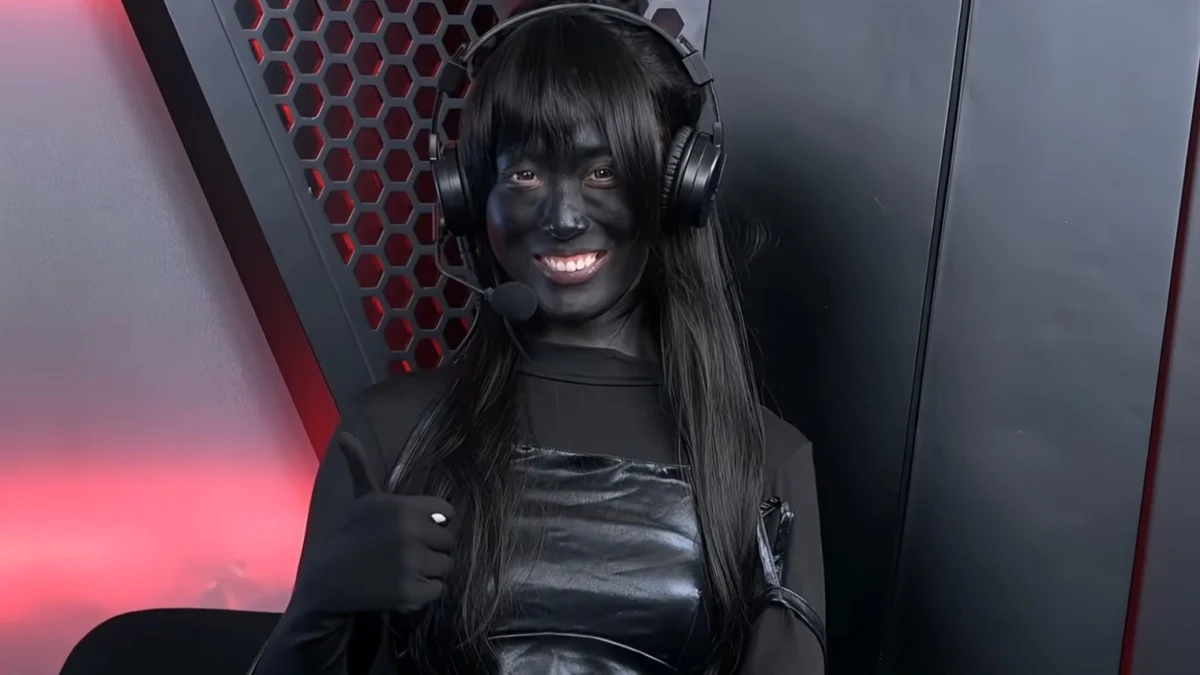
A notable incident within the Chinese esports scene has garnered widespread attention, propelling esports host Zhazha into viral fame. The controversy erupted following her appearance in a short skirt during a broadcast of the popular game Naraka: Bladepoint. In a bold and visually striking response to criticism and speculation surrounding her attire, Zhazha subsequently appeared on air in an entirely black ensemble, complete with face paint, a move she described as an "extreme" satirical statement.
The initial backlash stemmed from a segment of viewers who took issue with Zhazha’s choice of a short skirt. Accusations ranged from her allegedly dressing to deliberately attract male viewers to speculation that the broadcasters themselves had mandated such attire to boost viewership figures. These criticisms, amplified across social media platforms, touched upon sensitive issues regarding the professional presentation of women in the esports industry and the potential for objectification.
Zhazha, who has established herself as a commentator within the competitive gaming circuit, addressed the controversy directly through a translated statement shared on Weibo, a prominent Chinese social media platform. She vehemently denied any external pressure to wear specific clothing, asserting that her fashion choices were entirely her own. "No one has ever arranged for me to wear a short skirt," Zhazha stated. "As a commentator, my outfits have always been chosen by myself."
Her subsequent appearance, fully enveloped in black fabric from head to toe, with her face obscured by dark paint, was intended as a pointed, albeit unconventional, response. This dramatic visual shift served as a powerful commentary on the nature of the criticism she faced. She explained that this "extreme choice" was a form of satire, designed to highlight the absurdity of the accusations and the pressures sometimes placed upon female personalities in public-facing roles.
The Naraka: Bladepoint game, developed by NetEase, has seen a significant surge in popularity since its release in August 2021. The battle royale title, known for its martial arts-inspired combat and unique aesthetic, has cultivated a robust esports ecosystem in China, attracting both players and a dedicated viewership. Broadcasts of major tournaments and leagues often feature hosts and commentators who play a crucial role in engaging audiences and providing expert analysis. The visibility of these personalities means their on-screen presence, including their attire, can become a focal point for discussion, sometimes leading to intense scrutiny.
A Timeline of Events and Reactions
The sequence of events began with Zhazha’s appearance during a Naraka: Bladepoint broadcast where her outfit, a short skirt, drew attention. While specific dates of the initial broadcast were not detailed in the original report, the ensuing online discussion and Zhazha’s response occurred in close proximity, indicating a rapid escalation of the situation on social media.
Within days of the initial criticism, Zhazha made her now-viral appearance. This was not merely a change of clothes but a complete visual transformation. Alongside her male co-hosts, who were dressed in their usual professional attire, Zhazha presented a stark contrast, her all-black ensemble and face paint serving as a visual metaphor. This deliberate juxtaposition amplified the satirical intent of her action, drawing immediate attention and sparking a new wave of discussion.
Following her second appearance, Zhazha elaborated on her motivations. In her Weibo statement, she clarified her stance on clothing freedom and the perception of revealing attire. "I have never opposed so-called clothing freedom or the idea of women dressing more revealingly," she stated. "The outfit I wore on today’s broadcast was an extreme choice meant as a form of satire in response to those comments." This statement aimed to preempt any misinterpretation of her actions as a rejection of personal expression or a capitulation to prudish demands. Instead, she framed it as a sophisticated, albeit unconventional, form of protest against unwarranted judgment.

Zhazha also appealed to viewers for a more rational and contextualized understanding of the situation. She urged the online community to refrain from taking clips or statements out of context and from escalating the controversy unnecessarily. "I hope everyone can look at this rationally," she implored. "Please don’t take things out of context or stir up unnecessary controversy." Her plea highlighted a broader concern about the culture of online discourse, where nuanced situations can be easily oversimplified and weaponized.
The Broader Context of Gender and Presentation in Esports
The incident involving Zhazha is not an isolated case. Across the global esports landscape, female casters, hosts, and players have frequently found themselves subjected to scrutiny regarding their appearance, often facing a double standard compared to their male counterparts. Discussions around what constitutes "appropriate" attire for women in esports have been ongoing for years, highlighting a persistent tension between professionalism, personal style, and the perceived expectations of a predominantly male audience.
Data from various studies on online harassment in gaming and esports consistently show that women are disproportionately targeted with sexist remarks, objectification, and personal attacks. A 2021 report by the Geena Davis Institute on Gender in Media, for instance, highlighted that female gamers are more likely to experience online harassment. While this report focused on players, the implications extend to all women in visible roles within the industry, including broadcasting. The pressure to conform to certain aesthetic norms, or conversely, to be overly modest, can create a challenging environment for female professionals.
Zhazha’s response, while extreme, underscores a growing sentiment among some female personalities in the industry: a desire to be judged on their professional merit rather than their appearance. Her act of satire can be interpreted as a commentary on the performative nature of online discourse and the often superficial judgments made about women in the public eye. By adopting a costume that completely masked her appearance, she effectively stripped away any basis for judging her based on her physical attributes, forcing the conversation back to her role as a commentator.
Analyzing the Implications and Future Discourse
The viral nature of Zhazha’s story has sparked a broader conversation about the responsibilities of esports organizations, the conduct of online communities, and the well-being of female professionals in the industry. Her actions have prompted discussions on several key fronts:
Firstly, the incident highlights the importance of clear communication and ethical guidelines within esports broadcasting. While Zhazha stated her choices were her own, the initial speculation about organizer influence points to a need for transparency and a proactive approach from companies to ensure their talent feels supported and protected from undue pressure. Esports organizations have a responsibility to foster an inclusive environment where individuals can focus on their professional roles without facing unwarranted judgment or harassment.
Secondly, Zhazha’s satirical response serves as a potent reminder of the power of creative expression as a form of protest. By using her platform to make a bold statement, she has opened up a dialogue about the often-unseen pressures faced by women in the public sphere. This can encourage other women in similar positions to find their own ways to address unfair criticism and advocate for respectful treatment.
Thirdly, the reaction to Zhazha’s story underscores the evolving nature of online discourse. While some viewers expressed support for her courageous response, others may have continued to engage in unproductive criticism. The incident serves as a case study in how social media can amplify both positive and negative sentiments, and the challenge of moderating online conversations to ensure they remain constructive and respectful. The call for "reasonable comments" from Zhazha is a direct appeal for a more mature and thoughtful approach to online engagement.
Finally, the situation has the potential to influence how future broadcasters and hosts navigate discussions about attire and professional presentation. Zhazha’s unconventional approach, while effective in drawing attention, also raises questions about the sustainability and broader applicability of such methods. However, it undeniably shifts the focus from superficial judgments to a more critical examination of the underlying issues of sexism and objectification within the esports community. Her message, that she is "just a regular staff member who wants to focus on commentary and do my job well," is a powerful assertion of her professional identity, one that she hopes will resonate with audiences and lead to a more respectful and equitable environment for all in esports. The ongoing impact of her viral moment will likely continue to be felt as the industry grapples with these complex social dynamics.