


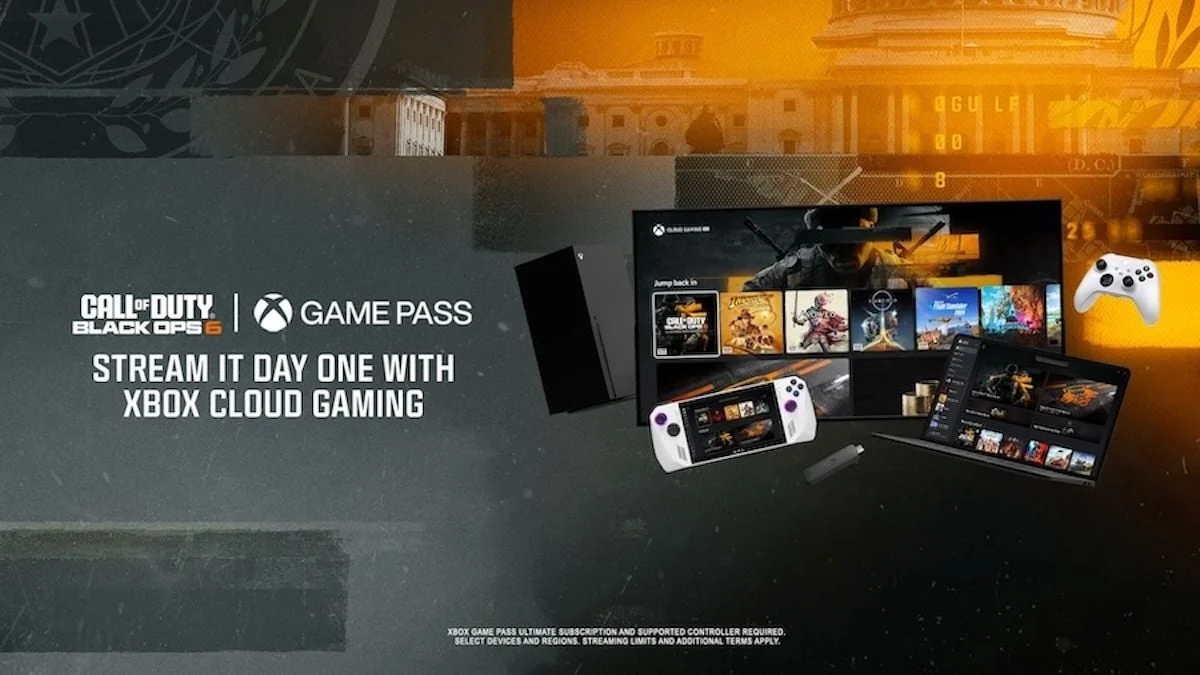
Microsoft has officially confirmed that Call of Duty: Black Ops 6 will be available for streaming via Xbox Cloud Gaming (Beta) for Game Pass Ultimate members on its launch day, October 25, 2024, beginning at 10:00 a.m. PT. This significant announcement further solidifies the integration of Activision Blizzard titles into the Xbox ecosystem following its landmark acquisition. In addition to the highly anticipated Black Ops 6, Microsoft also revealed that Call of Duty: Modern Warfare III and the popular battle royale title Call of Duty: Warzone will join the Xbox Cloud Gaming library for Game Pass Ultimate subscribers on the very same day, dramatically expanding the accessibility of the franchise across various devices.
This move marks a pivotal moment for the Call of Duty franchise and the Xbox Game Pass service. Previously, Microsoft had indicated Black Ops 6 would be a Day One addition to certain Game Pass membership tiers, a decision that underscored the strategic value of the Activision Blizzard acquisition. The extension of this availability to cloud streaming capabilities means that subscribers can access these titles not only on Xbox consoles and PCs but also on a wide array of devices, including smartphones, tablets, and lower-spec PCs, simply requiring an internet connection and a compatible controller.
The Strategic Context: Microsoft’s Acquisition of Activision Blizzard
The integration of Call of Duty into Xbox Game Pass and its cloud gaming offerings is a direct consequence of Microsoft’s colossal acquisition of Activision Blizzard, a deal valued at approximately $69 billion. Announced in January 2022 and finalized in October 2023, this acquisition was the largest in the history of the video game industry, reshaping the competitive landscape. Microsoft’s stated intention was to bolster its position in the gaming market, particularly against rivals like Sony and Nintendo, and to significantly enhance the value proposition of its Xbox Game Pass subscription service.
The acquisition process itself was fraught with regulatory scrutiny across multiple global jurisdictions. Concerns primarily revolved around potential anti-competitive practices, specifically the possibility that Microsoft might make Call of Duty exclusive to Xbox platforms, thereby disadvantaging PlayStation. To address these concerns and secure approvals from bodies like the European Commission and the UK’s Competition and Markets Authority (CMA), Microsoft made legally binding commitments to keep Call of Duty available on PlayStation for at least ten years and to offer similar access to other cloud gaming services. The CMA, initially a strong opponent of the deal, ultimately approved it after Microsoft agreed to divest the cloud streaming rights for Activision Blizzard games (excluding those within the European Economic Area) to Ubisoft. This complex negotiation underscores the immense perceived value of Call of Duty as a cornerstone franchise.
The Evolution of Xbox Game Pass and Cloud Gaming
Xbox Game Pass has been a central pillar of Microsoft’s gaming strategy since its inception in June 2017. Positioned as a "Netflix for games," the service offers subscribers access to a rotating library of hundreds of games for a monthly fee. Its appeal was significantly amplified by the commitment to launch all first-party Xbox Game Studios titles directly into Game Pass on their release day. This model proved disruptive, offering immense value to players and attracting millions of subscribers.
Xbox Cloud Gaming (formerly Project xCloud), introduced in beta in 2020, further expanded the reach of Game Pass. It allows Game Pass Ultimate subscribers to stream games from the library over the internet, bypassing the need for a powerful local console or PC. This technology leverages Microsoft’s vast Azure cloud infrastructure, enabling high-fidelity gaming experiences on less powerful devices. The service has continuously evolved, adding more titles, improving streaming quality, and expanding to new regions and devices. As of early 2024, Xbox Game Pass boasted over 34 million subscribers, a testament to its success and growing influence in the gaming ecosystem. The addition of a juggernaut like Call of Duty to its cloud offering is expected to be a significant driver for further subscriber growth, particularly for the Ultimate tier, which includes cloud access.
Call of Duty’s New Era on Game Pass
The arrival of Black Ops 6 as a Day One Game Pass title, complete with cloud streaming, marks a new era for the Call of Duty franchise. For decades, Call of Duty has been a premium, full-price release, consistently topping sales charts globally. Its transition to a subscription-inclusive model, particularly for its flagship annual release, represents a fundamental shift in its distribution strategy. While Modern Warfare III was added to Game Pass just a few months prior to this announcement, it was a post-launch inclusion, making Black Ops 6 the first Call of Duty title since the Activision Blizzard acquisition to debut directly on the service.
The simultaneous launch of Warzone and Modern Warfare III on Xbox Cloud Gaming alongside Black Ops 6 creates a comprehensive Call of Duty ecosystem for cloud players. Warzone, a free-to-play battle royale, already boasts a massive player base and benefits from increased accessibility. Bringing Modern Warfare III, a more recent premium title, to the cloud on the same day as its successor presents an interesting dynamic. While some players might immediately flock to the new Black Ops 6, the availability of MWIII ensures variety and caters to players who might prefer its specific maps, modes, or gameplay feel, such as the fan-favorite maps Favela and Rust often associated with older Modern Warfare titles. This strategy maximizes the utility of the Call of Duty library within Game Pass.
Technical Considerations and Player Experience
Streaming a fast-paced, competitive first-person shooter like Call of Duty via the cloud presents unique technical challenges. Low latency and stable internet connections are paramount for an enjoyable and competitive experience. Input lag, even milliseconds of delay between a player’s action and its on-screen representation, can be detrimental in a game where reaction time is critical. Microsoft has invested heavily in its cloud infrastructure to minimize these issues, but player experience will still be heavily dependent on individual internet speeds, network congestion, and proximity to Azure data centers.
The ability to play Black Ops 6 on a phone, as highlighted by the Xbox Wire blog post, offers unprecedented portability for the franchise. This means players can engage in multiplayer matches or campaign missions during commutes, while traveling, or in situations where a console or high-end PC is not available. This accessibility could significantly broaden the Call of Duty player base, attracting casual gamers or those who might not invest in dedicated gaming hardware. However, playing with touch controls on a phone, while an option for some cloud games, is generally less precise for shooters, suggesting that most serious players will opt for a compatible Bluetooth controller.
Market Implications and Competitive Landscape
The inclusion of Call of Duty on Day One for Game Pass and cloud streaming has profound market implications. It immediately elevates the value proposition of Game Pass Ultimate, making it an even more compelling offering for new and existing subscribers. For Microsoft, it represents a powerful lever to drive subscriptions and reinforce its ecosystem.
In the broader cloud gaming market, this move positions Xbox Cloud Gaming as a stronger contender against services like NVIDIA GeForce NOW, Amazon Luna, and even PlayStation Plus Premium (which offers cloud streaming for a selection of older titles). The addition of a top-tier, current-generation game like Black Ops 6 at launch gives Xbox a significant competitive edge in attracting players who prioritize immediate access to new blockbuster titles without large upfront hardware investments.
The decision also sends a clear message to competitors regarding Microsoft’s commitment to its subscription model and cloud infrastructure. While Sony has maintained Call of Duty‘s presence on PlayStation, the Day One Game Pass launch on Xbox, including cloud, undoubtedly places pressure on Sony to counter with its own compelling subscription benefits or cloud offerings for major third-party titles.
Broader Impact on the Gaming Industry
This development reflects a larger trend in the gaming industry towards subscription services and cloud streaming as viable distribution channels. Publishers are increasingly exploring models beyond traditional upfront purchases, driven by the desire for recurring revenue and broader audience reach. The success of Game Pass with Call of Duty could encourage other major publishers to consider similar strategies for their flagship titles, potentially accelerating the shift towards a "games-as-a-service" future.
For developers, being part of a service like Game Pass offers guaranteed exposure to a massive audience, which can be particularly beneficial for new IPs or smaller studios. While Call of Duty does not face issues with exposure, its presence on Game Pass legitimizes the platform further and demonstrates the financial viability of such a model even for the biggest franchises.
The announcement also aligns with Microsoft’s vision of "gaming everywhere," making content accessible regardless of device. This philosophy democratizes gaming to some extent, reducing barriers to entry for millions who might not own consoles or powerful PCs.
Looking Ahead: The Future of Activision Blizzard IP on Xbox
The Black Ops 6 announcement is likely just the beginning of a deeper integration of Activision Blizzard’s extensive intellectual property into the Xbox ecosystem. Beyond Call of Duty, Activision Blizzard owns iconic franchises such as Warcraft, Diablo, Overwatch, Candy Crush, and StarCraft. While not all of these are direct fits for cloud streaming in the same way Call of Duty is, particularly PC-centric titles like World of Warcraft, their eventual arrival on Game Pass in various forms is anticipated.
The strategy appears to be a gradual rollout, starting with the most popular and broadly appealing titles. The success of Black Ops 6 on Game Pass, particularly through cloud streaming, will undoubtedly inform Microsoft’s decisions regarding future Activision Blizzard releases and their integration into the subscription service. This long-term strategy aims to create an unparalleled library of games, strengthening Xbox’s position as a dominant force in the global gaming market.
The month of October has already seen other notable additions to Game Pass, including the critically acclaimed deck-building horror game Inscryption, the martial arts action title Sifu, and the popular sports simulation MLB The Show 24. These diverse additions, coupled with the monumental inclusion of Call of Duty: Black Ops 6 Day One on cloud, underscore Microsoft’s aggressive approach to continually enrich its Game Pass offering and solidify its position as a leader in subscription gaming. The gaming landscape is evolving rapidly, and Microsoft, with its recent strategic moves, is clearly aiming to be at the forefront of this transformation.