



The landscape of video games is constantly evolving, with genres that once dominated the market often finding themselves overshadowed by newer, more visually spectacular titles. For a generation of gamers, the "Tycoon" era of the late 1990s and early 2000s represents a golden age of simulation, where titles like Transport Tycoon, Rollercoaster Tycoon, and the Sim series, including SimGolf and SimPark, offered deep, engaging experiences that could consume hours of playtime. These games, characterized by their intricate management mechanics and strategic depth, fostered a dedicated following. However, as gaming technology advanced and player expectations shifted, the appeal of pure business simulation waned for many. While titles like The Guild 2 offered a glimpse into the genre’s enduring potential, the widespread enthusiasm for business management games seemed to be a relic of a bygone era. Yet, a recent emergence in the gaming sphere, Big Ambitions, has defied these expectations, proving that compelling gameplay can transcend perceived genre limitations and reignite a passion for intricate economic simulation.
The Unexpected Ascent of Big Ambitions
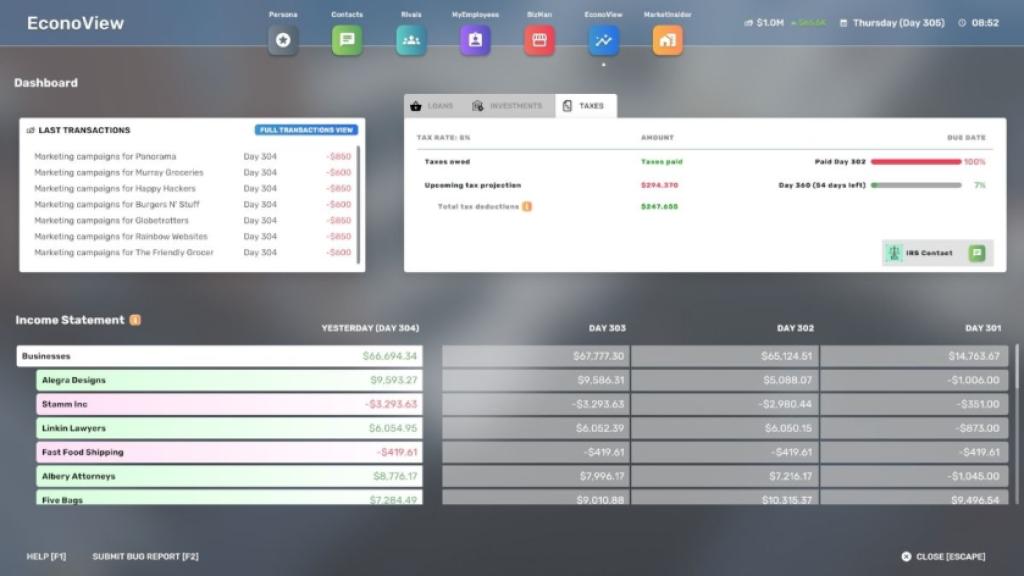
Big Ambitions, developed by Hovgaard Games, has emerged as a surprise hit, captivating players with a gameplay loop that, on paper, sounds remarkably mundane. The core premise involves establishing and managing a variety of businesses. Players are tasked with fundamental yet critical business operations: setting prices, optimizing employee schedules, sourcing products, and meticulously fine-tuning every aspect of their ventures to maximize profitability. This intricate web of micro-management forms the bedrock of the game’s appeal, demanding a level of strategic foresight and attention to detail that is rarely seen in contemporary gaming.
Beyond the direct business operations, Big Ambitions introduces a layer of personal simulation that adds an unexpected depth. Players must not only ensure their businesses thrive but also attend to the needs of their in-game character. This extends to the mundane yet vital aspects of daily life, such as managing vehicle fuel and maintenance, ensuring adequate nutrition, and maintaining personal well-being through activities like showering, eating, and even engaging in leisure pursuits like watching television or playing other video games. This duality, balancing the grand ambition of empire-building with the quotidian realities of personal existence, is a key differentiator that contributes to the game’s unique charm.
The initial perception of such a comprehensive management system might suggest a tedious grind, a sentiment that the game’s creators seemingly acknowledge. Early player experiences often describe a period of adjustment, where the sheer volume of tasks can feel overwhelming. However, it is precisely this initial hurdle that, once overcome, leads to a profound sense of accomplishment. As players begin to decipher the game’s intricate systems and develop effective business models, a significant shift occurs. What begins as a perceived "boring grind" transforms into an intensely satisfying journey of growth and optimization. Reports of players dedicating upwards of 50 hours to the game within its initial release window, often without realizing the passage of time, underscore its addictive quality.

Deconstructing the Appeal: Why Big Ambitions Works
The success of Big Ambitions is not easily reducible to a single factor. While the inherent satisfaction derived from incremental business growth is a well-established psychological draw in simulation games, Big Ambitions elevates this by offering a degree of player agency that is both liberating and challenging. The game refrains from overly explicit hand-holding, allowing players to experiment, learn from their mistakes, and ultimately discover their own optimal strategies. This approach fosters a sense of genuine achievement, making each breakthrough in business acumen feel earned and deeply rewarding. When a player successfully devises a business model that not only thrives in one district but can be replicated and scaled across multiple locations, creating a burgeoning franchise, the feeling of accomplishment is palpable.
The game provides a constant stream of objectives, catering to a wide range of player ambitions. Whether the goal is to establish a chain of popular burger joints, open a trendy nightclub, or ascend to the pinnacle of wealth and prestige by decorating a luxurious apartment with the finest goods and acquiring a high-performance Ferrari, there is always a tangible target to pursue. This continuous pursuit of goals, coupled with the intricate mechanics of supply chain management, warehouse rentals, and the hiring of specialized personnel like purchasing officers and logistics managers, ensures that players are perpetually engaged in strategic decision-making.
A particularly compelling element is the integrated leaderboard, which showcases player progress against rivals. As income streams grow and businesses expand, players ascend this competitive ranking, providing a clear visual representation of their success and a constant incentive to outperform others. The game also incorporates a dynamic competitive element through rival businesses. These competitors engage in subtle yet impactful "business attacks," such as aggressive price wars aimed at undermining local market share or the strategic opening of competing establishments to depress demand. While these challenges can initially seem daunting, the game’s design ensures that players who have built a stable financial foundation can effectively weather these storms. Furthermore, as a player’s empire solidifies, these rival tactics become increasingly negligible, underscoring the player’s dominance.
Evolution of the Business Simulation Genre
The resurgence of interest in business simulation games, exemplified by Big Ambitions, can be viewed as a natural evolution of player preferences and technological capabilities. Early simulation titles, while groundbreaking for their time, were often limited by hardware constraints, resulting in more abstract representations of business. Big Ambitions, benefiting from modern computing power, offers a significantly more detailed and immersive simulation. This allows for the intricate management of supply chains, including the complex logistics of importing goods and maintaining optimal inventory levels, to be rendered with a level of fidelity that was previously unimaginable.
The inclusion of personal character management, while seemingly a departure from pure business simulation, can be interpreted as a response to a broader trend in gaming towards more holistic player experiences. Games are increasingly expected to offer a sense of progression and immersion that extends beyond a singular focus. By integrating the player’s avatar into the business simulation, Big Ambitions creates a more relatable and grounded experience. The character’s needs and well-being directly influence their ability to manage their businesses, introducing a dynamic feedback loop that adds another layer of strategic consideration. This fusion of personal and professional simulation reflects a growing understanding of what constitutes an engaging and enduring gameplay experience in the modern era.
Contextualizing Big Ambitions within the Gaming Industry
The recent full launch of Big Ambitions into its 1.0 version signifies a milestone for the game and its developers, Hovgaard Games. The game’s journey through early access, a development phase where games are released to the public while still under active development, has allowed for significant community feedback and iterative improvements. This collaborative approach has undoubtedly contributed to the polished and engaging experience available at the official launch. The gaming industry has seen a rise in the success of early access titles that mature into robust and highly-rated releases, and Big Ambitions appears to be following this successful trajectory.
The implications of Big Ambitions‘ success extend beyond its immediate player base. It serves as a potent reminder that innovation in game design is not solely dependent on graphical fidelity or the creation of entirely new genres. Rather, a deep understanding of established mechanics, combined with a willingness to experiment and refine, can lead to groundbreaking experiences within familiar frameworks. For aspiring game developers, Big Ambitions offers a case study in how to revitalize a genre that may have been perceived as dormant. By focusing on player agency, rewarding strategic thinking, and providing a clear sense of progression, developers can cultivate dedicated communities and achieve significant commercial success.
Looking Ahead: The Future of Big Ambitions and Business Simulation
As Big Ambitions continues to evolve post-launch, players can anticipate further expansions and refinements. The developers have indicated a commitment to ongoing support, suggesting that new features, businesses, and gameplay mechanics will be introduced, further enriching the simulation. The game’s core design, with its emphasis on player freedom and emergent gameplay, provides a strong foundation for sustained engagement. The potential for future updates to introduce more complex economic models, advanced AI for rival businesses, or even multiplayer cooperative or competitive modes, remains a significant area of interest for the player community.
The success of Big Ambitions has undoubtedly sparked renewed interest in the business simulation genre as a whole. Publishers and developers may now be more inclined to invest in similar titles, potentially leading to a renaissance for games that prioritize strategic depth and intricate management. The market for sophisticated simulation experiences, once thought to be niche, has demonstrated its potential for broad appeal when executed with the care and innovation that Big Ambitions exemplifies. As players continue to explore the sprawling metropolis and build their empires, the legacy of this unlikely success story in the realm of business simulation is only just beginning to unfold.