


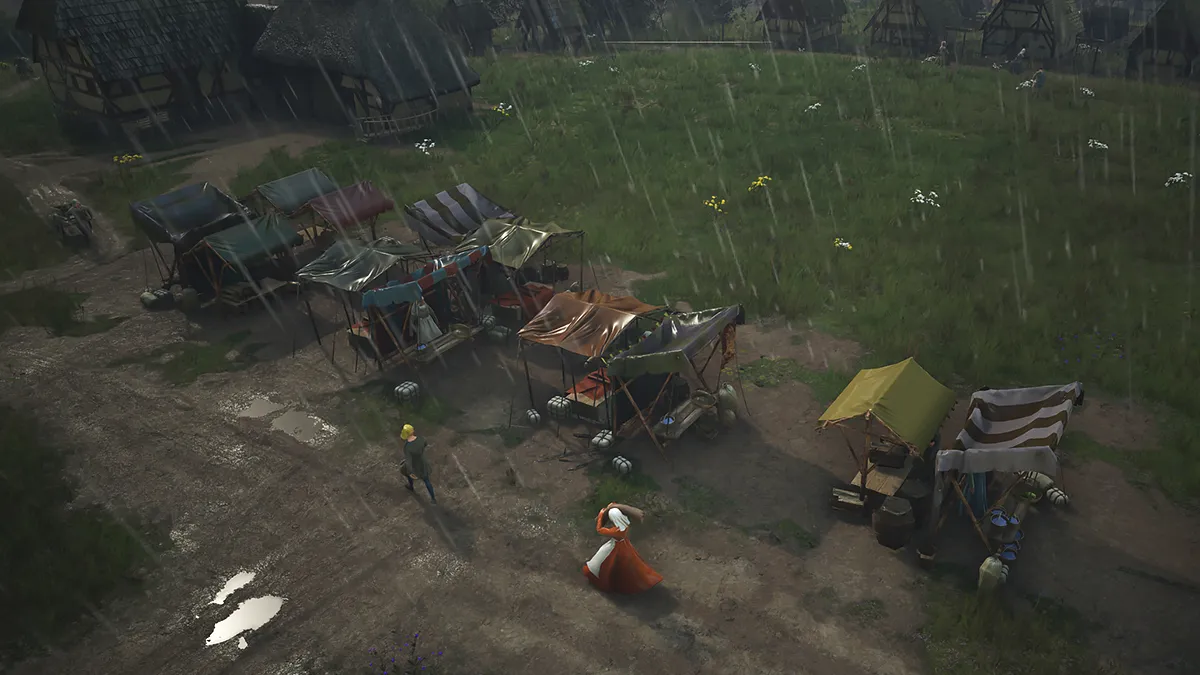
The burgeoning world of Manor Lords, a critically acclaimed city-builder and strategy game, presents players with a compelling, historically-inspired challenge of medieval settlement management. While the game excels in its intricate simulations of economy, warfare, and village life, one particular aspect frequently puzzles and frustrates new and seasoned players alike: the persistent issue of discarded supplies. Whether it’s the remnants of a recently demolished structure or a solitary log seemingly abandoned by its intended recipient, these scattered resources often linger, defying logical attempts at retrieval and impeding the organic growth of a meticulously planned settlement. This seemingly minor inconvenience can escalate into significant logistical bottlenecks, impacting construction, resource preservation, and overall town efficiency. Understanding the underlying mechanics and implementing strategic solutions is paramount for any aspiring medieval lord aiming for a prosperous and orderly domain.
The Silent Sabotage: Decay, Obstruction, and Lost Productivity
At its core, the presence of unattended resources in Manor Lords is more than just an aesthetic blight; it represents a tangible threat to a settlement’s stability and growth. The game simulates environmental degradation, meaning supplies left exposed to the elements for extended periods will inevitably decay and be lost. This decay mechanic, designed to imbue the game with a layer of realism and challenge, forces players to prioritize efficient storage. A forgotten pile of timber, a stack of bricks, or even a few units of grain, if left unprotected, will gradually diminish, representing a direct loss of valuable labor and acquired resources. This loss, while perhaps minor in isolated instances, can accumulate over time, particularly during the harsh winter months or prolonged periods of neglect, subtly undermining a player’s economic efforts.
Beyond decay, discarded supplies pose a significant practical obstacle to urban development. Construction sites often require clear ground before new buildings can be erected. A log, a pile of planks, or a forgotten stone block occupying a planned foundation will prevent construction from proceeding, leading to frustrating delays and forcing players to either redesign their layout or wait for an often unpredictable resolution. This directly impacts the pace of expansion, preventing the establishment of vital infrastructure, housing, or production facilities precisely when they are most needed. In the early game, where every building and every resource counts, such delays can severely hinder a settlement’s ability to establish a stable food supply, generate regional wealth, or defend itself against bandit incursions. The "craving for order" expressed by players is not merely aesthetic; it is a fundamental need for an efficient and functional medieval economy.
Decoding Villager AI: The Illusion of Idleness
A common point of confusion for players arises when faced with discarded supplies and seemingly idle villagers. Logic dictates that if resources are exposed and storage facilities are available, any unassigned villager should immediately prioritize moving these goods. However, Manor Lords employs a nuanced villager AI and task prioritization system that often leads to different outcomes. Villagers are not simply "idle"; they are either unassigned to a specific workplace, or they are assigned but currently performing tasks within their designated role, or they are engaged in personal activities like tending their plots, resting, or seeking provisions.
The game’s design emphasizes a hands-off, simulationist approach where players set the framework, and the villagers largely operate within it. This means that direct, real-time control over individual villager actions is limited. Instead, players must influence villager behavior through strategic building placement, road networks, and specific job assignments. The perception of villagers "side-eyeing a random log" while a critical construction project is stalled is a testament to this prioritization system. Without explicit instructions or optimized conditions, the task of moving scattered goods may fall lower on the AI’s priority list compared to, for example, farming, manufacturing, or even tending to their personal hearths. Understanding this distinction is crucial: "idle" often means "not assigned to a specific task that would involve moving these particular goods efficiently," rather than "doing nothing at all."
Strategic Solutions: Optimizing Storehouses and Granaries
The primary solution to managing general goods and foodstuffs – such as planks, stone, hides, grain, and berries – lies within the efficient operation of Storehouses and Granaries. These buildings are the backbone of any medieval settlement’s logistical network, providing sheltered storage and enabling the organized flow of resources.
When an "Exposed Goods" warning appears on the info bar at the top of the screen, it signals that valuable resources are currently outside of designated storage and are vulnerable to decay. While the immediate instinct might be to simply assign more villagers to the nearest Storehouse or Granary, this action, while helpful, is often insufficient on its own to resolve the issue swiftly. The effectiveness of these assigned workers is heavily dependent on several interconnected factors.
The Crucial Role of Road Networks: One of the most overlooked yet vital elements in resource transportation is the establishment of a robust road network. Manor Lords simulates travel time and efficiency. Villagers, especially those tasked with hauling heavy loads, will move significantly faster and more directly along established roads than across open terrain. Therefore, ensuring that a clear, direct road connects the location of the exposed goods to the relevant Storehouse or Granary is a foundational step in expediting their removal. Without proper infrastructure, even a large contingent of assigned workers will spend an inordinate amount of time simply traversing the landscape, reducing their overall efficiency and prolonging the exposure of critical supplies.
The Power of Limited Work Area: For targeted and rapid removal of exposed goods, the "limit the work area" function within the Storehouse or Granary interface is an indispensable tool. This feature allows players to temporarily override the default broad work area of the building, directing assigned workers to focus their efforts on a specific, player-defined zone.
- Step-by-Step Implementation:
- Select the Storehouse or Granary closest to the discarded supplies.
- Locate the "Limit Work Area" button (often represented by an icon resembling a circular boundary).
- Click this button, which will typically bring up an adjustable circular or rectangular overlay on the map.
- Carefully drag and resize this work area to encompass only the specific location where the exposed goods are lying. Ensure the storage building itself is also within this limited area to allow for immediate deposit.
- Confirm the selection.
By limiting the work area, players essentially issue a targeted directive to the assigned workers. Instead of passively waiting for the AI to prioritize the scattered items amidst a multitude of other potential tasks, these workers are now explicitly instructed to focus their hauling efforts within the defined zone. This dramatically increases the likelihood of them collecting the exposed goods and transporting them to storage in a timely fashion. Once the area is clear, it is imperative to return to the Storehouse or Granary interface and select "clear work area" to restore the building’s default operational range, allowing workers to resume their broader logistical duties. Failure to clear the work area can lead to inefficiencies elsewhere as workers remain restricted to a now-empty zone.
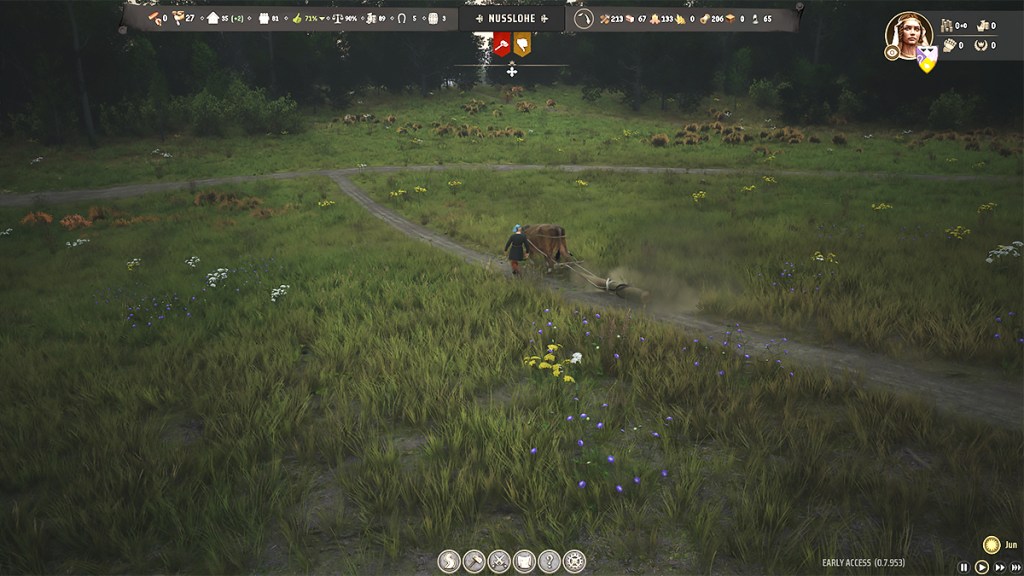
Worker Allocation and Oxen: The number of villagers assigned to a Storehouse or Granary directly impacts the speed of resource movement. While it might seem intuitive to assign many, there’s an optimal balance. Too few, and tasks are slow; too many, and other vital industries might suffer from labor shortages. Experimentation based on your settlement’s current needs is key. Furthermore, the presence of oxen significantly enhances the speed at which heavy goods, particularly timber, can be transported. While Storehouses and Granaries primarily deal with smaller, more manageable items, an overall efficient network of oxen contributes to the entire logistical flow of the settlement, indirectly aiding in the timely movement of all resources.
Timber Troubles: Managing Logging Camps and Loose Logs
Logs, the foundational resource for almost all construction in Manor Lords, present a unique logistical challenge. Unlike general goods, logs are not stored in Storehouses; instead, they are processed and stored at Logging Camps, and subsequently at Sawpits for plank production. Discarded logs, often resulting from forest clearing or abandoned logging operations, are a frequent sight and a common impediment to development.
The same "limit the work area" principle applies effectively to Logging Camps. If a cluster of logs is blocking a planned building site or simply creating clutter, assigning workers to a nearby Logging Camp and then limiting its work area to encompass the rogue logs will direct those loggers to collect and transport them back to the camp. This method is particularly efficient because loggers are already equipped and trained for timber handling.
Advanced Strategies for Log Removal:
- Temporary Logging Camps: In scenarios where the discarded logs are far from an existing Logging Camp, or if the current camp is heavily engaged in felling new trees, a highly effective, albeit resource-intensive, strategy is to construct a temporary Logging Camp in very close proximity to the abandoned timber. Assign a few workers to this new camp, limit its work area to the immediate vicinity of the logs, and watch as they are quickly gathered. Once the area is clear, the temporary camp can be demolished, recouping some of its construction cost. This method ensures maximum efficiency for isolated log piles.
- Unassigning Workers for Transport Focus: A less intuitive but often effective trick involves temporarily unassigning workers from an existing Logging Camp or even other resource-gathering buildings. When villagers become unassigned, they often revert to a general "haul" task, and if loose logs are the most pressing unassigned hauling task available, they will gravitate towards moving them. Crucially, unassigning workers can also free up oxen that were previously tied to that specific building’s operations. Oxen are vital for transporting heavy timber efficiently. By freeing an ox and an unassigned villager, you create a dedicated log-hauling unit that can quickly clear a troubled spot. Once the logs are moved, workers can be reassigned to their original posts.
- The Sawpit’s Role: While not directly involved in clearing discarded logs from the ground, the Sawpit plays a crucial role in the overall timber supply chain. An efficient Sawpit ensures that logs are promptly converted into planks, preventing a backlog of raw timber at the Logging Camp and reducing the likelihood of logs being left uncollected due to full storage.
As with Storehouses and Granaries, remember to "clear work area" in the Logging Camp interface once the surplus timber has been hauled away to restore normal operations.
Beyond the Piles: Strategic Logistics for a Thriving Settlement

The management of discarded supplies is not an isolated problem but rather a symptom of a larger logistical framework within Manor Lords. Mastering this specific challenge contributes to a broader understanding of efficient supply chain management, which is critical for a settlement’s long-term prosperity.
Early Game Considerations: In the nascent stages of a settlement, every resource and every villager’s time is precious. Proximity between resource extraction points (e.g., Woodcutter’s Lodge, Stonecutter’s Camp, Berry Gatherer’s Hut), processing facilities (e.g., Sawpit), and storage buildings (Storehouse, Granary, Logging Camp) is paramount. Minimizing travel distances inherently reduces the chance of resources being left exposed and maximizes worker productivity. Strategic road placement from the outset can save countless hours of villager time and prevent future logistical headaches.
Mid-to-Late Game Challenges: As a settlement expands, so does the complexity of its logistics. Multiple production zones, scattered residential areas, and increased demand for diverse goods necessitate a more sophisticated approach. Players might need to establish multiple Storehouses and Granaries strategically placed across different districts to reduce transport times. The introduction of trading posts and regional trade further complicates the flow of goods, requiring careful management of inventory and export/import routes. An efficient internal logistics network ensures that goods are readily available for trade, construction, and consumption, contributing directly to the accumulation of "Regional Wealth" and the overall economic health of the manor.
Developer Intent and Player Experience: The design choices in Manor Lords regarding resource decay and villager AI likely reflect a deliberate attempt by the developers to inject a layer of realism and micro-management challenge into the game. In a medieval setting, resource preservation was a constant struggle against the elements, and logistical inefficiencies were commonplace. By simulating these challenges, the game encourages players to think critically about infrastructure, worker allocation, and long-term planning. Community discussions frequently highlight these logistical puzzles as both frustrating and deeply rewarding when a solution is found, underscoring the game’s appeal to players who relish intricate systems. While the current system requires manual intervention for exposed goods, future updates could potentially introduce more automated solutions or refined AI behaviors, addressing common player feedback without sacrificing the core design philosophy of realistic challenge.
Conclusion: Mastering the Medieval Supply Chain
The seemingly trivial task of moving a few discarded logs or a pile of stone in Manor Lords is, in reality, a microcosm of the larger logistical challenges inherent in managing a thriving medieval settlement. By understanding the mechanics of resource decay, villager prioritization, and the strategic application of tools like road networks and limited work areas, players can transform what appears to be an annoying inefficiency into an opportunity for demonstrating their mastery of the game’s systems. Proactive planning, timely intervention, and a willingness to engage in targeted micro-management will ensure that valuable resources are preserved, construction proceeds unimpeded, and the settlement evolves into an organized, prosperous, and aesthetically pleasing domain. A few quick clicks and some strategic oversight can indeed clear up the mess, allowing aspiring lords to focus on the grander vision of their burgeoning manor.