


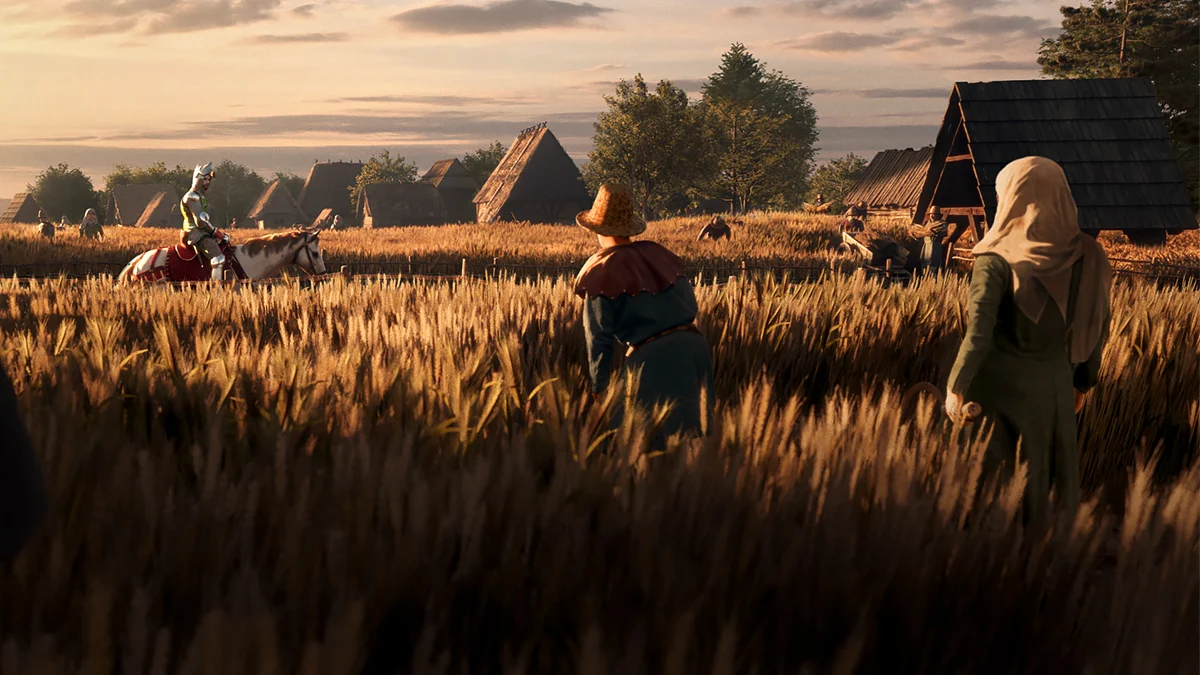
Farming stands as the bedrock of any burgeoning settlement in Manor Lords, an activity that demands immediate and strategic attention from the outset. It is not merely a means to sustain digital villagers but the very engine powering their survival through harsh winters, fueling their social lives with essential commodities like ale, and establishing the foundational economy of their burgeoning community. The intricate system of crop management, soil fertility, and processing chains forms a complex yet rewarding challenge for players aiming to build a prosperous medieval domain.
The Foundational Pillars of Early Game Sustenance
Upon embarking on their journey in Manor Lords, players are quickly introduced to the critical importance of agricultural production. The initial phases of settlement development are inextricably linked to the successful cultivation of staple crops, primarily Wheat, referred to in-game by its historical name, Emmer. This choice is not arbitrary; Wheat provides the most direct route to feeding the populace, transforming into flour and subsequently bread—the primary calorie source for early medieval communities. The imperative to secure a stable food supply becomes acutely apparent with the approach of the first winter, a period during which agricultural output ceases entirely. Without a substantial surplus of grain harvested in autumn, coupled with the necessary infrastructure for processing, settlements face the grim prospect of starvation and decline.
To effectively manage this initial food chain, players must prioritize several key structures. The Farmhouse serves as the central hub for all agricultural operations, housing the families assigned to cultivation and managing the fields. Once grain is harvested, it must be processed. A Windmill is indispensable for grinding raw grain into flour, a labor-intensive but critical step. Following this, a Communal Oven (or later, a dedicated Bakery) is required to transform the flour into edible bread, ready for distribution to the villagers. The efficient establishment and staffing of these facilities are paramount, as bottlenecks in any stage of this chain can lead to food shortages, even with ample raw grain.
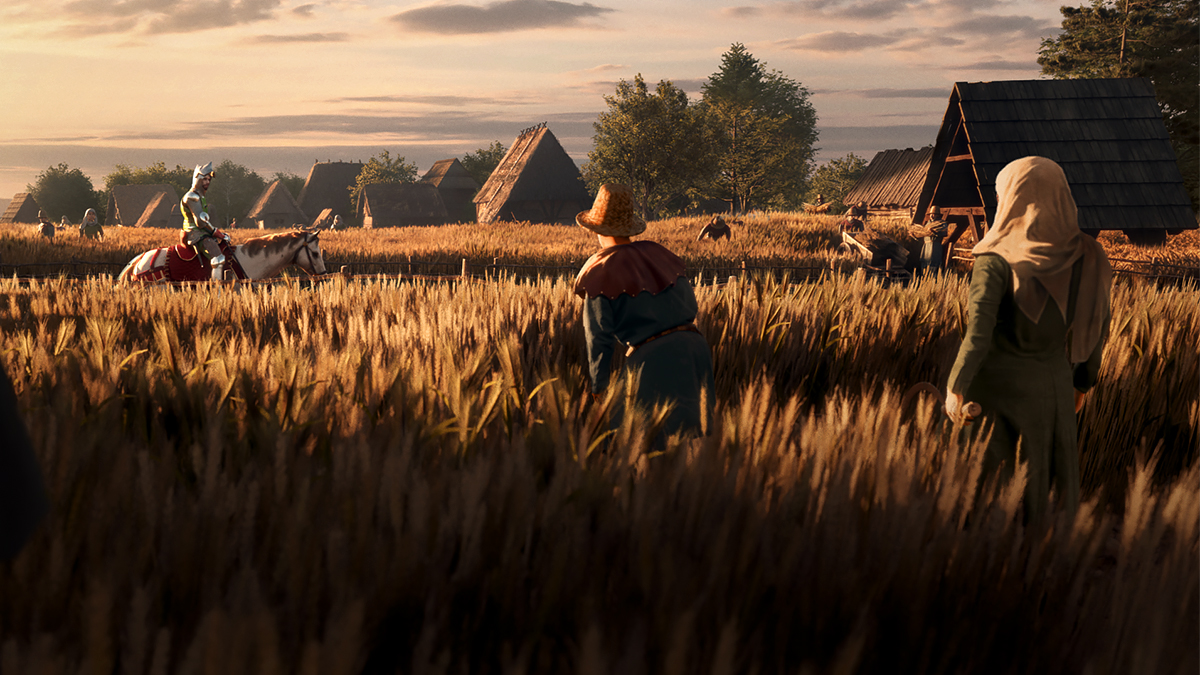
Beyond mere survival, the diversification of crops plays a pivotal role in the long-term prosperity and social stability of a manor. Once a sufficient reserve of Wheat is secured, the strategic focus often shifts to Barley. This grain, while not directly feeding the populace in its raw form, is crucial for the production of ale. Ale, a common beverage in medieval times, serves as a significant morale booster for villagers, contributing to their overall happiness and productivity. Its production also opens up avenues for trade, transforming a raw agricultural product into a value-added commodity.
A Deep Dive into Crop Types and Their Strategic Utility
Manor Lords incorporates four distinct crop types, each possessing unique characteristics and strategic applications, demanding careful consideration of soil suitability and long-term planning.
- Emmer (Wheat): As previously noted, Emmer is the cornerstone of early-game food production. It thrives in highly fertile soil and provides a substantial yield, making it ideal for bread production. Its cultivation is non-negotiable for sustaining a growing population.
- Barley: While secondary to Wheat for direct sustenance, Barley’s role in ale production makes it indispensable for maintaining citizen morale and creating a valuable trade good. It generally prefers moderately fertile land, often complementing Wheat fields in a crop rotation scheme.
- Flax: Unlike the grains, Flax is cultivated for its fibers, which are processed into linen and then into clothing. This crop introduces an essential element to the economic chain, enabling the production of valuable goods that satisfy a different tier of villager needs and provide a high-value export commodity. Flax typically requires good soil fertility, though often less demanding than Wheat.
- Rye: Rye offers an alternative to Wheat, particularly useful in areas with less optimal soil fertility. While its yield might be slightly lower than Wheat in prime conditions, its resilience makes it a reliable option for expanding food production into marginal lands. Rye can also be used for bread, offering dietary diversity, or potentially as animal feed.
Understanding the specific requirements and outputs of each crop is fundamental to designing an efficient and resilient agricultural system. For instance, a single morgen of highly fertile land dedicated to Wheat can reliably yield approximately 250-300 units of grain per harvest, assuming optimal conditions and efficient labor. Barley yields might be slightly lower, around 200-250 units, while Flax could produce 150-200 units of raw fiber. Rye, in less fertile areas, might still manage 180-220 units of grain, providing a crucial fallback.
Essential Agricultural Infrastructure
Beyond the Farmhouse, Windmill, and Communal Oven, several other structures are integral to a flourishing agrarian economy:
- Granary: This structure is vital for storing harvested crops safely and efficiently. Without adequate storage, precious yields can be lost to spoilage or simply remain exposed to the elements. A well-placed granary minimizes travel time for farmers and processors.
- Malt House / Brewery: Directly linked to Barley production, these buildings convert raw Barley into malt and then into ale, completing the production chain for this morale-boosting beverage. Their placement near markets or residential areas can improve distribution efficiency.
- Weaver’s Hut / Tailor’s Shop: These structures are essential for processing Flax. The Weaver’s Hut turns flax fibers into linen, which can then be further processed into clothing at a Tailor’s Shop. This adds significant economic depth, allowing for local production of essential goods and high-value trade items.
- Ox Stables: While not directly a processing building, oxen are crucial for efficient plowing and transportation of goods, significantly speeding up agricultural tasks, especially on larger fields. Investing in oxen can dramatically improve the productivity of farm families.
The Crucial Role of Soil Fertility and Crop Rotation
Manor Lords implements a nuanced soil fertility system that directly impacts crop yields and necessitates strategic planning. Players can access a color-coded land fertility indicator via the Construction menu’s Farming tab. Selecting a specific crop type (Emmer, Flax, Barley, or Rye) overlays the map with shades ranging from bright green (most fertile) to orange/red (least fertile). This visual guide is indispensable for selecting optimal locations for new fields, ensuring maximum yield and minimizing wasted effort.
A core mechanic tied to soil fertility is its gradual depletion with continuous use. Repeatedly planting the same crop in a field will inevitably diminish its productivity over time. To counteract this, the game strongly encourages the implementation of crop rotation. This historical agricultural practice is simulated through a three-year cycle system that players can configure for each field. A typical rotation might involve:
- Year 1: Primary Crop (e.g., Wheat) – High yield, but drains specific nutrients.
- Year 2: Secondary Crop (e.g., Barley or Rye) – A different crop that may draw different nutrients or be less demanding, or a legume that fixes nitrogen.
- Year 3: Fallow or Pasture – The field is left unplanted to rest, allowing soil nutrients to naturally replenish. Alternatively, it can be converted to pasture, where livestock can graze, enriching the soil with their waste (manure).
The strategic choice between fallow and pasture depends on the settlement’s needs. A fallow year offers the quickest soil recovery. Converting a field to pasture, however, integrates livestock into the agricultural cycle, providing additional benefits such as wool from sheep, meat, and further enriching the soil. This interconnectedness highlights the game’s commitment to simulating a holistic medieval economy.
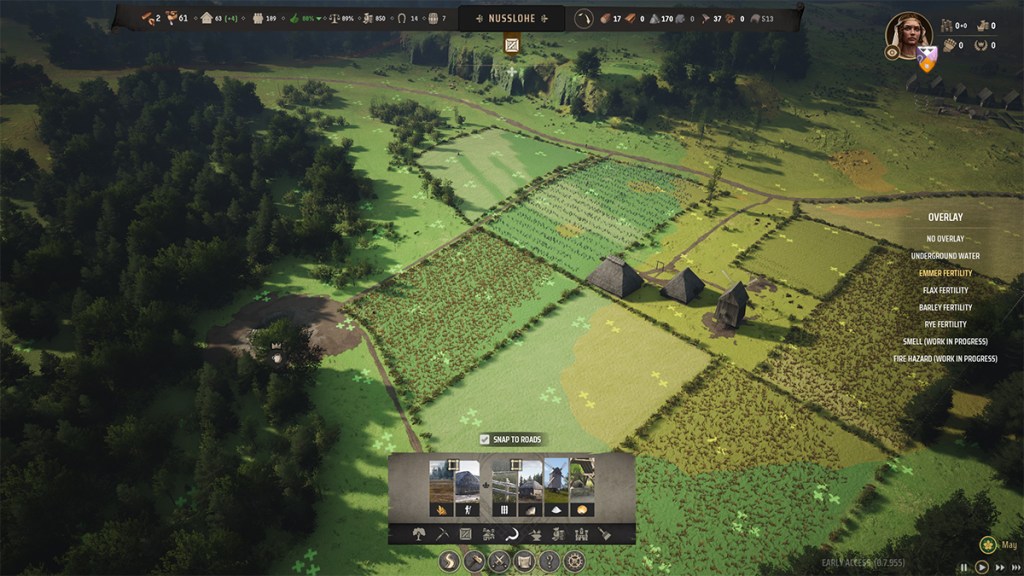
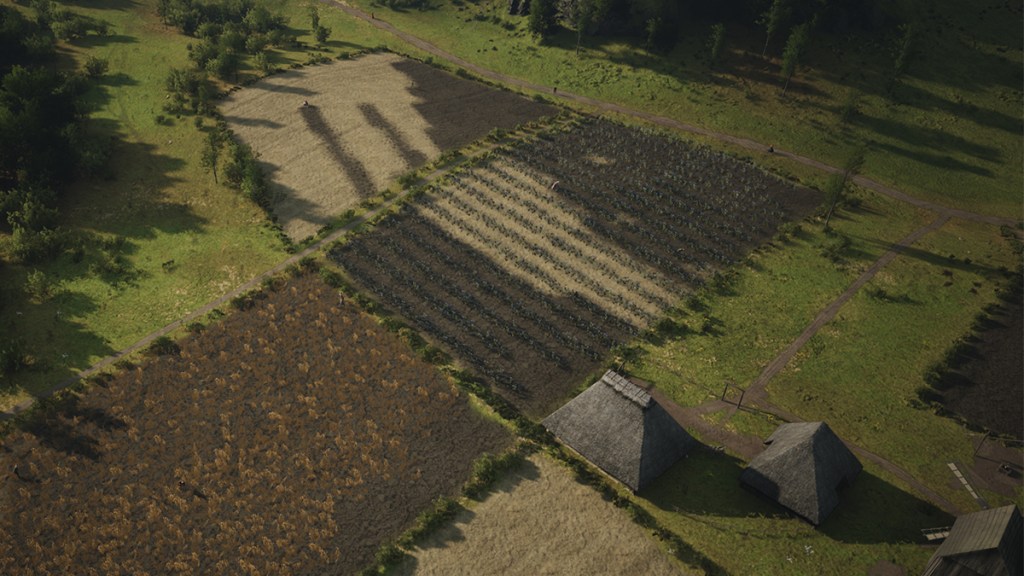
Fields in Manor Lords are measured in morgen, an archaic unit of land measurement historically representing the amount of land an ox could plow in a morning. A single family, equipped with basic tools, can realistically manage approximately two-thirds of a morgen per year. While a tooltip might initially suggest creating 1-morgen fields, the reality of diminishing fertility dictates a more expansive approach. To ensure sustainable food production for even a small town, players will typically need at least three fields for every one active crop type: two actively growing crops in rotation, and one left fallow or designated as pasture. This ensures a continuous supply while safeguarding the long-term health of the land.
Strategic Development Options for Agricultural Advancement
As a settlement grows and evolves, players earn Development Points by upgrading Burgage Plots. These points can be invested into various skill trees, one of which directly enhances agricultural productivity and efficiency. While the original article did not list specific options, a comprehensive understanding of Manor Lords’ design philosophy suggests plausible advancements that align with historical agricultural development:
- Heavy Plough: This foundational upgrade significantly increases the efficiency of plowing, allowing families to manage larger fields or complete tasks faster. It might also reduce the number of oxen required or make plowing possible on tougher terrain. This directly addresses the labor bottleneck in preparing fields.
- Fertilization Techniques: This development could unlock advanced methods for soil enrichment, beyond simply fallowing. It might allow the use of manure from livestock more effectively, or even introduce specific cover crops that accelerate nutrient recovery, reducing the time a field needs to lie fallow.
- Advanced Threshing: Improves the yield of grain from harvested crops, reducing waste and maximizing output from each harvest. This is crucial for settlements aiming for large surpluses or facing periods of lower fertility.
- Irrigation/Drainage Systems: For more advanced settlements, this option could mitigate the effects of drought or excessive rainfall, ensuring more consistent yields regardless of weather patterns. It would require significant investment but offer substantial returns in agricultural stability.
- Specialized Crop Varieties: Unlocking improved strains of Wheat, Barley, or Rye that offer higher disease resistance, better yields in specific soil types, or faster growth cycles, allowing for more flexible crop planning.
- Market Farming: This development could increase the trade value of agricultural products, making farming not just a matter of sustenance but a significant economic driver for the region, fostering more lucrative trade routes and generating greater regional wealth.
These strategic investments allow players to tailor their agricultural development to their settlement’s specific needs and the resources available in their territory, evolving from basic subsistence farming to a sophisticated and highly productive agrarian economy.
The Broader Impact and Implications of Farming Mastery
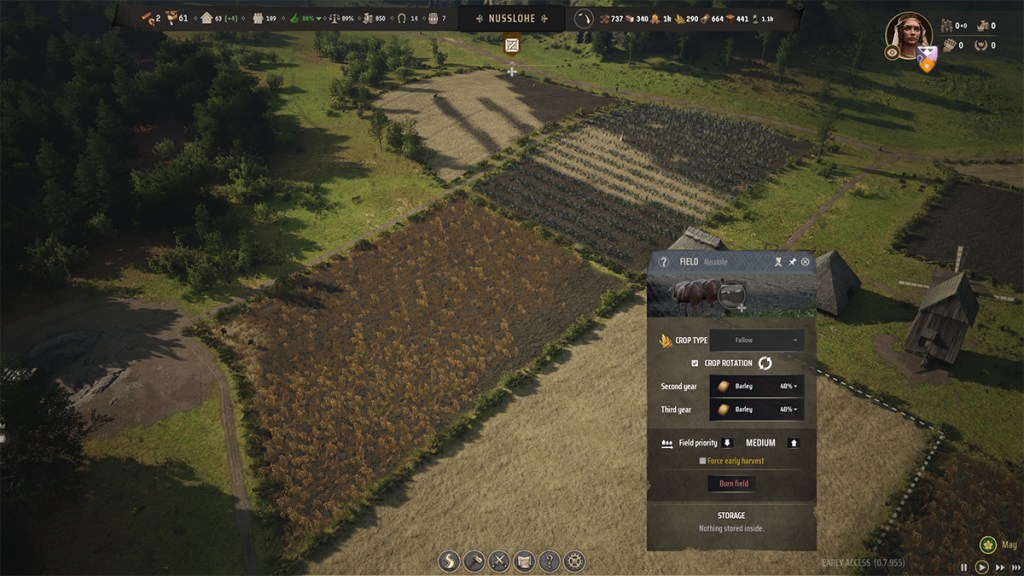
The meticulous management of farming in Manor Lords extends far beyond merely filling the bellies of villagers; it underpins the entire economic, social, and military fabric of the settlement.
- Economic Stability and Trade: A diverse and productive agricultural sector ensures self-sufficiency, reducing reliance on costly imports. Surpluses of grain, ale, or linen can be traded for other essential goods, raw materials, or even wealth, fueling further expansion and development. This allows for regional specialization, where a town strong in agriculture can support other towns focused on mining or crafting.
- Population Growth and Morale: A consistent and varied food supply, coupled with the availability of ale, directly contributes to villager happiness and, crucially, encourages population growth. Satisfied citizens are more productive and less likely to turn into bandits or abandon the settlement. Food security is the primary driver of attracting new families to Burgage Plots.
- Strategic Depth and Resilience: A robust farming economy provides a buffer against unforeseen challenges, such as bad harvests, disease, or external conflicts that might disrupt supply lines. It allows a settlement to weather crises more effectively and rebound faster. Furthermore, a strong food base can support a larger military, providing the sustenance needed for expeditions or defense.
- Environmental Management: The emphasis on soil fertility and crop rotation introduces an element of environmental stewardship. Players learn to manage their land sustainably, understanding that short-term gains at the expense of soil health lead to long-term decline. This reflects the delicate balance between exploitation and preservation inherent in medieval agricultural practices.
- Aesthetic and Immersion: While not a core gameplay mechanic, the visual representation of vast, well-managed farmlands stretching across the landscape adds significantly to the immersion and aesthetic appeal of Manor Lords. The sight of oxen plowing fields, windmills turning in the breeze, and villagers tending their crops creates a vibrant and believable medieval tableau, rewarding the player’s strategic efforts with a living, breathing settlement.
In essence, farming in Manor Lords is a microcosm of the game’s broader design philosophy: a commitment to historical realism, strategic depth, and the interconnectedness of various systems. It challenges players to think like medieval lords, balancing immediate needs with long-term sustainability, making thoughtful decisions about land use, resource allocation, and labor management. Mastery of these agrarian fundamentals is not just an optional side activity but the very essence of establishing a thriving and enduring manor, transforming a barren landscape into a beacon of medieval prosperity.