


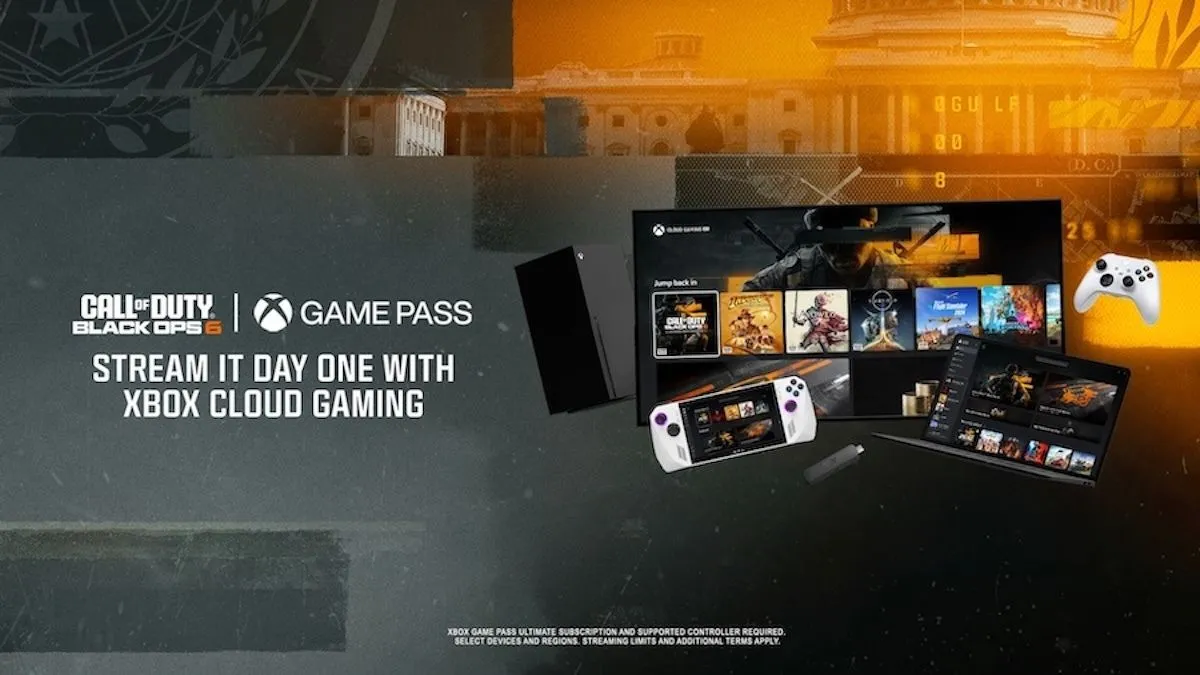
Microsoft has officially confirmed that Call of Duty: Black Ops 6, the latest installment in the globally renowned first-person shooter franchise, will be available on Xbox Cloud Gaming (Beta) for Game Pass Ultimate members on its launch day, October 25, 2024, starting at 10:00 a.m. PT. This announcement significantly broadens the accessibility of the highly anticipated title, allowing subscribers to stream the game across a multitude of devices, including phones, tablets, and lower-spec PCs, without the need for a dedicated console or powerful gaming rig. Furthermore, Microsoft revealed that Call of Duty: Modern Warfare III and the immensely popular free-to-play battle royale, Call of Duty: Warzone, will also join Xbox Cloud Gaming on the same date, providing a comprehensive Call of Duty offering for Game Pass Ultimate subscribers via the cloud.
This move represents a pivotal moment in Microsoft’s strategic integration of Activision Blizzard King into the Xbox ecosystem following its landmark acquisition. The decision to bring Black Ops 6 to Game Pass Day One was already a significant demonstration of Microsoft’s commitment to leveraging its newly acquired intellectual property to bolster its subscription service. Extending this availability to the cloud simultaneously underscores the company’s vision for ubiquitous gaming access and reinforces Game Pass Ultimate’s value proposition.
The Strategic Imperative: Call of Duty and Game Pass
The journey to this announcement has been a long and complex one, rooted in Microsoft’s ambitious $69 billion acquisition of Activision Blizzard King. This monumental deal, the largest in the history of the video game industry, faced intense scrutiny from regulatory bodies worldwide, including the U.S. Federal Trade Commission (FTC), the UK’s Competition and Markets Authority (CMA), and the European Commission. A core concern for regulators, particularly the CMA, revolved around the future availability of Call of Duty on competing platforms, primarily Sony’s PlayStation. Microsoft’s assurances that Call of Duty would remain multiplatform, coupled with long-term licensing agreements offered to competitors, eventually paved the way for the acquisition’s approval in October 2023.
From Microsoft’s perspective, the acquisition was not merely about consolidating intellectual property but fundamentally about expanding the reach and appeal of Xbox Game Pass. Call of Duty, with its consistent annual releases, massive global player base (often exceeding hundreds of millions across its titles), and status as one of the most profitable entertainment franchises in history, was identified as a critical asset. Integrating it into Game Pass Day One was seen as a transformative step to drive subscriptions, differentiate the service from competitors, and fulfill Microsoft’s broader cloud gaming ambitions.
Xbox Game Pass, launched in 2017, has grown to become a cornerstone of Microsoft’s gaming strategy. It offers a rotating library of hundreds of games for a monthly subscription fee, including all first-party Xbox titles on their release day. Game Pass Ultimate, the premium tier, bundles Game Pass for Console, PC Game Pass, Xbox Live Gold (for online multiplayer), and crucially, Xbox Cloud Gaming. As of early 2024, Game Pass reportedly boasts over 34 million subscribers, a testament to its compelling value proposition. The addition of a tentpole franchise like Call of Duty Day One is expected to further accelerate this growth.
Evolution of Xbox Cloud Gaming (xCloud)
Xbox Cloud Gaming, often referred to as xCloud, launched in beta in 2020 as part of Game Pass Ultimate. Its premise is simple yet revolutionary: stream Xbox games directly from Microsoft’s cloud servers to a user’s device. This eliminates the need for powerful local hardware, democratizing access to high-fidelity gaming experiences. Users can play on Android and iOS smartphones and tablets, Windows PCs, select smart TVs, and even Meta Quest VR headsets, often with just a Bluetooth controller.
The technology behind xCloud involves sophisticated data centers equipped with custom Xbox Series X hardware, processing the game and streaming the video output to the player, while simultaneously receiving input commands. For a fast-paced, reaction-intensive game like Call of Duty, the performance of cloud gaming is paramount. Latency – the delay between a player’s action and its reflection on screen – is a critical factor. Microsoft has continuously invested in optimizing its cloud infrastructure, reducing latency, and improving streaming quality to ensure a playable experience for demanding titles. The successful deployment of Black Ops 6 on cloud will serve as a significant validation of these ongoing technical advancements.
A Detailed Chronology of Integration and Announcements
The journey to Black Ops 6‘s cloud launch involved several key milestones:
- January 2022: Microsoft announces its intent to acquire Activision Blizzard King for nearly $69 billion.
- Late 2022 – Early 2023: Intense regulatory scrutiny begins, with Call of Duty‘s multiplatform future becoming a central point of contention.
- October 2023: After protracted negotiations and concessions, particularly regarding cloud gaming rights and licensing agreements, the acquisition officially closes.
- May 2024: Leaks and rumors begin to circulate regarding Black Ops 6 coming to Game Pass Day One.
- May 28, 2024: Xbox officially confirms Call of Duty: Black Ops 6 will launch Day One on Game Pass for select membership tiers, marking a historic shift for the franchise. This initial announcement focused on console and PC Game Pass.
- August 2024 (Approx.): Call of Duty: Modern Warfare III is added to Xbox Game Pass, further signaling Microsoft’s intent to integrate the franchise into its subscription service. This brought a relatively recent Call of Duty title to Game Pass, allowing subscribers to experience the gameplay loop.
- October 14, 2024 (Xbox Wire Blog Post): Microsoft officially announces that Call of Duty: Black Ops 6, alongside Modern Warfare III and Warzone, will be available on Xbox Cloud Gaming for Game Pass Ultimate members on October 25, 2024, at 10:00 a.m. PT, coinciding with Black Ops 6‘s global launch.
This timeline demonstrates a clear, deliberate strategy by Microsoft to fully integrate Call of Duty into its subscription and cloud ecosystem, maximizing its reach and value to subscribers.
Implications for Players and the Gaming Industry
The Day One Cloud Gaming launch of Black Ops 6 carries profound implications for both players and the broader gaming industry:
- Unprecedented Accessibility: Players who do not own an Xbox console or a high-end gaming PC can now access a brand-new AAA Call of Duty title on their existing devices. This includes millions of smartphone and tablet users, potentially expanding the Call of Duty audience to demographics previously limited by hardware costs. The ability to play on a phone during a commute or on a tablet in another room significantly enhances player flexibility.
- Enhanced Value for Game Pass Ultimate: For existing Game Pass Ultimate subscribers, this adds immense value. Not only do they get Black Ops 6 on Day One, but they can play it anywhere they have an internet connection. The simultaneous addition of Modern Warfare III and Warzone means a robust Call of Duty library is available instantly. This strengthens the overall appeal of Game Pass Ultimate against competing subscription services.
- Validation of Cloud Gaming: The successful streaming of a fast-paced, competitive FPS like Call of Duty on launch day will be a major milestone for cloud gaming technology. It demonstrates that cloud gaming is maturing beyond casual titles and is capable of delivering experiences for demanding core gamers. This could accelerate broader adoption and investment in cloud infrastructure across the industry.
- Shift in Purchasing Habits: While many Call of Duty fans are accustomed to purchasing each annual installment at full price, the Game Pass Day One offering, especially via cloud, presents an alternative. This could encourage some players to opt for a subscription rather than a direct purchase, further pushing the industry towards a subscription-based model.
- Competitive Landscape: This move intensifies competition in the subscription and cloud gaming markets. PlayStation, with its PlayStation Plus service, does not currently offer Day One access to its major first-party titles, nor does it have as robust a cloud gaming offering for its entire library. This puts pressure on competitors to innovate their own services.
- Future of Call of Duty: Under Microsoft, the future of Call of Duty seems firmly tied to the Xbox ecosystem. While remaining multiplatform, its integration into Game Pass and cloud gaming suggests a long-term strategy to leverage the franchise as a powerful driver for Microsoft’s services. This could also lead to deeper integration with other Xbox features and potentially unique content for Game Pass subscribers in the future.
Technical Considerations and User Experience
While the promise of playing Black Ops 6 on a phone is exciting, the actual user experience will largely depend on several technical factors:
- Internet Connection: A stable, high-speed internet connection (preferably 5G Wi-Fi or wired ethernet for optimal performance) is crucial for cloud gaming. Latency and packet loss can severely impact the responsiveness of an FPS.
- Input Lag: Despite Microsoft’s optimizations, some degree of input lag is inherent in cloud streaming. For casual play, this might be negligible, but for highly competitive multiplayer matches, it could be a disadvantage compared to playing locally on a console or PC.
- Visual Fidelity: While cloud gaming streams a high-resolution video feed, it may not always match the pristine visual quality of native 4K HDR output from a powerful local machine, especially on smaller screens. Compression artifacts can sometimes be noticeable.
- Device Compatibility and Controllers: While many devices are supported, the experience will be best with a compatible controller. Touch controls for complex FPS games are generally not preferred by core players.
Microsoft has made significant strides in addressing these challenges, but user experiences will vary widely based on individual network conditions and hardware. The "Beta" tag on Xbox Cloud Gaming indicates ongoing development and refinement.
Broader Context: A Month of Game Pass Value
The Call of Duty cloud announcement arrives amidst a strong period for Xbox Game Pass. Microsoft regularly adds a diverse range of titles to the service, and October has already seen notable additions such as the critically acclaimed deck-building horror game Inscryption, the stylish martial arts brawler Sifu, and the popular sports simulation MLB The Show 24. These additions, alongside the momentous Call of Duty integration, collectively reinforce the perception of Game Pass as a service that consistently delivers significant value to its subscribers across various genres and player preferences.
The availability of Modern Warfare III on Cloud Gaming, even with its successor launching simultaneously, also offers players choice. Some might prefer the familiar maps and gameplay of MW3 (like Favela and Rust, as noted in previous communications) while others dive into the new Black Ops 6 experience. Warzone, being a free-to-play live-service title, benefits immensely from cloud access, as it lowers the barrier for new players to try it out without any downloads or local storage concerns.
In conclusion, the Day One Xbox Cloud Gaming launch of Call of Duty: Black Ops 6, alongside Modern Warfare III and Warzone, marks a significant milestone in Microsoft’s overarching strategy. It not only delivers on the promise of the Activision Blizzard acquisition but also pushes the boundaries of accessibility and value within the gaming subscription model. As the industry continues its evolution, such moves by major players like Microsoft are set to reshape how games are consumed, played, and integrated into our daily lives.