


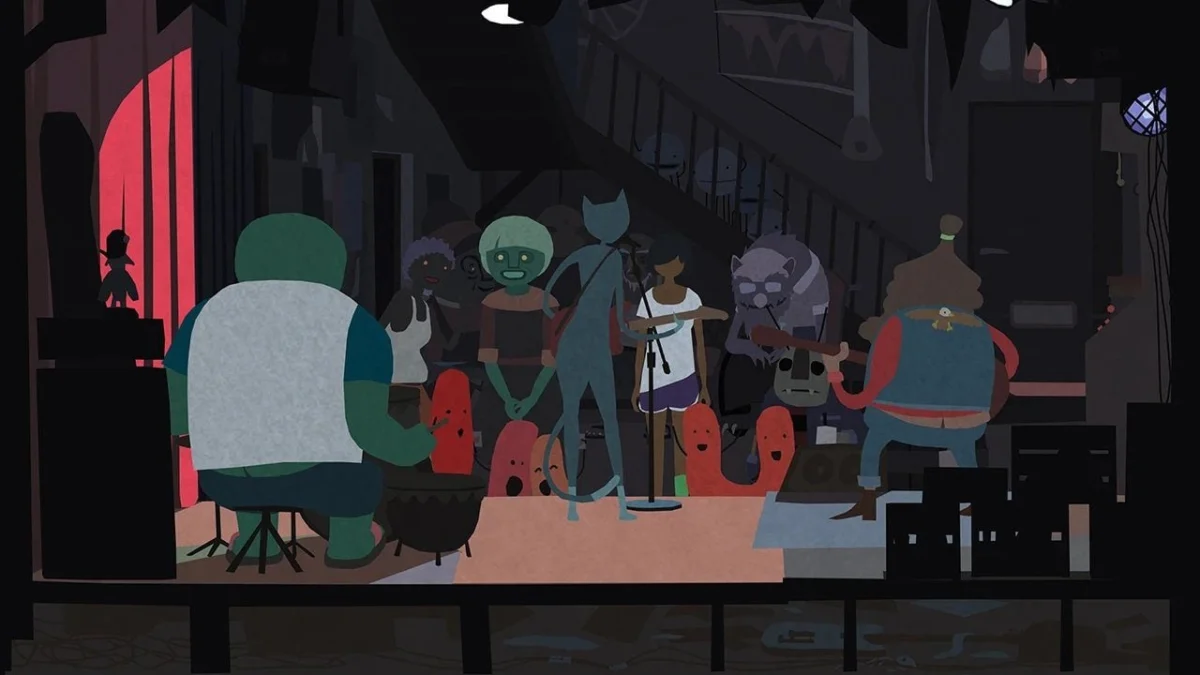
Danish game studio Die Gute Fabrik, celebrated for its critically acclaimed and uniquely crafted independent titles such as the narrative-driven adventure Mutazione, has announced a significant and somber decision: the halt of production on all current projects. This move, a stark indicator of the increasingly difficult financial climate facing independent game developers, stems directly from what the studio describes as a "challenging funding and investment scene" within the broader gaming industry. The announcement, made via official channels including their social media presence, signifies a temporary pause rather than a definitive closure, with the studio expressing a strong desire to resume operations should new funding opportunities emerge.
The decision to cease active development was enacted on February 19th, according to the studio’s statement. Die Gute Fabrik has committed its remaining financial resources to provide its team with a month of paid time following the production halt. This measure, while offering a crucial buffer, underscores the financial strain that has necessitated this difficult step. The studio’s public communication strategy appears to be dual-purposed: to transparently inform its community and stakeholders about the situation, and crucially, to amplify the visibility of its talented team members who are now actively seeking new employment opportunities within the industry.
A Difficult Decision Driven by Market Realities
In a series of tweets released on February 26th, 2024, Die Gute Fabrik articulated the gravity of their situation. The initial announcement read: "We’re sad to share that we’re halting production at @gutefabrik due to the challenging funding & investment scene in games right now. We downed tools earlier this month & have been doing our best to support the team who’ll be looking for work from mid-March." This direct and unvarnished statement immediately conveyed the seriousness of the circumstances.
The studio’s subsequent communication focused on empowering its displaced staff. Accompanying the announcement was a link to a "hiring sheet," a comprehensive document detailing the skills, experience, and contact information of their team members. The studio implored potential employers to consider their former colleagues, stating: "Please check out this sheet of the current team members who are now looking for new opportunities. We’ve been honoured to collaborate with them, both on Saltsea Chronicles, and on our unannounced prototype. Jump at the chance to hire them!" This proactive approach highlights the studio’s commitment to its employees even in the face of adversity.
Contextualizing the Funding Challenges in the Indie Game Sector
The predicament faced by Die Gute Fabrik is not an isolated incident but rather a symptom of a wider, systemic challenge within the independent game development sector. In recent years, the landscape for securing funding has become increasingly competitive and precarious. While digital distribution platforms and crowdfunding have democratized access to market for smaller studios, they have also led to an oversaturation of titles, making it harder for games to gain visibility and financial traction.
Several factors contribute to this challenging environment:
- Increased Development Costs: Even for independent studios, the cost of developing high-quality games has risen. Expectations for graphical fidelity, narrative depth, and polished gameplay mechanics require significant investment in talent, software, and hardware.
- Platform Fees and Revenue Splits: Digital storefronts, while essential for distribution, typically take a substantial percentage of revenue generated from sales. This can significantly reduce the profit margins for developers, especially those with smaller sales volumes.
- Investor Skepticism and Risk Aversion: The gaming industry, despite its immense profitability, is often viewed as a high-risk, high-reward investment. Following periods of rapid growth and significant investment, venture capital firms and angel investors can become more cautious, demanding clearer pathways to profitability and more robust assurances of return on investment. This is particularly true in the current global economic climate, where broader economic uncertainties can lead to a tightening of investment capital across various sectors.
- The "AAA" Dominance: The continued dominance of large-budget "AAA" titles in the market can overshadow independent productions. Marketing budgets for AAA games are often astronomical, making it difficult for smaller studios to compete for player attention and spending.
- The "Indiepocalypse" Narrative: While perhaps an overused term, the concept of an "indiepocalypse" reflects a genuine concern among developers about the sustainability of the independent development model. Anecdotal evidence and reports from various studios suggest that a significant number of independent games fail to recoup their development costs, leading to a cycle of financial precarity. Data from industry analysis firms often highlights the vast disparity in sales performance between a handful of breakout indie hits and the vast majority of titles that achieve only modest commercial success.
The "challenging funding and investment scene" cited by Die Gute Fabrik is a concise summation of these interconnected issues. It speaks to a market where securing upfront investment for new projects, or continuing to fund ongoing development through subsequent funding rounds, has become a significantly more arduous task than it might have been in previous years.
Timeline of Events and Studio’s Commitment
The cessation of production on February 19th marks a critical juncture for Die Gute Fabrik. This date signifies the point at which active development ceased, and the studio began implementing its transition plan. The subsequent announcement on February 26th served to formally communicate this news to the public and to initiate the process of supporting its team members in finding new roles.
The studio’s statement clearly delineates that this is a halt in production, not a dissolution of the company. The emphasis on seeking new funding is paramount. This suggests that Die Gute Fabrik is actively exploring avenues to secure the necessary capital to restart its development pipeline. This could involve seeking new investment from publishers, venture capital firms, crowdfunding campaigns, or potentially exploring alternative business models. The success of these efforts will determine the long-term future of the studio.
A Legacy of Unique and Celebrated Games
Die Gute Fabrik, whose name translates from German to "The Good Factory," has built a reputation for producing games that are not only technically proficient but also possess a distinct artistic vision and emotional resonance. Their most widely recognized title, Mutazione, released in 2019, garnered significant critical acclaim and a suite of awards.
Mutazione is a narrative adventure game set in a lush, mutated community. Players step into the shoes of Kai, a teenage girl who travels to the community of Mutazione to care for her ailing grandfather. The game is celebrated for its:
- Unique Art Style: Characterized by vibrant colors, hand-drawn aesthetics, and a distinct visual language that sets it apart from mainstream titles. The art direction fosters a sense of warmth and otherworldliness, contributing significantly to the game’s immersive quality.
- Compelling Narrative and Characters: Mutazione delves into themes of community, family, healing, and the acceptance of difference. The narrative is woven through character interactions, environmental storytelling, and the exploration of the town’s unique culture and history. The characters are richly drawn, offering relatable struggles and poignant moments.
- Innovative Gameplay Mechanics: While primarily a narrative-driven experience, the game incorporates elements of gardening, crafting, and musical minigames, which are seamlessly integrated into the storytelling and contribute to the overall player experience. The gameplay is designed to be relaxing and contemplative, mirroring the game’s themes of growth and recovery.
- Award Recognition: The game’s quality was recognized through various accolades, including nominations and wins at prestigious independent game awards ceremonies, further solidifying its status as a standout title in the indie scene.
Beyond Mutazione, Die Gute Fabrik also released Saltsea Chronicles, a more recent title that continues their tradition of narrative-driven experiences with a unique artistic sensibility. These games represent the studio’s dedication to pushing creative boundaries and delivering meaningful player experiences.
Support for the Team and the Future of Their Games
In their concluding remarks, Die Gute Fabrik made it clear that despite the production halt, their existing games remain available for purchase. They explicitly stated that buying their games is "the best way to support the team." This is a direct appeal to their player base to continue supporting their work, which in turn can provide some residual financial benefit to the studio and its members during this challenging period.
The widespread availability of their titles across multiple platforms further underscores this point. Mutazione is accessible on PlayStation 4, Nintendo Switch, PC, iOS, Xbox One, Xbox Series X|S, and macOS. Saltsea Chronicles is available on PlayStation 5, Nintendo Switch, and PC. This broad accessibility ensures that players interested in experiencing Die Gute Fabrik’s unique offerings can do so easily, and in doing so, contribute to the studio’s continued viability.
Broader Implications for the Independent Game Industry
The announcement from Die Gute Fabrik serves as a potent reminder of the precarious nature of independent game development. While celebrated for their creativity and innovation, many indie studios operate on thin margins, highly dependent on securing timely funding and achieving commercial success in a crowded market.
The implications of such a halt in production for a studio of Die Gute Fabrik’s caliber are far-reaching:
- Talent Drain: The displacement of skilled developers from a studio like Die Gute Fabrik could lead to a loss of specialized talent within the independent sector. These individuals, if unable to find suitable roles quickly, may be forced to seek employment in other industries or larger corporations, potentially impacting the future creative output of the indie scene.
- Chilling Effect on Innovation: If funding becomes excessively difficult to secure, there is a risk that developers may shy away from ambitious or experimental projects, opting instead for safer, more commercially predictable game designs. This could stifle the very innovation that makes the independent game sector so vital and exciting.
- Reinforcement of Market Trends: The situation may reinforce the trend of consolidation within the gaming industry, where larger, financially secure companies are better positioned to weather economic downturns and invest in development. This could further reduce the space for truly independent studios to thrive.
- Call to Action for Stakeholders: The plight of studios like Die Gute Fabrik highlights a need for greater support and understanding from publishers, investors, and even players. A more sustainable ecosystem requires mechanisms that better protect and nurture independent creators, ensuring that creative risks are rewarded and that talented teams can continue to produce the unique experiences that enrich the gaming landscape.
While Die Gute Fabrik holds out hope for renewed funding and a return to active development, their current situation underscores a critical juncture for the independent game industry. The coming months will be crucial in determining whether this talented studio can navigate the current economic headwinds and continue its legacy of crafting exceptional and memorable gaming experiences. The industry, and its passionate player base, will undoubtedly be watching with concern and support.