


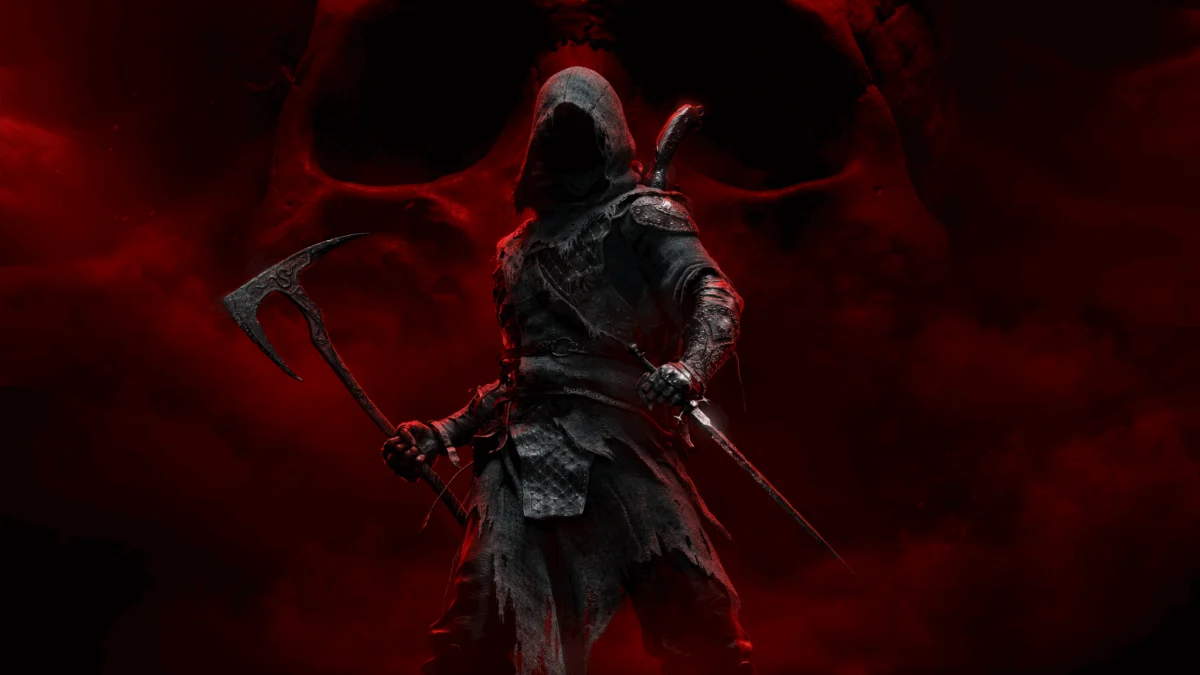
Mortal Shell II arrives as a comprehensive expansion and refinement of the concepts introduced in its 2020 predecessor, establishing itself as a significant entry in the increasingly crowded soulslike market. Developed by Cold Symmetry, the sequel seeks to address the criticisms of the original title—which was often noted for its deliberate but sometimes sluggish pacing—by introducing a more frenetic combat system, a larger world, and a significantly deeper narrative framework. Set in a desolate, surrealist landscape, the game tasks players with navigating a world shaped by cosmic horror and biological decay. The narrative centers on an interdimensional deity known as the UnderMether, whose physical manifestation has been corrupted by a parasitic entity. Players assume the role of the Harbinger, a faceless, sexless vessel capable of inhabiting the remains of fallen warriors, to recover stolen biological components known as "Ova" and cleanse the world of its infectious blight.

Narrative Framework and World-Building
The lore of Mortal Shell II builds directly upon the foundation of the first game while pivoting toward a more explicit cosmic horror aesthetic. The story begins with the Harbinger’s emergence, an event witnessed and worshipped by a remnant of "commonfolk" who view the protagonist as a divine Godling. This vessel, devoid of a mouth or inherent purpose, serves as a blank slate for the player, emphasizing the game’s focus on the "Shells"—the physical bodies of deceased heroes that provide the player with distinct combat styles and backstories.

The central conflict involves the UnderMether, a goddess who crashed onto the planet’s surface, leading to the rise of various religious sects devoted to her remains. The primary objective is the recovery of her eggs, which have been hoarded by powerful entities across the land. This quest is complicated by the presence of the "Unwanted Passenger," a parasitic force attached to the goddess that serves as the secondary antagonist. Unlike many contemporary titles that rely on heavy exposition, Mortal Shell II utilizes environmental storytelling and brief, cryptic dialogues to convey its themes of birth, decay, and the search for existential meaning in a dying world.

The Shell System and Character Progression
The defining mechanic of the franchise remains the Shell system, which has been significantly expanded for the sequel. Throughout the desolate country, players discover the remains of various characters, each offering a unique set of hidden statistics for Health, Resolve (the game’s equivalent of mana), and Stamina.

One of the early unlockable shells is a thief archetype, specializing in stealth and high-critical-damage thrust attacks. In contrast, a later-game shell features a knight focused on heavy armor and physical displacement, including a shoulder-charge ability that can disrupt enemy formations. Another prominent shell, a huntress named Proxima, has gained attention for its distinct visual design and high-mobility playstyle.

Character progression is managed through two primary currencies: Gloom and Tarstones.

- Gloom: Functioning similarly to "Souls" in FromSoftware titles, Gloom is earned by defeating enemies and is spent to upgrade the Harbinger’s base stats and shell-specific abilities.
- Tarstones: These items serve as the primary method for character building, offering a mixture of passive buffs and active abilities. Tarstones can be slotted into weapons and equipment to provide elemental affinities, increased damage for ranged attacks, or defensive bonuses.
- Shell Points: A new addition to the sequel, Shell Points are earned periodically and can be used to unlock passive traits unique to each shell. Notably, these points can be refunded at any time, allowing players to experiment with different builds without the penalty of a permanent commitment.
Combat Mechanics and Innovations
The combat in Mortal Shell II represents a marked departure from the original’s slower, more methodical pace. The sequel emphasizes speed and aggression, drawing comparisons to titles such as Lies of P and Black Myth: Wukong. The fundamental controls follow the standard soulslike layout—quick attacks on the right bumper and heavy attacks on the right trigger—but the defensive options provide the game’s unique mechanical identity.

The "Hardening" ability, a standout feature from the first game, returns as the cornerstone of the defensive toolkit. By activating the ability just before an enemy strike connects, the player can turn their skin to stone, negating damage and instantly refilling the stamina meter. Successful timing allows for "chain hardening," where a player can block multiple consecutive attacks while maintaining an offensive stance. Furthermore, the game features a poise-break system; once an enemy’s poise is depleted, players can execute high-damage canned animations that serve as both a mechanical reward and a visual spectacle.

The game’s economy also includes limited resources for weapon upgrades, forcing players to be selective about their gear. While the initial sword is viable, the game encourages the discovery of various hidden weapon types, ranging from heavy hammers to specialized ranged armaments.

Level Design and Technical Performance
Mortal Shell II is built on Unreal Engine 5, utilizing the engine’s advanced lighting and geometry capabilities to create a hauntingly beautiful environment. The world is geographically divided into two primary regions: the North and the South.

- The North: This region serves as the introductory area, characterized by a more traditional soulslike difficulty curve. It features a variety of environments and enemy counts that allow players to familiarize themselves with the core mechanics.
- The South: Representing the game’s "endgame" content, the Southern region features a significant spike in difficulty. Enemies in this area are capable of dealing massive damage, often requiring a mastery of the parry and hardening systems to survive.
The world is further populated by "Chaos Gates" and dungeons. Beacons, which serve as fast-travel points and "bonfires," often require cleansing through small, gimmick-based dungeons. While the overall map is large, the developer has opted for a segmented approach rather than a seamless open world, ensuring that each area feels distinct and intentionally designed.

On the technical front, the PC version of Mortal Shell II demonstrates high levels of optimization. Utilizing high-end hardware, such as the NVIDIA GeForce RTX 5080, the game is capable of maintaining frame rates exceeding 100 FPS at 4K resolution with Max settings and DLSS (Quality mode) enabled. The animations are fluid and legible, a critical requirement for a game focused on precision timing and parrying.

Broader Impact and Genre Standing
The release of Mortal Shell II occurs during a period of significant growth for the soulslike genre. By moving away from the "decent-at-best" reputation of the original and embracing a more polished, faster-paced identity, Cold Symmetry has positioned itself as a serious competitor to larger studios.

Comparative Analysis:

- Difficulty: While the game is difficult by default, the flexibility of the Shell Point system and the power of the Hardening mechanic provide players with more tools to overcome challenges than the original game offered.
- Variety: The inclusion of New Game Plus and the refundability of Shell Points suggest a focus on longevity and replayability, addressing the "one-and-done" nature of some smaller soulslike titles.
- Atmosphere: The game maintains a unique aesthetic niche, blending biological horror with cosmic themes that differentiate it from the gothic or mythological settings common in the genre.
Official responses from early adopters and critics suggest that the game’s "glow-up" is substantial. The decision to provide review code early to PC outlets indicates a high level of confidence in the game’s stability and performance. Although console performance data remains pending, the PC launch sets a high bar for the title’s technical reputation.

Conclusion and Future Implications
Mortal Shell II succeeds as a sequel by identifying the strengths of its predecessor and amplifying them while ruthlessly trimming the elements that did not work. The result is a game that feels both familiar to fans of the original and welcoming to veterans of the broader soulslike genre. With its refined combat, deep customization via Tarstones, and a world that leverages the full power of Unreal Engine 5, Mortal Shell II stands as a testament to the evolution of indie-to-mid-tier game development. As the industry continues to iterate on the formula established by FromSoftware, Mortal Shell II proves that there is still plenty of room for innovation within the shadows of the giants.