


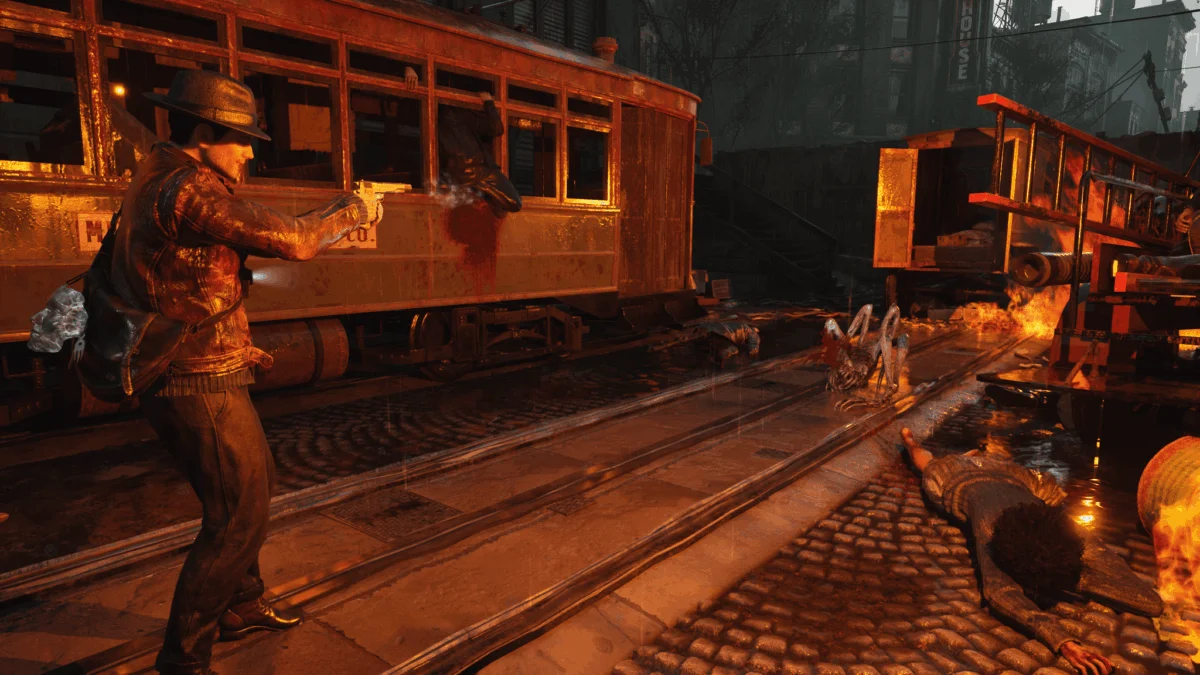
The Sinking City 2 represents a significant evolution for the Ukrainian-Irish development studio Frogwares, marking a definitive shift from the investigative adventure roots of its predecessor toward a structured survival horror experience. Following a tumultuous seven-year development cycle defined by legal disputes, a global pandemic, and the ongoing geopolitical crisis in Ukraine, the title has emerged as a standalone sequel that redefines the franchise’s mechanical identity. While the 2019 original attempted to blend open-world exploration with the studio’s established Sherlock Holmes detective mechanics, the sequel prioritizes tight resource management, visceral combat, and atmospheric dread, positioning itself within the competitive landscape of modern survival horror masterpieces.

The Evolution of Frogwares and the Path to Arkham
The journey toward the release of The Sinking City 2 is inextricably linked to the resilience of its development team. Frogwares, a studio primarily known for its long-running Adventures of Sherlock Holmes series, first ventured into the Lovecraftian mythos in 2019. However, the release of the first game was marred by a high-profile legal battle with its former publisher, Nacon (formerly Bigben Interactive), regarding licensing and distribution rights. This dispute led to the game being delisted from various digital storefronts for extended periods, creating a precarious financial situation for the independent developer.

The development of the sequel, which began in earnest following the resolution of these legal hurdles, was further complicated by the Russian invasion of Ukraine in 2022. Based in Kyiv, the Frogwares team faced unprecedented challenges, including staff displacement, power grid failures, and the mobilization of employees into the armed forces. According to data provided by the studio at the game’s launch, the development period between 2023 and 2026 saw 14 staff members drafted into military service, 17 homes of employees damaged by conflict, and the team enduring over 85,000 air raid sirens. Despite these conditions, a successful Kickstarter campaign provided the final injection of capital necessary to bring the project to fruition.

Narrative Framework: A New Vision of Cosmic Horror
Set in 1929, The Sinking City 2 relocates the action to Arkham, Massachusetts, a city synonymous with the literary works of H.P. Lovecraft. Unlike the first game, which featured private investigator Charles Reed, the sequel introduces a new protagonist, Calvin Rafferty. Rafferty is characterized as a charming occult adventurer, a departure from the somber tone of previous Frogwares leads. The narrative follows Rafferty’s arrival in a mysteriously flooded Arkham as he attempts to rescue his lover, Faye Bennett, from a supernatural "waking sleep."

The flood has brought with it an eldritch phenomenon known as "the Slither," a corruptive force that has manifested monsters and reality-warping horrors throughout the city. The game’s structure is notably more linear than its predecessor, offering a focused 15-hour campaign. This narrative tightening allows for a more cohesive exploration of the relationship between Calvin and Faye, supported by professional voice acting that avoids the "quippy" dialogue common in contemporary action titles. While the game utilizes Lovecraftian themes, it chooses to focus on the "unknowable horror" aspect of the mythos, intentionally sidestepping the controversial social and racial ideologies associated with Lovecraft’s personal history—a topic the first game attempted to address with varying degrees of success.

Mechanical Pivot: From Investigation to Survival Horror
The most significant change in The Sinking City 2 is its genre shift. Frogwares has moved away from the "open-city" detective model to a "semi-open" survival horror structure heavily influenced by modern benchmarks such as the 2019 Resident Evil 2 remake. This transition was a strategic decision by the studio to create a more commercially viable product while leveraging the strengths of the Unreal Engine 5.

The gameplay loop is built upon four pillars: exploration, resource management, puzzle-solving, and combat. The sprawling, often empty streets of the first game have been replaced by four distinct, densely designed environments that act as "puzzle boxes." Players must navigate flooded districts via boat and on foot, discovering shortcuts and utilizing keys—both literal and metaphorical—to progress.

The combat system has undergone a total overhaul. Utilizing an over-the-shoulder perspective, the game emphasizes precision and tactical movement. The arsenal includes:

- Standard Pistol: The primary tool for managing low-level threats, featuring a unique timing mechanic to boost damage.
- Shotgun: A high-impact close-quarters weapon that can be upgraded with an axe attachment for melee utility.
- SMG and Rifle: Sustained fire and long-range options for larger encounters.
- Grenade Launcher: An endgame explosive tool for boss encounters.
Resource scarcity is a defining feature, particularly on higher difficulty settings. Players are frequently forced to choose between engaging enemies or using the protagonist’s dodge ability to conserve ammunition and healing items. The enemy variety has also been expanded, featuring the "Harvesters"—highly agile, spider-like creatures—and evolving humanoid "Slither" monsters that develop ranged attacks and shielded weak points as the game progresses.

Technical Implementation and the Night Shade System
On the Xbox Series X, The Sinking City 2 offers two distinct graphical modes. The "Quality Mode" targets 30 frames per second (fps) with enhanced lighting, water reflections, and weather effects, utilizing the full suite of Unreal Engine 5 features to depict the decaying glamour of 1920s Arkham. The "Performance Mode" provides a stable 60fps experience at the cost of some texture resolution and a slight "shimmer" effect on character models.

A central gameplay innovation is the "Night Shade" mask. This mystical artifact serves as both a narrative device and a customizable RPG system. By collecting "Dream Essence"—primarily through solving environmental puzzles and connecting clues—players can unlock perks that modify Calvin’s abilities. These include:

- Offensive Boosts: Increased melee damage and faster reload speeds.
- Defensive Perks: Enhanced healing efficiency and increased invulnerability frames during dodges.
- Utility Enhancements: Improved crafting yields and expanded inventory space.
The "Mind Palace" mechanic from previous Frogwares games returns in a streamlined form. Rather than reconstruct entire crime scenes, players now use a clue board to organize information found in documents. This board serves as the primary method for generating Dream Essence, rewarding players for engaging with the world’s lore without slowing the pace of the survival horror action.

Post-Game Content and Replayability
Recognizing the conventions of the survival horror genre, Frogwares has integrated a robust ranking and reward system. Upon completion of the initial campaign, players are graded based on their speed, accuracy, and resource usage. This unlocks "Eldritch Fears"—a series of challenges designed for veteran players.

Additional post-game features include:

- Ex Oblivione Mode: A narrative-focused replay option that introduces new documents and lore entries, providing deeper context into the origins of the flood and the Slither.
- Point-Based Shop: Points accrued during the campaign can be spent on infinite ammunition, early weapon unlocks, and cosmetic outfits.
- Advanced Perks: New, high-tier Night Shade abilities that are only accessible in New Game Plus, allowing for a more action-oriented playstyle.
This focus on replayability is intended to provide value at a $49.99 price point, positioning the title as a more accessible alternative to $70 AAA releases while maintaining a similar level of mechanical depth and visual fidelity.

Industry Impact and Conclusion
The release of The Sinking City 2 is a landmark moment for independent game development. It demonstrates the ability of a mid-sized studio to successfully pivot genres in response to market demands while maintaining its creative voice. The transition from a niche detective simulator to a polished survival horror title suggests a new trajectory for Frogwares, one that balances their history of cerebral storytelling with the visceral engagement required by a broader audience.

The broader implications for the industry are notable. The Sinking City 2 serves as a case study in "AA" development—games that occupy the space between small indie projects and massive corporate blockbusters. By focusing on a 15-hour, high-quality experience rather than an overextended open world, Frogwares has managed to deliver a product that rivals the polish of major studio remakes.

Ultimately, the game stands as a testament to the resilience of the Ukrainian creative industry. Despite the "real-world horror" that surrounded its production, the final product is an exceptional entry in the survival horror genre. It successfully marries Lovecraftian atmosphere with modern gameplay sensibilities, ensuring its place as a significant achievement in the 2026 gaming landscape. Through its improved combat, thoughtful environmental design, and innovative customization systems, The Sinking City 2 transcends its troubled development history to become a definitive example of the genre’s potential.