


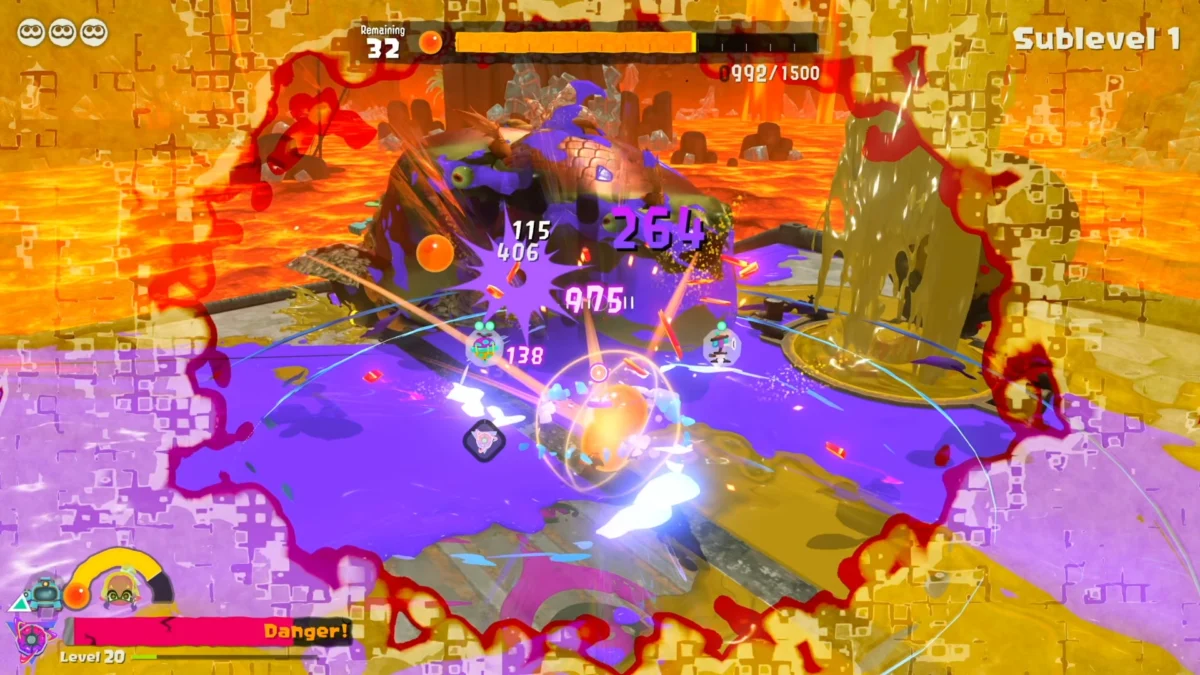
Nintendo has officially expanded its flagship ink-based shooter franchise with the release of Splatoon Raiders, a title that marks a significant departure from the series’ traditional focus on competitive Turf War matches. Developed as a dedicated cooperative looter-shooter, Splatoon Raiders leverages the advanced hardware capabilities of the Nintendo Switch 2 to deliver a high-fidelity Player vs. Environment (PvE) experience. This new entry builds upon the foundational mechanics of the "Salmon Run" mode introduced in previous installments, transforming what was once a secondary mini-game into a robust, standalone narrative and mechanical ecosystem. By integrating deep customization systems, base-building elements, and an expanded lore that leans into the series’ darker undertones, Nintendo aims to capture a segment of the market currently occupied by titles such as Warframe and Destiny 2, while maintaining the unique aesthetic identity that has defined the Splatoon IP since its 2015 debut.

Narrative Premise and Atmospheric Shift
Splatoon Raiders places players in the role of "The Mechanic," a specialized operative tasked with supporting the popular Splatoon 3 idol group, Deep Cut. Composed of members Shiver, Frye, and Big Man, the trio leads an expedition into a mysterious, perpetual storm located in an uncharted region of the ink-world. The primary objective involves uncovering the origin of this meteorological anomaly while simultaneously engaging in high-stakes treasure hunting.
The narrative tone of Splatoon Raiders represents a calculated shift toward environmental storytelling and atmospheric horror. While the franchise has long hidden "creepy" lore within collectible logs, Raiders brings these elements to the forefront. The game world is characterized by islands devoid of civilian life, where the primary objective is the extraction of Salmonid relics and Power Eggs—literal unhatched offspring used to fuel the player’s technology. This thematic weight is bolstered by a soundtrack described as a dissonant blend of distorted radio broadcasts and processed vocalizations, creating a sense of unease that contrasts sharply with the vibrant colors of the ink gameplay.

Core Mechanics and the Movement System
The gameplay of Splatoon Raiders remains rooted in the franchise’s signature dual-stance movement system. Players navigate the environment in "Kid Mode" to engage in combat and "Squid Mode" to facilitate rapid movement and resource recovery. Holding the ZL button allows the player to submerge into their own ink color, which serves as the primary method for reloading ink meters and sprinting across surfaces.
In a departure from the competitive "Turf War" logic, where inking territory is the primary win condition, Splatoon Raiders utilizes ink as a tool for environmental navigation and crowd control. Players must strategically ink paths through increasingly complex levels to maintain mobility against overwhelming numbers of Salmonids. The "muscle memory" developed in previous Splatoon titles is essential here, as the density of enemies often necessitates rapid transitions between attacking and submerged movement to avoid being cornered.

Gameplay Loop and Objective Variety
The primary progression in Splatoon Raiders is driven by "Raids," which are short-form missions typically lasting approximately five minutes. These missions are categorized into three main objective types:
- Extraction: Navigating from the start of a level to a designated end point while surviving waves of enemies.
- Extermination: Defeating specific quotas of Salmonids to harvest Power Eggs.
- Timed Boss Raids: Engaging a mini-boss at the conclusion of a stage within a strict time limit.
In addition to standard missions, the game introduces "Sampler Dungeons." These are unlocked by discovering hidden compasses throughout the world and function as specialized challenge rooms. Unlike the combat-heavy raids, Sampler Dungeons focus on the game’s physics and movement mechanics, requiring players to solve platforming puzzles and demonstrate mastery over the squid-jump and ink-climbing systems.

Customization, Crafting, and the Hub World
A central feature of the Splatoon Raiders experience is the "Raft Island," a modular hub world that serves as the player’s base of operations. This island evolves as the player progresses, physically expanding and offering new facilities. The base-building component allows players to:
- Upgrade Weaponry: Enhance the stats of found weapons or scrap them for raw currency.
- Gadget Fabrication: Create and modify sub-weapons and secondary tools.
- Stat Progression: Independently upgrade the player’s "Squid" attributes, such as ink efficiency and movement speed, separate from the character’s overall level.
The looting system introduces weapon rarities and modular components. Weapons dropped by enemies or found in treasure chests at the end of raids can be fitted with powerful modifiers. A significant addition to the loadout system is the inclusion of three distinct "Ink Tanks." Each tank provides a different set of gadgets designed to manage the "zerg rush" tactics employed by the Salmonid hordes. This level of granular customization provides a tactical depth previously unseen in the series, forcing players to adapt their gear to specific environmental challenges, such as the notoriously difficult "Awlmun" stages.

Technical Performance and Enemy Diversity
Splatoon Raiders showcases the technical leap afforded by the Nintendo Switch 2. The game manages significantly higher enemy counts than its predecessors, with Salmonid types ranging from small, fast-moving swarms to massive "tank" variants that require coordinated team fire to dismantle. The AI behavior is designed to pressure players into using the full extent of their toolkit, including the "Showstopper" abilities provided by the Deep Cut idols. These NPCs offer periodic support, such as jump boosts and massive area-of-effect (AoE) attacks, which are critical for surviving high-intensity encounters.
However, the game is not without technical and design hurdles. Despite the high-intensity combat, some players have noted a lack of mission variety during the mid-game "Crystal Mining" levels. These stages often require players to sweep small maps repeatedly, leading to a sense of repetition that can stall the narrative momentum. Furthermore, the absence of a "restart" function within missions has been identified as a significant quality-of-life oversight, requiring players to return to the hub world manually if they wish to retry a specific challenge.

Broader Impact and Industry Implications
The release of Splatoon Raiders is a strategic move for Nintendo, signaling a willingness to evolve its internal IPs into new genres. By entering the looter-shooter space, Nintendo is competing directly with established live-service giants. The success of this transition relies on the "Splatoon" brand’s ability to offer a mechanically distinct alternative to traditional gritty shooters.
Industry analysts suggest that Splatoon Raiders could serve as a blueprint for future Nintendo "Plus" titles—standalone expansions that take core mechanics from existing franchises and apply them to different gameplay loops. The focus on cooperative PvE also addresses a long-standing demand from the Splatoon community for more content that does not rely on the stresses of ranked competitive play.

Chronology of Development and Release
The path to Splatoon Raiders began with the success of the "Salmon Run Next Wave" mode in Splatoon 3. Following positive player feedback regarding the cooperative mechanics, Nintendo’s EPD (Entertainment Planning & Development) Division began prototyping a standalone project that focused entirely on the Salmonid conflict.
- August 2024: Internal development shifted toward a Switch 2 launch-window title.
- June 2025: The first teaser for "Project Raids" was shown during a Nintendo Direct, highlighting the return of Deep Cut.
- August 2026: Splatoon Raiders officially launched as a key title for the Nintendo Switch 2, receiving praise for its combat fluidity while facing minor criticism for its mission structure.
Final Assessment of the Raider Experience
Splatoon Raiders successfully translates the frantic, ink-splattering action of the main series into a rewarding cooperative experience. While it suffers from some of the grind-heavy tropes common to the looter-shooter genre, the core combat remains exceptionally tight. The integration of the Deep Cut idols into the gameplay loop provides a layer of charm that offsets the game’s more unsettling atmospheric choices. For players seeking an alternative to the competitive intensity of Turf War, or those looking for a deep, customizable shooter on the Nintendo Switch 2, Splatoon Raiders offers a compelling and uniquely stylized journey into the heart of the ink-storm. As Nintendo continues to patch the experience and potentially add a much-requested restart function, the title is poised to become a staple of the platform’s library.