


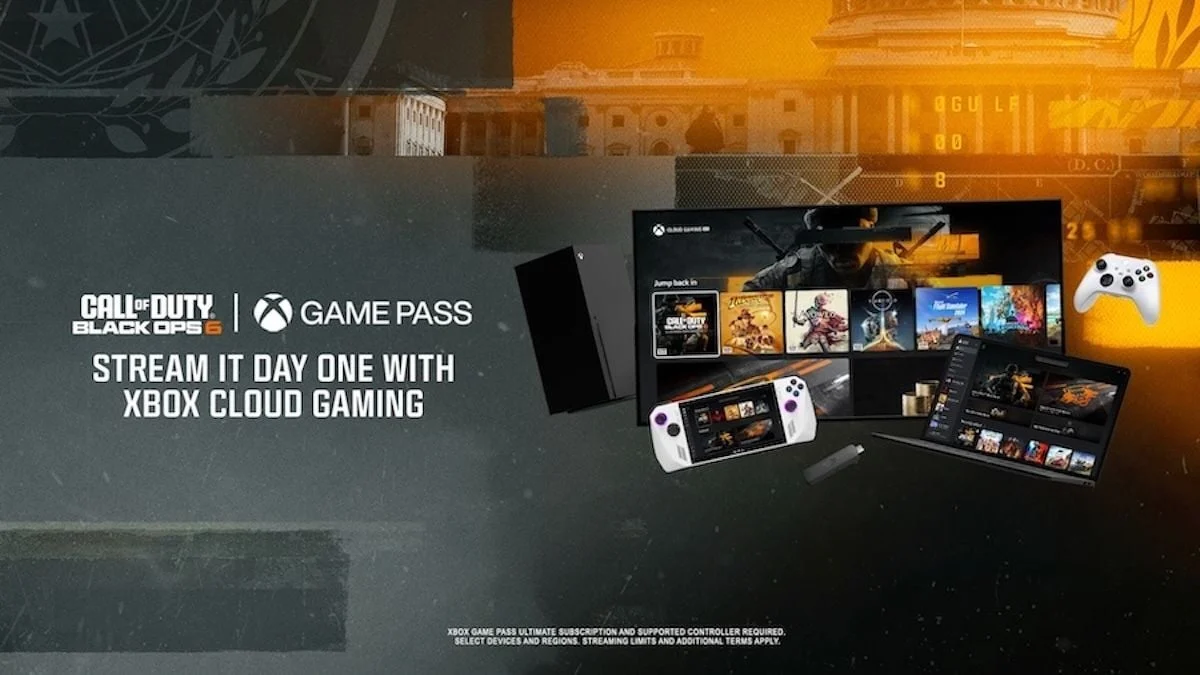
Microsoft has officially confirmed that Call of Duty: Black Ops 6 will be available on Xbox Cloud Gaming (Beta) for Game Pass Ultimate members from its launch day, October 25, 2024. This significant announcement expands the accessibility of the highly anticipated title, building upon the prior revelation that Black Ops 6 would be a Day One release across select Xbox Game Pass membership options for console and PC players. The move underscores Microsoft’s strategic vision for its gaming ecosystem, emphasizing player choice and broad access to premium titles through its subscription service.
The confirmation, detailed in an Xbox Wire blog post, specifies that the rollout for Call of Duty: Black Ops 6 on Xbox Cloud Gaming will commence at 10:00 a.m. PT on October 25. In a further enhancement to the cloud gaming library, Microsoft also announced that Call of Duty: Warzone, the immensely popular free-to-play battle royale experience, and last year’s premium installment, Call of Duty: Modern Warfare III, will join the Xbox Cloud Gaming service on the very same day. This comprehensive integration of the franchise into Microsoft’s cloud platform signals a pivotal moment for the Call of Duty brand and the broader gaming industry.
A Historic Acquisition: The Road to Activision Blizzard Integration
The journey of Call of Duty to Xbox Game Pass and subsequently to Cloud Gaming is inextricably linked to Microsoft’s colossal acquisition of Activision Blizzard. Announced in January 2022, the $69 billion deal represented the largest acquisition in the history of the video game industry, aiming to bolster Microsoft’s position in the rapidly evolving global gaming market. The acquisition, however, faced unprecedented scrutiny from regulatory bodies worldwide, including the U.S. Federal Trade Commission (FTC), the UK’s Competition and Markets Authority (CMA), and the European Commission.
Central to the regulatory concerns was the potential for Microsoft to make Call of Duty exclusive to Xbox platforms, thereby stifling competition. Call of Duty, a multi-billion-dollar franchise with a massive, dedicated player base across PlayStation, Xbox, and PC, was deemed a "must-have" title by regulators. Microsoft, under the leadership of Xbox head Phil Spencer, repeatedly pledged to maintain Call of Duty‘s multiplatform availability, even signing 10-year agreements with competitors like Nintendo and NVIDIA to bring the series to their respective platforms and cloud services.
After protracted negotiations, legal battles, and a significant restructuring of the deal’s cloud streaming rights in the UK (which saw these rights divested to Ubisoft for a period), the acquisition finally received all necessary approvals in October 2023. This landmark event not only brought a vast catalog of iconic franchises like Warcraft, Diablo, Candy Crush, and Call of Duty under the Xbox umbrella but also set the stage for their integration into Microsoft’s Game Pass ecosystem. The inclusion of Black Ops 6 as a Day One Game Pass title, followed swiftly by its cloud availability, represents the most significant manifestation of this integration to date.
Xbox Game Pass: A Pillar of Microsoft’s Gaming Strategy
Since its launch in 2017, Xbox Game Pass has evolved into a cornerstone of Microsoft’s gaming strategy, offering subscribers access to a rotating library of hundreds of games for a monthly fee. The service has consistently grown, reportedly boasting over 30 million subscribers by early 2024, encompassing various tiers including Game Pass Core, PC Game Pass, Xbox Game Pass for Console, and the premium Game Pass Ultimate.
Game Pass Ultimate, which includes all the benefits of the other tiers plus Xbox Live Gold, EA Play, and crucially, Xbox Cloud Gaming (Beta), represents the pinnacle of Microsoft’s subscription offering. The addition of first-party titles on their release day has been a key differentiator for Game Pass, providing immense value to subscribers. Historically, major titles from Xbox Game Studios and Bethesda have launched directly into the service, driving subscriptions and expanding the player base for these games.
The introduction of Call of Duty: Black Ops 6 as a Day One title on Game Pass, and particularly on Cloud Gaming, is a strategic masterstroke designed to further enhance the value proposition of Game Pass Ultimate. It signals Microsoft’s commitment to leveraging its newly acquired intellectual property to attract and retain subscribers, directly competing with rival services like Sony’s PlayStation Plus and other standalone cloud gaming platforms.
The Strategic Significance of Call of Duty on Cloud
The decision to bring Black Ops 6, Warzone, and Modern Warfare III to Xbox Cloud Gaming simultaneously on October 25 carries immense strategic weight. For years, Call of Duty has been synonymous with high-fidelity, fast-paced action, demanding precise controls and low latency. Making such a demanding title playable via cloud streaming addresses several key objectives for Microsoft:
-
Expanded Accessibility: Cloud gaming removes the barrier of requiring expensive dedicated gaming hardware. Players with compatible devices—be it a smartphone, tablet, laptop, or even a low-spec PC—and a stable internet connection can now experience Call of Duty. This democratizes access, potentially introducing the franchise to millions of new players globally who might not own an Xbox console or a high-end gaming PC. The ability to play Black Ops 6 on a phone, as highlighted in the original announcement, is particularly transformative for the franchise’s reach.
-
Subscriber Acquisition and Retention: The availability of Call of Duty Day One on Game Pass Ultimate, especially via cloud, is a potent incentive for new subscriptions and a strong argument for existing members to maintain their highest-tier membership. Call of Duty‘s immense popularity guarantees significant interest, and its presence on cloud gaming makes Game Pass Ultimate an even more compelling offering.
-
Showcasing Cloud Gaming Capability: Streaming a fast-action, competitive shooter like Call of Duty is a formidable technical challenge. Success in delivering a smooth, responsive experience will serve as a powerful testament to the maturity and robustness of Xbox Cloud Gaming’s infrastructure. It demonstrates Microsoft’s confidence in its streaming technology and its ability to handle high-demand, latency-sensitive games.
-
Competitive Advantage: While other cloud gaming services exist, none currently offer Call of Duty Day One as part of a comprehensive subscription service. This move gives Xbox Cloud Gaming a significant competitive edge, especially against platforms that might only offer Call of Duty through a "bring your own game" model or at an additional purchase cost.
Technical Underpinnings: The Promise and Challenges of Cloud Gaming
Xbox Cloud Gaming, currently in its beta phase, relies on a vast network of Microsoft Azure data centers equipped with custom Xbox Series X hardware. When a player initiates a game via the cloud, the game runs on these remote servers, and the video and audio are streamed to the player’s device, while their inputs are sent back to the server. This intricate dance of data transmission happens in milliseconds, aiming to replicate the feel of local gameplay.
For a title like Call of Duty, the technical demands are exceptionally high. The game’s competitive multiplayer modes require extremely low latency for inputs to register accurately and for visual feedback to be instantaneous. Factors such as internet bandwidth, network congestion, distance to the nearest Azure data center, and the efficiency of Microsoft’s streaming codecs all play critical roles in the player’s experience. While significant advancements have been made in cloud streaming technology, challenges persist, particularly for players in regions with less developed internet infrastructure or those experiencing high latency.
Microsoft’s decision to launch Call of Duty on cloud gaming implies that the company is confident in its ability to deliver a satisfactory experience for a substantial portion of its Game Pass Ultimate subscriber base. This launch will undoubtedly serve as a massive stress test for the cloud infrastructure, providing invaluable data and insights for future optimizations and expansions of the service. The performance of Black Ops 6 on cloud will be closely watched by industry analysts and players alike.
Player Accessibility and Market Expansion
The implications for player accessibility are profound. A significant portion of the global gaming population does not own a dedicated console or a high-end gaming PC. By bringing Call of Duty to the cloud, Microsoft effectively lowers the barrier to entry, allowing these players to engage with one of the world’s most popular franchises using devices they already own. This is particularly relevant for the mobile gaming market, which boasts billions of users. Playing a full-fidelity Call of Duty experience on a smartphone, streamed from the cloud, represents a powerful convergence of traditional and mobile gaming.
Furthermore, the simultaneous release of Modern Warfare III and Warzone on cloud gaming alongside Black Ops 6 offers players unprecedented choice and continuity. While some might opt for the latest installment, others might revisit older favorites or dive into the free-to-play Warzone without any upfront hardware investment. This strategy maximizes the reach of the Call of Duty ecosystem and caters to diverse player preferences. The mention of Modern Warfare III and the enduring appeal of maps like Favela and Rust, even with a successor launching, highlights the long-tail value Microsoft aims to extract from its acquired IP through Game Pass.
Economic Implications: Redefining Game Monetization
The move of Call of Duty to a subscription and cloud model has significant economic implications for both Microsoft and the wider gaming industry. Historically, Call of Duty titles have been premium, full-price releases, consistently topping sales charts annually. While Black Ops 6 will still be available for individual purchase, its Day One inclusion in Game Pass shifts a substantial portion of its potential player base towards a subscription model.
For Microsoft, this strategy aims to boost Game Pass subscriptions, particularly the higher-margin Ultimate tier. The revenue generated from these subscriptions, coupled with in-game purchases (microtransactions, battle passes, cosmetics) within Black Ops 6 and Warzone, could potentially offset any initial loss from direct game sales. The long-term value of a subscriber, often measured by Average Revenue Per User (ARPU) over their subscription lifetime, can exceed the one-time purchase price of a game.
For the gaming industry, this move by a major publisher with a flagship franchise like Call of Duty further validates the shift towards subscription-based access and cloud streaming as viable and increasingly dominant monetization models. It signals a potential future where access to games is primarily through services rather than individual purchases, pushing competitors to reassess their own strategies and potentially accelerate their investment in similar offerings. The ongoing success of Game Pass with Call of Duty could accelerate this industry-wide transformation.
Looking Ahead: The Future of Gaming with Cloud Integration
The launch of Call of Duty: Black Ops 6 on Xbox Cloud Gaming is more than just a new game release; it’s a statement of intent from Microsoft. It solidifies their vision of gaming as an accessible, device-agnostic experience powered by the cloud and delivered through a robust subscription service. This move comes at a time when the broader Game Pass service continues to add compelling content, with recent additions like Inscryption, Sifu, and MLB The Show 24 bolstering its already diverse library.
As cloud gaming technology continues to mature, and internet infrastructure improves globally, the ability to stream high-quality, graphically intensive games will only become more seamless. Microsoft is positioning itself at the forefront of this evolution, using its vast cloud computing resources and newly acquired intellectual property to shape the future of how players access and experience video games. The success of Call of Duty on the cloud will not only impact Microsoft’s bottom line but will also serve as a crucial benchmark for the viability and potential of cloud gaming for competitive, AAA titles, paving the way for a truly ubiquitous gaming experience.