


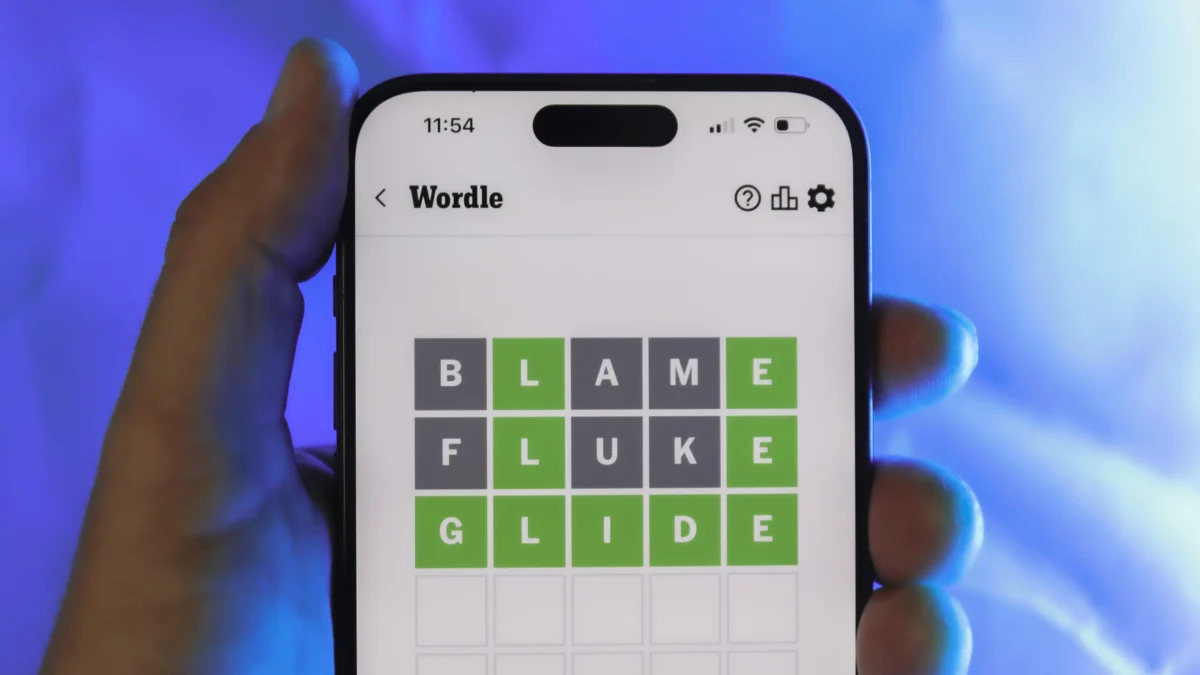
Today’s Wordle answer, GRAPE, presented players with a relatively straightforward linguistic challenge, featuring common letters and a widely recognized meaning, underscoring the game’s consistent ability to deliver accessible yet engaging daily mental exercise. The five-letter solution, a small, round berry often consumed fresh or utilized in winemaking, follows a pattern of answers that balance everyday familiarity with the strategic depth required to solve the puzzle within six attempts. This particular word, devoid of repeated letters and commencing with ‘G’ while concluding with ‘E’, offered a clear path for many enthusiasts, maintaining the game’s reputation for approachable fun while still demanding careful thought and vocabulary recall. The solution, which contained two vowels, fit neatly into the typical phonetic structure often observed in Wordle answers, guiding players who meticulously applied the game’s color-coded feedback system.
The Daily Wordle Phenomenon: A Brief Overview
Wordle, the global sensation that transformed daily word puzzles, operates on a simple premise: players have six attempts to guess a five-letter word. After each guess, the game provides feedback in the form of colored tiles: green for correct letters in the correct position, yellow for correct letters in the wrong position, and grey for letters not in the word at all. This intuitive feedback mechanism, combined with the singular daily puzzle, has cultivated a massive global following since its public launch. The game’s design fosters both individual problem-solving and a collective social experience, as players frequently share their results—represented by a distinctive grid of colored squares—on social media platforms without revealing the answer, thus preserving the challenge for others.
Unpacking Today’s Solution: GRAPE
For Wordle #1863, the solution GRAPE offered several key entry points for players. The provided hints were instrumental in narrowing down the possibilities:
- No Repeated Letters: This immediately eliminates a significant portion of the English lexicon, simplifying the search space. Many common five-letter words, such as "APPLE" or "ERROR," would be ruled out by this constraint.
- Two Vowels: With five letter slots, knowing there are precisely two vowels helps players structure their initial guesses. Common vowel pairings or distributions can be explored. In "GRAPE," the vowels ‘A’ and ‘E’ are distinct and contribute to its commonality.
- Starts with ‘G’: This powerful hint dramatically reduces the pool of potential words. Focusing on "G" words that fit the vowel and no-repeat criteria is a highly effective strategy.
- Ends with ‘E’: Combining the first and last letter hints (‘G’ and ‘E’) significantly constrains the possibilities, often leading to rapid breakthroughs. For "GRAPE," knowing the ‘G’ and ‘E’ positions leaves "R A P" to be determined in the middle.
- Meaning: "a small, round berry that can be eaten fresh or used in winemaking": This semantic hint is often the final piece of the puzzle for players who have narrowed down the letters but need a definitive confirmation or a nudge towards the exact word. It leverages common knowledge and makes the solution feel intuitively correct once revealed.
The interplay of these hints, moving from structural characteristics to specific letter placements and finally to semantic context, exemplifies the methodical approach Wordle encourages. The accessibility of the word "GRAPE" means that even without all the hints, many players might have stumbled upon it through good starting words or logical deduction.
A Timeline of Wordle’s Viral Ascent
Wordle’s journey from a private passion project to a global phenomenon is a compelling narrative in the landscape of digital entertainment:

- October 2021: Josh Wardle, a software engineer based in Brooklyn, New York, created Wordle for his partner, Palak Shah, who enjoyed word games. The initial version was shared privately with family and friends.
- November 2021: Wardle made the game publicly available online. It quickly began to gain traction through word-of-mouth.
- December 2021: The game experienced exponential growth, particularly after Wardle introduced the now-iconic share feature—the grid of green, yellow, and grey squares—which became a viral sensation on Twitter and other social media platforms. By the end of the month, millions were playing daily.
- January 2022: Wordle’s popularity skyrocketed, attracting tens of millions of daily players worldwide. Its simple, ad-free interface and single-daily-puzzle format resonated broadly.
- January 31, 2022: The New York Times Company announced its acquisition of Wordle from Josh Wardle for an undisclosed sum reported to be in the low seven figures. The acquisition was part of the Times’ strategy to expand its digital subscriber base, particularly through its Games section.
- February 2022 onwards: Wordle officially migrated to The New York Times website. While some players reported minor changes in the word list or user experience, its core appeal remained intact, continuing to draw millions of players daily and contributing significantly to the NYT’s digital engagement metrics.
The Psychology Behind Wordle’s Enduring Appeal
Wordle’s success can be attributed to several psychological and sociological factors that tap into fundamental human desires for challenge, connection, and routine.
- Optimal Difficulty: The game strikes a perfect balance between being challenging enough to be engaging but not so difficult as to be frustrating. Five-letter words are common enough to be guessable, and six attempts provide a reasonable margin for error. This "flow state" keeps players coming back.
- Daily Ritual: The single daily puzzle creates a unique sense of anticipation and ritual. It’s a small, manageable commitment that provides a satisfying mental break without demanding significant time. This daily habit formation is a powerful driver of engagement.
- Social Connection: The ability to share results without spoilers fosters a sense of community and friendly competition. Players compare scores, discuss strategies, and celebrate successes, transforming a solitary activity into a shared experience. This social validation is a key component of its virality.
- Cognitive Benefits: Engaging with Wordle offers tangible cognitive benefits, including vocabulary enhancement, pattern recognition, deductive reasoning, and strategic thinking. For many, it’s a fun way to keep their minds sharp.
- Accessibility and Simplicity: Wordle’s minimalist design, lack of ads (initially), and free-to-play model made it incredibly accessible. There are no complicated rules, tutorials, or in-app purchases, reducing barriers to entry.
- Sense of Accomplishment: Solving the Wordle provides a small but meaningful sense of accomplishment each day. This positive reinforcement encourages continued play.
Supporting Data and Impact
The New York Times reported that Wordle significantly boosted its digital subscriptions. In its Q1 2022 earnings call, the NYT noted that Wordle brought "tens of millions of new users" to the Times’ platforms, many of whom were new to its ecosystem. While specific subscriber numbers directly attributable to Wordle are often bundled with overall Games subscription growth, the company clearly views it as a major driver for engagement and conversion. Before the acquisition, Wordle was estimated to have over two million daily players and attracted over 30 million unique visitors to its original website. Post-acquisition, The New York Times Games app saw a substantial increase in downloads and active users.
The acquisition also highlighted a broader trend in media companies investing in casual gaming as a strategy for audience engagement and monetization beyond traditional news content. Wordle’s success demonstrated that simple, well-designed games could attract massive audiences and potentially convert them into subscribers for broader content offerings.
Statements and Reactions
Upon the acquisition, Josh Wardle expressed his delight, stating his desire for Wordle to "remain accessible to everyone" and expressing confidence in The New York Times to uphold the game’s values of simplicity and fun. He emphasized that the game was always meant to be a simple, ad-free pleasure.
The New York Times, for its part, released a statement highlighting Wordle as a valuable addition to its portfolio of word games, including its famous Crossword and Spelling Bee. Jonathan Knight, general manager for The New York Times Games, stated that the acquisition was part of a larger strategy to "deepen engagement" with subscribers and attract new ones. He noted that Wordle aligned perfectly with the Times’ mission of providing engaging and enriching content.
Player reactions to the acquisition were mixed. While many were happy that the game would continue under a reputable publisher, some expressed concerns about potential paywalls, changes to the game’s difficulty, or the loss of its independent spirit. However, The New York Times largely maintained Wordle’s original design and free access, assuaging many of these fears. The integration into the NYT ecosystem generally went smoothly, preserving the game’s core experience.

Broader Impact and Implications
Wordle’s impact extends beyond its immediate player base and financial transactions:
- Casual Gaming Landscape: Wordle spurred a renaissance in simple, web-based, daily puzzle games. Numerous clones and variations emerged, such as Quordle (guess four words simultaneously), Octordle (eight words), Heardle (guess a song), and many others, demonstrating the appetite for bite-sized, engaging digital entertainment. This trend underscored the market’s readiness for games that are quick to play, easy to understand, and shareable.
- Digital Culture and Social Media: The Wordle grid became an iconic piece of internet culture, a shorthand for intelligence, frustration, or triumph. It demonstrated the power of a simple, visual sharing mechanism to drive viral growth and foster community online. It also highlighted the role of Twitter and other platforms in amplifying cultural phenomena.
- News Media Diversification: For news organizations, Wordle’s success reinforced the value of diversifying content beyond traditional news. Engaging games and lifestyle content can attract new demographics and serve as gateways to broader subscriptions, proving that quality journalism can coexist and even thrive alongside lighter, recreational offerings.
- Mental Well-being: In a world often characterized by information overload and complex digital interactions, Wordle offers a refreshing escape. Its focused, low-stress engagement provides a brief moment of mental clarity and accomplishment, contributing positively to daily routines for millions.
Recent Wordle Answers and the Ongoing Challenge
The daily unveiling of Wordle solutions continues to be a point of discussion and strategy among players. The game’s creators meticulously curate a list of five-letter words, ensuring a diverse range of difficulties and letter combinations. Looking back at recent solutions provides a glimpse into this variety:
- Yesterday’s Wordle Answer (July 25, No. 1862): ALOHA – A culturally significant word, easy to spell but perhaps less common in everyday English vocabulary for some players, offering a different kind of challenge.
- July 24, No. 1861: PUTTY – A common material, with a tricky double ‘T’ that could trip up players if not guessed strategically.
- July 23, No. 1860: ORBIT – A scientific term, relatively common, with a good mix of vowels and consonants.
- July 22, No. 1859: LORRY – A British English term for a truck, which can sometimes pose a challenge for American players due to dialectal differences. This highlights the global nature of the game’s word list.
- July 21, No. 1858: SHILL – A word with specific connotations, and a double ‘L’ at the end.
These examples illustrate the careful curation of the Wordle dictionary, which includes both widely understood terms and words that might introduce a slight cultural or linguistic nuance, ensuring the game remains fresh and engaging day after day.
Conclusion
The solution of GRAPE for Wordle #1863 is more than just another daily answer; it is a microcosm of the larger phenomenon that Wordle represents. From its humble origins as a personal project to its acquisition by The New York Times and its enduring status as a global digital pastime, Wordle has demonstrated the profound appeal of simple, accessible, and socially engaging puzzles. Its success underscores the human desire for routine, mental stimulation, and community in the digital age, solidifying its place as a cultural touchstone and a testament to the power of well-designed interactive experiences. As millions continue to log in daily, the legacy of Wordle as a brief, bright spot in their day remains as strong as ever.