


Microsoft Rewards has evolved into one of the most sophisticated digital loyalty programs in the consumer technology sector, offering users a tangible way to offset the costs of gaming through ecosystem engagement. As of July 2026, the program has undergone a significant structural overhaul, transitioning from the long-standing Level 1 and Level 2 system to a more tiered Silver and Gold membership framework. While the era of effortlessly generating 20,000 points per month has largely concluded following the 2024 adjustments, dedicated users can still reliably accumulate approximately 10,000 points monthly. This volume of points translates to roughly $10 or £10 in Xbox credit, totaling an annual subsidy of $120—enough to cover the cost of two premium "AAA" titles or a substantial portion of an annual subscription service.
The 2026 update represents a strategic pivot for Microsoft, aiming to streamline the user experience while incentivizing consistent daily interaction across the Bing search engine, the Xbox mobile app, and the Game Pass library. However, the program remains subject to regional variations. While users in the United States and the United Kingdom often have access to the full suite of earning opportunities, participants in other territories may find a more condensed version of the rewards dashboard. Understanding the mechanics of the new Silver and Gold tiers is essential for maximizing one’s return on time invested.
The Evolution of Microsoft Rewards: A 2024–2026 Chronology
The trajectory of Microsoft Rewards over the last three years reflects a broader trend in the tech industry toward sustainable engagement metrics rather than raw user acquisition.
In early 2024, Microsoft began "nerfing" or reducing the point values of several high-yield activities. The "Daily Achievement" bonus, which once offered 50 points per day for any Xbox achievement, was replaced by more modest "Daily Play" goals. This shift was designed to move users away from "achievement hunting" toward sustained gameplay sessions.
By May 2026, Microsoft officially announced the transition to the Silver and Gold membership system. This overhaul was initially rolled out in European and Asian markets before making its way to North America. The new system emphasizes "Gold" status, which is achieved by maintaining a consistent daily streak of activities. Gold members unlock higher earning caps for Bing searches and exclusive access to "Weekly Console Bonuses," creating a tiered incentive structure that rewards the most loyal segments of the Xbox community.
Daily Task Architecture and Point Optimization
The core of the 10,000-point monthly goal rests on the completion of daily tasks. These activities are designed to take less than ten minutes in total but require daily consistency to maintain "Gold" status and streak bonuses.
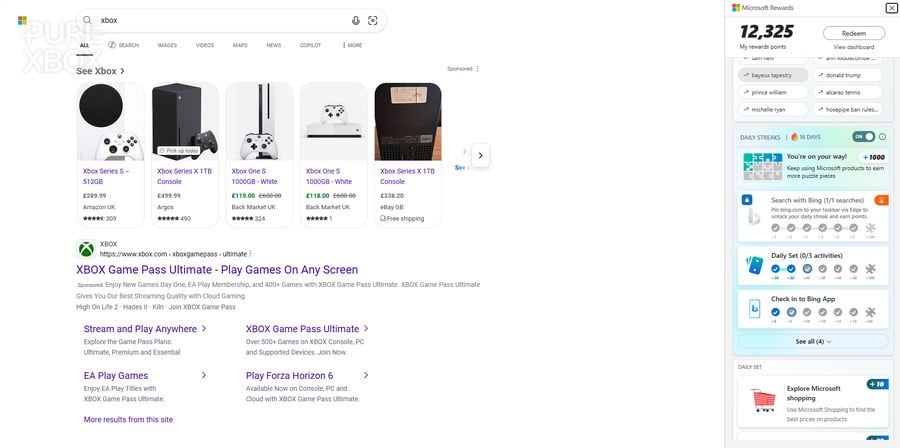
Bing Searches remain the primary engine for point generation. Under the Gold tier, users can earn up to 60 points daily through a combination of PC and mobile searches. Unlike previous iterations of the program where PC and mobile caps were separate, the 2026 system often merges these into a single pool, simplifying the tracking process for the user. Additionally, the "Explore on Bing" section provides an extra 10 points for specific curated searches, often highlighting trending news or educational topics.
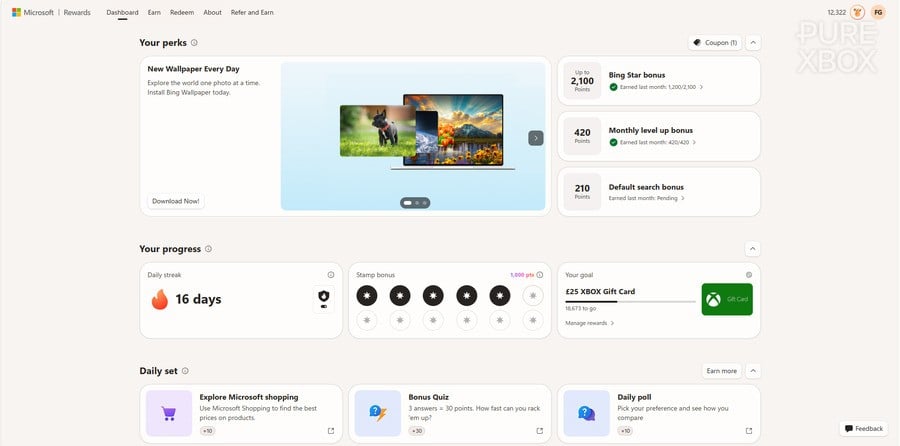
The "Daily Set," accessible via a web browser or the Microsoft Edge app on Xbox consoles, serves as the cornerstone of the streak system. Comprising a short quiz, a poll, and a featured link, the Daily Set provides a minimum of 30 points per day. Sustaining this streak triggers "Stamp Bonuses," which provide 1,000-point windfalls at regular intervals, significantly boosting the monthly total.
Gamers are also incentivized to engage with the Xbox Game Pass library. The "Daily Play" task requires a user to play any title within the Game Pass Premium or Ultimate library for at least 15 minutes. This earns 10 to 20 points depending on the user’s subscription tier. While 600 points a month from this activity may seem marginal, it ensures that the user is making progress toward larger weekly and monthly "Packs."
The Microsoft Bing mobile app has also been integrated more deeply into the rewards ecosystem. The "Daily Check-In" feature offers a escalating point reward over a seven-day cycle, often totaling 100 points per week. Complementing this is the "Read to Earn" feature, which grants 3 points for every news article read on the app, up to a maximum of 30 points daily.
Weekly and Monthly Milestones
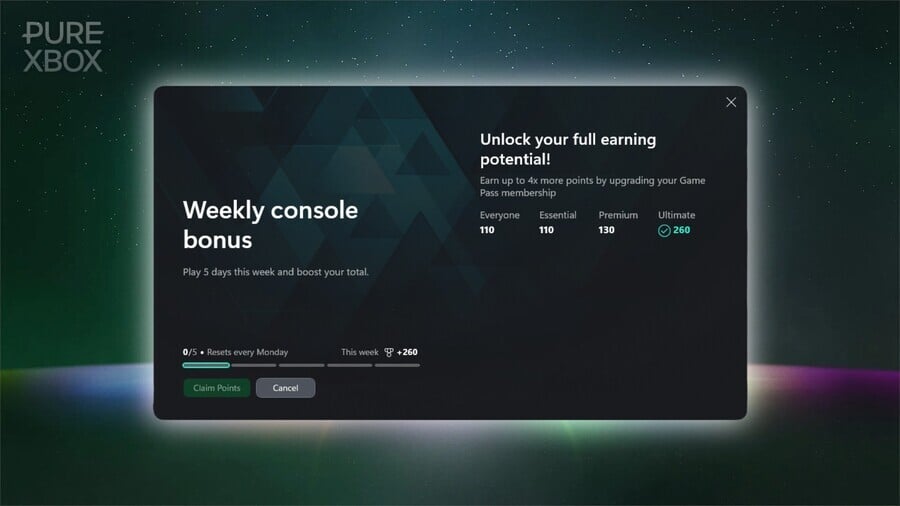
Beyond the daily grind, Microsoft Rewards utilizes weekly and monthly "streaks" to keep users within the ecosystem. The "Weekly Console Bonus" is perhaps the most lucrative of these. By playing games for five consecutive days within a week, Game Pass Ultimate members can earn up to 260 points. This is mirrored by a "Weekly PC Bonus" for those who engage with the Xbox app on Windows, offering a similar point structure.
The Game Pass "Weekly Streaks" further incentivize commitment. Playing a Game Pass title for 15 minutes a day for five days a week unlocks a multiplier. In the first week, an Ultimate member earns 140 points, with this value increasing over a four-week cycle if the streak is maintained.
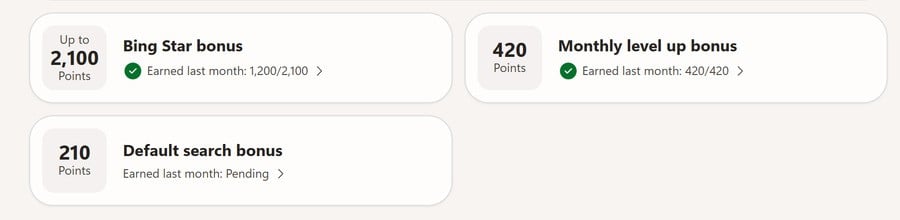
Monthly tasks are designed to reward deep engagement with the platform’s features. The "Bing Star Bonus" and "Monthly Level Up Bonus" are 2026 additions that act as a "dividend" for active users. The Star Bonus is calculated based on "natural search behavior," rewarding users who use Bing as their primary search engine without necessarily focusing on rewards-specific tasks. The Level Up Bonus is a flat reward granted to anyone who finishes the month at the Gold tier.
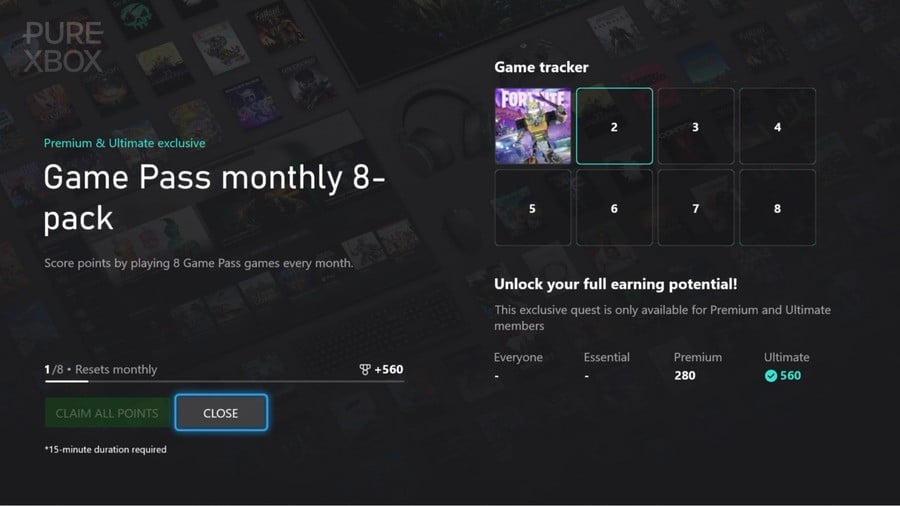
The "Game Pass Monthly 8-Pack" is the final major pillar. By playing eight different Game Pass titles for at least 15 minutes each throughout the month, Ultimate members receive 560 points. This encourages users to sample the diversity of the Game Pass library, benefiting both Microsoft and indie developers who gain increased visibility through these quests.
Supporting Data: The Value Proposition
To understand the impact of these rewards, one must look at the conversion data. In most regions, 5,000 Microsoft Rewards points are equivalent to a $5 gift card. By hitting the 10,000-point target, a user effectively receives a 100% ROI on their Game Pass subscription cost in some months, or at least a 50-60% subsidy on the Ultimate tier.
| Activity Type | Daily Points (Avg) | Monthly Total (Est) |
|---|---|---|
| Bing Searches (Gold) | 60 | 1,800 |
| Daily Set & Streaks | 50 | 1,500 |
| Read to Earn | 30 | 900 |
| Daily Game Play | 20 | 600 |
| Weekly Console/PC Bonuses | N/A | 1,400 |
| Monthly Game Pass Packs | N/A | 800 |
| Stamp Bonuses/Star Bonus | N/A | 3,000 |
| Total | 160+ | 10,000+ |
This data illustrates that while the daily rewards are small, the cumulative effect of bonuses and streaks accounts for nearly 50% of the monthly earnings.
Official Responses and Market Context
While Microsoft rarely comments on the specific algorithmic changes to point values, spokespeople have previously noted that the program is intended to "reward fans for doing what they love." Industry analysts suggest that the 2026 shift toward a tiered membership system is a response to the rising costs of digital customer retention. By moving toward a "Gold" tier that requires consistent search engine usage, Microsoft is leveraging the rewards program to gain market share for Bing in its ongoing competition with Google.
Furthermore, the integration of rewards into the Xbox mobile app is seen as a move to bolster Microsoft’s presence in the mobile gaming space. By requiring users to open the app for "Daily Check-Ins" and "Jewel" gameplay, Microsoft increases its mobile "Daily Active Users" (DAU) count, a key metric for investors and advertisers.
Broader Impact and Implications for the Gaming Industry
The Microsoft Rewards model has set a precedent that other platform holders are attempting to emulate. Sony’s "PlayStation Stars" and Nintendo’s "My Nintendo Gold Points" offer similar loyalty incentives, but neither matches the breadth of Microsoft’s ecosystem integration. The ability to earn points through non-gaming activities, such as searching the web or reading news, gives Microsoft a unique advantage in daily user habituation.
However, the program’s reliance on regional availability remains a point of contention. Users in "Tier 1" regions enjoy a significantly higher earning potential than those in emerging markets, creating a disparity in the "net cost" of gaming globally. As Microsoft continues to expand its cloud gaming initiatives, the alignment of rewards across all regions will be a critical factor in maintaining a fair and inclusive community.
For the individual gamer, the 10,000-point monthly target represents a balance between reward and effort. While the program no longer offers the "easy" 20,000 points of the early 2020s, it remains the most generous loyalty scheme in the interactive entertainment industry. By integrating these tasks into a daily routine, Xbox users can effectively navigate the rising costs of digital hobbies, ensuring that the "free-to-play" philosophy extends even to the most expensive premium titles.