


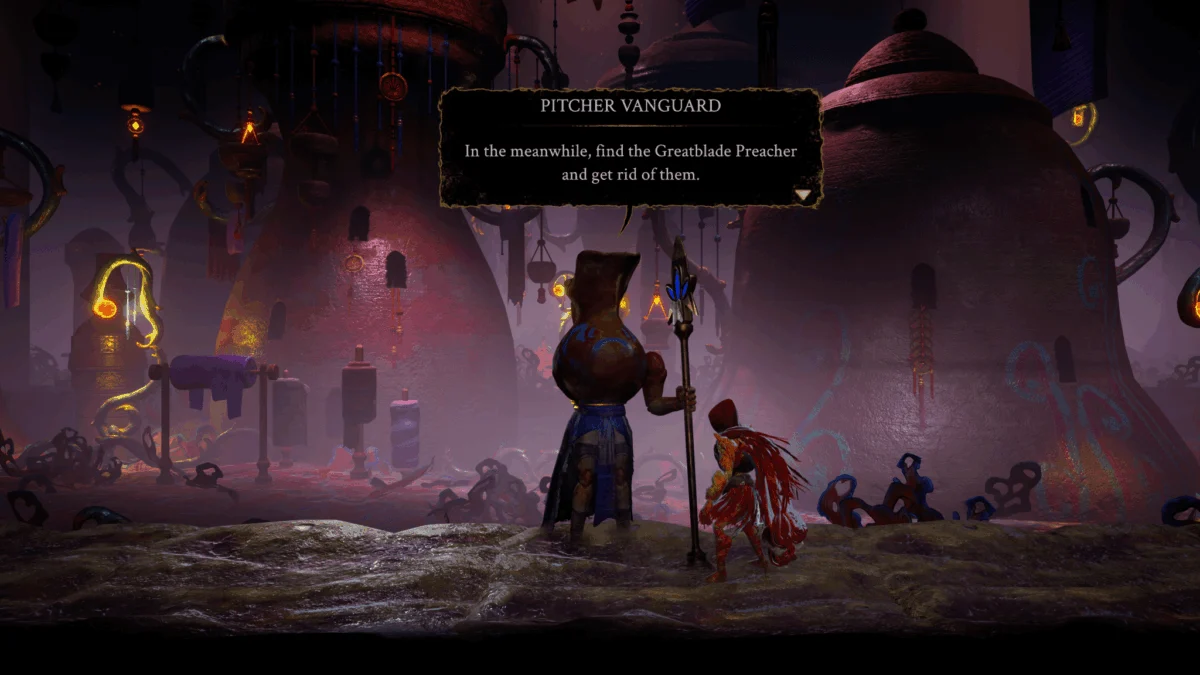
Following the critical success of the original 2021 release, developer Clover Bite has returned with Grime II, a sequel that significantly expands upon the surrealist "Soulsvania" foundation established by its predecessor. While the first title was recognized as a solid 15-hour entry into the genre, Grime II effectively doubles the scope of the experience, offering over 30 hours of core gameplay and an additional 10 hours of optional side content. This expansion is not merely quantitative; the sequel introduces a more vibrant aesthetic, refined combat mechanics, and a sophisticated narrative structure that delves deeper into its unique cosmic horror mythology.

The Evolution of the Grime Universe: From Stone to Canvas
The narrative and aesthetic transition between the two titles marks a shift in the series’ creative direction. Where the original Grime focused on a world of "rock and stone," emphasizing a brutal, monolithic atmosphere, Grime II introduces a world defined by "paint" and saturated color. The protagonist, referred to as a "hatchling," emerges from a cosmic slumber into a landscape that feels more purposefully constructed than the desolate corpse-world of the first game.
In the established lore of the Grime universe, the life force of all things is known as "Breath." The first game took place within the decaying remains of a fallen giant, but Grime II explores a world of active creation. Players encounter "smiths" who weave Breath into physical forms, suggesting a civilization that has endured through multiple cosmic cycles. This setting allows for a more diverse array of environments, ranging from emerald-hued monuments to industrial cities and toxic purple swamps, all rendered with high-fidelity effects via the Unity engine.

Chronology of Development and Release
The journey to Grime II followed a strategic path of post-launch support for the original game. Between 2021 and the announcement of the sequel, Clover Bite released several significant updates, including the "Colors of Rot" DLC, which served as a conceptual bridge to the sequel’s focus on vibrant decay and expanded combat options.
Grime II has been developed with a multi-platform launch strategy, targeting Steam, Xbox, and PlayStation consoles simultaneously. This stands in contrast to the original’s staggered release, reflecting the studio’s growth and the increased demand for the IP. Technical benchmarks for the sequel indicate a highly optimized experience; on high-end PC hardware, the game maintains triple-digit frame rates, ensuring the precision required for its high-stakes combat remains uncompromised.

Core Gameplay Mechanics and Combat Depth
The combat system in Grime II remains rooted in the Soulslike tradition, emphasizing stamina management, pattern recognition, and high-risk parrying. However, the sequel introduces several layers of mechanical complexity:
The Mold and Assimilation System
Central to the progression is the "Assimilation" mechanic. Unlike traditional RPGs where enemies simply drop currency, players in Grime II must actively "absorb" their prey. By dodging into enemies when specific prompts appear, players gain stacks of that creature’s essence. After accumulating a specific number of stacks (ranging from four to nine), the player permanently learns a "Mold"—a magical ability that mimics the enemy’s attack patterns.

Magic and Stat Progression
Character development is governed by five primary attributes: Health (HP), Strength, Dexterity, and two distinct magical paths. The magical system is tied to the use of "paint," which acts as a resource for casting Molds. These Molds are categorized into two styles:
- Transformation Molds: The player briefly takes the form of the prey to deliver a high-damage strike, though this leaves the player vulnerable to counter-attacks.
- Summoning Molds: The player casts a spectral version of the prey to attack independently, allowing for safer, more tactical engagements.
By the endgame, typically around level 60, players can have multiple fully upgraded weapon sets and armor configurations, allowing for highly specialized builds that cater to either brute force or magical utility.

Level Design and Navigational Complexity
Grime II distinguishes itself from its peers through its rejection of certain genre tropes, such as the standard "double jump." Instead, the game’s navigation is built around a complex series of momentum-based abilities and environmental interactions. The map is designed as a dense, interconnected web of shortcuts and hidden paths, often utilizing parallax scrolling to hide secrets in plain sight.
Progression and Fast Travel
The game employs a unique checkpoint system involving "hand-shaped" shrines. These serves as the primary nodes for fast travel and character leveling. To discourage aimless wandering, each zone contains two specific map markers. The first marker reveals the topographical layout of the area, while the second marker activates the fast travel network between checkpoints. This "two-key" system ensures that players must thoroughly explore a region before they are granted the convenience of teleportation.

Environmental Interaction
The "Grasp" ability, mapped to the right analog stick, serves as a versatile tool for both combat and exploration. It allows players to hook onto environmental points or pull items from a distance. This mechanic is essential for navigating the game’s verticality, which shifts from simple horizontal movement to complex "magical gymnastics" as the player acquires more abilities from "long-discarded corpses" throughout the world.
Technical Performance and Aesthetic Achievement
The visual overhaul in Grime II is one of its most prominent features. By moving away from the "dull slabs of rock" that characterized the first game, Clover Bite has utilized Unity’s lighting and particle systems to create a world that feels both alien and inviting. Specific zones, such as the fingernail-themed region and the paint waterfalls, showcase a level of artistic ambition that rivals major AAA productions in the Metroidvania space.

Soundscape and Orchestration
The auditory experience is equally prioritized, featuring a soundtrack dominated by violins and pianos. The score is designed to provide a "haunting beauty" that contrasts with the visceral nature of the combat. During boss encounters, the music dynamically shifts to match the intensity of the fight, a feature that has been noted for its ability to maintain player immersion even during repeated attempts at difficult encounters.
Accessibility and Player Choice
Recognizing the inherent difficulty of the Soulsvania genre, Grime II includes comprehensive "Assist Modes." Players can adjust their damage output (up to 200%) or decrease damage taken (down to 25%). However, the developer has implemented a tiered achievement system, rewarding players who complete the game on "Normal" settings—defined as 100% damage scaling—to preserve the intended challenge for those who seek it.

Industry Implications and Market Position
The release of Grime II occurs at a pivotal moment for the Metroidvania genre. Following the success of titles like Prince of Persia: The Lost Crown and Hollow Knight, the market has seen an influx of "Soulslike" hybrids. Grime II’s success suggests a maturing of the subgenre, where indie developers are now capable of producing content with the length and polish typically reserved for larger studios.
The game’s narrative approach—offering players choices in dialogue that can lead to rebukes from their "maker"—indicates an move toward more traditional RPG elements within the side-scrolling format. This inclusion of moral agency, paired with a psychic "voice in the head" that discourages empathy, adds a layer of psychological horror to the cosmic setting.

Official Responses and Community Reception
While Clover Bite has remained focused on the technical stability of the launch, early player feedback has highlighted the "rewarding frustration" of the boss mechanics. Some players have reported minor issues with environmental hitboxes, particularly in areas with high-density hazards. The developers have historically been responsive to such feedback, as evidenced by the extensive patching and free content updates provided for the first Grime.
Conclusion: A New Standard for the Series
Grime II represents a successful evolution of an indie IP. By doubling the gameplay hours and significantly increasing the visual and mechanical complexity, Clover Bite has moved beyond the "promising new team" label and established itself as a premiere developer in the action-platformer space. The game’s blend of difficult but fair combat, impeccable platforming, and a top-tier soundtrack positions it as a significant release for 2026. For enthusiasts of the genre, Grime II offers a dense, challenging, and aesthetically stunning experience that honors its roots while aggressively pushing into new territory.