


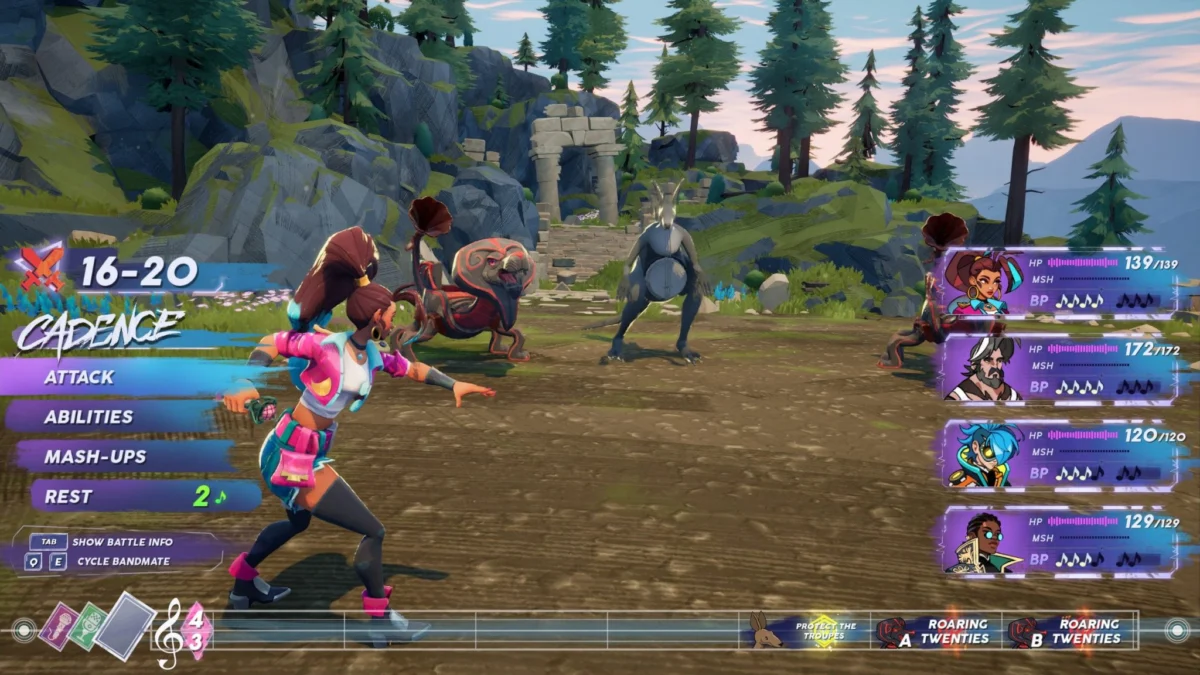
People of Note represents a significant departure from traditional role-playing game conventions, merging the mechanical depth of turn-based combat with the thematic vibrancy of a feature-length musical. Developed by Iridium and published under the Annapurna label, the title attempts to carve out a niche within the "genre mash-up" category, a space increasingly populated by experimental indie projects that seek to subvert long-standing gameplay loops. The game introduces players to a world where musical genres are not merely aesthetic choices but the literal foundations of geography, culture, and conflict. By integrating puzzle-heavy dungeons with a narrative structured around professional musical numbers, People of Note positions itself as a bold experiment in interactive storytelling.

The Narrative Foundation and the Land of Note
The central narrative follows Cadence, an aspiring pop vocalist whose primary ambition is to achieve stardom through the "Noteworthy" contest, a prestigious regional competition. The story begins with a moment of professional stagnation; despite her technical proficiency, Cadence is informed by a panel of judges—some of whom harbor ulterior motives—that her performance lacks a necessary "spark." This critique serves as the catalyst for the game’s inciting incident: the discovery of diverse musical frequencies emanating from across the continent.
As Cadence travels beyond her pop-centric origins, she encounters various musical cultures, ranging from the high-energy environments of rap-centric cities to the desolate, rock-infused deserts. The primary objective shifts from a simple quest for fame to a broader mission of musical synthesis, as Cadence seeks to combine disparate genres to create a revolutionary sound. However, the self-serving nature of her initial journey eventually gives way to a more complex plot involving a global threat to the Land of Note. While the narrative utilizes a late-game twist to add stakes, critical analysis suggests that the characterization of Cadence remains a point of contention. Unlike traditional RPG heroes who undergo selfless transformations, Cadence’s arc is often viewed as forced, with her motivations remaining largely centered on personal success until the final acts. Supporting characters, such as the veteran rocker Fret, provide necessary emotional grounding, though they often struggle to offset the perceived lack of relatability in the protagonist.

Regional Chronology and World Design
The Land of Note is partitioned into several distinct ecological and musical zones, each designed to reflect the characteristics of a specific genre. The development team at Iridium utilized fixed camera angles to navigate these environments, a choice that emphasizes the artistic detail of the world while limiting player perspective to curated views.
- Chordia: The starting region, characterized by bright aesthetics and a population obsessed with the boy band "Smolder." It serves as the player’s introduction to the pop genre’s influence on social structures.
- Durandis: A rugged desert landscape themed around heavy metal and classic rock. This region introduces more aggressive environmental hazards and enemies that mirror the intensity of its soundtrack.
- Pyre: A sophisticated, neon-lit urban center dedicated to the culture of rap and hip-hop. The architecture here is ornate, blending futuristic designs with classical garden elements.
- The Choral Reef and Lilting Green: These areas explore more ethereal and folk-based musical themes, providing a respite from the high-tempo urban environments.
The progression through these regions follows a linear chronology, where Cadence must complete specific dungeons to unlock the next musical influence. These dungeons are populated with puzzles that require players to interact with the environment in musically themed ways, such as assembling giant flutes, aligning light beams to "tune" a room, or managing water pressure to reach hidden platforms.

Technical Analysis of Combat and Systems
Despite its heavy emphasis on rhythm and melody, People of Note utilizes a standard turn-based combat system rather than a dedicated rhythm-action mechanic. The combat is structured around "stanzas" and "measures," terms used to describe the flow of turns between the player’s party and the enemy.
The Stanza System
Each turn is referred to as a stanza, during which players can see the upcoming moves of their opponents. This transparency is intended to turn every encounter into a tactical puzzle. Players must manage "BP" (Beat Points) to execute special abilities. The system is further deepened by the inclusion of "Songstones," which function similarly to the "Materia" system found in the Final Fantasy series. These stones can be equipped to various instruments—the game’s version of weapons—to grant unique magical abilities or stat buffs.

Equipment and Customization
Characters can be outfitted with genre-specific gear. For Cadence, this involves microphones and stage attire, while her bandmates utilize guitars and other instruments. This equipment directly influences HP (Health Points), Defense, and Attack power. Shops located within the various regions provide a steady stream of upgrades, ensuring that the party’s power level scales with the increasing HP pools of enemies, which can exceed 1,600 points in the mid-to-late game.
The QTE Missed Opportunity
One of the more divisive elements of the combat system is the inclusion of Quick Time Events (QTEs). During certain attacks, players are prompted to time button presses to maximize damage. While this is the closest the game gets to rhythm-based gameplay, it is not intrinsically linked to the beat of the background music. A "Perfect" timing increases damage output, while a failure results in a "Standard" hit. Critics have noted that the lack of a true rhythm-combat integration feels like a missed opportunity given the game’s overarching theme.

Accessibility and Developer Philosophy
Iridium has implemented a suite of accessibility features that are somewhat unprecedented for the RPG genre. Recognizing that some players may be drawn to the musical and narrative elements but deterred by traditional RPG hurdles, the developers included options to:
- Skip Puzzles: Players can bypass environmental challenges entirely, allowing them to move through dungeons without engaging with the mechanics.
- Skip Combat: Any battle, including standard encounters, can be skipped.
- Disable QTEs: The timing-based damage buffs can be toggled off, defaulting damage to a standard, predictable value.
These features effectively allow People of Note to be played as a visual novel. While this increases the game’s reach to non-traditional gamers, it has sparked a debate regarding the impact on the game’s "ludo-narrative harmony." By allowing players to remove the struggle of combat and puzzles, the tension of the "sinister plot" may be diminished for some. However, from a professional standpoint, these options represent a forward-thinking approach to inclusive game design.

Visual and Auditory Presentation
The game’s aesthetic is a blend of high-fidelity environmental art and static, visual-novel-style character interactions. During dialogue sequences, characters are represented by detailed 2D portraits, all of which are fully voice-acted. This provides a high level of polish to the narrative delivery.
The "musical" aspect of the game is realized through pre-rendered cinematic sequences where characters perform full-length songs. These numbers cover a wide spectrum of styles, including an 80s-inspired villain track and various country, EDM, and rock ballads. Observations of the technical performance indicate that these pre-rendered sequences occasionally suffer from lower visual resolution compared to the real-time gameplay, creating a slight visual disconnect during the game’s most pivotal moments.

Market Implications and Genre Impact
The release of People of Note comes at a time when the "rhythm-RPG" subgenre is seeing a resurgence of interest, following the success of titles like Hi-Fi Rush and The Artful Escape. However, by sticking to traditional turn-based roots rather than action-oriented rhythm mechanics, People of Note targets a different demographic—those who prefer the slow, methodical pace of a tactical RPG but crave a contemporary, stylized presentation.
Industry analysts suggest that the game’s success will likely be measured not just by sales figures, but by its influence on how accessibility is handled in future RPGs. The "skip battle" feature, in particular, is a bold statement against the "grind" culture often associated with the genre.

Broader Impact and Concluding Analysis
People of Note is an ambitious project that succeeds in its world-building and thematic consistency while struggling with narrative engagement and combat variety. The game’s commitment to its musical theme is evident in every facet of its design, from the terminology used in menus to the architectural cues of its world.
While the repetitive nature of the turn-based encounters and the polarizing characterization of the protagonist may alienate some long-term RPG fans, the game remains a testament to the creative potential of genre-blending. It stands as a unique entry in the 2026 gaming calendar, offering a "video game-musical" experience that is as much about the spectacle of the performance as it is about the mechanics of the play. For the industry, it serves as a case study in how to balance niche artistic visions with broad accessibility, even if that balance occasionally results in a gameplay experience that feels "one-note" to genre purists. The final "end-credits" sequence, a direct message from the developers, reinforces the project’s status as a labor of love, aimed at those who find beauty in the intersection of a well-placed chord and a well-timed turn.