


The mechanical keyboard industry has witnessed a significant shift toward modularity and high-end customization in recent years, a trend further cemented by the launch of the EPOMAKER RT98 Modular Mechanical Keyboard. This latest peripheral from EPOMAKER, currently undergoing a highly successful Kickstarter campaign scheduled to run through late April, represents a departure from traditional fixed-layout designs by offering a swappable interface that allows users to reposition the numeric pad. As the enthusiast keyboard market continues to expand, projected to reach a valuation of nearly $2 billion by 2028, manufacturers are increasingly integrating advanced features such as customizable displays and "southpaw" configurations to cater to niche productivity and gaming requirements. The RT98 arrives as a flagship-tier option designed for users who prioritize tactile feedback, aesthetic versatility, and functional adaptability.

Evolution of the Modular Keyboard Layout
The primary innovation of the EPOMAKER RT98 lies in its "modular" designation, which specifically refers to the internal architecture that permits the relocation of the number pad. In a standard full-sized keyboard, the numeric pad is fixed on the right side, often forcing gamers and productivity professionals to stretch their right hand significantly to use a mouse, which can lead to ergonomic strain. By allowing the numeric pad to be moved to the left side—creating what is known in the enthusiast community as a "Southpaw" layout—the RT98 enables a more ergonomic alignment for right-handed mouse users.
However, the modularity of the RT98 is not a tool-less endeavor. Unlike some magnetic snap-on peripherals, the RT98 requires a deliberate mechanical adjustment. Users must utilize a hexagonal wrench to unscrew the unit and lift the internal keyboard plate from its shell. Technical analysis of the hardware reveals that the numeric pad is connected to the main PCB via a small, delicate ribbon cable. This cable must be unhooked and rerouted to the opposite side of the device during the reconfiguration process. While this level of modularity offers unprecedented flexibility for a mid-sized keyboard, it presents a higher barrier to entry for casual users, requiring a degree of manual dexterity and technical comfort.

Technical Specifications and Hardware Performance
The RT98 utilizes a 98% layout, a form factor that has gained immense popularity for retaining nearly all the functionality of a 104-key board while occupying a significantly smaller footprint on the desk. This is achieved by compressing the navigation cluster and moving the numeric pad closer to the main typing area.
Under the hood, the RT98 features EPOMAKER’s in-house blue linear switches. These switches are engineered for a smooth, consistent keystroke without the audible "click" associated with traditional blue switches from other manufacturers, focusing instead on a "creamy" and responsive tactile feel. The keyboard supports hot-swappable sockets, allowing enthusiasts to replace the switches with any three-pin or five-pin mechanical switches without the need for soldering.

Connectivity is handled through a tri-mode system, a standard for modern enthusiast boards:
- Wired Mode: Via a centered USB-C port, providing the lowest possible latency for competitive gaming.
- 2.4GHz Wireless: Utilizing a dedicated USB dongle for a stable, high-speed connection suitable for most high-performance tasks.
- Bluetooth: Supporting multiple device pairings, making it compatible with tablets, smartphones, and laptops.
The device also features a toggle switch on the rear to alternate between macOS and Windows input modes, ensuring that the function row and command keys map correctly regardless of the operating system.

The Integrated Mini-Display and Aesthetic Appeal
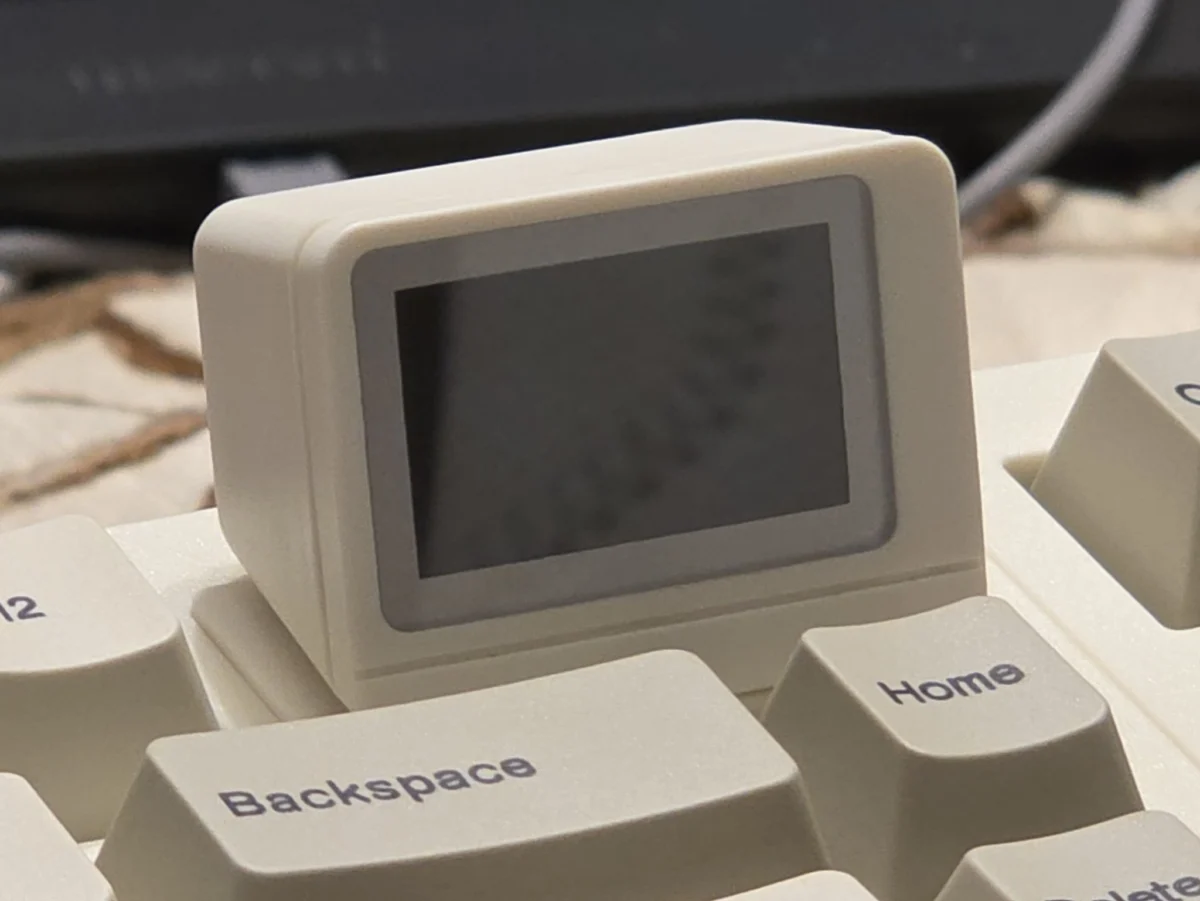
One of the most striking visual features of the RT98 is the inclusion of an integrated mini-screen, which is reportedly one of the largest displays ever implemented on a mechanical keyboard. This screen serves both functional and aesthetic purposes. Functionally, it can be synchronized with a computer to display the time, date, and battery status. Aesthetically, it serves as a canvas for user expression.
Through proprietary web-based software, users can upload up to three custom GIFs to the screen. The software handles the necessary compression and frame-rate adjustments to ensure smooth playback on the keyboard’s hardware. During testing, the screen was capable of maintaining playback at approximately 30 frames per second. However, this high level of visual customization comes at a cost to power efficiency. The screen significantly impacts battery longevity, with reports indicating that the device may require recharging after approximately eight hours of continuous use when the display is active. For users who prefer a wireless setup, this may necessitate frequent charging or a permanent wired connection.

Software Ecosystem and User Interface
EPOMAKER has transitioned toward a web-based software model for the RT98, utilizing the VIA protocol and Chromium-based web applications. This move is increasingly common in the peripheral industry as it eliminates the need for users to install bulky, often intrusive driver software on their local machines.
The VIA software allows for deep customization of keymaps and macros. Users can remap any key on the board, which is particularly useful for the modular layout; if the numeric pad is moved to the left, users can reprogram keys to suit their new workflow.

Despite the convenience of web-based tools, the initial setup process for the RT98 involves a degree of friction. The necessary URLs for the customization sites are provided via QR codes on a physical card included in the box. This requires users to scan the codes with a mobile device and then transfer the links to a desktop browser, a step that some critics argue could be simplified through direct URL documentation or a unified landing page.
Environmental Commitment and Packaging
In response to growing consumer demand for sustainable business practices, EPOMAKER has designed the RT98’s packaging with recyclability in mind. The unit ships in a standard cardboard box with minimal plastic usage. Most internal components and protective materials are paper-based, allowing for easy disposal in standard recycling streams. This reflects a broader trend in the tech industry where companies are attempting to reduce their carbon footprint through "green" packaging initiatives, even as the products themselves remain complex electronic assemblies.

Chronology of the RT98 Launch
The development and release of the RT98 followed a structured timeline typical of enthusiast-grade hardware:
- Late 2023: Internal development and prototyping of the modular "southpaw-ready" chassis.
- Early Q1 2024: Announcement of the RT98 and the commencement of the Kickstarter campaign.
- March 2024: Distribution of review units to hardware analysts and keyboard enthusiasts to gather feedback on the modular mechanism and software stability.
- April 2024: The Kickstarter campaign reaches its funding goals, with the project currently over-subscribed.
- Late April 2024: Scheduled conclusion of the crowdfunding phase, followed by the transition to mass production and fulfillment.
Industry Implications and Market Impact
The introduction of the RT98 highlights the maturing of the mechanical keyboard market. What were once considered "extreme" modifications—such as moving the numeric pad or adding LCD screens—are now being integrated into mass-market products.

Industry analysts suggest that the success of the RT98’s Kickstarter campaign demonstrates a clear appetite for "modular" electronics that allow the end-user to dictate the physical layout of their tools. However, the RT98 also underscores a tension in the market: the balance between customization and ease of use. While the RT98 offers immense flexibility, the requirement for tools (like the hex wrench) and the risk of damaging ribbon cables during reconfiguration suggest that the industry is still searching for a truly "plug-and-play" modular solution.
Furthermore, the RT98’s reliance on the VIA open-source firmware standard is a win for the Right to Repair movement and long-term product viability. By using industry-standard protocols, EPOMAKER ensures that the keyboard will remain functional and customizable even if official company support were to cease in the future.

Conclusion
The EPOMAKER RT98 Modular Mechanical Keyboard stands as a testament to the creative heights of current peripheral design. It successfully merges the "retro" aesthetic of creamy vanilla shells with cutting-edge digital displays and a highly flexible physical layout. While the battery life caveats and the manual labor required for modularity may deter casual consumers, the RT98 is a significant offering for the enthusiast community. It provides a platform for deep personalization that few other keyboards in its price bracket can match, signaling a future where the physical boundaries of our input devices are as customizable as the software they control.