


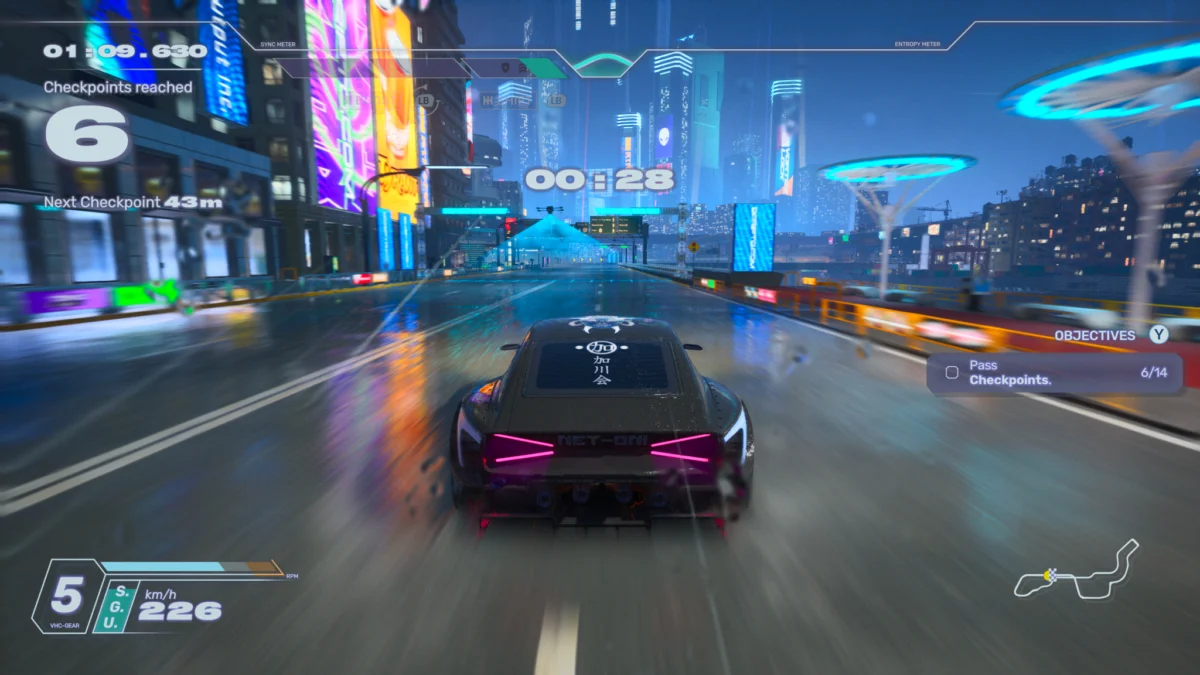
The global gaming industry has witnessed a significant shift in the racing genre over the last decade, with a heavy emphasis on hyper-realistic simulators often overshadowing the vibrant, high-octane arcade racers of the late 1990s and early 2000s. However, Milan-based developer Milestone has challenged this trajectory with the release of Screamer, a high-budget reboot of the long-dormant PC racing franchise. Reviewed on the Xbox Series X, this 2026 iteration represents a radical departure from its predecessors, trading the gritty realism of the original series for a neon-saturated, anime-inspired aesthetic that aligns with modern AAA production standards.
Historical Context and the Evolution of the Screamer IP
To understand the significance of the 2026 reboot, one must look back at the origins of the Screamer brand. Originally developed by Graffiti and published by Virgin Interactive in 1995, the first Screamer was a landmark title for PC gaming, often cited as the platform’s answer to Namco’s Ridge Racer. It was followed by Screamer 2 in 1996 and Screamer Rally in 1997, which pivoted toward off-road and rally physics. The series effectively went into hiatus after Screamer 4×4 in 2000, leaving a vacuum in the arcade racing market.

Milestone’s decision to revive the IP in 2026 follows a period of rapid expansion for the studio. Known primarily for its simulation-heavy titles such as the RIDE and MotoGP franchises, Milestone has spent the last several years refining its proprietary technology. Creative and Development Director Michele Caletti noted in recent industry interviews that the revival of Screamer was born from a desire to explore "philosophical" connections to the original arcade spirit rather than direct gameplay replication. This move places Screamer as a direct competitor to other stylized racers, filling a niche for high-speed, track-based competition that has been largely vacant since the decline of the Burnout and Ridge Racer series.
Narrative Architecture: The Hundred Billion Dollar Tournament
In a departure from traditional arcade racers that often relegate plot to the background, Screamer features a sophisticated single-player campaign centered on a global tournament organized by a reclusive figure known only as "Mr. A." The stakes are historically high within the game’s lore, offering a prize of $100 billion to the winning trio of drivers. This narrative framework allows for a structured, linear progression that serves as both a story-driven experience and an extended tutorial for the game’s complex mechanics.

The campaign features a roster of over a dozen voiced characters, each with distinct motivations and interpersonal conflicts. The primary protagonists, a team known as The Green Reapers, drive the central plot through a revenge arc involving a rival driver named Gabriel Mertens. The narrative is delivered through a blend of visual novel-style dialogue sequences and high-fidelity animated cinematics. To ensure top-tier visual storytelling, Milestone collaborated with Polygon Pictures, the renowned Japanese animation studio behind projects such as Star Wars: Visions and collaborations with Studio Ghibli.
A unique cultural element of the game is its "Universal Language Translator" lore, which justifies a multilingual cast. Drivers speak in their native tongues—including English, Japanese, Italian, Spanish, French, and Dutch—creating a global atmosphere that mirrors the international scale of the tournament. While the story is linear, players are given the agency to explore side stories and character-specific missions, totaling approximately 16 hours of narrative content.

Technical Innovations: The ECHO System and Twin-Stick Driving
At the heart of Screamer’s gameplay is a sophisticated mechanical loop that distinguishes it from contemporary racers. The game utilizes a "twin-stick" control scheme, a method popularized by indie titles like Inertial Drift but scaled here for a AAA audience. While the left stick handles standard steering, the right stick is dedicated to managing "sharp-angle" drifts. This system requires a high degree of precision; over-correcting with the right stick can result in a total loss of momentum, making the mastery of cornering a central skill requirement.
Furthermore, the game introduces the ECHO System, a dual-resource management mechanic integrated into the car’s "Active Transmission." The system is divided into two primary metrics:

- Sync (Cyan Bar): Generated through clean driving, slipstreaming, and maintaining high speeds. This resource is spent on short-duration turbo boosts.
- Entropy (Pink Bar): Accumulated by spending Sync energy. This resource powers "Strikes"—offensive maneuvers used to disrupt opponents—and defensive shields.
This cyclical energy economy creates a tactical layer to the racing. Leading drivers must focus on maintaining Sync to stay ahead, while those in the pack can leverage slipstreams and Entropy-based Strikes to claw back positions. The "Overdrive" mechanic serves as the game’s ultimate ability, granting extreme velocity at the cost of significantly increased wreck vulnerability.
Visual Identity and Audio Production
The aesthetic of Screamer is a deliberate homage to futuristic anime. The environments are characterized by "neon-soaked" cityscapes and rain-slicked asphalt, optimized for the Xbox Series X’s hardware capabilities. Milestone partnered with the design firm Plumehead to create unique vehicles for each character, ensuring that the cars act as visual extensions of the drivers’ personalities. For instance, Gabriel Mertens’ vehicle reflects a "James Bond-esque" luxury aesthetic, while the idol group Strike Force Romanda utilizes flashy, light-emitting designs.

The auditory experience is headlined by the opening track "Survive" by the J-pop/J-rock group WAGAMAMARAKIA. The soundtrack is heavily electronic, designed to maintain the high-intensity tempo of the races. From a technical standpoint, the game maintains a "rock-solid" 60 frames per second (FPS) on the Xbox Series X, utilizing the console’s Velocity Architecture to ensure near-instant load times between the narrative segments and the racing events.
Multiplayer and Post-Launch Trajectory
Screamer offers a robust suite of multiplayer options, including four-player local split-screen—a feature increasingly rare in modern AAA titles—and full online matchmaking. The online modes include standard team-based races and specialized "Overdrive" lobbies where the high-speed mechanic is permanently active.

Early data from the launch window suggests that while the game is highly polished, certain character-vehicle combinations may require balancing. Milestone has already demonstrated a commitment to post-launch support, releasing an initial patch to address difficulty spikes in the campaign’s later chapters. The studio’s cadence of releases—including the recent success of RIDE 6—indicates that Screamer is intended to be a long-term fixture in their portfolio, with potential for seasonal content or expansions based on the tournament’s lore.
Industry Implications: The Return of the Arcade Era?
The release of Screamer serves as a significant case study for the viability of high-budget arcade racers in the mid-2020s. For years, the industry consensus suggested that the "golden era" of track-based racers had passed, replaced by open-world titles like Forza Horizon. Milestone’s investment in a linear, story-heavy, track-based experience suggests a belief in a market correction.

By blending Japanese animation styles with Italian racing expertise, Milestone has created a product that appeals to multiple demographics: nostalgic fans of the original 1990s series, anime enthusiasts, and competitive racing players looking for a high-skill-ceiling alternative to simulators. The success of Screamer may encourage other publishers to revisit their classic arcade racing IPs, potentially sparking a broader resurgence of the genre.
In conclusion, Screamer (2026) stands as a testament to Milestone’s evolution from a niche developer of motorcycle simulations to a powerhouse of stylized, high-production arcade entertainment. With its flawless technical performance on the Xbox Series X and its innovative ECHO gameplay system, it sets a new benchmark for what a modern arcade racer can achieve. For the "arcadebros" who have waited decades for a return to form, the message from Milan is clear: the genre is not only back but has been modernized for a new generation of hardware and players.