


Upon embarking on the journey of establishing a medieval settlement in Manor Lords, players are typically granted a humble contingent of five initial families, a number that quickly proves insufficient for the ambitious task of village development and expansion. The seemingly straightforward challenge of attracting additional inhabitants to populate and labor within a burgeoning village is, in practice, governed by a nuanced interplay of core game mechanics, primarily "Approval" and the availability of "Living Space." Understanding and strategically managing these elements is paramount to transforming a nascent outpost into a thriving medieval hub.
The Foundation of Growth: Approval and Living Space
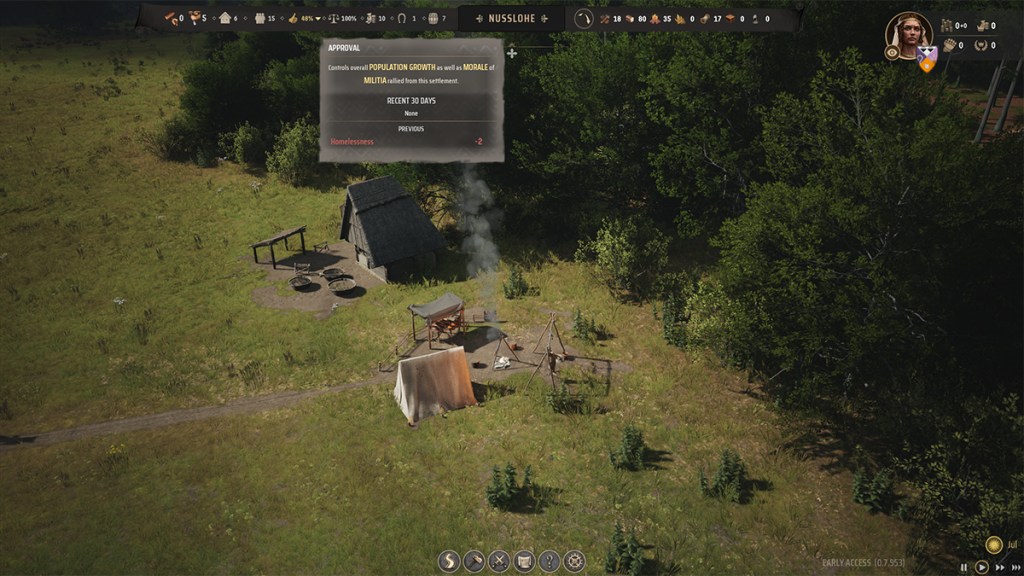
The core mechanisms driving population influx in Manor Lords are intrinsically linked: a high level of villager Approval coupled with sufficient available housing. These two factors dictate the rate at which new families will consider settling in your domain. Approval, a critical metric, is visibly tracked via a dedicated bar at the top-left of the user interface. A minimum Approval rating of 50% is required for a single new family to join the village each month. Elevating this to 75% or higher significantly accelerates growth, attracting two families monthly. Conversely, neglecting the well-being of your populace can have dire consequences: should Approval plummet below 25%, existing villagers will begin to abandon the settlement in search of more favorable conditions, leading to economic and social decline. Therefore, maintaining high Approval is not merely about growth but also about retention, forming the bedrock of a stable and expanding community.
Cultivating Contentment: Strategies for Boosting Approval
Achieving and sustaining high Approval in Manor Lords requires a multifaceted approach, addressing the fundamental needs and aspirations of your villagers. Early game strategies focus on essential provisions, while later stages demand more sophisticated amenities and diversified economies.
1. Ensuring Food Security and Variety:
In the initial phases of settlement, the most direct path to increasing Approval lies in providing a stable and varied food supply. A monotonous diet quickly leads to discontent. To counter this, players should prioritize the construction of essential food production structures:
- Hunting Camp: Provides a steady supply of meat, a crucial protein source. Strategically placing these near forested areas with high wild animal populations maximizes efficiency.
- Forager Hut: Gathers berries, offering an alternative food type. Berries are seasonal, so their availability must be managed, but they provide vital dietary diversity.
- Farmhouses: As the village grows, transitioning to arable farming for grains (wheat, rye) becomes essential. This allows for the production of bread, a staple food that significantly boosts Approval, especially when available at market stalls.
- Goat Sheds/Chicken Coops: Integrated into Burgage Plots, these backyard extensions offer supplementary food sources like eggs and goat meat, further enhancing dietary variety without requiring dedicated large-scale infrastructure.
The goal is not just quantity but a visible presence of different food types in the village market, signaling prosperity and abundance to potential newcomers.
2. Providing Adequate and Quality Housing (Burgage Plots):
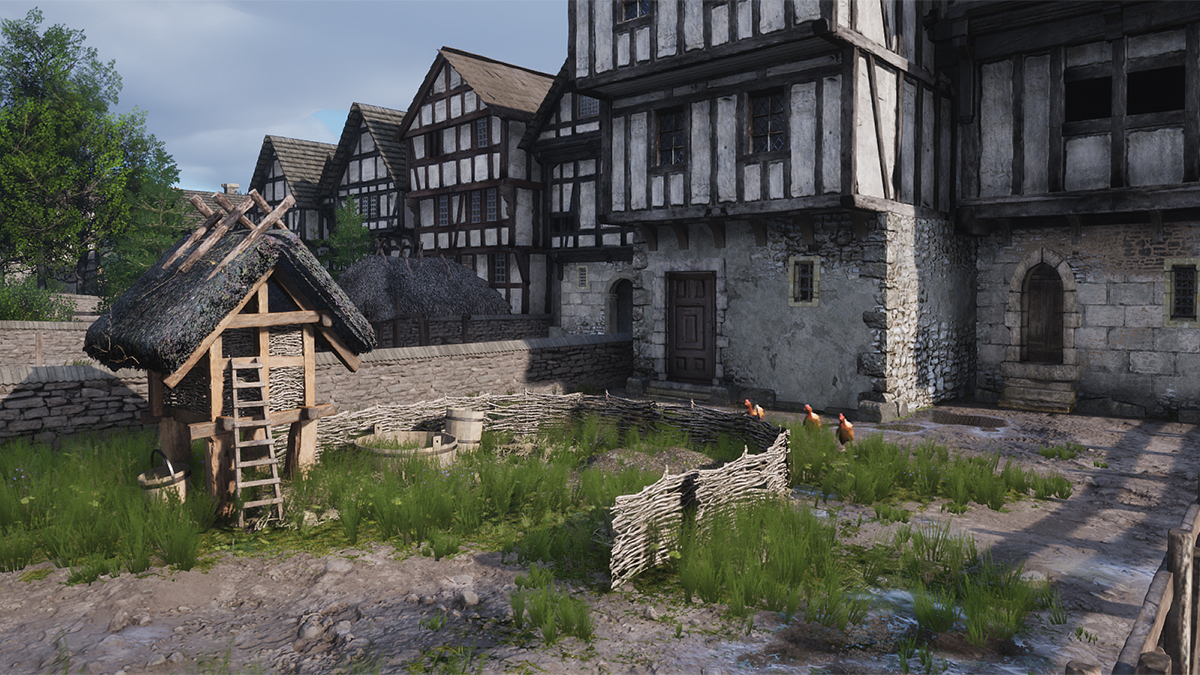
Beyond sustenance, secure and comfortable housing is a fundamental requirement for villager satisfaction. Burgage Plots serve as the primary residential units in Manor Lords, and their availability and quality directly impact Approval.
- Initial Construction: It is a prudent strategy to construct more Burgage Plots than immediately necessary. This proactive approach ensures that newly arriving families have a home ready upon their arrival, preventing temporary homelessness, which can severely depress Approval ratings.
- Burgage Plot Levels and Amenities: Burgage Plots are not static; they can be upgraded through three distinct levels, each demanding increasing levels of amenities and market access.
- Level 1 Requirements: To upgrade to Level 1, a Burgage Plot requires proximity to a Well and a Church. Wells provide essential fresh water, a basic necessity. Churches, representing spiritual well-being, become increasingly important as the population grows. Strategic placement of these communal buildings is crucial to maximize the number of plots they serve.
- Level 2 & 3 Requirements: Higher levels of Burgage Plots will demand more advanced amenities, such as a Tavern with a consistent supply of Ale, and consistent access to a diverse range of goods at the Marketplace (e.g., clothing, tools, spices). Each upgrade not only improves the living standards of the residents but also provides a significant boost to overall village Approval.
3. Establishing a Robust Marketplace:
The Marketplace is the beating heart of any medieval settlement, facilitating the distribution of goods and serving as a major contributor to villager Approval.
- Stall Creation: Once a Marketplace is designated, villagers who are assigned to relevant production buildings (e.g., storehouses, granaries, woodcutter’s lodge) will automatically set up stalls to sell their wares.
- Diversity of Goods: The key to a high-performing Marketplace, and thus high Approval, is a wide variety of goods available. This includes not only diverse food items (meat, berries, bread, vegetables) but also essential non-food items like Firewood (for heating), Clothing (linen, leather, wool), and Tools. Villagers appreciate having their needs met conveniently.
- Accessibility: Ensure the Marketplace is centrally located and easily accessible to all Burgage Plots to maximize its impact on Approval.
4. Managing Fuel Supply:
While often overlooked in favor of food and housing, a consistent supply of fuel, primarily firewood, is critical for survival during harsh winters and directly impacts Approval.
- Woodcutter’s Lodge: This early-game structure is vital for producing firewood. Assigning families to this building ensures a steady supply.
- Charcoal Kiln: As the village grows and timber resources become more strained, a Charcoal Kiln provides a more efficient fuel source, converting timber into charcoal at a better ratio than simple firewood. It also reduces the need for constant logging, preserving forests. A shortage of fuel, particularly in colder months, will rapidly erode Approval.
5. Addressing Spiritual Needs:
The construction of a Church is not just an amenity requirement for Burgage Plots; it fulfills the spiritual needs of the populace, contributing significantly to overall Approval. A well-placed church can serve numerous families, acting as a focal point for community life and religious observance. As the village expands, upgrading to a larger church or even constructing a second one may become necessary to cover the growing population’s spiritual demands.
6. The Role of Ale and Taverns:
In the mid to late game, the introduction of Ale and the construction of Taverns become powerful tools for boosting and maintaining high Approval.
- Ale Production: This involves growing barley (requiring a farm), malting it at a Malthouse, and then brewing it at a Brewery. This production chain requires significant investment in infrastructure and labor.
- Tavern Function: Once ale is produced, assigning a family to a Tavern ensures it is served to villagers. Taverns act as social hubs, providing recreation and significantly enhancing villager contentment, contributing a substantial boost to Approval. They also serve as a key source of regional wealth through sales and can indirectly contribute to tax revenue.
Beyond Basic Needs: Advanced Considerations for Sustained Growth
As the settlement matures, the demands on the player evolve. Sustained growth and high Approval necessitate a more complex economic and social infrastructure.
A Chronological Approach to Early-Game Population Management:
-
Initial Setup (First 1-2 Months):
- Prioritize a Logging Camp and Woodcutter’s Lodge for timber and firewood.
- Build a Hunting Camp and Forager Hut for immediate food variety.
- Construct the first few Burgage Plots (e.g., 6-8) to house initial families and anticipate the first wave of newcomers.
- Designate a Marketplace.
- Build a Granary and Storehouse to manage resources efficiently.
-
Establishing Basic Amenities (Months 3-6):
- Construct a Well to provide water to existing and new Burgage Plots.
- Build a Church to meet spiritual needs and enable Burgage Plot upgrades.
- Expand Burgage Plots further, always staying ahead of population demand.
- Consider a Tannery or Weaver’s Workshop if resources allow, to start producing basic clothing for the market, further boosting Approval.
-
Diversifying the Economy and Meeting Advanced Needs (Months 7+):
- Establish Farms for grain production (wheat, rye) to enable bread and eventually ale production.
- Build a Windmill and Bakery for bread.
- Begin the ale production chain (Farm for barley, Malthouse, Brewery).
- Construct a Tavern once ale production is stable.
- Introduce more advanced goods to the Marketplace (tools, shoes, clothing from different materials).
- Consider specialized industries like Mining Pits (iron, clay) and Smelting Furnaces for tools and construction materials.
The Implications of Population Dynamics: Broader Impact on Gameplay
The consistent attraction and retention of families in Manor Lords is not merely an arbitrary goal; it is the engine that drives virtually every other aspect of the game.
- Labor Specialization: More families mean more available labor. This allows for the assignment of villagers to specialized roles across various industries (farming, mining, crafting, logistics), increasing efficiency and unlocking complex production chains. Without sufficient labor, even the most advanced buildings remain dormant.
- Economic Prosperity: A growing population translates directly into a more robust economy. Increased production leads to more goods for trade, both within the village market and with external regions. This generates regional wealth, which can be invested back into infrastructure and development.
- Military Strength: Families are the source of your militia. A larger population allows for the recruitment and training of more military units, which is crucial for defending your territory against bandits, raiding parties, and rival lords, as well as for regional conquest.
- Taxation and Royal Favor: A larger, more prosperous population means greater potential for tax revenue. This wealth can be used to fund royal taxes, satisfy regional demands, and contribute to your standing with the crown, unlocking further development opportunities and prestige.
- Settlement Evolution: The progression of your settlement from a small village to a town and eventually a large city is directly tied to population numbers and the quality of life provided. Each milestone unlocks new buildings, technologies, and diplomatic options.
Developer Intent and Future Outlook:
The intricate system of Approval and Living Space in Manor Lords reflects the developer’s vision for a grounded, organic city-building experience. Rather than simply clicking a "recruit" button, players are challenged to understand and respond to the human element of settlement management. Every decision, from where to place a well to what crops to plant, has a tangible impact on the well-being and growth of the populace. As an early access title, Manor Lords is subject to ongoing development and balancing. Players can anticipate future updates that might introduce new needs, challenges, or avenues for influencing Approval, further deepening the strategic complexity of population management. However, the core principles of providing for basic needs, ensuring variety, and maintaining a high quality of life are likely to remain central to attracting and retaining families in the long term.
In conclusion, the journey from a handful of families to a bustling medieval city in Manor Lords is a testament to the player’s ability to master the delicate balance of resource management, infrastructure development, and villager satisfaction. By prioritizing Approval through diverse food, ample housing, essential amenities, and a thriving marketplace, and by strategically expanding living spaces, players can ensure a steady influx of new blood, transforming a humble beginning into a powerful and prosperous domain.