


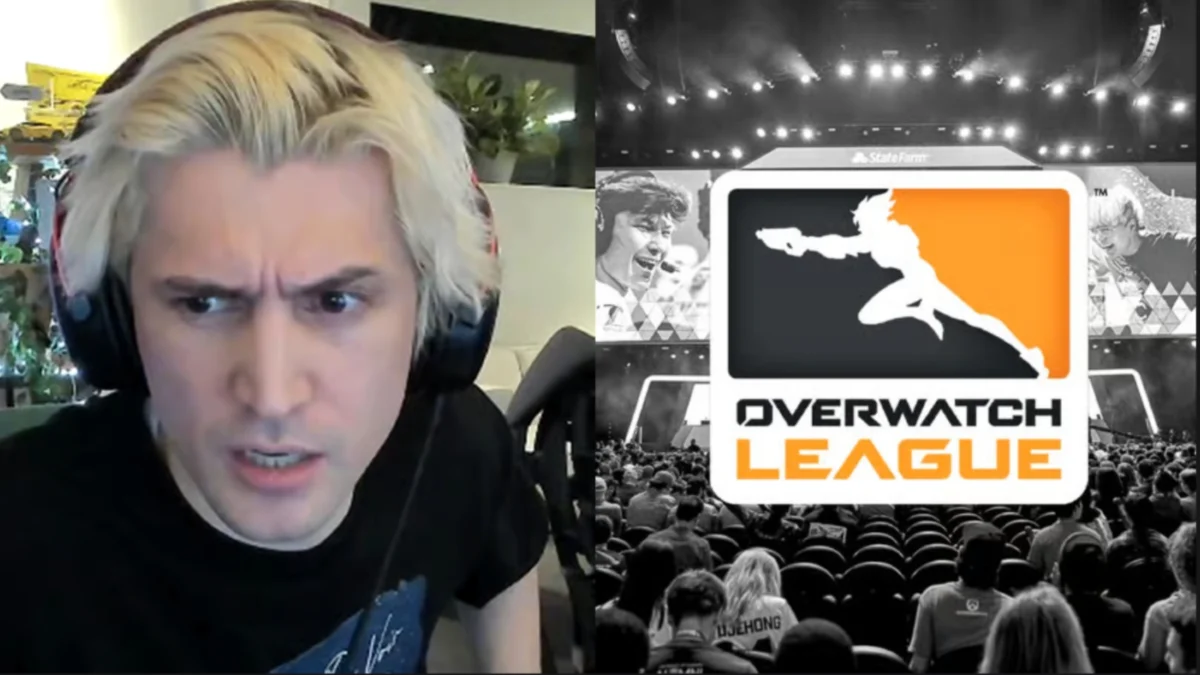
Felix "xQc" Lengyel, a prominent figure in the esports and streaming communities, has leveled serious accusations against the Overwatch League (OWL), claiming the league artificially inflated its viewership figures through the use of viewbots. These allegations, made during a recent stream, suggest that the perceived success of the OWL was a carefully constructed illusion, a revelation that Lengyel states significantly influenced his decision to step away from professional Overwatch competition.
The controversy ignited when xQc reacted to a 2019 statement by entrepreneur Mark Cuban, who asserted that the Overwatch League had achieved a concurrent viewership peak of 300,000 viewers. Lengyel vehemently contested this figure, presenting a starkly different estimation of around 14,000 actual viewers, and directly accusing the league of employing viewbotting tactics to manufacture higher numbers. "These numbers were so botted," xQc stated emphatically, his voice conveying disbelief. "These numbers were so botted, it’s comical. Brother, for multiple years, they tried to hide the numbers."
xQc’s Claims of Inflated OWL Viewership
Lengyel’s accusations are rooted in information he purportedly received during the league’s nascent stages. He detailed an alleged conversation with an unnamed "insider whistleblower" who shared viewership data from an early testing phase of the Overwatch League on Major League Gaming (MLG). "They ran a test on MLG," xQc explained. "For the preseason, they said, ‘we’re going to run Overwatch League on MLG TV.’ And I had an insider whistleblower that was talking to me. I’m not going to say who. And he told me the numbers of how many people were actually watching. And I went, ‘Yo!?’"
While xQc did not provide concrete evidence to substantiate these claims, nor did he reveal the identity of his alleged source, the assertion itself has ignited significant debate within the esports community. The Overwatch League, launched in 2018 by Blizzard Entertainment, was envisioned as a premier franchised esports league, aiming to emulate the success of traditional sports leagues. Its initial rollout was met with considerable fanfare and investment, positioning it as a potential flagship for franchised esports.
Background: The Overwatch League’s Ambitious Launch
The Overwatch League represented a significant departure from previous esports models. Instead of city-based franchises operating independently, OWL established a closed system with buy-in fees for team owners, aiming for long-term stability and revenue generation through media rights, sponsorships, and merchandise. The league’s initial marketing and broadcast strategy, including its partnership with MLG, underscored a commitment to professional presentation and broad audience reach.
However, like many ambitious esports ventures, the OWL faced challenges in translating initial hype into sustained, large-scale viewership comparable to established traditional sports or even other major esports titles. Early viewership figures, while promising for a new league, often fell short of the astronomical numbers sometimes projected or alluded to in promotional materials. This discrepancy between perceived potential and actual performance has been a recurring topic of discussion among analysts and fans.
Chronology of xQc’s Involvement and Departure
Felix Lengyel’s history with Overwatch and the Overwatch League is a significant part of this narrative. He was a highly skilled and popular player, notably for the Dallas Fuel in the inaugural OWL season in 2018. His raw talent and charismatic, albeit often controversial, personality made him a fan favorite. However, his tenure with the Dallas Fuel was marked by a series of suspensions and eventual release due to in-game toxicity and rule violations.
Despite these issues, Lengyel’s popularity as a streamer continued to soar. He transitioned to full-time streaming, amassing a massive following on platforms like Twitch. His decision to potentially re-enter professional play, even as an OWL player, would have represented a significant professional pivot. According to his recent statements, he had indeed signed contracts to participate in the Overwatch League.
The alleged revelation about inflated viewership numbers occurred during this critical juncture, directly impacting his career trajectory. "I had already signed the contracts to play in the Overwatch League," xQc revealed. "When I heard that, I was like… I’m already starting to organize my exit." He articulated his concern about the practical implications of such a revelation on his personal brand and potential earnings: "How am I going to market myself as a 10k Andy to a 14k Andy stream?" The "Andy" suffix, often used in streaming culture, typically refers to a viewership count. His concern suggests a belief that a league with demonstrably lower viewership would devalue his own perceived standing and marketability.
The Impact of OWL Contractual Restrictions on Streaming
Beyond the alleged viewership inflation, xQc also pointed to the restrictive nature of Overwatch League contracts as a significant deterrent to his continued participation. The demands of professional play, including mandatory practice, team meetings, and travel, severely curtailed his ability to engage in his primary income stream: live streaming.
"Why would I take days off to practice? Go to the office, practice. Do scrims. Do matches," he questioned, outlining the commitment required. "I can’t stream, I can’t make videos, I can’t vlog. I wasn’t even allowed to stream when the games were live." This prohibition on streaming during official match broadcasts, a common restriction in many professional sports and esports leagues to prevent conflicts of interest and ensure exclusive content for broadcast partners, was a major point of contention for Lengyel.
He summarized his perspective as a pragmatic assessment of value exchange: "So why would I lose everything with nothing to gain? It’s just about the exchange of value." For xQc, the perceived lack of genuine viewership success, coupled with the significant personal and professional sacrifices required by OWL contracts, created an unfavorable equation, ultimately leading him to prioritize his lucrative and more flexible streaming career.
Supporting Data and Industry Context
While xQc’s claims are currently unsubstantiated by independent verification, they tap into broader discussions about viewership metrics in esports. The esports industry, while experiencing rapid growth, has historically grappled with transparency in viewership figures. Third-party analytics sites, such as Esports Charts, provide valuable data, but official league figures, particularly those from proprietary broadcasts or internal reporting, can sometimes be difficult to independently verify.
In 2019, the year of Mark Cuban’s statement, the esports landscape was indeed characterized by a fervent belief in its exponential growth potential. Venture capital poured into various esports organizations and leagues, fueled by projections of massive, engaged audiences. However, the reality often proved more nuanced. While certain major esports tournaments consistently draw hundreds of thousands, and sometimes millions, of concurrent viewers, the consistent, week-over-week viewership for franchised leagues has been a more persistent challenge.
For instance, data from Esports Charts for the Overwatch League’s peak viewership periods around its launch and early seasons, while significant, did not consistently reach the 300,000 concurrent viewer mark claimed by Cuban, particularly when considering only legitimate human viewers. While official league broadcasts might include various metrics or have had specific high-profile events that approached such numbers, xQc’s assertion suggests a systemic issue of inflated reporting rather than isolated high-performing events. The league’s eventual discontinuation in its original format in late 2022, transitioning into a new structure, has also led to retrospective analyses of its financial and viewership sustainability.
Potential Implications and Industry Reactions
The implications of xQc’s allegations, if true, are far-reaching. For the Overwatch League, it would cast a shadow over its legacy and its past claims of success. It could also raise questions about the integrity of broadcast partnerships and sponsorship deals that were predicated on these reported viewership figures.
From a player’s perspective, such revelations highlight the power imbalance that can exist between league operators and professional talent. Players like xQc, whose personal brands and earnings potential are intrinsically linked to viewership and engagement, are particularly sensitive to the authenticity of these metrics. His decision to prioritize his streaming career over a potentially less lucrative and more restrictive OWL contract underscores the evolving landscape of esports careers, where individual content creation often offers greater autonomy and financial reward than traditional league play.
As of the time of this report, there has been no official statement from Blizzard Entertainment or any representatives of the Overwatch League regarding xQc’s specific claims of viewbotting. Given the serious nature of the accusations, any official response would likely be carefully considered. The esports community, however, will undoubtedly continue to dissect these claims, seeking further clarification and evidence. The conversation initiated by xQc brings to the forefront the ongoing need for transparency and accurate reporting of viewership data within the dynamic and often opaque world of professional esports. The longevity and success of future esports ventures may well depend on building trust through verifiable metrics and sustainable growth models, rather than potentially illusory figures.