


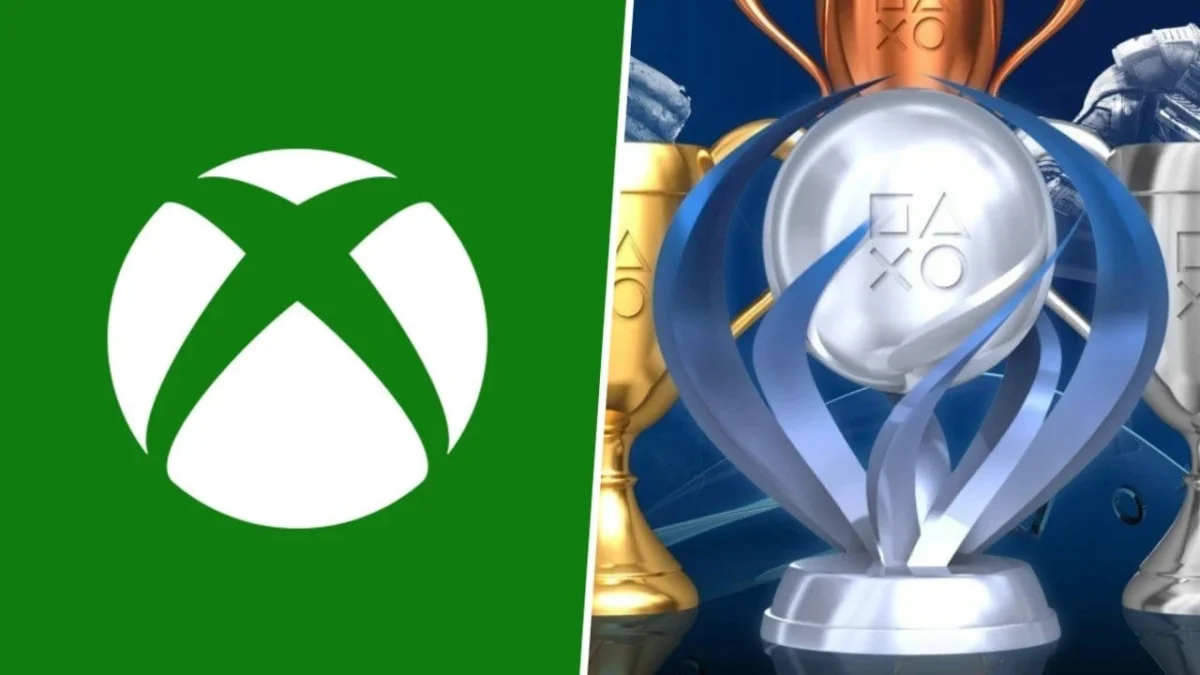
Xbox leadership has officially teased the development of a system analogous to PlayStation’s coveted Platinum Trophy, a move that has been persistently requested by its dedicated player base for years. Asha Sharma, Head of Xbox’s consumer experiences, indicated on social media that her team is actively working on "something" related to a Platinum Trophy equivalent, with a target implementation timeline set for later in 2026. This announcement, while brief, signals a significant shift in Xbox’s approach to player recognition and achievement tracking, potentially reshaping how millions of gamers engage with their titles.
The Genesis of a Demand: Understanding the Platinum Allure
For over a decade, PlayStation’s trophy system has included a unique distinction: the Platinum Trophy. Awarded upon the acquisition of every other trophy within a single game, the Platinum serves as the ultimate badge of completion for dedicated players. It represents not just significant playtime, but often a deep mastery of a game’s mechanics, an exploration of all its content, and the overcoming of its most challenging objectives. This system has cultivated a thriving subculture of "trophy hunters" and "completionists" who meticulously work through game lists, driven by the desire to add another gleaming Platinum to their digital display cabinet.
The psychological appeal of the Platinum Trophy is multifaceted. Firstly, it offers a clear, hierarchical endpoint to the achievement journey within a game, a definitive marker that "this game has been conquered." Unlike Xbox’s Gamerscore, which accumulates points across all games without a specific per-game cap or ultimate reward beyond the numerical total, the Platinum provides a tangible, game-specific acknowledgment. Secondly, it fosters a sense of prestige and social recognition. Players often proudly display their Platinum collections on their profiles, comparing their accomplishments with friends and the wider gaming community. This social element transforms individual achievement into shared validation, driving further engagement. Thirdly, for many, it taps into an inherent human desire for mastery and completion, offering a structured path to extracting maximum value and experience from a game.
Xbox’s Historical Stance and the Evolution of Achievement Systems
Xbox pioneered the concept of in-game achievements with the launch of the Xbox 360 in 2005, introducing Gamerscore as a universal metric for player accomplishment. This system revolutionized how players interacted with games, adding an extra layer of challenge and replayability beyond simply finishing the main story. Developers were tasked with integrating diverse achievements, ranging from story progression milestones to obscure challenges, rewarding players with points that contributed to their overall Gamerscore. The system was widely praised and quickly adopted by other platforms, including PlayStation, which introduced its own trophy system in 2008.
Despite the initial innovation, Xbox’s achievement system, while robust, has remained largely unchanged in its core philosophy regarding per-game completion. While players can achieve 100% of a game’s achievements, there has never been an overarching, single achievement or visual marker to signify this feat across the entire platform. This has led to consistent calls from the Xbox community for an equivalent to the Platinum Trophy. Over the years, Xbox representatives have, on occasion, addressed these requests. Previous statements often indicated a reluctance to directly imitate PlayStation’s system, citing a desire to maintain Xbox’s unique identity or a belief that Gamerscore itself served as the primary, sufficient motivator. There was also a perceived philosophical difference, with Xbox potentially preferring a more open-ended, cumulative recognition system over one focused on discrete, per-game "ultimate" awards.

However, the persistent fan demand, amplified through social media and community forums, has evidently reached a critical mass. The argument has always been less about outright copying PlayStation and more about adopting a feature that demonstrably enhances player satisfaction and engagement, regardless of its origin.
The Current Announcement: A Glimpse into 2026
The recent tease from Asha Sharma emerged from a direct interaction with a fan on social media, a common channel for community feedback to reach platform holders. While the details provided were minimal, the confirmation that "something" is in the works for 2026 is highly significant. Sharma’s role in overseeing consumer experiences further underscores that this initiative is geared towards enhancing player satisfaction and interaction with the Xbox ecosystem.
The vagueness of the announcement leaves ample room for speculation regarding the exact nature of this "equivalent." It is unlikely Xbox would simply brand it a "Platinum Trophy" due to copyright and branding considerations, but the core functionality—a distinct, universal recognition for achieving 100% of a game’s available achievements—is clearly the objective. Potential implementations could include:
- A "Mastery Achievement" or "Completionist Badge": A unique achievement that automatically unlocks once all other achievements in a game are earned. This could carry a special icon, sound, or even a higher Gamerscore value than standard achievements.
- Profile Display Integration: A prominent visual element on a player’s Xbox profile, similar to how PlayStation users can showcase their Platinum Trophies. This could be a dedicated section or a unique border/icon around completed game tiles.
- Tiered Recognition: Beyond a single "Platinum" equivalent, Xbox could introduce a tiered system for various levels of completion, though this might dilute the singular prestige of a true "ultimate" award.
- Developer-Assigned "Ultimate" Achievements: While less likely to be universal, developers could be given tools to designate a special achievement as the "ultimate" completion award for their game, which then triggers a platform-level recognition.
The timing, "later in 2026," suggests that this is not a minor update but a substantial feature requiring significant development, integration across the Xbox platform, and potentially new guidelines for game developers. This timeline also allows Xbox to carefully design and test the system, ensuring it meets player expectations and integrates seamlessly with the existing achievement framework.
Broader Implications: Player Engagement, Developer Strategy, and Competitive Landscape
The introduction of a Platinum Trophy equivalent holds several significant implications for the Xbox ecosystem.
Enhanced Player Engagement and Retention: For completionists, this feature will undoubtedly increase the incentive to revisit older titles and pursue 100% completion in new releases. The promise of a tangible, universal reward for mastery could lead to extended playtime per game, increased sales of DLC (which often adds new achievements), and greater overall engagement with the Xbox platform. Studies in player psychology consistently show that clear goals and meaningful rewards significantly boost motivation and persistence. A "Platinum" equivalent could serve as a powerful extrinsic motivator, turning casual players into more dedicated "hunters."

Impact on Game Development: Developers will likely need to consider this new meta-achievement when designing their achievement lists. The pressure to create balanced, achievable, yet challenging achievement sets that lead to a satisfying "Platinum" equivalent will be higher. This could encourage more thoughtful achievement design, moving away from simple grind-fests towards more engaging and skill-based challenges that truly test a player’s commitment and understanding of the game. It might also lead to developers ensuring that all DLC achievements are integrated into the "100% completion" calculation or that a base-game "Platinum" is achievable without all DLC, similar to PlayStation’s approach.
Competitive Landscape: This move helps to level the playing field with PlayStation in a feature area where Xbox has historically lagged behind in terms of perceived player recognition. While Gamerscore remains unique, adding a per-game completion reward addresses a key competitive differentiator. In an increasingly competitive gaming market, platforms are constantly seeking ways to attract and retain players. Offering features that players demonstrably value is a crucial part of this strategy. It demonstrates Xbox’s responsiveness to community feedback and its commitment to evolving its platform based on player desires.
Community Reaction: The immediate reaction from the Xbox community is expected to be overwhelmingly positive. This has been a top-tier request for years, and its implementation will be seen as a direct response to player voice. It could foster a renewed sense of community pride and encourage more discussions around achievement hunting strategies, game recommendations for "Platinum" challenges, and overall platform loyalty.
The Road Ahead: 2026 and Beyond
While the 2026 timeline seems distant, it underscores the complexity of integrating such a feature across a vast gaming ecosystem. It involves not just designing the front-end user experience but also ensuring backend compatibility with thousands of existing titles and establishing clear guidelines for future game development. Xbox will need to address questions such as:
- Will existing 100% completed games retroactively award the new equivalent?
- How will DLC achievements factor into the 100% calculation?
- What will be the visual and functional distinctions of this new reward?
- Will there be any associated Gamerscore implications?
The announcement from Asha Sharma is a clear indication that Xbox is listening to its community and is prepared to evolve its core features to enhance the player experience. As the gaming industry continues to mature, player recognition and progression systems play an increasingly vital role in fostering long-term engagement and platform loyalty. The introduction of a Platinum Trophy equivalent is not just a feature parity move; it is a strategic decision that acknowledges the deep-seated desire among a significant segment of the gaming population for ultimate, game-specific recognition. The gaming community will undoubtedly be eagerly awaiting further details as 2026 approaches, anticipating what promises to be one of the most significant updates to the Xbox achievement system since its inception.