


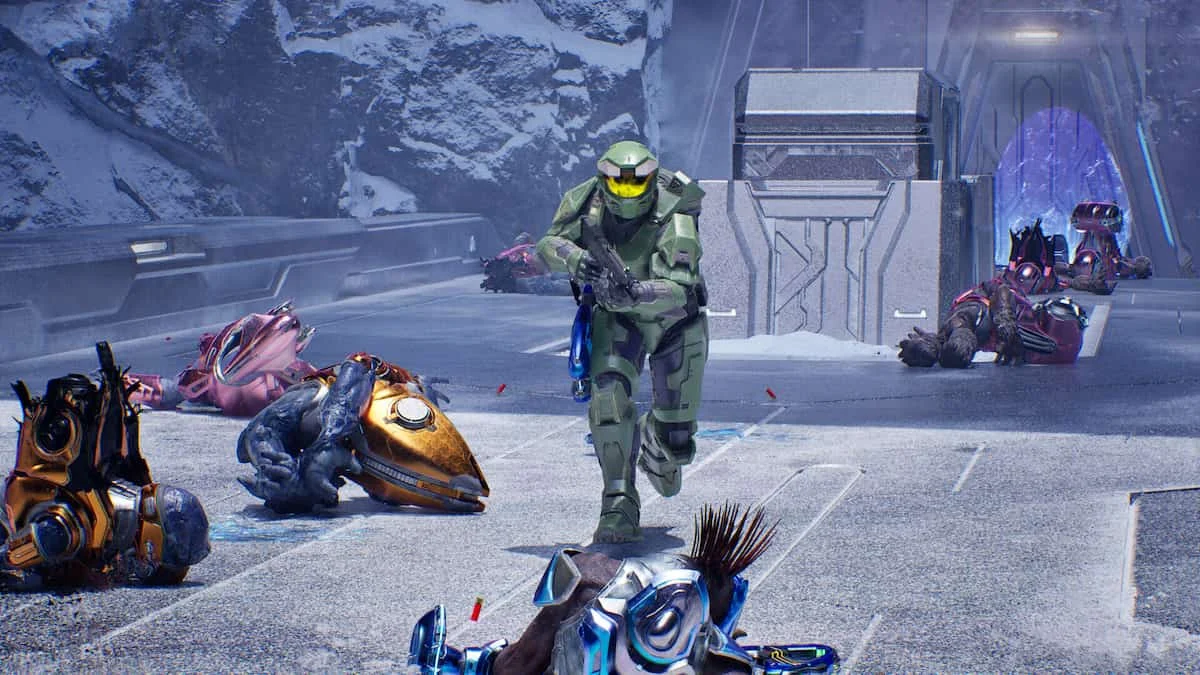
The latest developments within Microsoft’s Xbox division paint a stark picture of ongoing restructuring and strategic recalibration, as a new round of layoffs has impacted Halo Studios, occurring mere days after the highly anticipated launch of Halo: Campaign Evolved. This move signifies a continuation of Xbox CEO Asha Sharma’s declared "reset" of the business, a comprehensive initiative that has already seen significant workforce reductions across Microsoft’s gaming sector.
The impact of this latest wave of dismissals became evident through social media, particularly LinkedIn, where several developers from Halo Studios shared their experiences. These posts confirmed that an undisclosed number of employees were let go shortly after celebrating the release of Halo: Campaign Evolved. This event follows closely on the heels of a much larger workforce reduction that saw approximately 1,600 employees laid off across Microsoft’s gaming divisions in the preceding month. Sources indicate that these cuts are not isolated incidents and are part of a broader, ongoing effort to streamline operations and realign strategic priorities within the Xbox ecosystem.
One poignant account came from Nick Treitman, a producer who had dedicated 6.5 years to the Halo franchise. In a LinkedIn post, Treitman expressed his disappointment but also his understanding of the prevailing industry climate: "After 6.5 years working on Halo and dodging just as many rounds of layoffs – it has finally caught up to me," he stated. "I have nothing but love for Halo and the folks at the studio, this is just a tough reality in the gaming industry right now." His words underscore the personal toll of these corporate decisions and highlight the pervasive uncertainty within the interactive entertainment sector.
The ripple effect of these layoffs extends beyond Halo Studios. Several other Xbox-associated development teams have faced similar fates, with some being spun off or granted independence. This includes prominent studios such as Arkane, Compulsion Games, Double Fine, Ninja Theory, Undead Labs, and id Software, all of which have experienced workforce reductions or significant organizational changes as part of Sharma’s broader restructuring plan.
Another developer, producer Paul Morris, also shared his departure from Halo Studios on LinkedIn, coinciding with the launch of Halo: Campaign Evolved. He reflected on the challenging job market: "Today, I learned my time at Halo Studios will be coming to an end following the successful launch of our latest game, Halo: Campaign Evolved," Morris wrote. "I know this is one of the most challenging job markets our industry has seen, and I know the road ahead won’t be easy. But I’m not done, and my purpose has not changed." His sentiment conveys a mix of resilience and a commitment to continuing his career despite the setbacks.
The Context of "Halo: Campaign Evolved" and Player Reception
Halo: Campaign Evolved, a remake of the original Halo game, was released to generally positive critical reviews, lauded for its technical improvements and faithfulness to the source material. However, player reception has been more divided. On Steam, the game garnered a "Mixed" rating, while Metacritic registered a user score of 5.7. This lukewarm player response, while not the sole driver of the layoffs, likely contributes to the broader financial considerations influencing Microsoft’s strategic decisions. In an industry where sales and player engagement are paramount, a title that doesn’t fully resonate with its target audience can influence resource allocation and future investment.
Asha Sharma’s "Reset": A Strategic Imperative
The recent layoffs are a direct consequence of Xbox CEO Asha Sharma’s assertive "reset" strategy, a plan explicitly designed to address what she has described as an unhealthy business model. In a candid statement made on July 6th, Sharma articulated the rationale behind this drastic restructuring. She highlighted significant concerns regarding profit margins, which she stated are considerably lower than those of comparable platform and publishing businesses, falling between three to ten times less.

Sharma elaborated on the strategic missteps and market conditions that led to the current situation. "We entered Gen 9 with a smaller install base and a higher cost structure," she explained, referring to the current generation of gaming consoles. "To grow, we bet on Game Pass, multi-platform, and a broader portfolio of content. While those businesses have created meaningful value, they did not grow at the pace we expected." This admission suggests that the aggressive expansion of Xbox Game Pass and the move towards multi-platform releases, while strategically sound in theory, did not yield the anticipated revenue growth to offset operational costs and support a larger workforce.
The CEO further elaborated on the internal response to these growth challenges: "As that happened, our core business weakened, and we added more teams, more investment, and more time, hoping for a better outcome." This indicates a period where Microsoft may have attempted to compensate for slower-than-expected growth by increasing investments and personnel, a strategy that ultimately proved unsustainable.
The external economic environment has also played a critical role. Sharma pointed to the broader industry challenges, stating, "And now the industry is facing the most severe hardware crisis in its history." This statement alludes to the global semiconductor shortages, supply chain disruptions, and potentially decreased consumer spending on hardware due to economic pressures, all of which have impacted the gaming industry significantly over the past few years. The confluence of these internal and external factors has created what Sharma deems an imperative: "We must reset Xbox."
Chronology of Restructuring and Layoffs
The current wave of layoffs at Halo Studios is not an isolated event but rather the latest chapter in a series of workforce adjustments within Microsoft’s gaming division. The timeline of these significant events provides a clearer picture of the ongoing restructuring:
- Early 2024: Initial reports and analyses suggested that Microsoft’s gaming division was under scrutiny for its profitability and efficiency. This period likely saw internal reviews and strategic planning sessions aimed at identifying areas for cost reduction and operational improvement.
- January 2024: The first major public announcement of significant layoffs occurred, impacting approximately 1,900 employees across Activision Blizzard, which Microsoft had recently acquired. This move was framed as a necessary step following the integration of the studio into the Xbox family and a broader effort to align the combined entity’s operational structure.
- February 2024: Following the Activision Blizzard cuts, Microsoft announced further layoffs affecting around 1,600 employees within its Xbox division and other gaming-related teams. This broader reduction targeted various departments and studios under the Xbox umbrella.
- Late July 2024 (approximate based on article context): The most recent wave of layoffs directly impacts Halo Studios, occurring just days after the launch of Halo: Campaign Evolved. These dismissals are explicitly linked to Xbox CEO Asha Sharma’s "reset" initiative.
This chronological progression illustrates a systematic and sustained effort by Microsoft to reshape its gaming business, moving from large-scale integrations and broader departmental cuts to more targeted reductions within specific studios that may be undergoing further strategic recalibration.
Broader Industry Implications and Analysis
The recurring layoffs within Microsoft’s gaming division, particularly at established studios like Halo Studios, reflect broader trends and challenges facing the video game industry. Several key implications can be drawn from these events:
- The Fragility of the Gaming Economy: Despite the immense popularity and cultural significance of video games, the underlying economics can be precarious. High development costs, intense competition, evolving player expectations, and the cyclical nature of hardware sales create a volatile environment. Studios, even those associated with iconic franchises, are not immune to market pressures.
- The Impact of "Live Service" and Long-Term Development: The increasing trend towards "live service" games, which require continuous updates and support, demands significant ongoing investment. While potentially lucrative, these models also carry inherent risks if player engagement wanes or if the initial investment does not yield sustained returns. The development cycles for AAA titles are also lengthening, increasing the financial exposure for publishers.
- The Shifting Landscape of Game Distribution and Monetization: The rise of subscription services like Xbox Game Pass, while offering value to consumers, fundamentally alters revenue streams for developers and publishers. While Sharma acknowledged the value created by Game Pass, its growth rate did not meet expectations, highlighting the challenge of balancing subscription revenue with traditional sales and other monetization strategies. The push towards multi-platform releases, while expanding reach, also introduces complexities in terms of marketing, development, and platform-specific considerations.
- The Pressure for Profitability: In an era of economic uncertainty and increased investor scrutiny, publicly traded companies like Microsoft face immense pressure to demonstrate profitability and efficiency. Restructuring and cost-cutting measures, including layoffs, are often seen as necessary steps to meet financial targets and reassure shareholders.
- The Human Cost of Corporate Strategy: The repeated job losses within the gaming industry, exemplified by the experiences of developers like Nick Treitman and Paul Morris, underscore the human toll of these strategic shifts. The industry, often celebrated for its creativity and innovation, is also characterized by a workforce that is frequently subjected to instability and uncertainty.
Looking Ahead: The Future of Xbox
Asha Sharma’s "reset" signals a period of significant change for Xbox. The stated goal is to achieve healthier margins and a more sustainable business model. This will likely involve a continued focus on optimizing operational costs, a potential reevaluation of content acquisition and development strategies, and a clearer articulation of Xbox’s long-term vision in a rapidly evolving market. The success of this reset will not only be measured by financial metrics but also by Microsoft’s ability to retain talent, foster innovation, and continue delivering compelling gaming experiences to its global audience amidst these challenging times. The industry will be watching closely to see how these strategic adjustments ultimately shape the future of the Xbox brand.