


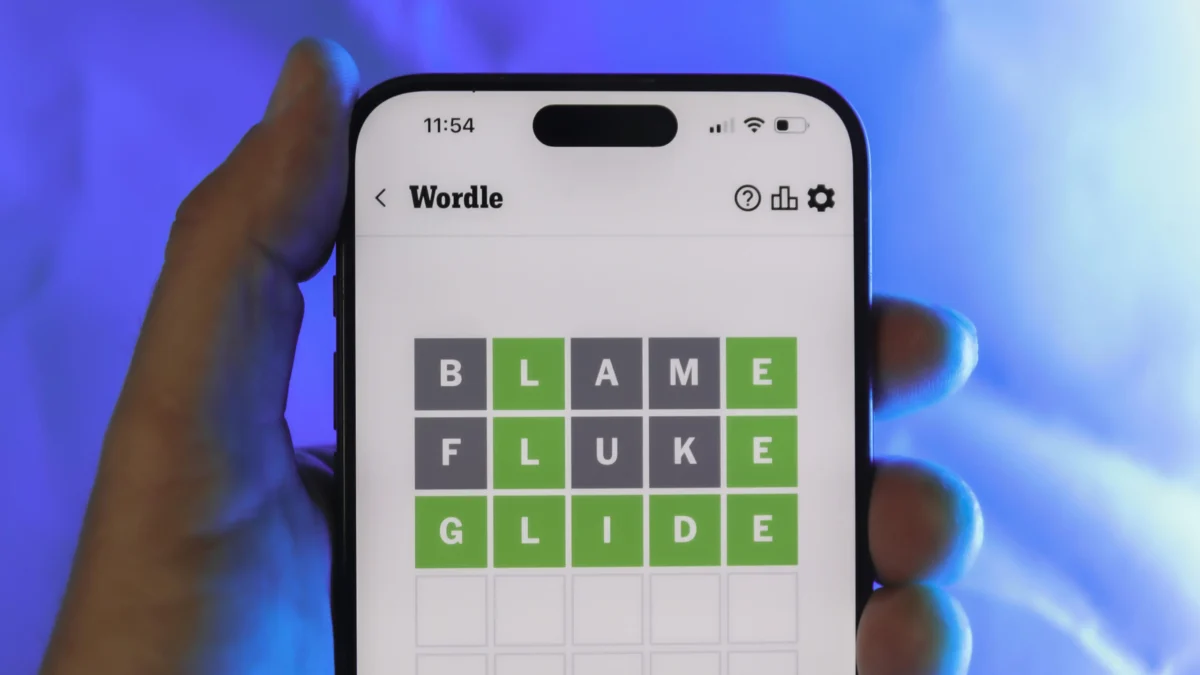
The latest iteration of the globally popular online word puzzle, Wordle, presented players with a particularly vexing challenge today, August 30, 2022, with the answer revealed as "INTEL." This five-letter solution, an abbreviation for "intelligence," has ignited a fresh round of discussion among the game’s millions of daily participants, with many expressing surprise and some frustration over its inclusion in the curated dictionary. The decision to feature an abbreviated term marks another instance where Wordle’s evolving linguistic parameters have prompted players to reconsider their strategies and expectations for the deceptively simple game.
The contentious nature of "INTEL" stems from a long-standing, albeit unwritten, understanding among many players that Wordle typically adheres to common, full-form English words—nouns, verbs, or adjectives—avoiding proper nouns, obscure terminology, and, crucially, abbreviations. While "INTEL" is widely recognized, particularly in contexts relating to military, corporate, or technological information gathering, its status as a direct shortening of "intelligence" has led some to perceive it as an "unfair" entry, challenging the established conventions of the game.
The Genesis and Global Phenomenon of Wordle
To fully appreciate the nuanced reaction to words like "INTEL," it is essential to revisit the origins and meteoric rise of Wordle. Created by software engineer Josh Wardle for his partner in 2021, the game quickly captivated a global audience with its elegant simplicity. Players are given six attempts to guess a five-letter word, with feedback provided after each guess: green squares indicate a correct letter in the correct position, yellow squares denote a correct letter in the wrong position, and grey squares signify letters not in the word at all. This straightforward mechanism, combined with the singular daily puzzle and the easy shareability of results without spoilers, fostered a vibrant online community.
The game’s initial success was organic, spreading rapidly through word-of-mouth and social media. Its appeal lay in its accessibility, its gentle mental stimulation, and its ability to connect people through a shared daily ritual. By January 2022, Wordle had become a cultural phenomenon, prompting The New York Times Company to acquire the game from Wardle for an undisclosed seven-figure sum. This acquisition brought Wordle under the umbrella of a prestigious journalistic institution known for its commitment to language and puzzles, but it also introduced a new layer of scrutiny regarding the game’s dictionary and editorial decisions.
Navigating the Wordle Dictionary: A Source of Ongoing Debate
The New York Times’ stewardship of Wordle has largely been successful, maintaining its core appeal while integrating it into their broader puzzle offerings. However, the curation of the game’s dictionary has been a recurring point of contention. The NYT inherited a dictionary from Josh Wardle but has since made its own adjustments, primarily aimed at removing obscure, offensive, or potentially controversial words to ensure a consistent and inclusive player experience. Yet, these editorial interventions have not been without their challenges, occasionally leading to widespread debate over specific word choices.

Previous instances of words sparking player dissent include "AGORA," "RUPEE," "SAUNA," and "HOMER." While these words are technically valid and appear in standard dictionaries, their perceived commonality or cultural specificity often differed among the diverse global player base. "AGORA," for example, an ancient Greek marketplace, was deemed too esoteric by some, while "RUPEE," a unit of currency, was seen as geographically specific. "HOMER," while a common name, was considered a proper noun by some, violating another unwritten rule, despite its other meanings (e.g., a home run in baseball).
"INTEL" falls into a distinct category of contentious words: the abbreviation. While "intel" has certainly permeated everyday lexicon, especially within certain professional spheres, its formal status as a complete word versus a shortened form of "intelligence" is where the linguistic friction arises. Standard dictionaries often list "intel" as an informal or colloquial abbreviation for "intelligence," acknowledging its widespread use but subtly categorizing it. For a game that prides itself on linguistic precision, such entries can feel like a departure from the expected norm.
Deconstructing the Puzzle: Hints and Strategic Approaches
For those who tackled Wordle #1898 today, the provided hints offered a structured path through the challenge, though the ultimate answer "INTEL" still required a leap for some. The original article provided five key clues:
- No repeated letters: This immediately narrows the field of possible five-letter words significantly, eliminating a vast number of common words with double letters (e.g., "BLOOD," "CLICK," "TWEEN" from recent answers).
- Two vowels: This is a crucial hint, guiding players towards words with a balanced vowel-consonant structure. Common vowels (A, E, I, O, U) are fundamental to most Wordle strategies.
- First letter is ‘I’: This is a powerful constraint, drastically reducing the pool of potential words. ‘I’ is a relatively common starting letter, but combined with other hints, it becomes highly effective.
- Last letter is ‘L’: Another strong positional clue. ‘L’ is a moderately common ending letter in five-letter words.
- Meaning: Secret, strategic, or specialized information: This semantic hint is perhaps the most direct pointer to "INTEL," especially for players familiar with its contemporary usage. However, without prior guesses confirming the letter structure, it might still be challenging to connect this meaning directly to a five-letter word starting with ‘I’ and ending with ‘L’ that isn’t a full, conventional word.
Effective Wordle strategy often begins with a strong opening word designed to reveal as many common letters and vowel positions as possible. Words like "CRANE," "ADIEU," "SLATE," or "TRAIN" are popular choices because they incorporate high-frequency letters (E, A, R, I, O, T, N, S, L, C). For "INTEL," a strong opener might reveal ‘I’ or ‘L’ early, or perhaps another common consonant like ‘N’ or ‘T’.
Once the first letter ‘I’ and last letter ‘L’ were established, players would then focus on filling the three middle slots, knowing there are no repeated letters and one more vowel. Potential combinations might include I _L. With the meaning hint, words like "IDYLL" (though often considered archaic or poetic, and has a repeated L sound in some pronunciations, but not a written repeated letter), or perhaps trying common letter combinations. The "abbreviation" factor is what often throws players off, as they might discard "INTEL" in favor of more conventionally spelled words that fit the letter pattern.
The Linguistic Status of ‘INTEL’
The core of the "INTEL" debate lies in its linguistic classification. Is it merely an abbreviation, or has it evolved into a standalone lexical item? Language is dynamic, and words constantly shift in usage and meaning. "Intel" originated as a clipped form of "intelligence," particularly in military and espionage contexts, becoming widely recognized during the Cold War and subsequent conflicts. Over time, its usage expanded into business, technology, and general discourse, often replacing the longer "intelligence" in certain phrases (e.g., "market intel," "tech intel").
Many dictionaries now list "intel" as a noun, often with a note indicating its informal status or its origin as an abbreviation. For instance, Merriam-Webster defines "intel" as "secret information about enemies or competitors; intelligence." The Oxford English Dictionary also acknowledges "intel" as a colloquial noun. This formal recognition by authoritative linguistic bodies suggests that "intel," while derived from an abbreviation, has arguably achieved a degree of lexical independence, functioning as a complete word in its own right, especially in specific registers.
However, for a game that appeals to a broad demographic, the nuance of "informal" or "colloquial" can be lost. Many players expect words to be universally recognized as standard, full-form entries. The inclusion of "INTEL" tests this boundary, pushing players to consider the fluid nature of language and the validity of terms that straddle the line between abbreviation and independent word.
Player Reactions and the Wordle Community
The immediate aftermath of a challenging Wordle often plays out on social media platforms like Twitter and Reddit. Threads dedicated to the daily puzzle quickly fill with a mix of triumph, frustration, and shared commiseration. For "INTEL," one can infer typical reactions:
- Frustration: Many players would likely express annoyance at what they perceive as an "unfair" word, citing its abbreviated nature. Comments like "Wordle is getting ridiculous with these words!" or "Abbreviations shouldn’t count!" would be common.
- Relief and Pride: Those who successfully guessed "INTEL" would share their triumph, perhaps detailing their thought process or admitting they got lucky.
- Discussion and Debate: The word choice would undoubtedly spark discussions about the game’s dictionary, prompting players to share their personal rules for what constitutes a "valid" Wordle word.
- Strategic Analysis: Players might analyze how "INTEL" fits or breaks common strategies, discussing whether their usual starting words helped or hindered them.
The WordleBot, a tool developed by The New York Times, would likely provide interesting statistics on how players fared with "INTEL." It analyzes every submitted guess, offering insights into optimal strategies and common pitfalls. For a word like "INTEL," the WordleBot might highlight a higher-than-average number of guesses, indicating its difficulty, or point out that players struggled to identify the word even after revealing several letters, due to its unconventional form.
The New York Times’ Editorial Philosophy and Future Implications
The New York Times’ continued management of Wordle involves a delicate balance: maintaining the game’s approachable nature while also providing a consistent, albeit sometimes challenging, intellectual exercise. The inclusion of words like "INTEL" suggests a willingness to occasionally push the boundaries of what players expect, perhaps aiming to broaden the linguistic scope of the puzzle or simply reflecting the evolving nature of the English language.
The editorial team at the NYT likely weighs several factors when curating the Wordle dictionary:

- Commonality: Is the word generally known by a significant portion of the English-speaking population?
- Clarity: Is its meaning unambiguous?
- Fairness: Does it offer a reasonable challenge without being overly obscure or niche?
- Linguistic Validity: Is it recognized by reputable dictionaries?
"INTEL" arguably ticks the boxes for commonality and linguistic validity, even if its "fairness" is debatable among purists. By including such words, the NYT reinforces its role not just as a puzzle provider but also, subtly, as a steward of language, reflecting its dynamic and often informal usage.
The implications of including words like "INTEL" are multi-faceted. It could:
- Broaden Player Vocabulary: Players might be introduced to words or forms of words they hadn’t previously considered for a puzzle game.
- Spark Linguistic Awareness: It encourages players to think more deeply about word origins, abbreviations, and the evolving lexicon.
- Alter Player Strategy: Players might adapt their guessing strategies to account for the possibility of abbreviations or more informal terms.
- Fuel Ongoing Debate: The discussion around "fair" words is likely to continue, adding to the game’s cultural footprint and community engagement.
A Look at Recent Wordle Answers
The context of "INTEL" also benefits from a review of recent Wordle answers, showcasing the variety of words the puzzle presents:
- August 29, No. 1897: BLOOD – A common, foundational word with a repeated letter, offering a classic Wordle challenge.
- August 28, No. 1896: TWEEN – A modern term, often referring to pre-teenagers, reflecting contemporary language usage.
- August 27, No. 1895: UNCUT – A descriptive adjective, relatively straightforward.
- August 26, No. 1894: CAPON – A more specific term (a castrated rooster), potentially challenging for some due to its niche agricultural context, though a valid noun.
- August 25, No. 1893: CLICK – A highly common verb/noun, generally considered an easier word.
This sequence demonstrates the varying difficulty and linguistic range within the Wordle dictionary. From common nouns like "BLOOD" to more specific terms like "CAPON" and contemporary words like "TWEEN," the game continuously offers a diverse linguistic landscape. "INTEL," in this context, stands out as a unique entry due to its abbreviated nature, pushing the boundaries of what players typically expect from the daily word puzzle.
Conclusion: Wordle’s Evolving Lexicon
The selection of "INTEL" as today’s Wordle answer underscores the ongoing evolution of the game and its dictionary under The New York Times’ stewardship. While challenging and even frustrating for some players accustomed to more traditional word forms, its inclusion highlights the dynamic nature of the English language and the fine line between abbreviation and established lexical item. Wordle continues to serve not just as a daily mental exercise but also as a platform for linguistic discussion, prompting millions worldwide to engage with the nuances of vocabulary, strategy, and the ever-changing rules of language itself. As the game continues its popular run, players can likely anticipate further surprises, forcing them to adapt their approaches and deepen their appreciation for the vast and varied tapestry of the English lexicon.