


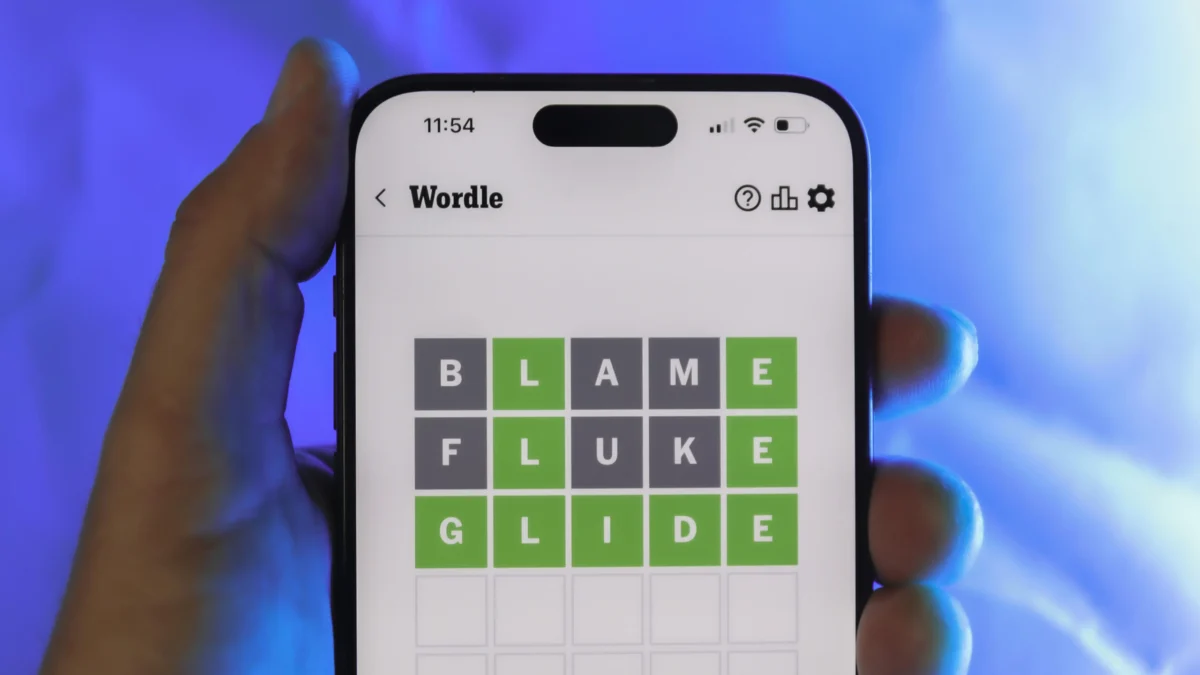
The daily quest to decipher the elusive five-letter word in Wordle continues to captivate millions globally, transforming a simple word puzzle into a cherished daily ritual. Today’s Wordle answer, "WISPY," presented a notable challenge for many enthusiasts, potentially disrupting hard-earned winning streaks due to its relatively uncommon initial and final letters. The New York Times, which acquired the viral sensation, continues to provide a suite of engaging daily puzzles, including the Mini Crossword, Connections, Connections: Sports Edition, and Strands, catering to a broad spectrum of word and logic game aficionados. For dedicated Wordle players aiming to fortify their strategies and maintain their unbroken streaks, understanding the underlying mechanics of English letter frequency and optimal starting word selection remains paramount.
The Daily Riddle: Unveiling "WISPY"
Each day, Wordle presents a fresh linguistic puzzle, and today’s challenge, identified as No. 1915, proved to be particularly tricky for many solvers. The word "WISPY" is defined as something thin, delicate, and light, often referring to hair, smoke, or clouds. Its difficulty stemmed primarily from its less frequent starting letter ‘W’ and ending letter ‘Y’, which are not typically among the top guesses for initial placements in a five-letter word strategy. The hints provided for today’s puzzle were designed to guide players through its nuances without outright revealing the solution:
- Wordle Hint No. 1: Repeats
- Today’s Wordle answer had no repeated letters, a crucial piece of information that immediately narrows down the possibilities for many experienced players.
- Wordle Hint No. 2: Vowels
- The answer featured one traditional vowel and one "sometimes vowel." In English, ‘A’, ‘E’, ‘I’, ‘O’, ‘U’ are standard vowels, while ‘Y’ often functions as a vowel, particularly when it’s not at the beginning of a word or when it creates a vowel sound (as in "WISPY"). This hint pointed directly to the presence of ‘I’ and ‘Y’.
- Wordle Hint No. 3: First Letter
- The word commenced with ‘W’, a letter that ranks lower in overall English letter frequency compared to common openers like ‘S’, ‘A’, ‘E’, or ‘R’.
- Wordle Hint No. 4: Last Letter
- The word concluded with ‘Y’, another letter that, while common as a vowel sound, is less frequently an ending consonant in high-frequency five-letter words.
- Wordle Hint No. 5: Meaning
- The semantic hint, describing something thin, delicate, and light, provided the final contextual clue for players who had successfully identified some of the letters.
The combination of a low-frequency starting letter, an uncommon ending letter, and the ‘Y’ acting as a vowel often creates a formidable barrier, even for seasoned players. Such words highlight the game’s ability to challenge conventional strategies and force players to think outside their usual lexical boxes. For context, yesterday’s Wordle answer, Sept. 15, No. 1914, was "DEALT," a word significantly more common in everyday parlance and featuring letters with higher frequency in the English lexicon. Other recent answers include "ASTER" (Sept. 11, No. 1910), "NIFTY" (Sept. 12, No. 1911), "FOCUS" (Sept. 13, No. 1912), and "RINSE" (Sept. 14, No. 1913), showcasing a diverse range of difficulty and letter combinations.
The Genesis and Global Phenomenon of Wordle
Wordle’s journey from a personal project to a global sensation is a testament to the power of simplicity and viral sharing. Created by Welsh software engineer Josh Wardle for his partner during the COVID-19 pandemic, the game was initially designed as a private, engaging pastime. Its public launch in October 2021 was low-key, but its popularity exploded through word-of-mouth, particularly on social media platforms where players enthusiastically shared their results using the distinctive green, yellow, and grey grid emojis without revealing the actual word. This unique sharing mechanism fueled its rapid ascent, turning it into an internet sensation by late 2021.
Wardle’s intention was to create a game that was accessible, non-addictive, and devoid of the common trappings of modern mobile games, such as intrusive ads, microtransactions, or demanding endless play. He aimed for a single daily puzzle, fostering anticipation and making each day’s challenge a shared global event. This philosophy resonated deeply with players seeking a refreshing departure from typical digital entertainment.
By January 2022, Wordle was attracting millions of daily players. Its immense success drew the attention of The New York Times, a media institution with a long-standing tradition of offering engaging puzzles, most notably its iconic crossword. In late January 2022, The New York Times Company announced its acquisition of Wordle from Josh Wardle for an undisclosed seven-figure sum. The acquisition was framed as an effort to expand The Times’s portfolio of games, which had become a significant driver of digital subscriptions. The Times committed to keeping the game free for all, at least initially, honoring Wardle’s original vision while integrating it into its broader digital offerings.

Mastering Wordle: Strategies for Sustained Success
The enduring appeal of Wordle lies not just in its daily challenge but also in the strategic depth it offers. While luck plays a minor role, consistent success often stems from a calculated approach, beginning with the choice of an optimal starting word. Experts and computational analyses have delved into the English lexicon to identify words that maximize information gain in the fewest guesses.
1. Letter Frequency Analysis:
The English language is not democratic in its letter usage. Some letters appear far more frequently than others. According to analyses of vast text corpora like the Oxford English Dictionary, the most common letters in English words, in descending order, are generally E, T, A, O, I, N, S, H, R, D, L, U. Conversely, letters like Q, Z, J, X, W, K, V, B, Y, G, F, M, P tend to appear less frequently.
An effective starting word leverages these high-frequency letters. The goal is to identify as many correct letters as possible, and their positions, within the first one or two guesses. Words like "CRANE," "ADIEU," "ROATE," "SLATE," "TRAIN," and "CLOSE" are frequently cited as excellent starting points because they incorporate a good mix of common vowels and consonants.
- "CRANE": Features C, R, A, N, E – all high-frequency letters, including three common vowels.
- "ADIEU": Maximizes vowel usage (A, D, I, E, U) which is crucial for identifying word structures.
- "ROATE": Another word rich in common letters (R, O, A, T, E).
- "SLATE": Offers S, L, A, T, E – combining common consonants with frequently used vowels.
- "TRAIN": (As mentioned in the original text) T, R, A, I, N – excellent distribution of high-frequency letters.
- "CLOSE": (Also mentioned) C, L, O, S, E – another strong contender for its letter composition.
2. Vowel and Consonant Balance:
A balanced approach to vowels and consonants in the initial guess is vital. Too many vowels might give positional information but little about specific consonants, while too many consonants might miss crucial vowel placements. A word with 2-3 vowels and 2-3 consonants, especially common ones, is generally considered ideal.
3. Unique Letters:
Optimal starting words also tend to use five unique letters, avoiding repeats. This ensures that each letter guessed provides distinct information, maximizing the data gained from the colored tiles (green for correct letter and position, yellow for correct letter wrong position, grey for not in the word). For instance, a word like "APPLE" would only test four unique letters, which is less efficient for a first guess.
4. The "Second Word" Strategy:
Some advanced players advocate for a two-word opening strategy. The first word (e.g., "CRANE") aims to identify common letters. The second word (e.g., "BLIMP" or "FROTH") uses a completely different set of high-frequency letters not present in the first word, thereby maximizing the chances of hitting a green or yellow tile within two guesses, regardless of the outcome of the first. This approach is rooted in information theory, aiming to reduce the pool of possible answers as quickly as possible.
5. Avoiding Rare Letters in Early Guesses:
Conversely, it’s generally advisable to avoid words containing rare letters (Q, Z, J, X, W, K) in the initial guesses, unless there is a specific strategic reason or a strong hunch. These letters provide less statistical information on average, and while they might be part of the solution, dedicating an early guess to them can be inefficient. Today’s word "WISPY" with its ‘W’ and ‘Y’ highlights this challenge, as many players’ optimal starting words would not include these letters, making the initial identification more difficult.
The New York Times Games: A Broader Ecosystem of Engagement
The acquisition of Wordle solidified The New York Times’s position as a premier destination for digital puzzles. The NYT Games platform offers a diverse array of intellectual challenges that complement Wordle’s simplicity with varying levels of complexity.
- The Mini Crossword: A quick, accessible version of the classic crossword, perfect for a short mental break. Its daily release and manageable size make it a popular choice.
- Connections: This game challenges players to find groups of four words that share a common thread. It tests lateral thinking and semantic association, often revealing surprising connections between seemingly disparate terms.
- Connections: Sports Edition: A specialized version of Connections, focusing on sports-related terminology, athletes, teams, and events, catering to a niche but passionate audience.
- Strands: The newest addition to the NYT Games family, Strands requires players to find hidden words within a grid of letters that relate to a specific theme. It’s a more abstract and challenging word search variant that demands careful observation and thematic understanding.
These games, alongside the traditional New York Times Crossword, form a robust ecosystem that appeals to millions of subscribers. The "Games" section has become a significant asset for The Times, driving engagement and subscription revenue. The daily nature of these puzzles fosters routine and a sense of community, with players often discussing their triumphs and frustrations on social media.
The Psychological and Social Dimensions of Daily Puzzles
The appeal of games like Wordle and its NYT counterparts extends beyond mere entertainment. Psychologically, these daily challenges offer a sense of accomplishment, a brief mental workout, and a welcome distraction from the stresses of daily life. The finite nature of Wordle—one puzzle per day—prevents overconsumption and fosters anticipation. This controlled engagement contributes to its sustained popularity.
Socially, Wordle has created a unique global community. The non-spoiler sharing mechanism allows players to express their progress without revealing the answer, fostering friendly competition and camaraderie. It has become a common talking point, a shared cultural touchstone that connects people across different demographics and geographies. This collective experience of tackling the same puzzle each day strengthens bonds and creates a sense of belonging.
Looking Ahead: The Enduring Legacy of Wordle
As Wordle continues its run under The New York Times, its legacy as a game that democratized word puzzles and created a unique social phenomenon remains secure. While today’s "WISPY" might have stumped some, it serves as a reminder of the game’s clever design, its ability to surprise, and the continuous learning curve it offers. The strategic pursuit of optimal starting words, the reliance on linguistic data, and the sheer joy of deduction ensure that Wordle, along with the broader New York Times Games suite, will likely remain a cherished daily ritual for years to come, continuing to challenge minds and connect communities one five-letter word at a time. The simple grid, filled with green, yellow, and grey, represents not just a solved puzzle, but a daily triumph of wit and strategy in a world that increasingly values concise, engaging, and intellectually stimulating digital experiences.