


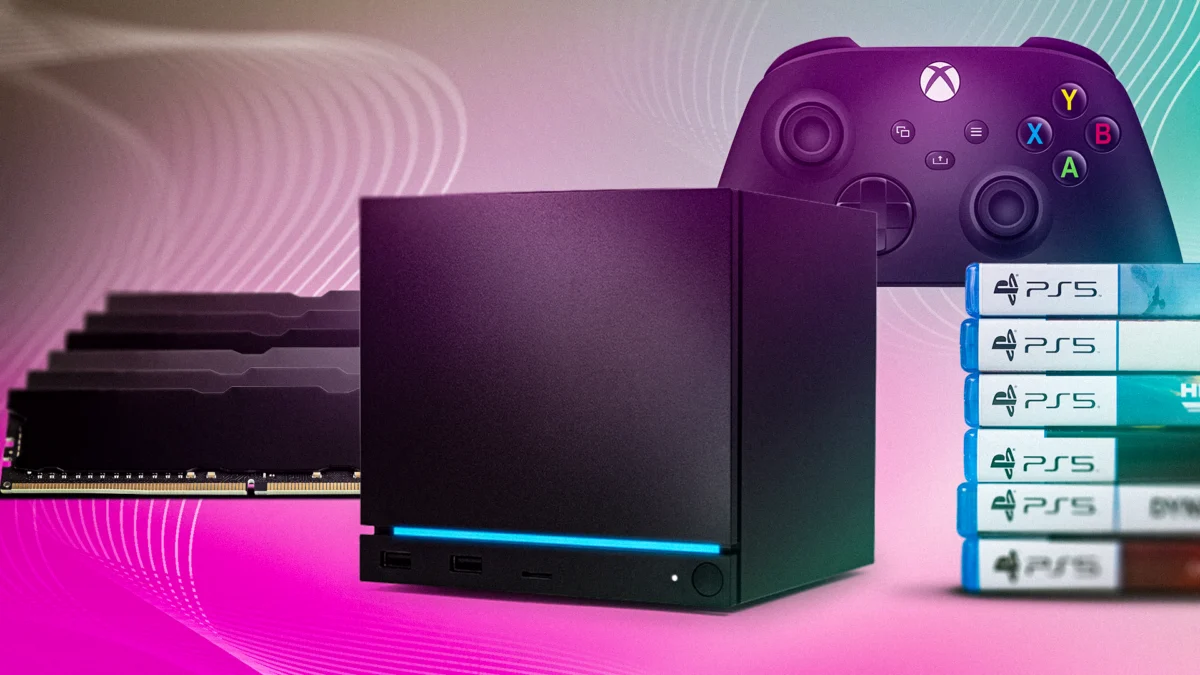
Summer, traditionally a period of vibrant releases and celebratory sales for the gaming community, took an unsettling turn in 2026, marking a significant inflection point defined by escalating costs, industry consolidation, and shifting consumer paradigms. While staples like the Steam Summer Sale offered expected discounts and digital showcases such as Nintendo Direct and PlayStation’s State of Play unveiled future titles, an undercurrent of disquiet grew stronger with a series of announcements that collectively dampened gamer enthusiasm. This disquiet was further exacerbated by the ongoing "RAMageddon," a global shortage of Random Access Memory (RAM) that had already driven up the prices of essential gaming hardware, from consoles and handhelds to PC components. The confluence of these factors signaled a profound shift, with major industry players making decisions that challenged long-held consumer expectations and raised concerns about the future accessibility and ownership of digital entertainment.
The Economic Strain of "RAMageddon" and Rising Hardware Costs
The year 2026 found the gaming industry grappling with the pervasive economic fallout of "RAMageddon," a term coined to describe the severe global shortage and subsequent price hike of RAM and storage components. This crisis, largely attributed to the insatiable demand for high-bandwidth memory (HBM) by the rapidly expanding artificial intelligence sector, rippled through the entire tech supply chain. Manufacturers of consumer electronics, including gaming hardware, faced unprecedented increases in production costs, directly translating into higher retail prices for end-users. Analysts had warned that this shortage was not a fleeting issue, predicting its persistence for at least another two to three years, setting an ominous tone for upcoming hardware generations. This macroeconomic pressure formed the backdrop against which many of the summer’s most contentious announcements were made, with companies increasingly unwilling or unable to subsidize hardware costs as they had in previous console cycles.
Valve’s Steam Machine: A High-Priced Entry Point

One of the most anticipated hardware launches of the year, Valve’s Steam Machine, finally arrived on June 29, 2026, after more than half a year of eager anticipation. Positioned as a bridge between PC gaming flexibility and console-like living room comfort, the device aimed to replicate the success of Valve’s popular Steam Deck handheld. However, its debut was met with a polarizing reception, primarily due to its premium pricing structure. The base model launched at $1,049, with a 2TB storage option commanding $1,349. In a move that further alienated some prospective buyers, the Steam Machine’s controller was sold separately, adding another $79 to the cost and pushing the total price for a functional setup to $1,128 for the 512GB model and $1,428 for the 2TB version.
Valve’s decision not to subsidize the hardware, a common practice for traditional console manufacturers like Microsoft and Sony, meant that consumers bore the full brunt of the "RAMageddon"-inflated component costs. Despite its high price, performance benchmarks indicated that the Steam Machine was only slightly ahead of the PlayStation 5 and Xbox Series X, consoles that had been on the market for several years. This performance-to-price ratio became a central point of contention.
While the Steam Machine offered a compelling solution for PC gamers desiring a seamless big-screen experience without the "logistical nightmare" of extensive cable management, many questioned its overall value. Industry analysts noted that the device, while technically capable of delivering reliable 1080p gaming in a compact form factor, appeared to be a "solution without a problem" for a significant portion of the market. PC enthusiasts already had robust setups, and console gamers were hesitant to invest over $1,100 for a system that offered comparable or only marginally superior performance to their existing consoles, especially with next-generation consoles on the horizon. The Steam Machine’s launch, therefore, established an unpleasant precedent: it was the first console-like device to break the $1,000 price barrier, a trend widely expected to continue with the upcoming PlayStation 6 and Microsoft’s Project Helix, both projected to launch in late 2027 or 2028 at similar or higher price points.
Sony’s All-Digital PlayStation 6: A Contentious Future
Hot on the heels of the Steam Machine’s launch, Sony delivered another seismic shift on July 1, 2026, announcing that its next-generation console, the PlayStation 6, would be entirely digital, completely eschewing a physical disc drive. This declaration confirmed earlier rumors and sent shockwaves through the gaming community, igniting a fierce debate about consumer rights, game preservation, and the future of physical media.

Sony justified its decision by citing its 2025 fiscal year earnings report, which claimed that 85% of all new games sold were digital. The company argued that removing the disc drive would impact a "relatively small number of players" and streamline production. While the 85% figure was met with skepticism across social media, it underscored a broader industry trend toward digital distribution that had already wreaked havoc on traditional physical retailers. GameStop, for instance, had closed over 1,300 locations in the preceding two years, including 700 in 2025 alone. Larger retailers like Best Buy and Walmart had also steadily phased out physical media sections from their shelves, reflecting a dwindling market for disc-based games. From a purely business perspective, Sony argued that including a disc reader for a console expected to have a decade-long lifespan, in an environment where both consumers and retailers were abandoning physical media, was no longer a financially viable option.
However, the backlash from consumers was immediate, severe, and sustained. Critics highlighted several fundamental concerns with an all-digital future:
- Loss of Ownership: The most significant argument centered on the nature of digital purchases. Unlike physical discs, which confer a tangible sense of ownership, digital games are essentially licenses that can be revoked by the platform holder at any time. This was starkly illustrated just days before the PS6 announcement, on June 29, 2026, when Sony removed previously purchased StudioCanal movies from users’ digital libraries, demonstrating the platform’s ultimate authority over content consumers believed they owned.
- Demise of the Used Game Market: An all-digital ecosystem eliminates the lucrative and consumer-friendly used game market, forcing players to purchase all titles at full price or wait for official digital sales. This impacts affordability and access, especially for those on tighter budgets.
- "Always Online" Requirement and Preservation: Digital-only gaming often necessitates a constant internet connection for authentication, updates, and access, leaving players vulnerable to choppy Wi-Fi, outages, or eventual server shutdowns. The long-term preservation of games also becomes precarious, as titles can disappear if platform holders decide to delist them or cease supporting older digital storefronts.
- Storage Limitations: With game sizes continually increasing, an all-digital library quickly consumes internal storage, often requiring costly external solutions.
The gaming community’s reaction manifested in widespread protests. Social media platforms were flooded with objections, memes, and calls for boycotts. Companies like Domino’s, GameSir, and KFC joined the satirical chorus, announcing plans to "go digital" with their products, mocking Sony’s rationale. A week-long "PlayStation Blackout" was planned for August, further demonstrating the depth of consumer frustration, which was exacerbated by a recent PlayStation Network outage that left many unable to access their digital purchases.
Microsoft’s Restructuring: Layoffs and Strategic Re-evaluation
While Sony grappled with consumer backlash, Microsoft faced its own internal challenges, culminating in a significant restructuring of its Xbox division. In July 2026, Microsoft announced the layoff of 3,600 employees from its Xbox department and the closure of four internal game studios: Compulsion Games, Double Fine, Ninja Theory, and Undead Labs. This move marked a stark re-evaluation of Microsoft’s decade-long strategy of aggressively acquiring major studios like Activision, ZeniMax (Bethesda), and Mojang, largely to bolster its Xbox Game Pass subscription service.

Asha Sharma, who took over as Xbox CEO in February 2026, inherited a division struggling to translate its massive acquisitions into sustained profitability. While her predecessor, Phil Spencer, had garnered significant goodwill, his tenure oversaw a period where Microsoft’s gaming department, despite its vast investments, failed to consistently deliver blockbuster exclusive titles or achieve the desired financial returns from Game Pass. Sharma’s early actions, which included lowering Game Pass prices and announcing that Call of Duty titles would no longer be day-one additions to the service, signaled a departure from previous strategies. The subsequent layoffs and studio closures were a painful public admission that the "throwing spaghetti at the wall to see what sticks" approach had not yielded the anticipated success.
In her official announcement, Sharma openly acknowledged a "fragmented mess" within Xbox’s management structure, framing the restructuring as an attempt to "right the ship" and streamline operations. This corporate reset, however, left thousands of developers jobless and raised questions about the stability and creative freedom within Microsoft’s remaining studios.
Looking ahead, Microsoft’s next console, code-named Project Helix, slated for late 2027 or 2028, is reportedly being designed as a direct competitor to the Steam Machine, aiming to play both Xbox and PC games. Insiders suggest that Project Helix is also expected to launch at a price point exceeding $1,000, driven by the persistent RAMageddon. Although the hardware team is reportedly exploring ways to mitigate these costs, the development cycle, with developer consoles anticipated as early as 2027, places it firmly within the window of the memory shortage, making significant price reductions unlikely without substantial console subsidies from Microsoft. There were even whispers that Project Helix might follow Sony’s lead in being disc-less, though some reports indicated Microsoft was considering retaining a disc drive to gain a competitive advantage over the PS6.
Nintendo and the Escalating Price of Software
Even Nintendo, often perceived as an outlier in its market approach, contributed to the industry’s unsettling trends. In 2025, the gaming giant was the first to establish a new benchmark for brand-new game releases, charging an unprecedented $80 per title. This precedent quickly replicated across the industry, with highly anticipated games like Grand Theft Auto VI confirmed to launch at this elevated price point. Furthermore, with the May 2026 release of "Yoshi and the Mysterious Book," Nintendo set another concerning standard by pricing physical copies higher than their digital counterparts. While some individual games had previously offered minor price disparities, a publisher of Nintendo’s scale universally applying this strategy was seen as a "watershed moment," signaling a potential industry-wide shift that could further disincentivize physical purchases.

The Broader Implications: A New Era of Gaming Instability
The collective impact of these announcements in Summer 2026 painted a troubling picture for the gaming community. The trends are not isolated incidents but rather converging forces shaping a new, more challenging landscape for both consumers and creators.
- Skyrocketing Costs: Consumers are facing a dual assault of rising hardware and software prices. The $1,000+ console, once unthinkable, is becoming the new norm, while $80 digital games are steadily replacing the traditional $60-$70 price tag. This escalating cost of entry and ongoing engagement risks alienating a significant portion of the gaming audience.
- Digital-Only Future and Consumer Rights: The move towards an all-digital ecosystem, exemplified by the PlayStation 6, fundamentally alters the relationship between players and their purchased content. The shift from ownership to licensing raises serious concerns about game preservation, accessibility, the viability of the used game market, and consumer autonomy. The StudioCanal incident served as a chilling reminder of the fragility of digital libraries.
- Developer Instability and Layoffs: The wave of layoffs at Microsoft’s Xbox division is not an isolated event. The gaming industry experienced a significant surge in job losses throughout 2026, with dedicated websites tracking layoffs reporting "significantly higher" numbers than in 2025. Data suggested that by the end of 2026, layoffs would affect 14,259 people, a 78% increase from initial forecasts. Sony also contributed to this trend, laying off hundreds from Bungie after the studio released its final Destiny 2 update in June. This pervasive instability impacts developer morale, fosters a climate of fear, and threatens creative innovation as studios prioritize financially safer, often iterative, projects.
- Consolidation and Strategic Shifts: The industry is witnessing a period of strategic re-evaluation and consolidation. Microsoft’s layoffs indicate a retreat from its expansive acquisition strategy, while Sony’s digital-only move reflects a bold, albeit risky, bet on future market trends. The competition between future consoles, like Project Helix and PS6, will likely hinge on differentiation beyond just raw power, potentially including service offerings and platform exclusivity.
The summer of 2026 served as a stark wake-up call, indicating that the gaming industry is undergoing a fundamental transformation. The era of all-digital, $1,000+ consoles, $80 digital games, and widespread studio closures appears to be firmly entrenched, at least for the foreseeable future. As hardware and software costs continue to climb, and consumer ownership rights diminish, the industry faces critical questions about its long-term sustainability and its commitment to the very community that fuels its existence. The trends observed in 2026 are not merely temporary blips but rather foundational shifts that will define the gaming experience for years to come.