


The Genesis of Rebel Wolves and Development Context
Rebel Wolves was founded in early 2022 by several prominent members of CD Projekt Red, aiming to create a studio environment that prioritized creative independence and a "team-first" mentality. The announcement of their first project, then codenamed "Dawnwalker," generated immediate interest due to the involvement of key figures behind some of the most critically acclaimed RPGs of the last decade. The studio’s mission was to depart from the "lore-heavy" homework often required in high-fantasy settings, instead focusing on a more accessible but emotionally resonant narrative.

The development of The Blood of Dawnwalker utilized Unreal Engine 5, allowing the team to leverage advanced lighting and asset streaming technologies to create the Vale Sangora. Throughout the development cycle, the studio emphasized that while the game would be smaller in geographic scale than contemporary open-world giants, it would offer a higher density of meaningful choices. This philosophy is evident in the final product, which eschews the "map-clearing" tropes of the genre in favor of a narrative that reacts dynamically to the player’s presence.

Narrative Framework: The Struggle of Coen and Vale Sangora
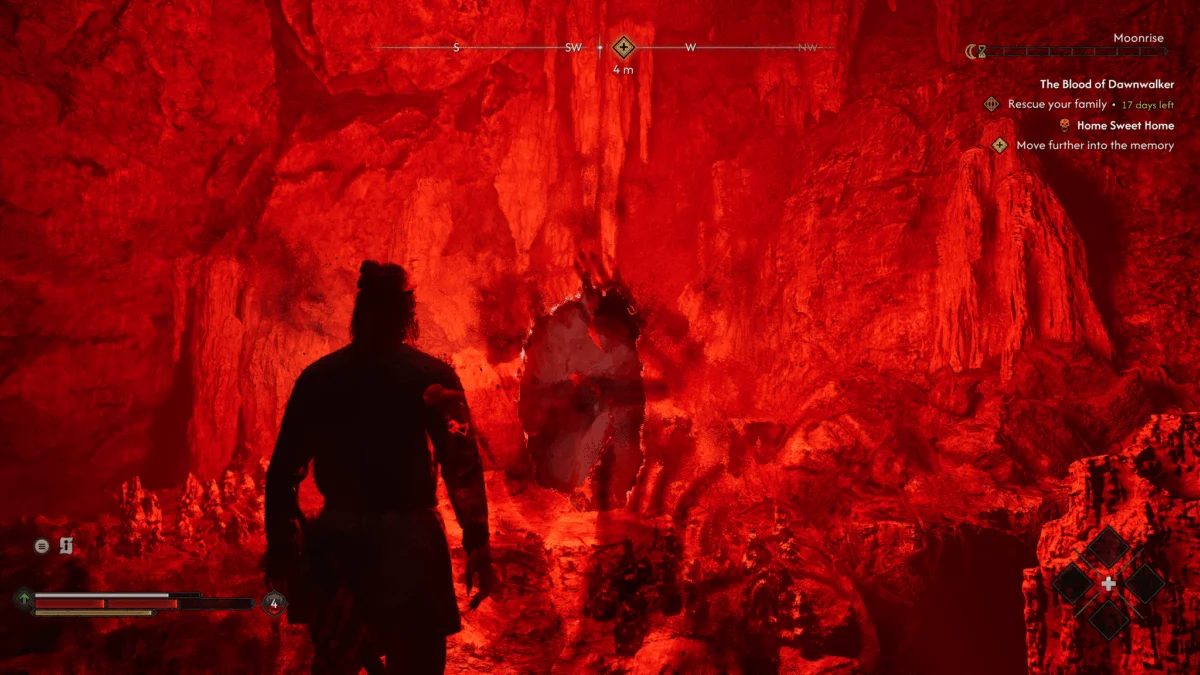
The story follows Coen, a young man residing in the secluded Vale Sangora, a region devastated by the Black Plague. In this setting, vampires have emerged not merely as predators but as a complex social class—acting as both the "saviors" who halted the plague’s spread and the "oppressors" who now demand a heavy blood tithe. The central conflict is personal: Coen has exactly thirty days to rescue his family from the clutches of the primary antagonist, Brencis, the Knyaz of Vale Sangora.

The narrative structure is notably open. Following a linear prologue, players are granted the freedom to pursue the main objective immediately, though success without proper preparation is statistically improbable. The writing avoids the binary "good vs. evil" trope, instead presenting moral gray areas. Coen is portrayed as a protagonist who is inexperienced yet socially savvy, allowing the player to navigate complex diplomatic situations. While the game includes romance options, early reports suggest these subplots are less integrated into the main narrative than other systems, sometimes feeling secondary to the primary family-rescue arc.

The Dawnwalker Mechanic: A Dual-State Paradigm
The gameplay is defined by the "Dawnwalker" state, reflecting Coen’s half-human, half-vampire nature. This system creates a distinct gameplay loop dictated by the in-game clock:

- Daytime Gameplay: During the day, Coen retains his human appearance and gains access to witchcraft-based abilities. This period is generally safer, as it removes the necessity for feeding and allows for easier navigation of human settlements.
- Nighttime Gameplay: As the sun sets, Coen’s vampiric traits manifest. Players gain access to supernatural mobility, including short-range teleports (Phase Jump), the ability to walk on vertical surfaces, and the use of claws in lieu of traditional weaponry.
A critical component of the nighttime cycle is the "Hunger" mechanic. If Coen’s health drops below a certain threshold during combat, he may lose control and feed on nearby NPCs, including quest-givers. This introduces a high-stakes risk-reward factor to nighttime exploration, as a single failed combat encounter can permanently alter the narrative landscape by removing key characters.

Temporal Constraints and Mission Structure
Perhaps the most discussed feature of The Blood of Dawnwalker is the 30-day time limit. Every major action—completing quests, upgrading skills, or traveling long distances—advances the clock. This mechanic was designed to instill a sense of urgency and force players to prioritize their objectives.

However, data from early playthroughs indicates that the system is more forgiving than its initial presentation suggests. Most players can reach the final encounter with the majority of side content completed within approximately 20 in-game days. While the threat of a "fail-state" looms over the early hours, it serves more as a narrative pacing tool than a rigid mechanical barrier. The game features three secondary antagonists who must be weakened or defeated to prepare for the final confrontation. Each of these villains is tied to a bespoke questline, though much of the preparation involves clearing enemy camps and reducing their regional "Infamy" level.

Combat Systems and Technical Performance
The combat in The Blood of Dawnwalker utilizes a directional input system for both attacking and blocking. Players must match the angle of incoming strikes based on visual cues, a system that provides depth in one-on-one duels but has been criticized for becoming chaotic during encounters with large groups.

On the technical front, the game’s performance on the Xbox Series X has seen significant improvements since the pre-launch period. Initially, the developer promised only 30fps and 40fps modes. However, a comprehensive day-one patch introduced a 60fps "Performance Mode." While this mode achieves a smoother frame rate, it does so with some compromises:

- Visual Consistency: The game lacks High Dynamic Range (HDR) support at launch, leading to some lost detail in the game’s many dark environments.
- Stability: Frame rates can fluctuate during intense combat sequences, and certain cinematic cutscenes remain locked at 30fps to maintain visual fidelity.
- Geometry Issues: Players have reported "jank" associated with complex movement, such as Coen becoming stuck on terrain when attempting to transition between wall-walking and floor-running.
Market Performance and Future Trajectory
On September 10, 2026, Rebel Wolves announced that The Blood of Dawnwalker had surpassed 1 million copies sold across all platforms. This commercial success is a vital indicator for the studio’s long-term plans. The developer has confirmed that this title is the first entry in a planned "Dawnwalker Saga."

Future installments are rumored to explore different historical periods, including a potential transition to a modern-day setting. The studio has also expressed intentions to implement a "save-data carryover" system, where the choices made by Coen in the 14th century will influence the state of the world and the lineage of characters in future games. This ambitious plan positions Rebel Wolves as a serious competitor in the RPG space, moving beyond the shadow of their previous work at CD Projekt Red.

Analysis of Implications for the RPG Genre
The Blood of Dawnwalker arrives at a time when the industry is questioning the sustainability of massive, 100-hour open-world maps. By offering a "modest" world size in Vale Sangora, Rebel Wolves is betting on density and reactivity over sheer scale. The world changes based on the player’s "Infamy" score; as Coen becomes more notorious, guards become more alert, vendor prices rise, and certain city sectors may be placed under lockdown.

While the game suffers from the "unpolished silver" typical of ambitious debut titles—including camera issues and occasional navigation bugs—it demonstrates a clear path forward for narrative-heavy RPGs. The success of the 30-day mechanic, even as a "soft" limit, suggests that players are willing to accept unconventional constraints if they enhance the story’s stakes. As the studio moves into post-launch support, the focus will likely remain on tightening the directional combat and resolving the remaining technical "hitchiness" on console platforms. For the broader industry, The Blood of Dawnwalker serves as a case study in how veteran talent can successfully pivot to independent development while maintaining high production values and narrative ambition.