


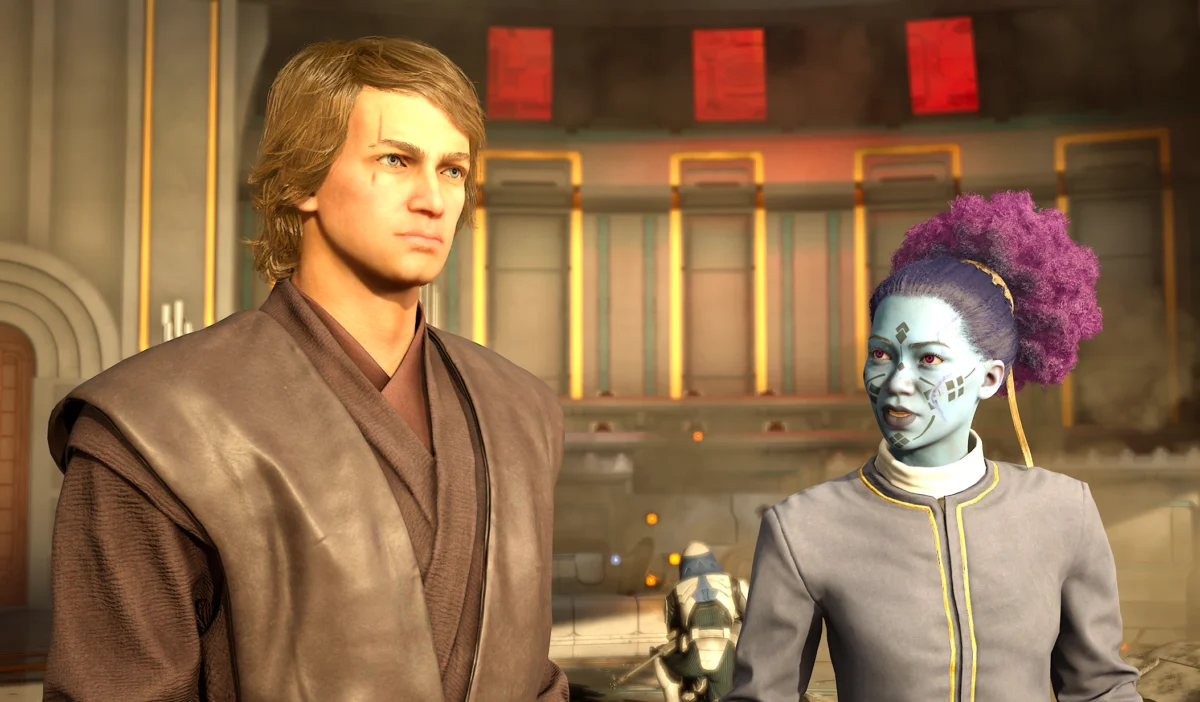
Star Wars: Zero Company, the highly anticipated turn-based strategy title from Bit Reactor, officially launched on August 27, promising to usher in a new era for the genre by fusing strategic depth with "absolute cinema" production values typically reserved for blockbuster adventure and role-playing games. Developed under the ambitious vision of industry veteran Greg Foertsch, the game seeks to transcend the traditional confines of turn-based tactics, offering a rich narrative, extensive character customization, and an immersive experience set within the iconic Star Wars universe.
The Genesis of a Cinematic Strategy Game
At the heart of Star Wars: Zero Company’s innovative approach is Greg Foertsch, a luminary in the realm of tactical strategy games. Foertsch, celebrated for his tenure as art director at Firaxis Games, played a pivotal role in shaping the visual and atmospheric identity of critically acclaimed titles such as XCOM: Enemy Unknown and XCOM 2, which revitalized the turn-based strategy genre. His portfolio also includes the recently released Marvel’s Midnight Suns, a tactical RPG that garnered praise for its unique card-based combat system and deep character interactions, though it was arguably overlooked in terms of mainstream commercial success.

Foertsch’s departure from Firaxis was driven by a profound desire to push the boundaries of turn-based strategy even further. He envisioned a game where strategic combat was seamlessly integrated with the epic storytelling and high production fidelity characteristic of major RPGs and adventure titles. This ambition led him to establish Bit Reactor, a new studio dedicated to realizing this very goal. The studio’s inception quickly gained significant traction when Foertsch received a call from industry titan Vince Zampella, then CEO of Respawn Entertainment. Zampella, known for spearheading successful franchises like Apex Legends and the Star Wars Jedi series (Fallen Order, Survivor), recognized the potential in Foertsch’s vision and presented him with the opportunity to apply it to the expansive Star Wars universe. The prospect of blending his innovative strategy concepts with one of entertainment’s most beloved intellectual properties proved irresistible for Foertsch, and he promptly accepted the challenge.
A Deep Dive into the Star Wars: Zero Company Experience
Star Wars: Zero Company is not merely a turn-based strategy game; it is an immersive narrative and tactical experience. From the outset, the game distinguishes itself with a level of polish and atmosphere that rivals titles from more traditionally popular genres. The commitment to "epic production values" is evident in every facet, from its sweeping orchestral score that evokes the grandeur of Star Wars films to the high-quality writing and voice acting. Notably, many of the voice actors featured in Zero Company have lent their talents to The Clone Wars animated series, grounding the game firmly within that beloved era of Star Wars lore and ensuring authentic performances that resonate with fans. The story, initially presenting low stakes, gradually expands into a truly grand narrative, unfolding a compelling saga that promises to captivate players.
Players step into the boots of Hawks, a former Republic officer whose career has seen better days. Recruited by an intelligence service, Hawks is tasked with investigating the enigmatic Infinite Coil, a mysterious cult whose activities pose an escalating threat to galactic peace. The game offers robust character creation tools, allowing players to fully customize their rendition of Hawks. With six playable species, each offering cosmetic differences rather than optimal stat choices, players are encouraged to select based on aesthetic preference and role-playing inclination. The depth of customization extends to a wide array of hairstyles, tattoos, scars, and outfits, providing RPG aficionados with countless hours to personalize Hawks and their expanding roster of companions. This emphasis on player agency in character appearance is a deliberate move to foster a deeper connection between the player and their in-game avatar, a hallmark of successful RPGs.

Assembling the Misfit Crew: Zero Company
Hawks serves as the leader of Zero Company, a motley ensemble of individuals united by their shared mission, diverse backgrounds, and often questionable pasts. This "standard-issue group of ne’er-do-wells and rogues, dreamers and cynics" forms the core of the player’s tactical force. Each member brings a distinct personality and backstory to the team:
- Jae: A secret agent striving to prove her worth to her noble family, hinting at a narrative thread of ambition and legacy.
- Trick: A clone trooper on a poignant quest to find his lost brothers and secure markers for his card game, blending personal loss with a touch of roguish charm.
- BR-1: An astromech droid whose expressive "beep boop beep" suggests a personality beyond mere programming.
- Kabb Uppercut: A former prize fighter whose simple desire to listen to space opera adds a touch of unexpected cultural depth to the rough-and-tumble crew.
As the narrative progresses, Zero Company expands, recruiting additional allies including a skilled Jedi, a formidable Mandalorian (Cly Kullervo, whose shock ability is noted as a "game changer"), and other "random drifters" encountered throughout the galaxy. This dynamic recruitment system allows players to tailor their squad composition to their preferred playstyle. The game features eight distinct classes—such as rogue, sniper, assault, and medic—with the added strategic layer of multiclassing becoming available after a certain point. While recruits may come with a preset class, their abilities are largely customizable, offering further tactical flexibility. Story characters, like the Jedi (e.g., Tel-Rea, a cybernetically altered Tognath wielding dual lightsabers and Force push), possess unique, often restricted, abilities that contribute significantly to the wondrous variety and tactical options available to the player.
Strategic Combat and Base Management: The Den and Beyond

Missions in Star Wars: Zero Company are viewed from an isometric perspective, familiar to veterans of XCOM and similar tactical games. Each character commands three action points per turn, which can be spent on movement, firing a weapon, deploying a grenade, or utilizing a special power like Kabb’s signature "Uppercut." The combat system incorporates percentage chances to hit, a mechanic that will instantly resonate with XCOM players who understand the inherent tension and occasional frustration of a 95% chance to hit somehow resulting in a miss—a defining characteristic affectionately dubbed "ZCOM, baby!" The game features a robust permadeath system: if a character loses all their energy, they are downed and must be revived, but will sustain a wound. Accumulate three wounds, and the character is permanently lost. While story characters other than Hawks can die, Hawks’ death results in an immediate game over, requiring a mission reload. For the most hardcore players, a "Beskar mode" offers an ironman-like experience where Hawks’ death means the entire campaign is irrevocably lost, adding an intense layer of risk.
Between missions, Zero Company operates from "The Den," an abandoned cargo ship docked at the asteroid station known as the Ring of Kafrene. This hub serves as the central point for a range of downtime activities crucial for character progression and strategic planning, embodying the "roleplaying in RPG" aspect. Here, players can engage in dialogue with their companions, purchase new equipment, heal wounded squadmates in the medbay, and invest credits in upgrading facilities to unlock new team abilities. For players who prefer a more streamlined experience, a map interface allows direct access to necessary menus, bypassing extensive hub exploration.
Beyond direct combat, Hawks and the crew engage in various off-screen "Operations" using a dedicated currency called "Intelligence." These operations can lead to new missions, or simply yield credits and equipment, providing a strategic layer reminiscent of XCOM 2‘s global management or Midnight Suns‘ research projects. This mechanic is particularly useful for giving rarely used squad members purpose, as players often find themselves developing "A" and "B" teams, with the latter frequently handling these background operations. The HoloTable, a central interface in The Den, presents critical strategic choices, such as prioritizing missions that prevent enemy bonuses, often under a time constraint, forcing players to make impactful decisions that shape the ongoing campaign.
A crucial element of character development and squad synergy is the "Bond" system. This relationship metric increases when characters work together—healing, rescuing, or assisting shots—unlocking small but meaningful bonuses that accumulate over time. Bond acts as a secondary form of experience points, offering a choice of three upgrades each time it levels up. Its rapid progression early in the game incentivizes players to pair rookies with Hawks and other main characters, ensuring a well-rounded and deeply connected squad.

Mastering Advantage: The Key to Victory
Initially, the pace of missions might strike some XCOM diehards as slow, a concern raised during early previews. However, the game truly hits its stride once players expand their squad and begin to master the intricate "Advantage" system. This core mechanic allows characters to spend "Advantage" points, earned through tactical play, to perform powerful special moves beyond their regular action points—from firing a bazooka and utilizing the Force to executing dramatic map-traversing abilities.
As players unlock more characters and discover various ways to generate and spend Advantage, each fight transforms into an evolving, dynamic puzzle. The strategic interplay of action points and Advantage generation becomes paramount for maximizing damage and controlling the battlefield. The game rewards creative tactical thinking, allowing players to orchestrate devastating combinations of abilities. For instance, Cly Kullervo, the Mandalorian, is highlighted for her "effective shock ability," making her a genuine "game changer" in combat scenarios. The gradual unfolding of these tactical layers, coupled with the rich character interactions and narrative progression, is what transforms the game into an addictive experience, frequently leading players to declare "just one more mission" well past midnight.
Technical Performance, Replayability, and Future Outlook

Ahead of its August 27 launch, the game was reviewed on a high-spec desktop PC running ultra settings. While the overall experience was overwhelmingly positive, minor animation glitches and one crash were noted, issues Bit Reactor has pledged to address with a "Day Zero patch" for improved stability. Star Wars: Zero Company is also available on Xbox Series consoles and PlayStation 5, ensuring a broad audience can access the title.
The game offers significant replay value. The reviewer expressed a desire to play through as a male Hawks to experience different voice performances and to re-tackle the "Hard" difficulty, now armed with a deeper understanding of the Advantage system. While Bit Reactor has stated it will not officially support community-made mods, likely due to licensing complexities associated with the Star Wars IP, there is a strong expectation that a dedicated modding community will emerge, further extending the game’s longevity and appeal. This unofficial modding scene has historically been a major factor in the enduring popularity of strategy games like XCOM.
The pre-release buzz surrounding Star Wars: Zero Company has been overwhelmingly positive. Early previews, including those from CNET, largely praised the game’s ambition and execution, generating considerable excitement on platforms like Reddit and social media. This positive reception suggests that the game is poised to build strong word-of-mouth momentum. Its broad appeal is anticipated to attract not only seasoned tactics enthusiasts but also a wider audience, including fans of the Clone Wars era eager for deep lore cuts and players who appreciate narrative-driven CRPGs, drawing favorable comparisons to titles like Baldur’s Gate 3.
Greg Foertsch’s stated goal was to hook more players on turn-based strategy games, a mission that Star Wars: Zero Company appears to fulfill with remarkable success. By elevating production values, weaving a compelling narrative, and introducing innovative mechanics, Bit Reactor has crafted a Star Wars experience that respects the tactical depth of its genre predecessors while simultaneously pushing it into exciting new cinematic territory. This venture represents a significant step forward for turn-based strategy, potentially setting a new benchmark for how cinematic storytelling and strategic gameplay can harmoniously coexist within the expansive galaxy far, far away.