


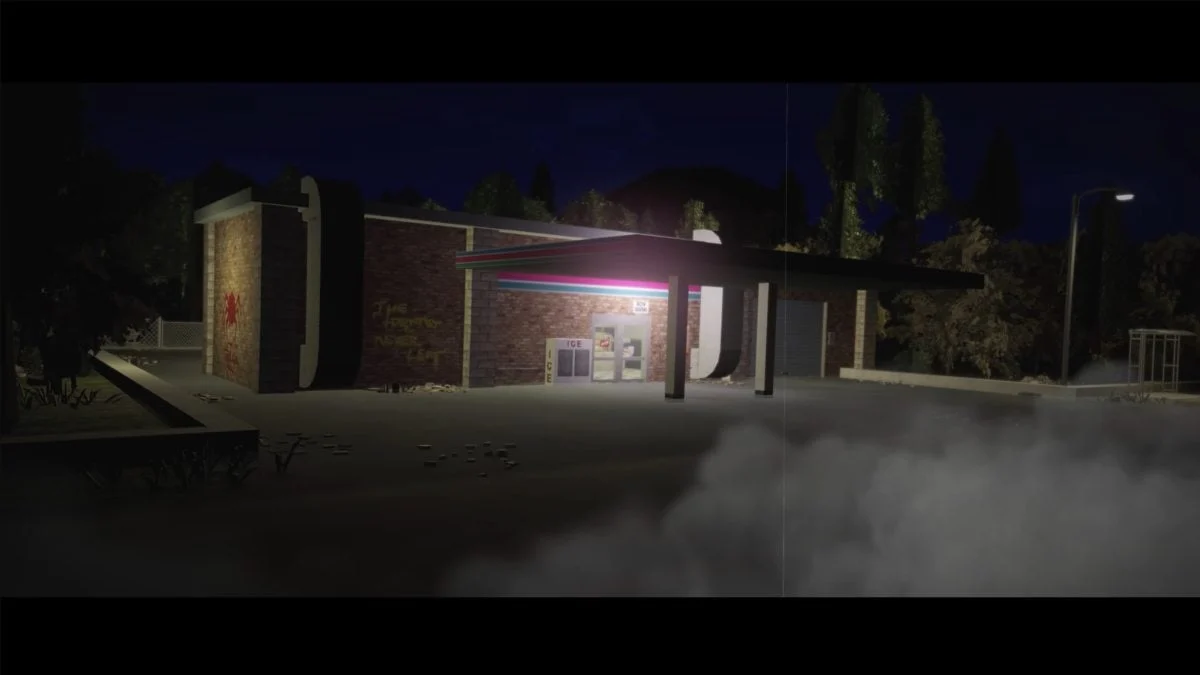
The chilling atmosphere of Shift at Midnight is no stranger to player anxieties, but beyond the mounting pressure of veterinary bills and the harrowing realities of surgical debt for beloved pets, a new mystery has emerged: the disappearance of Guillermo. This brown Labrador, distinguished by his yellow collar, vanishes during the tenth night of the game, leaving behind a poignant missing dog poster prominently displayed on the in-game notice board. While this notice board typically serves as a crucial conduit for vital information, disseminated through the Store Manager’s calls or written notes, Guillermo’s case presents a peculiar deviation from the game’s established quest mechanics. Unlike the urgent side quests that demand immediate player intervention, the missing dog scenario appears to be treated with a distinct lack of actionable gameplay.
The Enigmatic Notice Board and Guillermo’s Poster
The notice board in Shift at Midnight functions as a dynamic information hub, reflecting the unfolding events and challenges within the game’s unsettling narrative. Players rely on these postings to navigate the game’s intricate plotlines and often to uncover critical clues. The appearance of Guillermo’s missing poster on Night 10 signifies a moment that, at first glance, suggests a new objective or a narrative thread to be pursued. The poster itself, a tangible in-game asset, details Guillermo’s breed, color, and identifying accessories, aiming to evoke a sense of urgency and empathy from the player.
However, the narrative surrounding Guillermo’s disappearance raises more questions than it answers. Despite the inclusion of a $50 reward, seemingly aligned with the game’s mechanics for accumulating bonuses through completing the Store Manager’s requests, there is no apparent in-game mechanism for players to actively search for or locate the missing canine. This absence of a tangible pursuit has led to widespread speculation within the player community that Guillermo’s poster may, in fact, be a deliberate narrative device, a so-called "red herring," designed to serve a purpose beyond direct player interaction or gameplay resolution. The lack of an in-game model for Guillermo further strengthens this theory, suggesting that the dog itself is not an entity to be found within the game’s environment.
Distinguishing Guillermo from Tofu and the Doppelganger Threat
It is crucial to differentiate Guillermo from Tofu, the service dog that players are required to serve in the game. Shift at Midnight is known for its deceptive gameplay, and the Tofu encounter is a prime example, where players might be misled into actions that could harm the innocent animal. Guillermo, on the other hand, is presented as a distinct entity, a "random dog" whose absence is noted. This distinction is significant, as it steers players away from conflating his disappearance with other, more direct gameplay challenges involving animal characters.
The narrative implications of Guillermo’s disappearance are particularly intriguing when considered within the broader context of Shift at Midnight’s overarching themes. The game frequently introduces elements of paranoia and distrust, particularly through the recurring motif of doppelgangers replacing familiar characters. Guillermo’s owner is conspicuously absent from the missing poster, leading to the logical inference that the owner may have been one of the individuals replaced by a doppelganger. If this is the case, Guillermo would be left ownerless, a victim of the sinister machinations plaguing the game’s world. This speculative connection to "The Dentist," a character or entity often associated with the doppelganger phenomenon, adds another layer of complexity to the mystery.
Player Reaction and Community Investigation
The immediate instinct for many players upon encountering the missing dog poster would be to assume a search mission. The natural inclination is to venture into the game’s surrounding environments, such as the forest, in the hope of finding a stray canine. However, the game design does not facilitate this. Viewing the missing poster does not unlock any relevant dialogue options with in-game characters or trigger any specific investigative pathways for the current night’s shift. This lack of direct engagement strongly suggests that the poster’s inclusion is primarily for thematic and narrative enrichment, rather than to initiate a solvable in-game quest.
The broader purpose of Guillermo’s poster, therefore, appears to be rooted in reinforcing the game’s core themes and player motivations. By presenting the plight of a lost pet, the game subtly aims to amplify the player’s sense of responsibility and their drive to protect their own virtual companions. The entire premise of Shift at Midnight revolves around the player risking their life to work a night shift, often with the underlying motivation of caring for their own pet. Guillermo’s story, even if unresolvable, serves as a poignant reminder of the emotional stakes involved and the potential consequences of the dangers that lurk within the game’s universe.
The Shift at Midnight community, particularly on dedicated platforms like the game’s Discord Server, has actively engaged in trying to locate Guillermo. Players have shared their experiences and confirmed through collective effort that there is no discernible in-game method for finding the missing dog. This consensus among the player base is a strong indicator that the developers have intentionally designed Guillermo’s disappearance as a narrative element rather than a playable quest.
Evidence of a Lore-Driven Element
The most compelling evidence supporting the theory that Guillermo cannot be found in-game lies within the missing poster itself. The poster, while providing details about Guillermo, conspicuously lacks any actionable contact information. Crucially, there is no in-game option to call the owner’s listed number, a standard feature on real-world missing pet posters and a typical gameplay mechanic for initiating quests related to lost items or individuals. This absence of a functional call-to-action reinforces the idea that the poster is a piece of environmental storytelling, designed to add depth and emotional resonance to the game’s world, rather than to present a solvable puzzle.
The decision to implement a seemingly unresolvable missing pet scenario is a bold narrative choice. It deviates from conventional game design, which often rewards players with clear objectives and achievable outcomes. Instead, Shift at Midnight appears to be leveraging this element to cultivate a specific atmosphere and to explore the emotional impact of loss and helplessness within its unsettling narrative. This approach can be seen as a sophisticated method of world-building, where even seemingly minor details contribute to the overall immersion and thematic coherence of the game.
Broader Implications for Game Narrative and Player Engagement
The inclusion of Guillermo’s missing dog poster, and its subsequent lack of direct gameplay resolution, has several broader implications for the design and player reception of Shift at Midnight. Firstly, it highlights a growing trend in game development to incorporate elements that serve purely narrative or thematic purposes, even if they don’t directly contribute to player progression. This can enhance the emotional depth and realism of a game’s world, fostering a stronger connection between the player and the game’s universe.
Secondly, it challenges traditional player expectations. In an era where games often provide clear checklists and readily accessible solutions, Shift at Midnight is offering an experience that embraces ambiguity and the potential for unanswered questions. This can be a polarizing approach, with some players appreciating the narrative sophistication and others potentially feeling frustrated by the lack of tangible reward for their investigative curiosity.
Thirdly, the community’s reaction and subsequent confirmation of Guillermo’s unfindable status demonstrate the power of player collaboration and information sharing. The collective efforts of the Discord community have effectively deconstructed this narrative element, providing clarity for new players and solidifying the understanding of the developers’ intent. This organic process of community-driven discovery is a testament to the engagement Shift at Midnight has fostered.
In conclusion, Guillermo’s disappearance in Shift at Midnight is not a quest to be completed but a narrative thread woven into the fabric of the game’s unsettling reality. The missing dog poster serves as a poignant reminder of the stakes involved and the pervasive sense of unease that defines the experience. While players may not be able to reunite Guillermo with his owner, his story contributes significantly to the game’s thematic exploration of loss, responsibility, and the constant threat of the unknown, making Shift at Midnight a truly memorable and thought-provoking experience. The $50 reward, therefore, becomes less of a tangible incentive and more of a symbolic nod to the financial burdens associated with pet care, a relatable anxiety that the game expertly amplifies within its dark and mysterious setting.