


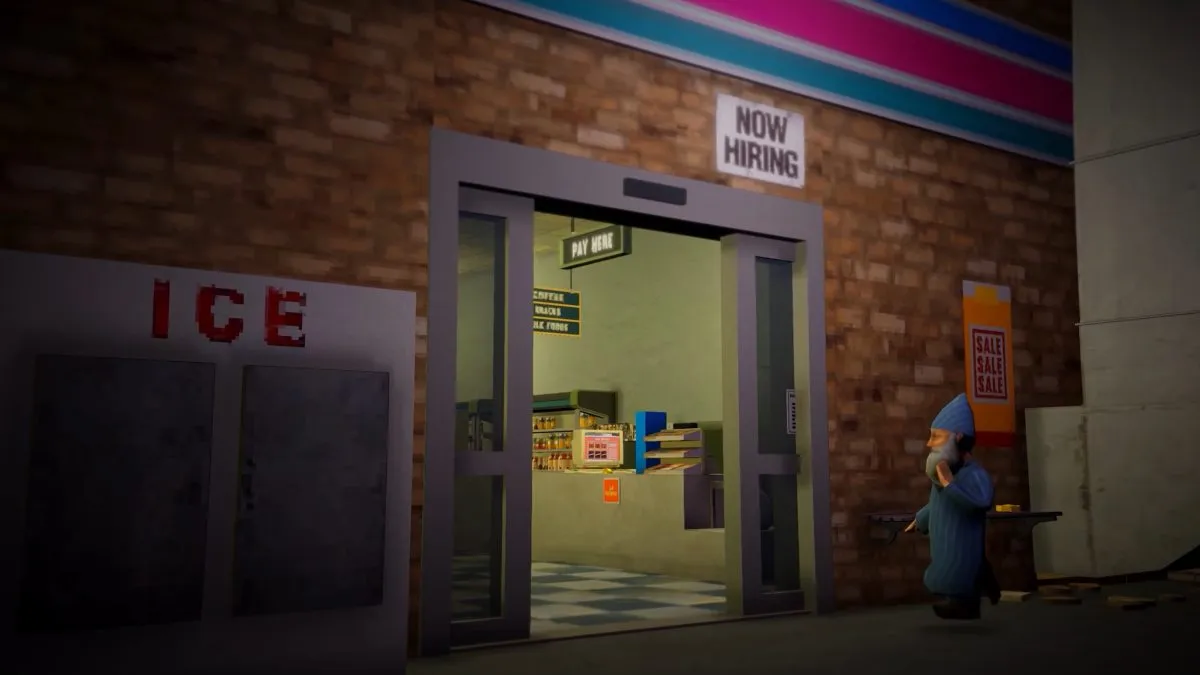
The digital aisles of "Shift at Midnight," a popular simulation game known for its escalating absurdity and challenging gameplay, have become the focal point of intense player discussion and analysis. At the heart of this escalating pandemonium is a character named Norbert, whose peculiar behavior and disruptive presence have cemented his status as the game’s most enigmatic and chaotic element. While the game, which begins with a seemingly mundane premise of managing a late-night convenience store, gradually descends into a surreal landscape populated by increasingly obvious doppelgangers, it is Norbert who orchestrates much of this madness. Understanding his role is crucial for players navigating the game’s complex mechanics and striving for its coveted "True Ending."
Norbert’s Anomalous Presence: A Doppelganger’s Blueprint?
Norbert is not a passive observer in the world of "Shift at Midnight." He actively materializes in both the game’s Story Mode and its perpetually challenging Endless Mode, serving as a persistent thorn in the side of the player-manager. His primary objective appears to be the deliberate disruption of the player’s progress, employing a range of increasingly outlandish tactics to sabotage their runs.
What immediately sets Norbert apart from other characters is his inherent doppelganger-like characteristics, even before such entities become overtly prevalent in the gameplay. From his initial introduction, Norbert exhibits behaviors that deviate sharply from expected customer interactions. He positions himself behind the store counter, a clear indication of assumed employment rather than patronage, creating immediate suspicion. Furthermore, his refusal to answer direct questions posed by the player, coupled with his inexplicable absence from the game’s in-universe NET Database—despite possessing what appears to be a valid identification document—further solidifies his anomalous nature.
This peculiar set of behaviors functions as a critical litmus test for players. The game designers have ingeniously crafted Norbert’s interactions to be a unique challenge. Unlike the standard doppelgangers, which, when identified and dealt with (either through shooting or other lethal means), trigger the arrival of one of the game’s five distinct entity types at the end of the shift, confronting Norbert yields a different outcome. Attempting to eliminate Norbert does not result in the spawning of these typical entities. Instead, it initiates a cascade of unpredictable chaos, a direct consequence of antagonizing this particular anomaly.
A Chronology of Mayhem: Norbert’s Disruptive Tactics
Norbert’s interventions are not confined to a single encounter. He has been observed to reappear throughout subsequent shifts, each time devising novel strategies to undermine the player’s store operations. His methods range from directly impacting the store’s reputation, a crucial metric for success, to actively diminishing potential bonuses.
One notable instance of Norbert’s disruptive activities involves him making a dramatic entrance, often riding through the store on a motorcycle, an action that would undoubtedly cause alarm and potentially damage inventory. On other occasions, he has been implicated in poisoning the store’s offerings, exemplified by his unauthorized lemonade stand—a venture operating without the requisite permits, further highlighting his disregard for established order. Perhaps his most insidious tactic involves disguising himself as a regular customer. This camouflage is so effective that Norbert remains invisible to standard observation, requiring the player to utilize the in-game Scanner to detect his presence.
The game’s mechanics suggest a direct correlation between player action and Norbert’s escalation. Any form of harm inflicted upon Norbert, whether intentional or accidental, appears to provoke a more aggressive response. He then actively attempts to manipulate the player into harming innocent customers or directly targets the player, creating a high-stakes scenario where the line between perpetrator and victim blurs. This relentless, often maniacally laughing, force of nature is described by players as "unkillable," emphasizing the futility of direct confrontation as a means of resolution.
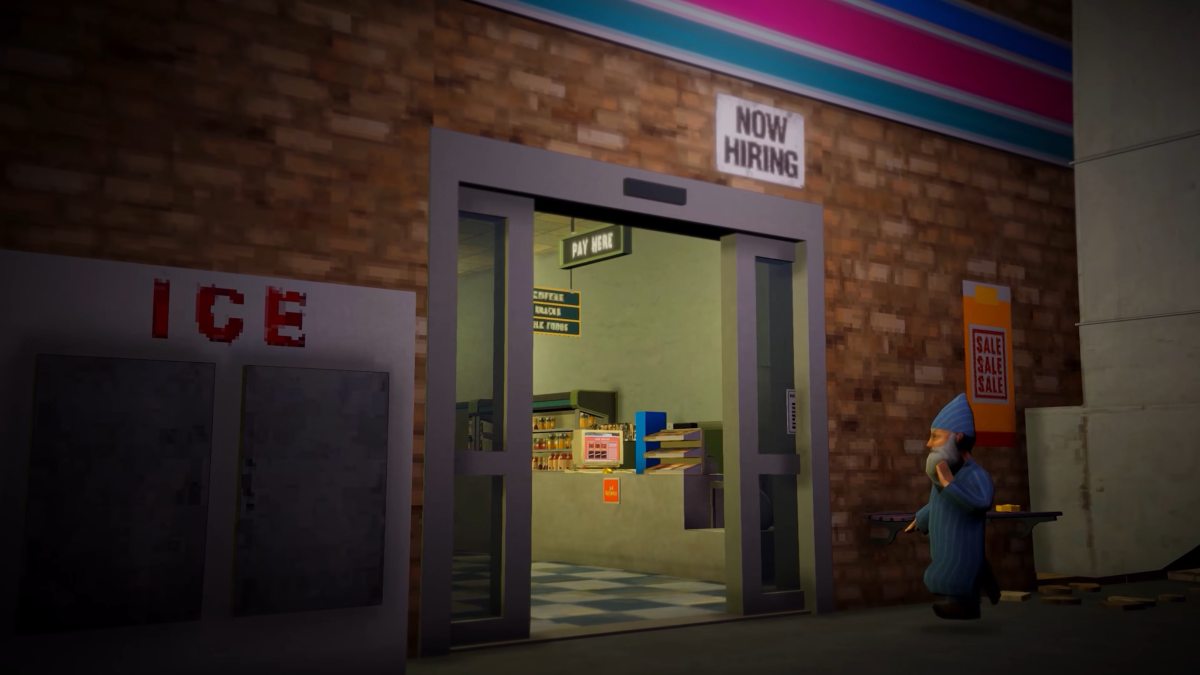
Strategic Implications: Chaos vs. Completion
The strategic implications of Norbert’s character are multifaceted, presenting distinct pathways for different player objectives. For content creators and players who thrive on emergent gameplay and unpredictable scenarios, the obvious choice is to engage with Norbert, thereby unleashing the full spectrum of chaos he embodies. This approach guarantees a dynamic and often humorous stream of unpredictable events, enhancing the entertainment value of their gameplay.
However, for players who are focused on achieving the game’s "True Ending," a more nuanced approach is required. Evidence and player-driven analysis suggest that serving Norbert during his initial appearance and subsequently sparing his life is a critical step. This act of compliance, rather than confrontation, is believed to be instrumental in progressing towards the game’s most fulfilling conclusion. The implication here is that understanding and accommodating even the most disruptive elements can be a key to unlocking deeper narrative threads and achieving ultimate success. Therefore, players are advised to embrace Norbert’s brief "run" within the store, complete his transaction efficiently, and allow him to depart without incident, thereby preserving the potential for long-term progression.
Background Context and Player Reactions
"Shift at Midnight" was released on [Insert hypothetical release date, e.g., October 27, 2023] by independent developer Stellaris Games. The title quickly garnered a dedicated following for its unique blend of simulation, survival, and psychological horror elements. The game’s escalating difficulty curve and its penchant for surreal twists have been frequently lauded by critics and players alike. Norbert’s introduction, approximately [Insert hypothetical timeframe, e.g., three months] post-launch through a significant game update on [Insert hypothetical update date, e.g., January 15, 2024], was intended to inject a new layer of unpredictability into the gameplay.
The player community has responded to Norbert’s presence with a mixture of frustration, amusement, and analytical fervor. Online forums and social media platforms are rife with discussions detailing strategies for dealing with him, sharing humorous anecdotes of his disruptions, and speculating about his true nature and purpose within the game’s lore. Hashtags such as #ShiftAtMidnight, #NorbertChaos, and #DoppelgangerMystery have trended intermittently on platforms like X (formerly Twitter) and Reddit, indicating the significant impact of this character on the game’s cultural footprint.
A representative from Stellaris Games, speaking anonymously due to company policy regarding ongoing game development discussions, commented on the player reception. "Norbert was designed to be a meta-commentary on the emergent properties of complex simulation games. We wanted to introduce an element that players couldn’t simply ‘solve’ through brute force or predictable patterns. His interactions are meant to challenge player assumptions and encourage a deeper understanding of the game’s underlying systems. The community’s engagement with Norbert, both in terms of their attempts to exploit his chaos and their strategic efforts to appease him for the ‘True Ending,’ has exceeded our expectations."
Broader Impact and Implications for Game Design
The character of Norbert in "Shift at Midnight" serves as a compelling case study in modern game design, particularly in the realm of emergent narrative and player-driven challenges. His existence highlights a growing trend in the gaming industry towards creating characters and scenarios that defy conventional problem-solving. By introducing an entity that is both disruptive and integral to achieving ultimate success, developers are encouraging players to think critically and adapt their strategies beyond simplistic reactive measures.
The implications of Norbert’s design extend to how players perceive difficulty and progression. Instead of a linear increase in enemy stats or environmental hazards, "Shift at Midnight" offers a more dynamic form of challenge, where social interaction and seemingly benign actions (like serving a peculiar customer) can have profound long-term consequences. This approach fosters a deeper level of engagement, as players are not just reacting to immediate threats but are constantly considering the broader impact of their choices.
Furthermore, Norbert’s ambiguous nature—is he a doppelganger, a glitch, or something else entirely?—prompts player speculation and community collaboration. This fosters a robust online community where players share theories, data, and strategies, effectively extending the lifespan and appeal of the game. The success of such a character suggests that players are increasingly seeking experiences that offer layers of mystery and require a collaborative effort to fully unravel. The development of characters like Norbert indicates a potential future direction for simulation and survival games, where the most challenging obstacles are not always the most overtly dangerous, but rather the most psychologically complex and strategically ambiguous.