


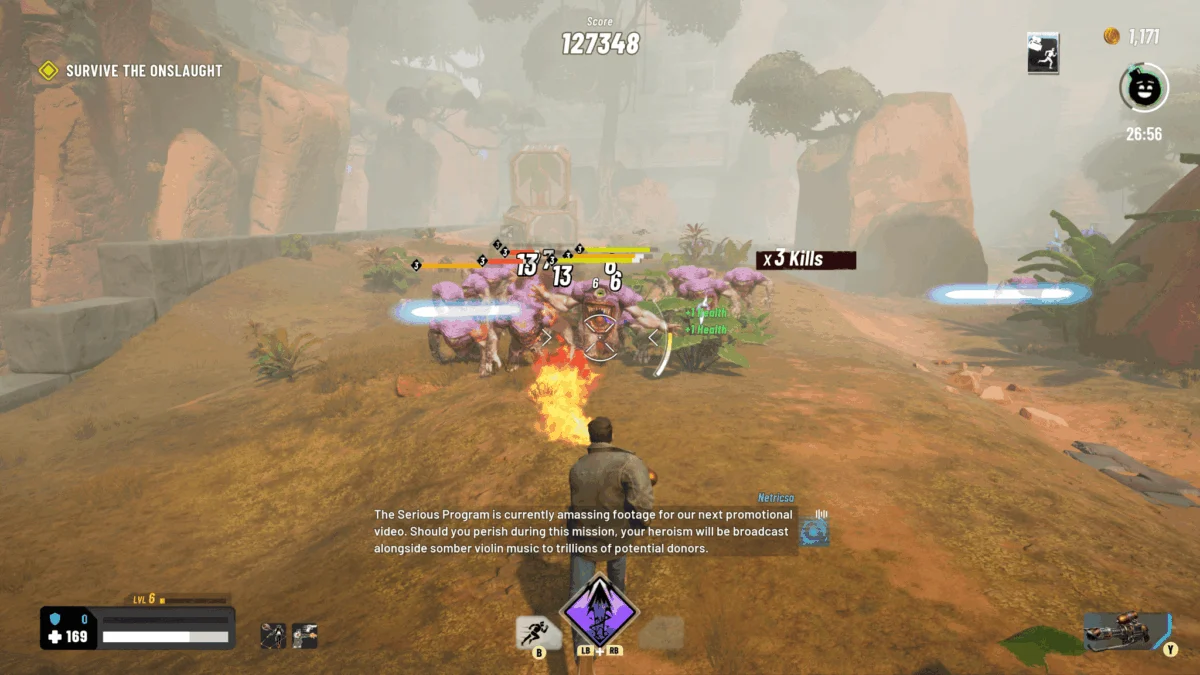
The 25-year legacy of the Serious Sam franchise has reached a pivotal crossroads with the release of Serious Sam: Shatterverse, a transformative spin-off that marks the most significant departure from the series’ traditional formula since its inception in 2001. Developed by Behaviour Interactive—the studio primarily recognized for the asymmetrical horror hit Dead by Daylight—and published by Devolver Digital, Shatterverse reimagines the high-octane, horde-based shooter as a co-op-centric roguelite. Tested on the Xbox Series X, the title attempts to bridge the gap between the "boomer shooter" sensibilities of the early 2000s and the modern demand for procedural replayability and deep character progression.
The Evolution of Sam Stone: From Serious Engine to Unreal Engine 5
For over two decades, the Serious Sam series was defined by Croteam’s proprietary Serious Engine, a technical marvel capable of rendering hundreds of enemies simultaneously in vast, open environments. The transition to Unreal Engine 5 in Shatterverse represents a fundamental shift in the game’s DNA. While the visual fidelity is undeniably modernized, featuring advanced lighting and high-resolution assets, the "feel" of the game has undergone a radical transformation.

Long-time fans will immediately notice a change in the kinetic feedback of Sam’s movement and aiming. The Serious Engine was known for its "skating" physics and precise, twitch-based projectile management. In contrast, Shatterverse adopts the weightier, more standardized movement associated with modern Unreal-based shooters. This transition is initially jarring; the projectile spread on iconic weapons like the revolver and flamethrower feels more pronounced, and the lack of Aim Down Sights (ADS) on most weaponry creates a learning curve for players accustomed to the surgical precision of mainline entries like Serious Sam: The Second Encounter.
A Chronological Context: 25 Years of Chaos
To understand the significance of Shatterverse, one must look at the timeline of the franchise’s development:
- 2001: Serious Sam: The First Encounter debuts, introducing the world to Sam "Serious" Stone and the Mental’s horde.
- 2002-2011: The series expands with The Second Encounter and Serious Sam 3: BFE, cementing the "horde shooter" subgenre.
- 2020-2022: Serious Sam 4 and the standalone expansion Siberian Mayhem attempt to modernize the Serious Engine, though with mixed technical results.
- 2025: The industry sees a resurgence of classic FPS reboots, including a notable Painkiller revival, setting the stage for experimental spin-offs.
- 2026: Serious Sam: Shatterverse is released, pivoting the IP toward the roguelite genre to capitalize on the popularity of titles like Risk of Rain 2 and Hades.
This chronology illustrates a franchise that has consistently sought to maintain its identity while adapting to changing industry standards. Shatterverse is the boldest experiment in this timeline, outsourcing development to a non-FPS specialist to gain a fresh perspective on the IP.

Roguelite Structure and the Multiverse Mechanic
Shatterverse abandons the massive, linear campaigns of previous titles in favor of a run-based structure. Each run consists of nine hand-crafted levels selected at random from a larger pool. Progression is segmented into tiers, with a boss encounter occurring every third level. This structure is designed for high-stakes co-op play, supporting up to five players simultaneously.
The narrative justification for this shift lies in the "Shatterverse" itself—a multiverse concept that allows for various iterations of the protagonist. Players can choose from multiple Sam variants, including "Alien Sam" and "Cartoony Sam," each possessing unique base statistics and an "Ultimate Skill." This character-based system introduces a layer of hero-shooter strategy previously absent from the series.
Gameplay Synergies and Build Diversity
The true depth of Shatterverse reveals itself several hours into the experience. Initial runs can feel repetitive due to a limited starting pool of weapons and perks. However, as players successfully navigate the higher difficulty tiers, the game unlocks an extensive array of loot and upgrades.

- Weapon Perks: Late-game armaments can be imbued with elemental damage and specialized modifiers.
- Trinkets: These items allow for ARPG-style builds, enabling players to focus on specific stats such as critical hit chance, gold gain, or health regeneration.
- Ultimate Upgrades: Character skills can be evolved to provide team-wide buffs, encouraging synergistic compositions in five-player sessions.
Technical Analysis and Multiverse Anomalies
Running on Xbox Series X, Shatterverse maintains a stable frame rate despite the chaos on screen, a testament to Behaviour Interactive’s optimization of Unreal Engine 5. The game introduces "Multiverse Anomalies," which act as stage modifiers to prevent the hand-crafted levels from becoming stale. These anomalies can range from "Gravity Distortions" to "Loot Stealing Enemies" or even forced perspective changes, such as switching the game to a third-person view.
While the level design is simpler than the labyrinthine, secret-filled maps of the 2001 original, these anomalies provide a different kind of variety. The challenge escalates through an incremental power creep; as players become faster and more lethal, the enemy waves grow in density and complexity. The final "endgame" bosses are described as "mental" in their difficulty, requiring precise coordination and optimized builds to defeat.
Industry Implications and Developer Strategy
The decision by Devolver Digital to hand the Serious Sam reins to Behaviour Interactive reflects a broader trend in the gaming industry: the "genre-pivot" spin-off. By applying the roguelite framework to an established FPS brand, publishers can extend the lifespan of an IP between major mainline releases.

In a hypothetical statement regarding the game’s direction, a spokesperson for Devolver Digital might emphasize the goal of "expanding the Serious Sam universe beyond the traditional linear experience to offer players a replayable, social environment that honors the series’ chaotic roots." This strategy appears to have been successful in Shatterverse, as the game’s cooperative mechanics address the loneliness often felt in solo "boomer shooters."
Broader Impact on the FPS Landscape
Serious Sam: Shatterverse arrives at a time when the "boomer shooter" revival is maturing. Players are no longer satisfied with mere nostalgia; they demand modern progression systems and social features. Shatterverse’s success—or failure—will likely influence how other classic IPs are handled.
The game’s reliance on co-op play does present a potential hurdle for solo players. The difficulty scaling is clearly tuned for a group, where revives and shared aggro mitigate the intensity of the horde. Solo players may find the early hours particularly punishing, as the lack of meta-progression makes the initial repetition more apparent. However, for those who persevere, the "one more run" loop becomes highly addictive once the full breadth of the Shatterverse is accessible.

Conclusion: A New Direction for a Classic Hero
Serious Sam: Shatterverse is a calculated risk that largely pays off. It successfully translates the core appeal of the franchise—killing thousands of screaming enemies—into a format that rewards long-term engagement and cooperative strategy. While it may lose some of the "purist" appeal of the Serious Engine’s unique physics, it gains a level of depth and replayability that mainline entries have occasionally struggled to provide.
As a spin-off, it serves as a bridge to the future of the franchise. It proves that Sam Stone is a versatile enough character to survive outside of his traditional comfort zone. For fans of the series, Shatterverse offers a refreshing take on a familiar world, and for newcomers, it provides an accessible entry point into one of gaming’s most enduringly absurd universes. While the "Second Encounter" may still hold the crown for pure nostalgia, Shatterverse stands as the most sophisticated and fun spin-off in the 25-year history of the brand.