


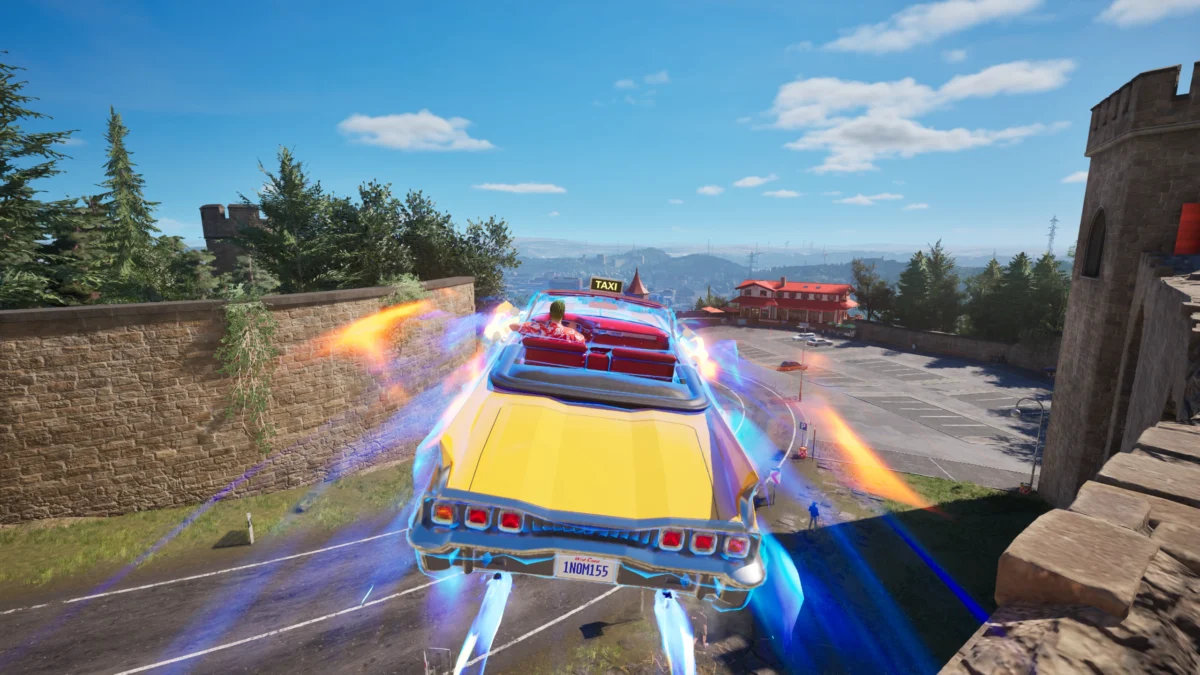
The Dreamcast era, a vibrant yet commercially challenging period in gaming history, was characterized by a surge of audacious and singularly original titles such as Space Channel 5, Seaman, Shenmue, Chu Chu Rocket, Power Stone, and Jet Set Radio. Among these, few encapsulated the console’s unique, kinetic spirit as perfectly as Crazy Taxi, a game whose premise was as straightforward as its title suggested: frantic, high-speed cab driving. Now, Sega is poised to reintroduce this beloved, chaotic classic to contemporary audiences with Crazy Taxi: World Tour, offering a modern reimagining that aims to preserve its distinctive charm while introducing expansive new gameplay elements. A recent, exclusive preview at Sega’s summer press showcase in downtown Los Angeles provided an initial glimpse into what promises to be a significant revival for the franchise, slated for release in 2027.
A Return to the Wild Era: The Dreamcast Legacy
The Sega Dreamcast, launched in North America in September 1999, was a console ahead of its time, lauded for its graphical prowess, innovative online capabilities (it was the first console to feature a built-in modem), and an exceptionally creative software library. Despite its critical acclaim and a passionate fanbase, the Dreamcast struggled to gain significant market share against the impending PlayStation 2 and ultimately led to Sega’s exit from the console hardware business in 2001. However, its brief but brilliant tenure left an indelible mark on gaming culture, fostering a generation of developers who dared to experiment with unconventional concepts.
Crazy Taxi, initially an arcade phenomenon from 1999, quickly became one of the Dreamcast’s flagship titles upon its port in 2000. It wasn’t merely a racing game; it was an experience defined by its sheer speed, aggressive driving mechanics, and a pulsating punk-rock soundtrack featuring bands like The Offspring and Bad Religion. Players were tasked with picking up passengers and delivering them to their destinations against a ticking clock, earning bonus cash for stunts and near-misses. This formula, while simple, generated an addictive gameplay loop that rewarded reckless abandon and mastery of its unique "Crazy Dash" and "Crazy Drift" techniques. The game sold over 1.6 million units across various platforms, establishing itself as a cult classic and a quintessential Dreamcast experience.
The decision to revive Crazy Taxi for modern consoles is particularly noteworthy when contrasted with other high-profile remasters and remakes currently dominating the industry. Titles like Silent Hill 2 Remastered and Metal Gear Solid Delta, while eagerly anticipated, are based on games already widely regarded as canonical milestones in storytelling and gameplay. Crazy Taxi, while not a narrative epic, stands as a vibrant testament to the Dreamcast’s commitment to pure, unadulterated fun and kinetic energy. Its return signifies Sega’s broader strategy to tap into the rich veins of its intellectual property catalog, appealing to both nostalgic fans and a new generation of players seeking unique gameplay experiences.
The Crazy Taxi Franchise: A History of High-Octane Rides
The Crazy Taxi series began its life in arcades, captivating players with its vibrant graphics and immediate, exhilarating gameplay. Its success led to its iconic Dreamcast port, which faithfully translated the arcade experience to homes, becoming one of the console’s best-selling titles. The franchise subsequently saw several iterations, including Crazy Taxi 2 (2001) for the Dreamcast, which introduced multiple maps, the ability to pick up multiple passengers, and a "Crazy Hop" jump mechanic. Crazy Taxi 3: High Roller (2002) expanded further, bringing the series to the Xbox and featuring a new Las Vegas-inspired map. Over the years, the game has been ported to various platforms, including PlayStation 2, Nintendo GameCube, PC, and mobile devices, maintaining its core appeal while adapting to new hardware.
The enduring popularity of Crazy Taxi lies in its distinct blend of accessibility and depth. New players could immediately grasp the core objective, while seasoned veterans could master the intricate "Crazy Through" and "Crazy Drift" maneuvers to maximize their earnings and achieve higher scores. The game’s vibrant, exaggerated urban environments and quirky cast of characters further solidified its identity, creating a world that was both challenging and inherently joyful to navigate. This rich history provides a strong foundation for Crazy Taxi: World Tour, which aims to honor its predecessors while pushing the boundaries of the franchise.
Unveiling Crazy Taxi: World Tour: A First Look

During the recent Sega summer press showcase, attendees were granted a valuable, albeit brief, hour-long preview of Crazy Taxi: World Tour. The early build, though preliminary for a game due in 2027, provided significant insight into the developers’ vision for this revival. A primary objective, clearly evident from the demonstration, is the faithful preservation of the original game’s essential "vibes" and its iconic visual style. The core fare-pickup system remains intact: players will still accelerate towards colorful circles denoting waiting passengers, then embark on a high-speed dash to their destinations, navigating traffic and pedestrians with characteristic recklessness as the timer relentlessly counts down.
Crucially, the signature late ’90s to early 2000s alt-rock and pop-punk soundtrack, a cornerstone of the original game’s identity, is confirmed to make a return. This musical accompaniment was more than just background noise; it was integral to the game’s high-octane energy and anarchic spirit. The latest trailer released by Sega prominently features this musical direction, signaling a commitment to recreating the full sensory experience that defined the original. This adherence to the franchise’s auditory legacy is a critical factor for long-time fans, many of whom associate specific tracks with their most memorable in-game moments.
Evolving the Ride: New Features and Global Ambitions
While retaining the foundational elements that made Crazy Taxi a classic, World Tour introduces substantial innovations designed to expand the gameplay experience beyond the traditional time-limited fare system. The preview highlighted the inclusion of several new modes, with a particular focus on a free-form sandbox environment. This departure from the strict arcade structure allows players greater freedom to explore and interact with the game world at their own pace, fostering a sense of discovery and emergent gameplay.
The preview map, set in Germany, showcased the game’s new international ambitions. This German landscape was not a single, monolithic entity but rather a sprawling loop punctuated by distinct, thematic zones: a bustling airport, a vibrant city downtown, a quaint small village, and a picturesque castle perched on a hill. This varied topography suggests a greater emphasis on environmental diversity and geographical distinction compared to the more generic urban settings of previous titles.
The most exciting and arguably the most "Dreamcast-esque" innovation revealed during the preview was the introduction of specialized fares, each accompanied by unique mini-quests. These encounters are designed to inject a new layer of narrative eccentricity and challenge into the game. Examples cited include an "unsettlingly enthusiastic man in an Easter Bunny costume" requesting assistance in "collecting his eggs," and a daredevil in a wingsuit desiring a launch from the back seat of the taxi off a cliff. The dialogue accompanying these characters suggests that they are not map-specific but rather recurring "bizarre specimens" that players will encounter across various international locations, each time presenting a new, absurd objective. This element significantly enriches the game’s character and replayability, moving beyond simple destination delivery to incorporate puzzle-solving and unique driving challenges.
Sega’s Strategy: Riding the Nostalgia Wave
The development of Crazy Taxi: World Tour is indicative of a broader trend within the video game industry: the strategic revitalization of beloved legacy IPs. Publishers are increasingly recognizing the immense value in revisiting classic titles, leveraging both built-in fanbases and the appeal of nostalgia to attract new players. This approach often carries lower development risks compared to entirely new intellectual properties, as the core concept and audience appeal are already established.
Sega, in particular, has demonstrated a keen understanding of this strategy. The success of recent Sonic the Hedgehog game revivals and media adaptations, alongside the consistent critical and commercial performance of its Yakuza series (known for its blend of serious narrative and wildly eccentric side quests), underscores a clear directive to maximize the potential of its diverse catalog. Crazy Taxi: World Tour fits perfectly into this framework, promising to rekindle interest in a franchise that has lain dormant for a significant period on main consoles.
Industry analysts suggest that such revivals serve multiple purposes. They provide a tangible connection to gaming’s past, satisfying long-time fans who yearn for modern interpretations of their favorite titles. Simultaneously, they introduce classic gameplay concepts to a younger demographic accustomed to contemporary graphics and expanded features. For Sega, this means potentially expanding its market reach and reinforcing its identity as a company with a rich history of innovative and entertaining games. The target audience for World Tour is therefore dual-pronged: seasoned gamers who remember the Dreamcast fondly and new players who appreciate distinctive, high-energy arcade-style experiences that stand apart from the often-serious mainstream.

Technical Modernization and Design Philosophy
While specific technical details remain under wraps given the 2027 release, it is logical to infer that Crazy Taxi: World Tour will feature a significant overhaul in graphics, leveraging modern console capabilities to deliver stunning visuals, realistic physics, and expanded environmental detail. The original game’s vibrant color palette and distinctive character designs will likely be retained but rendered with contemporary fidelity.
The design philosophy behind World Tour appears to be a careful balancing act: honoring the chaotic spirit and core mechanics of the original while introducing modern conveniences and expanded gameplay loops. Developers are challenged to ensure that the updated graphics and physics enhance, rather than detract from, the raw, unrefined joy that defined the Dreamcast classic. Maintaining the "kinetic energy" – the sense of uncontrolled speed and constant movement – is paramount. This includes refining the car handling, the impact feedback of crashes, and the responsiveness of the control scheme to feel both familiar and fresh.
The shift towards a free-form sandbox and specialized quests also suggests an evolution in level design, moving from linear time trials to more open-ended exploration and engagement. This will require intricate world-building, ensuring that each international map feels distinct and offers ample opportunities for both traditional fare delivery and the more elaborate mini-quests.
Implications for the Gaming Landscape
The return of Crazy Taxi: World Tour holds broader implications for the gaming landscape. In an industry often dominated by hyper-realistic simulations, gritty narratives, and competitive multiplayer titles, the resurgence of a game like Crazy Taxi is a welcome reminder of the enduring appeal of pure, unadulterated fun and eccentric character. It represents a counter-narrative to the prevailing trend of serious, often emotionally taxing gaming experiences, offering a refreshing dose of lighthearted, "dumb-in-the-best-way" inanity.
The success of World Tour could further validate the market for quirky, character-driven games that prioritize immediate enjoyment over complex lore. This could encourage other publishers to revisit their own libraries of unconventional titles, potentially sparking a new wave of creative revivals that celebrate the diverse history of video games. Moreover, a successful launch could have a positive economic impact for Sega, reinforcing its position as a major player in the console market, not just through new IPs but through the intelligent cultivation of its rich legacy.
The experience of picking up a "sleazeball Lothario trying to escape his latest failed amorous encounter," dodging "missiles fired from pursuing cop cars," and dropping the fare off "literally on the wheels of a plane taking off" perfectly encapsulates the exaggerated, no-explanation-necessary oddball style that Crazy Taxi: World Tour aims to revive. It is this unique blend of absurdity and high-octane action that promises to make the game a standout release. As the gaming community anticipates its 2027 arrival, the message from Sega is clear: the crazier the fares, the better, and the Dreamcast’s distinctive spirit is alive and well.