


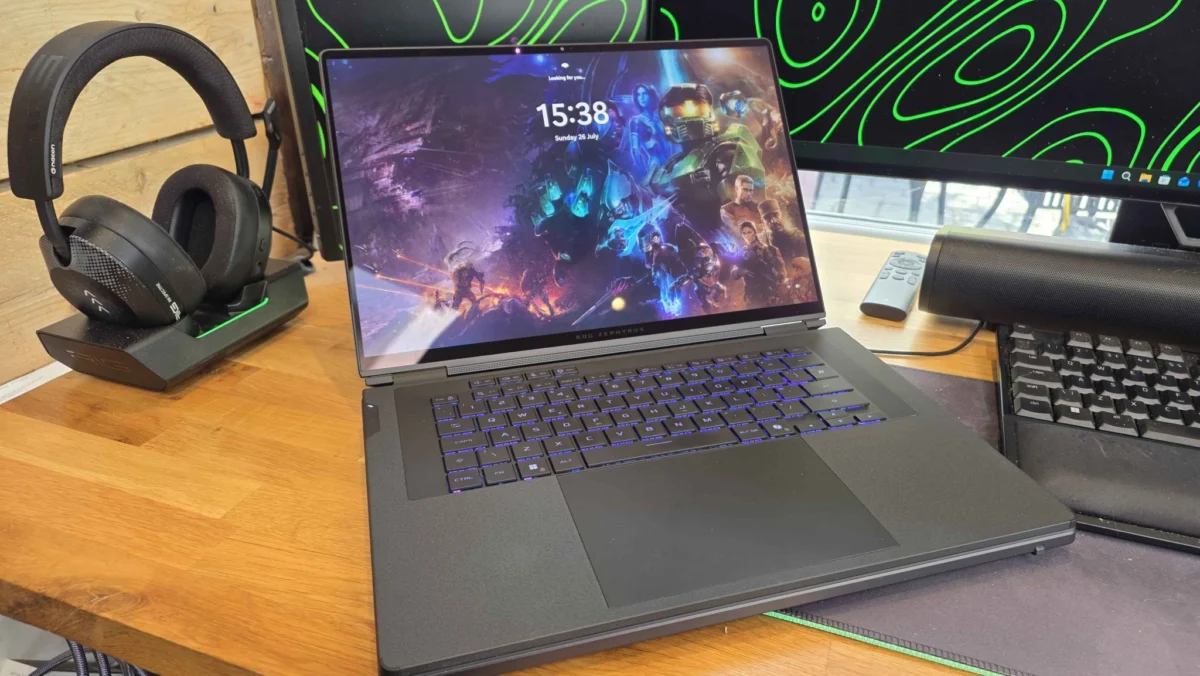
The ASUS Republic of Gamers (ROG) division has officially released the 2026 iteration of its flagship Zephyrus Duo, designated as model GX651. This device represents the latest evolution in the manufacturer’s pursuit of multi-screen mobile computing, a journey that began with the introduction of the ScreenPad Plus technology several years ago. While traditional laptop designs have prioritized incremental gains in processing power and thermal efficiency, the Zephyrus Duo series has consistently focused on expanding the user’s digital real estate through a unique dual-screen form factor. The 2026 model arrives at a critical juncture in the hardware industry, coinciding with the launch of Intel’s Panther Lake architecture and NVIDIA’s 50-series mobile GPUs. This review analyzes the device’s technical specifications, ergonomic performance, and its broader implications for the high-end workstation and gaming markets.

Architectural Foundation and Core Specifications
The ROG Zephyrus Duo (2026) is built upon a foundation of cutting-edge silicon, aimed at bridging the gap between desktop workstations and portable devices. At the heart of the unit is the Intel Core Ultra 9 Processor 386H. This "Panther Lake" generation chip features 16 cores and 16 threads with a 18MB cache, capable of reaching clock speeds up to 4.9 GHz. A significant addition to this year’s model is the integrated Intel NPU (Neural Processing Unit), which provides up to 50 TOPS (Trillions of Operations Per Second) of AI-specific compute power. This inclusion reflects the industry-wide shift toward local AI processing, enabling more efficient background tasks such as noise cancellation, image enhancement, and automated video editing workflows.
Graphics performance is handled by the NVIDIA GeForce RTX 5090 Laptop GPU, equipped with 24GB of GDDR7 memory. The transition to GDDR7 is a noteworthy milestone, offering higher bandwidth and improved power efficiency compared to the previous generation. This allows the GX651 to maintain high frame rates in AAA titles while simultaneously driving two high-resolution OLED displays. The system is further bolstered by 64GB of LPDDR5X-8533 MT/s RAM and a 1TB PCIe 5.0 NVMe M.2 SSD, ensuring that data throughput remains a non-issue for professional content creators handling 8K video files or complex 3D renders.

Dual-Screen Innovation: The Nebula HDR Displays
The defining feature of the Zephyrus Duo remains its dual-screen configuration. The 2026 model utilizes two 16-inch ROG Nebula HDR Displays. Both panels are 16:10 OLED units with a 3K resolution (2880 x 1800) and a 120Hz refresh rate. These specifications are a departure from older models that often featured a primary high-resolution screen paired with a lower-resolution secondary panel. By synchronizing the specifications across both screens, ASUS has eliminated the visual jarring that occurs when moving windows between displays with different pixel densities or color profiles.
The displays are VESA DisplayHDR True Black 1000 certified and cover 100% of the DCI-P3 color gamut, making them suitable for professional color grading. With a peak brightness of 1100 nits, the panels remain legible in varied lighting environments. The inclusion of Dolby Vision and NVIDIA G-SYNC (on the main panel) ensures that the device meets the standards of both the cinema-grade creative industry and the competitive gaming sector. The secondary screen, which traditionally sits above the keyboard in previous designs, has been reimagined in this model to offer more versatility, supporting portrait, "book," and flat-lay modes.

Ergonomic Design and Physical Evolution
Despite the internal complexity required to drive two screens and top-tier silicon, the Zephyrus Duo (2026) maintains a relatively slim profile for its class. The chassis is constructed from CNC-milled aluminum, finished in a smooth gray. Its dimensions are 35.5 x 24.7 cm, with a thickness ranging from 1.99 to 2.49 cm. Weighing in at 2.82kg, it is significantly more portable than 18-inch desktop replacements, such as the Razer Blade 18, while offering more screen surface area.
The device introduces a "Slash Lighting Array" on the lid, a customizable 35-zone RGB system that serves as a visual hallmark of the ROG brand. However, the most significant ergonomic change is the magnetically attached wireless keyboard. To accommodate the secondary screen, the keyboard and trackpad are often pushed to the front of the chassis on dual-screen laptops. ASUS has addressed the resulting ergonomic challenges by making the keyboard detachable. It connects via Bluetooth and features its own internal battery, which charges automatically when magnetically docked to the lower screen. This design allows users to position the screens at eye level while keeping the keyboard in a more natural typing position.

Connectivity and Peripheral Support
The I/O suite on the GX651 is designed to support a comprehensive workstation setup without the immediate need for external dongles. The device includes:
- Two USB 3.2 Gen 2 Type-A ports (10Gbps).
- Two Thunderbolt 4 ports with power delivery and DisplayPort 2.1 support (40Gbps).
- One HDMI 2.1 FRL port for external 4K/120Hz or 8K/60Hz output.
- One UHS-II SD card reader, essential for photographers and videographers.
- A 3.5mm combo audio jack.
One notable omission is a dedicated RJ45 Ethernet port. While the device supports the latest Wi-Fi 7 and Bluetooth 6.0 standards, the lack of a physical LAN port may be a point of contention for competitive gamers or professionals working in environments with restricted wireless access. ASUS appears to be banking on the high bandwidth of Wi-Fi 7 to bridge this gap, though a USB-to-Ethernet adapter remains a likely secondary purchase for many users.

Performance Analysis: Productivity and Gaming
In real-world testing, the Zephyrus Duo (2026) demonstrates a clear advantage in multi-threaded productivity. The dual-screen setup is particularly effective for workflows involving video editing software like DaVinci Resolve. Users can utilize the top screen for the primary timeline and preview window while dedicating the lower screen to asset management, color wheels, or mixer controls. This mimics the multi-monitor setups common in professional studios, condensed into a mobile form factor.
In gaming scenarios, the hardware handles demanding titles with ease. Testing on "Halo: Campaign Evolved" and other modern titles indicates that the RTX 5090 maintains consistent performance even at native 3K resolutions. The secondary screen can be utilized for secondary applications such as Discord, Twitch chat, or system monitoring via the ASUS Armoury Crate software.

Battery life remains a complex variable for a device with these specifications. When operating at full capacity with the discrete GPU active, the 90Wh battery provides approximately 2 hours of runtime. This is expected for a machine drawing significant power to drive two OLED panels and high-end silicon. However, the device features a "laptop mode" or "productivity mode" which optimizes power consumption. In this state, the GX651 has been recorded to last over 10 hours, an impressive feat for a device of this caliber. This dual-identity—a 2-hour power monster for gaming and a 10-hour workhorse for general tasks—positions it uniquely in the market.
Thermal Management and Audio Systems
To prevent thermal throttling, ASUS has utilized its Active Aerodynamic System (AAS), which lifts the secondary screen to create a larger intake for cool air. This system is critical given the heat generated by the Intel Core Ultra 9 and the RTX 5090. The thermal solution allows the components to maintain high clock speeds during sustained loads, though fan noise is audible during intensive tasks.

The audio system consists of four 2W woofers and two 2W tweeters, supported by Dolby Atmos. The sound stage is surprisingly deep for a laptop, with clear separation between mids and highs and a noticeable bass presence. The integrated 1080p IR camera supports Windows Hello for biometric authentication, though like many Windows-based IR systems, its reliability can be affected by specific lighting conditions.
Market Implications and Broader Impact
The ROG Zephyrus Duo (2026) enters the market with a starting price of $4,499.99. This pricing places it firmly in the "luxury workstation" category, competing more with high-end Apple MacBook Pro configurations and specialized mobile workstations from Dell and HP than with standard gaming laptops.

The success of this model indicates a growing market for "prosumer" devices that do not force a choice between gaming performance and creative utility. By integrating AI-focused NPUs and dual high-resolution OLEDs, ASUS is catering to a demographic that requires extreme multitasking capabilities on the go. The move toward detachable, wireless keyboards also suggests a future where the laptop form factor becomes increasingly modular, adapting to the user’s environment rather than forcing the user to adapt to the machine.
Conclusion
The ASUS ROG Zephyrus Duo (2026) GX651 represents a significant refinement of the dual-screen concept. By standardizing the quality of both displays and incorporating the latest advancements in AI processing and graphics hardware, ASUS has moved the Duo series from a "niche experiment" to a viable, high-performance alternative for mobile professionals. While the high entry price and the absence of an Ethernet port are valid criticisms, the device’s ability to provide a desktop-like multi-monitor experience in a 2.8kg package is currently unmatched in the industry. As remote work and high-fidelity content creation continue to drive the demand for more screen real estate, the Zephyrus Duo stands as a benchmark for the future of mobile productivity.