


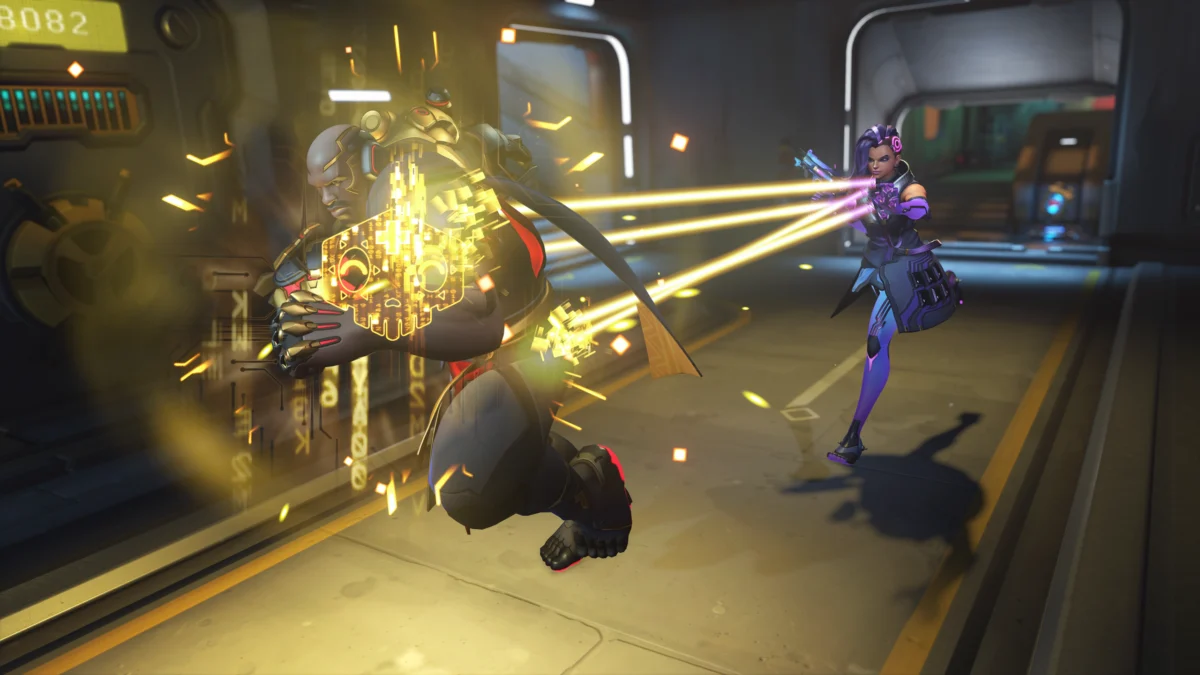
Blizzard Entertainment’s hero shooter, Overwatch, is poised for a significant shake-up with the impending launch of Season 5, introducing a brand-new support hero, Doctrine, alongside comprehensive reworks for two iconic characters, Sombra and Roadhog. These announcements, made during the highly anticipated BlizzCon 2026 opening ceremony, mark a pivotal moment in the game’s ongoing evolution, following the ambitious pledge made in February to add ten new heroes in celebration of Overwatch’s 10th anniversary. This commitment, more than tripling the average hero additions in previous years, underscores Blizzard’s dedication to revitalizing its beloved title and expanding its strategic depth.
The BlizzCon 2026 presentation detailed how the ninth of these ten new heroes, Doctrine, will join the roster next month, coinciding with the launch of Season 5. Simultaneously, two long-standing heroes, Sombra and Roadhog, will undergo substantial gameplay reconfigurations designed to address long-standing community feedback and introduce fresh strategic dimensions to their respective roles. The reveal at BlizzCon included hands-on demonstrations of the new content, allowing attendees and industry professionals to experience these changes firsthand and engage with Overwatch developers regarding the philosophy and anticipated impact behind each adjustment.
A Decade of Overwatch: Context and Evolution
Overwatch’s 10th anniversary in February served as a landmark occasion, prompting Blizzard to outline an aggressive roadmap for content delivery. The announcement of ten new heroes within a single year signaled a renewed investment in the game’s future, particularly after periods where hero releases were less frequent. This surge in new characters aims to inject fresh dynamics into the meta, encourage player re-engagement, and broaden the strategic possibilities available to players across all roles. The game, which transitioned to a 5v5 format in recent years, has continuously adapted its core mechanics, hero kits, and competitive structure to maintain relevance and appeal to its diverse player base. The introduction of role lock, while streamlining team composition, also amplified the importance of well-balanced and versatile heroes within each category. The current wave of updates is understood within this broader context of continuous refinement and strategic expansion, ensuring Overwatch remains a vibrant and competitive title.
BlizzCon 2026 itself served as the ideal platform for these revelations. The annual convention consistently acts as Blizzard’s primary conduit for major game announcements, offering a direct line to its most dedicated community members and the global gaming press. The atmosphere at BlizzCon, traditionally charged with excitement and anticipation, provided an optimal environment for showcasing the future direction of Overwatch, allowing developers to articulate their vision directly and receive immediate feedback from a passionate audience. The decision to unveil such significant hero changes at this event underscores their importance to the game’s future trajectory.
Introducing Doctrine: The Vampiric Support Catalyst
Season 5’s headline addition is Doctrine, a new support character whose vampiric thematic permeates his entire kit. Described by developers as a villainous figure, Doctrine is designed to empower allies and debilitate opponents, establishing him as a high-impact, strategic force on the battlefield. His core identity revolves around a kit-defining alternate fire ability that allows him to dynamically boost his other skills.

One of Doctrine’s standout mechanics is the interaction between his alternate fire and his "Infuse" ability. When Infuse is empowered, Doctrine’s primary fire transforms, gaining increased strength and the ability to pierce through multiple enemies. This not only enhances his offensive capabilities but also allows him to apply healing or other effects more broadly. Furthermore, his dash ability, typically a movement tool, grants temporary free flight when infused, offering unprecedented vertical mobility for a support hero. This free flight can facilitate aggressive plays, enable quick repositioning to high ground, or provide crucial escape potential. The healing and attack speed boost he provides to allies, another aspect of his kit, also becomes self-applicable when empowered, further enhancing his survivability and engagement potential.
Doctrine’s ultimate ability, "Deliverance," is perhaps the most evocative manifestation of his vampiric fantasy. It unleashes a swarm of bat-like drones that simultaneously provide overhealth to allies within their radius and significantly reduce opponents’ maximum life for several seconds. This dual-effect ultimate has the potential to dramatically swing team fights, creating a substantial health advantage for Doctrine’s team while critically weakening the enemy’s front line and back line alike.
Kenny Hudson, Lead Hero Producer on Overwatch, highlighted Doctrine’s versatility but also noted his projected high skill ceiling due to his accuracy-based mechanics. "He seems pretty versatile, but I think there’s going to be a high skill ceiling for him as well, because it’s accuracy-based," Hudson commented during an interview at BlizzCon. He further speculated on the critical role Doctrine’s ultimate ability will play in competitive success, a characteristic often more pronounced in support heroes compared to other roles.
Art Director Dion Rogers elaborated on Doctrine’s visual and thematic design, emphasizing his "austere, too-important-for-you demeanor" that aligns with the vampiric archetype while distinctly separating him from damage-role heroes. Rogers pointed to Doctrine’s posture and the use of a staff as his weapon, rather than a conventional firearm, as deliberate choices to convey a dangerous yet unmistakably support-oriented character. This design philosophy aims to avoid thematic confusion and reinforce his unique role within the roster.
Initial playtests at BlizzCon provided valuable insights into Doctrine’s operational dynamics. The "minigame" of managing and strategically empowering his abilities proved engaging, requiring players to make tactical decisions about resource allocation. For instance, reserving a charge for his enhanced dash ("Shrouded Momentum") could be crucial for escaping aggressive flankers like D.Va, allowing Doctrine to bait opponents before swiftly retreating to safety. The community’s initial reactions suggest a strong interest in exploring Doctrine’s full potential, particularly during his upcoming trial weekend, which will allow a broader player base to experiment with his intricate kit. His narrative connection to Doomfist and his anticipated role in Season 5’s story further deepen his integration into the Overwatch lore.
Sombra’s Seismic Shift: From Damage Flanker to Support Strategist
Beyond Doctrine, Season 5 ushers in one of the most significant hero reworks in Overwatch history: Sombra’s official transition from a damage hero to a support role. This move, which has been "flirted with" by the developers for years, fundamentally alters her identity and playstyle. Sombra’s new kit focuses on healing allies and reducing enemies’ damage output, while crucially retaining her iconic Translocator ability and EMP ultimate.
Sombra has a storied history of reworks, arguably more than any other Overwatch hero. Developers have consistently grappled with the challenge of preserving her "invisible hacker" fantasy while mitigating the frustration she often caused opponents. Her previous iterations frequently drew criticism for the perceived "unfun" nature of being hacked and unable to use abilities, often leading to a cycle of buffs and nerfs that struggled to find a stable middle ground. This latest rework represents Blizzard’s "biggest swing" yet at these persistent issues.

Kenny Hudson articulated the core design philosophy behind the rework: "The idea was [to] take away the frustration of getting hacked and shot out of anywhere and the friction that comes from being unable to use your abilities." The goal is to retain Sombra’s stealthy, disruptive identity but channel it into direct team utility rather than purely offensive harassment. Both Hudson and Art Director Dion Rogers noted that early internal playtests yielded surprisingly positive results, suggesting that the role swap harmonized well with the character’s core mechanics.
The concept of Sombra as a support is not entirely new. In the early days of the professional Overwatch League, before the implementation of role lock, some support players experimented with Sombra due to her utility and disruption capabilities. More recently, the "Mirrorwatch" event, which featured alternate-reality hero kits, offered a glimpse of a support-oriented Sombra who could provide attack speed boosts and overhealth to allies—mechanics that bear a resemblance to the current rework’s direction.
This shift carries significant implications for Overwatch’s meta. Sombra’s new healing capabilities, combined with her continued ability to infiltrate enemy lines and disrupt key targets, could introduce a unique blend of offensive pressure and defensive utility to the support role. However, questions remain regarding her raw healing throughput and whether she will be a viable primary healer or necessitate a secondary support with higher on-demand healing. The efficacy of her damage reduction abilities and how they synergize with various team compositions will also be crucial factors in determining her place in the competitive landscape. This rework represents a bold attempt to transform a historically problematic hero into a valuable and less frustrating asset for her team, and her performance during Season 5 will be closely monitored by both players and developers.
Roadhog’s Redevelopment: A Team-Oriented Tank Transformation
Roadhog, another long-standing hero, is also receiving a comprehensive rework, though he will remain firmly entrenched in the tank role. The primary objective of these changes is to transition Roadhog from a largely self-sufficient "lone wolf" tank into a more team-focused protector. The most impactful changes involve adjustments to his Chain Hook’s pull distance and the mechanics of his Scrap Gun, effectively eliminating his infamous "one-shot" combo against most heroes. This decision, according to Kenny Hudson, is aimed at making him "a lot less frustrating" to play against. For years, the instantaneous burst damage potential of Roadhog’s hook-and-shoot combo has been a major source of player frustration, leading to calls for rebalancing.
In place of his burst damage, Roadhog gains a new ability: "Trash Compactor." This ability allows him to nullify incoming damage for a period and then convert a portion of that absorbed damage into a burst of area-of-effect damage. Scott Kennedy, an Overwatch Hero Designer, explained in a group interview that Trash Compactor is intended to give Roadhog a direct means of protecting his team and contributing to collective engagements, moving away from his previous identity as a tank primarily focused on individual picks.
The removal of the hook combo’s burst damage is expected to significantly reduce frustration for opponents. However, its impact on playing with a Roadhog remains a subject of debate. Historically, Roadhog’s value often stemmed from his ability to secure critical eliminations through his hook, creating openings for his team. The concern is that without this definitive kill potential, he might struggle to assert enough pressure to justify his selection as a tank. Critics ponder whether he might continue to operate as a somewhat isolated tank, seeking opportune hooks from unexpected angles, potentially leaving his team vulnerable if his skill shots miss or if he becomes isolated.
However, the evolving landscape of tanking in Overwatch’s 5v5 format offers a counter-perspective. Modern tank play often emphasizes creating multiple angles of pressure and dictating enemy positioning, rather than simply shielding the entire team in a tight formation. Even traditional "main tanks" like Reinhardt are increasingly valued for their ability to hold aggressive off-angles and leverage their shields for personal protection during pushes. In this context, a reworked Roadhog with enhanced team utility and damage mitigation could become a more consistent and less "feast-or-famine" hero. His new ability to absorb damage and retaliate could make him a formidable anchor, capable of soaking significant pressure and punishing aggressive enemy dives. This rework represents an effort to integrate Roadhog more effectively into modern team compositions, shifting his emphasis from individual elimination potential to broader team resilience and engagement control.

Broader Implications and the Future of Overwatch
The concurrent release of a new hero and two major reworks in Season 5 signals Blizzard’s ongoing commitment to a dynamic and evolving Overwatch experience. The focus on the support role with both Doctrine and the Sombra rework suggests an intentional effort to diversify support playstyles and address community desires for more engaging and impactful healers. The support role, often seen as challenging due to its critical yet sometimes less flashy nature, stands to gain significant strategic depth from these additions.
For the competitive scene, these changes could dramatically alter the meta. Doctrine’s complex kit and high skill ceiling may foster a new generation of mechanically skilled support players, while Sombra’s transition could introduce a disruptive, healing-focused flanker that challenges traditional team compositions. Roadhog’s rework, if successful, could rehabilitate a hero often relegated to niche picks, making him a more reliable and team-oriented tank option. The interplay between these new and reworked heroes will undoubtedly lead to extensive experimentation in both quick play and competitive ladders, as players and professional teams alike seek to uncover optimal strategies and compositions.
The developer statements from Kenny Hudson, Dion Rogers, and Scott Kennedy consistently emphasize a desire to reduce player frustration while expanding strategic possibilities. This indicates a responsive development philosophy that values player experience alongside game balance. The upcoming trial weekend for Doctrine and the full launch of Season 5 will provide the first widespread public testing of these changes, offering crucial data and feedback that will inform future adjustments. Blizzard’s willingness to make such sweeping changes to established heroes demonstrates a proactive approach to maintaining the game’s long-term health and ensuring a fresh, engaging experience for its dedicated player base. As Overwatch continues its second decade, these updates are poised to shape its competitive landscape and player experience for seasons to come.
Editors’ note: Adam Benjamin’s travel costs for BlizzCon were covered by Blizzard Entertainment. The judgments and opinions of CNET are our own.