


The prospect of piloting the MOLE, a sophisticated subterranean drilling and navigation vessel, can initially appear daunting, particularly when the only guidance comes in the form of cryptic messages and intricate interfaces. Yet, the survival of Earth hinges on the skill of its navigator, and that crucial role falls to the player. This comprehensive guide delves into the mechanics of acquiring coordinates and plotting a course within the immersive experience of MOLE, a game that simulates the high-stakes challenges of deep-earth exploration and resource acquisition.
The Genesis of the MOLE Mission: A World in Need
The narrative of MOLE is set against a backdrop of planetary distress. As Earth’s surface resources dwindle and environmental conditions deteriorate, humanity’s last hope lies in the exploitation of subterranean reserves. The MOLE program, a clandestine initiative, was conceived to undertake this monumental task. Its success is paramount, not just for continued survival, but for the potential discovery of new energy sources and geological formations that could fundamentally alter humanity’s future trajectory. The cryptic nature of the MOLE’s operational instructions reflects the experimental and highly sensitive nature of the program, where every action carries significant weight and potential consequences.
Day One Operations: Unearthing the Initial Coordinates
The primary gameplay loop of MOLE revolves around the meticulous process of acquiring and inputting navigational data. For the initial phase of the mission, players will primarily engage with the Navigation Cassette, a vital component for extracting seismic information from the planet’s crust.
Locating and Processing Seismic Data:
Upon entering the MOLE’s cockpit, players will notice a console to their immediate left. This station is equipped with a small display, a lever, and an insertion slot for the Navigation Cassette. The process begins with inserting the cassette into this terminal. Once secured, the lever must be pulled to initiate the upload of seismic data. This action triggers a progress bar on the console; players must wait until this bar reaches 100 percent before removing the cassette. This seismic data is raw and requires further processing.
Decrypting and Analyzing Terrain Data:
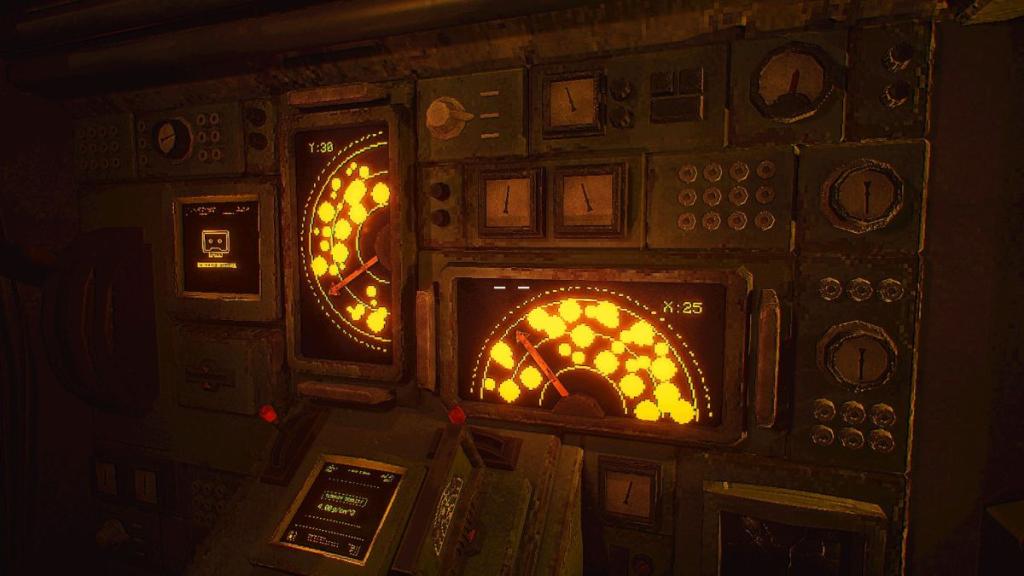
The next critical step involves decrypting the gathered seismic data. Players must turn to face the computer terminal directly opposite the cassette insertion point. Interacting with this terminal and pressing the Spacebar initiates the decryption process. Once the data is rendered comprehensible, the Navigation Cassette is then inserted into the main console situated on the left wall of the cockpit. This console features two smaller levers, which are central to determining the MOLE’s precise trajectory.
Determining X and Y Coordinates:
The key to plotting a course lies in accurately setting these two levers. Each lever corresponds to a display above, showing empty spaces and areas marked with rock clusters. The objective is to manipulate the levers so that an arrow, controlled by the player, points directly through an empty space on the display, avoiding any obstructions. Successfully navigating these empty spaces on both displays will yield the Y and X coordinates, respectively. These numerical values are crucial for guiding the MOLE. After obtaining both sets of coordinates, players must return to the pilot’s seat. A red handle, typically located near the pilot’s controls, needs to be pulled to activate the keypads where these coordinates are to be inputted. Precision is paramount, as even minor discrepancies can lead the MOLE off course, potentially into hazardous geological formations.
Optimizing Subterranean Travel: Drill Speed and Terrain Density
With the navigational coordinates secured, the focus shifts to preparing the MOLE for its subterranean journey. This involves determining the optimal drill speed, a factor directly influenced by the geological composition of the strata ahead.
Interpreting the Terrain Density Chart:
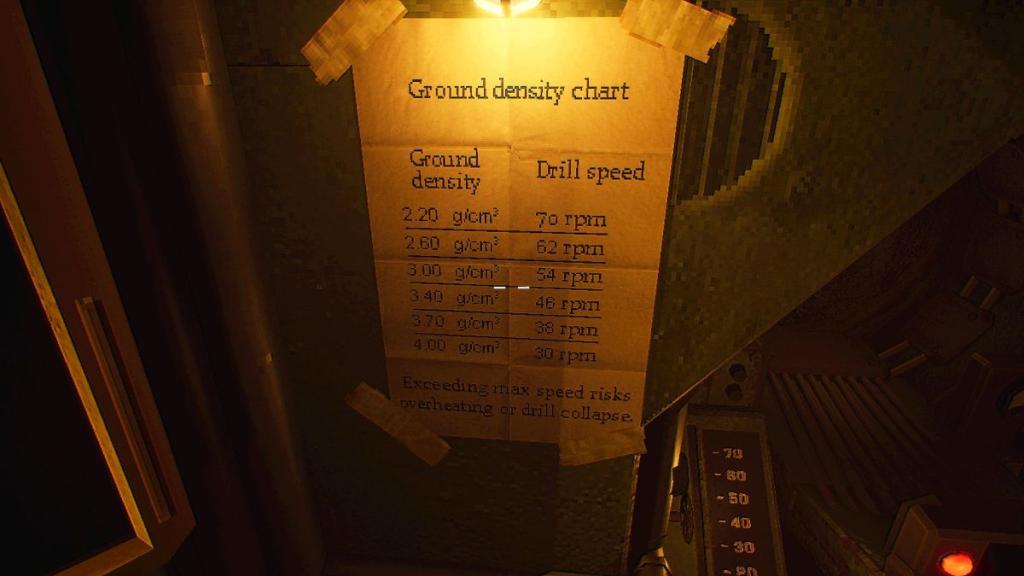
After inputting the coordinates, players must return to the two small levers on the main console. Here, the Terrain Density display will provide critical information about the ground ahead, typically measured in g/cm³. This reading needs to be cross-referenced with the Terrain Density Chart, which is usually located next to the pilot’s seat. This chart serves as a conversion key, translating the g/cm³ values into appropriate drill speeds. It is important to note that the density readings may not always correspond precisely to a listed drill speed. In such cases, players must exercise judgment and adjust the speed based on the closest available setting or interpolate between values, always referring to this chart for every new set of coordinates acquired.
Engaging the Drill and Navigating the Grid:
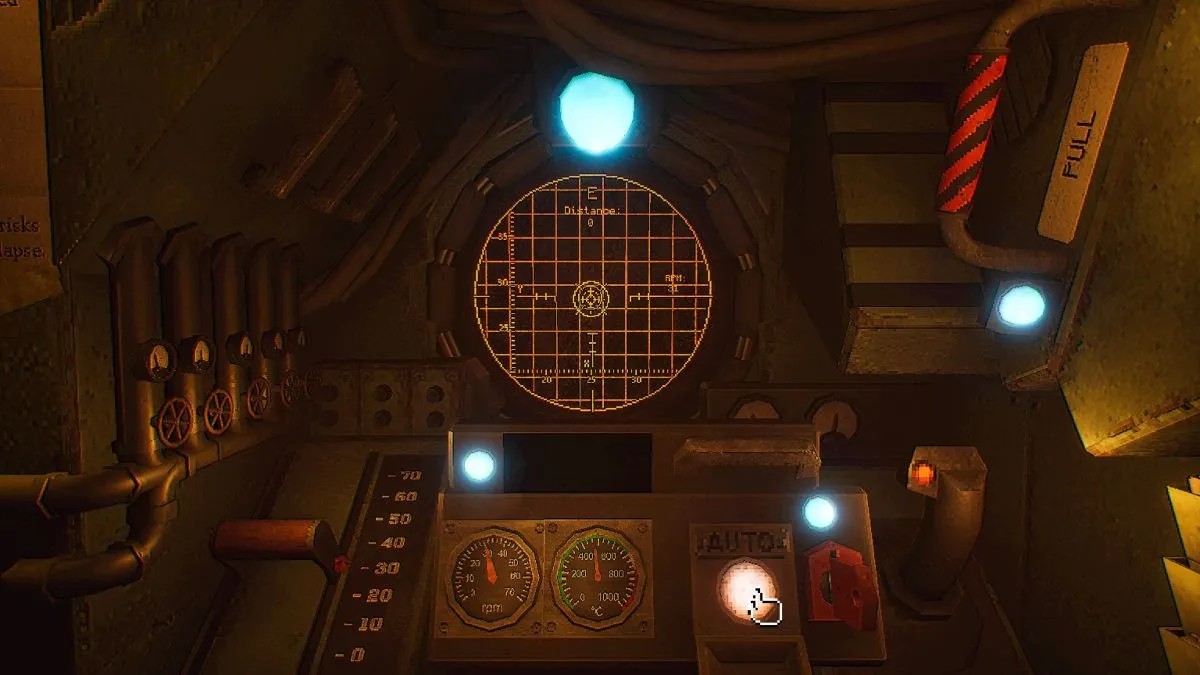
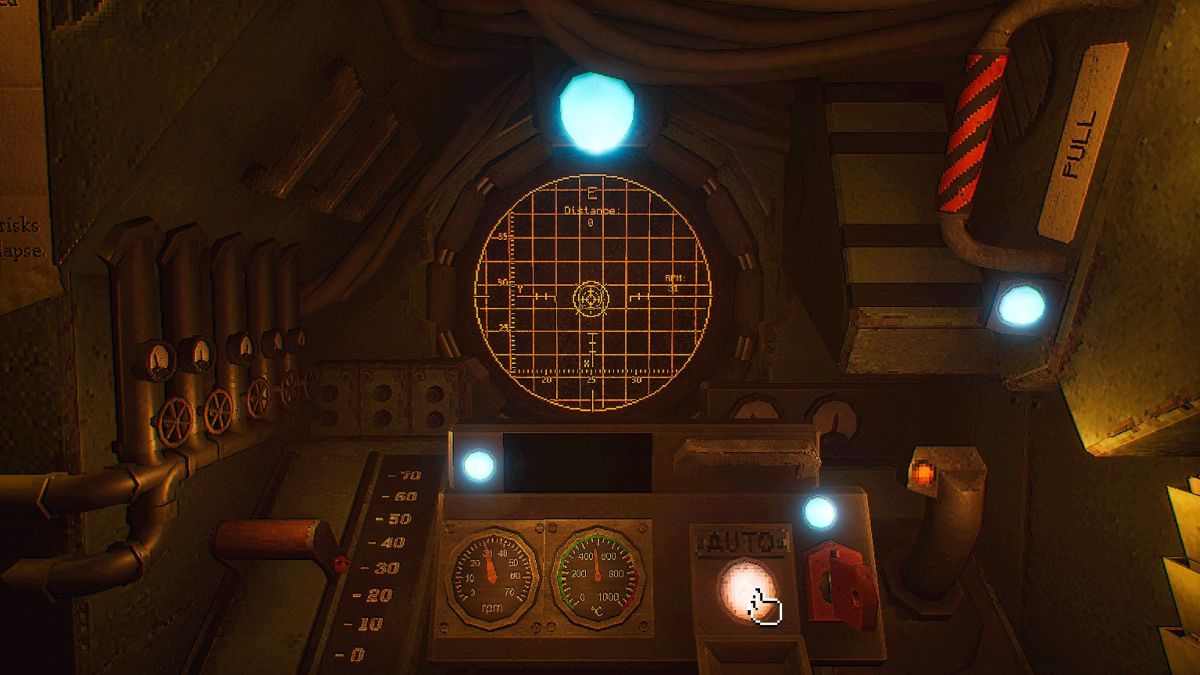
Once the optimal speed is determined, players return to the pilot’s seat. The speed is set using the red lever on the left side of the console. The right-hand side of the pilot’s station features a navigation stick, which is used to control the MOLE’s movement. The objective is to follow an arrow displayed on a grid ahead, guiding the drill towards the designated destination. The piloting circle, controlled by the player, must be precisely aligned with the stationary circle representing the target. When the MOLE is correctly positioned and aligned, a button will become available to switch to automatic piloting. Engaging this "Auto" function allows the MOLE to proceed along the plotted course with minimal further intervention.
Advanced Navigation: The Role of the Targeting Cassette
As the mission progresses, particularly into the second day of operations, a new layer of complexity is introduced with the advent of the Targeting Cassette and its integration into the piloting system.
The Two Pillars of Navigation: Navigation and Targeting Cassettes:
The MOLE’s navigational capabilities are augmented by two distinct types of cassettes. The Navigation Cassette, as detailed previously, is instrumental in gathering seismic data and determining geographical coordinates. The Targeting Cassette, however, deals with a different form of data: the Signal’s new information, crucial for more precise targeting and potentially for circumventing unforeseen anomalies.
Activating the Targeting System:
The Targeting Cassette becomes a critical tool once the MOLE’s laboratory module becomes accessible, typically on the second day of gameplay. To utilize it, players must first retrieve a crystal from the Geologist’s workstation. This crystal is then placed on a motherboard situated beneath a monitor displaying the White Rabbit Signal. This setup is designed to interface with the unique energy signatures detected deep within the planet.
Harnessing the White Rabbit Signal:
The process of using the Targeting Cassette involves a sequence of specific actions. Players must turn off the lights in the laboratory. With the lights dimmed, they then interact with the Signal displayed on the monitor. This interaction is designed to be immersive, with beams of light appearing to encircle the player’s vision, symbolizing the capture of the signal’s essence. Following this, players must turn to the wall behind them. While the lights remain off, they interact with a grid displayed on this wall. This action reveals radio frequencies associated with the Signal. Once the lights are switched back on, the Targeting Cassette is inserted into a radio unit. The top knob is used to set the first two digits of the identified radio frequency, while the bottom knob is adjusted to match the subsequent three digits. A small lever, marked with a red light, is then pulled to fine-tune the cassette’s reception and lock onto the specific frequency.
Integrating Targeting Data into Navigation:
The data acquired via the Targeting Cassette is not directly used for physical piloting but must be converted into navigational coordinates. Players return to the MOLE’s cockpit and access the computer terminal. Here, they select three files with the ".xyx" extension, a process typically initiated by pressing the Spacebar for each selection. Upon selecting all three files, pressing Enter twice confirms the conversion. This processed data from the Targeting Cassette is then integrated into the navigational system. Players can then revert to using the Navigation Cassette, following the established method of decrypting seismic data and inputting coordinates to pilot the drill to its newly refined destination. This dual-cassette system highlights a progression in the MOLE’s operational capabilities, moving from basic geological surveying to more sophisticated signal tracking and data triangulation.
Broader Implications and Future Considerations
The successful implementation of the MOLE program has far-reaching implications. The ability to reliably extract resources from the planet’s interior could alleviate critical shortages and potentially provide solutions to energy crises. Furthermore, the detailed seismic and geological data gathered by the MOLE could revolutionize our understanding of planetary formation and internal dynamics.
Resource Scarcity and Geopolitical Stability:
In the game’s narrative context, the dwindling surface resources have likely led to significant geopolitical instability and societal strain. The MOLE’s success offers a potential pathway to renewed prosperity and resource independence, which could reshape global power structures and foster an era of unprecedented cooperation.
Scientific Advancement and Exploration:
Beyond resource extraction, the MOLE acts as a cutting-edge scientific instrument. The data it collects on subterranean geology, mineral composition, and even potential subterranean life forms could unlock entirely new fields of scientific inquiry. This opens the door for future missions, perhaps even more advanced drilling platforms or exploration vehicles designed for greater depths and more challenging environments.
The Ethical Dimensions of Deep-Earth Exploitation:
While the immediate need for resources is pressing, the long-term consequences of extensive subterranean exploitation are a subject of considerable debate. The game implicitly raises questions about environmental impact, the potential for unforeseen geological consequences, and the ethical responsibilities associated with altering the planet’s deep crust. Future developments in the MOLE narrative could explore these complex ethical considerations, adding further depth to the player’s experience and challenging their decision-making. The ongoing development and deployment of the MOLE program represent a critical juncture for the civilization within the game’s universe, demanding both technical prowess and careful consideration of the future.