


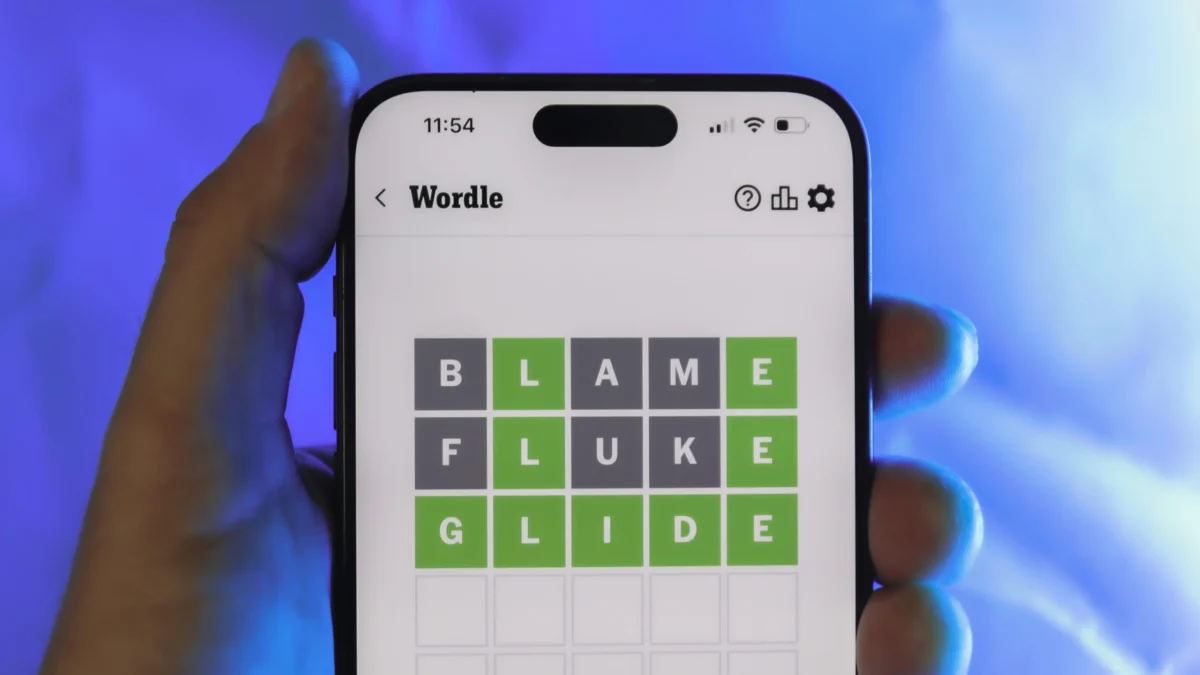
The daily Wordle puzzle continues to captivate millions worldwide, presenting a linguistic challenge that blends simple mechanics with surprising strategic depth. Recently, players faced a particularly tough day with the word "ELEGY," a term referring to a poem or song of lament for the dead, which proved to be a streak-buster for many due to its unusual nature and the presence of a repeated vowel. This follows another challenging word, "COPSE," the answer to Wordle No. 1,924 on September 25. These daily puzzles, alongside The New York Times’ other popular offerings like the Mini Crossword, Connections, Connections: Sports Edition, and Strands, have become a staple in many people’s routines, often prompting players to seek out hints and strategic advice to maintain their winning streaks.
The intrinsic appeal of Wordle lies in its elegant simplicity: players have six attempts to guess a five-letter word, receiving feedback on correct letters in the correct position (green), correct letters in the wrong position (yellow), and incorrect letters (gray). This seemingly straightforward premise belies a rich strategic landscape, where initial word choices and subsequent deductions are paramount. For words like "ELEGY," which features a repeated ‘E’ and ends in ‘Y’ (a "sometimes vowel"), the challenge is amplified, requiring players to think beyond common letter patterns and consider less frequent word structures.
The Daily Conundrum: A Case Study in ‘ELEGY’
The recent appearance of "ELEGY" as a Wordle solution highlighted several elements that can make a puzzle particularly difficult. The hints provided for this specific word illustrate the strategic clues often sought by players:
- Repeats: The presence of one repeated letter immediately narrows down possibilities, as many common words do not feature immediate repetitions. For "ELEGY," the repeated ‘E’ is a critical piece of information.
- Vowels: "ELEGY" contains one true vowel (‘E’) and one "sometimes vowel" (‘Y’). Crucially, the ‘E’ is repeated, meaning players are looking for a word with two ‘E’s and one ‘Y’ serving as a vowel. This specific vowel configuration is less common than words with multiple distinct vowels.
- First and Last Letters: Starting with ‘E’ and ending with ‘Y’ significantly limits the potential five-letter words. While ‘E’ is the most common starting letter in English, ending with ‘Y’ is less frequent than ‘E’, ‘S’, or ‘T’.
- Meaning: Providing a semantic hint – "a poem or song paying tribute to someone who has died" – offers a direct path to the solution for those with a strong vocabulary, but it’s often the last resort for players struggling with letter patterns.
Such words often lead to a phenomenon known as a "streak buster," where even experienced players find their unbroken runs of correct guesses coming to an end. The frustration of missing a difficult word like "ELEGY" or "COPSE" is a shared experience within the Wordle community, fostering discussion and a collective sense of achievement or commiseration.
The Genesis of a Global Sensation: Wordle’s meteoric Rise
Wordle’s journey from a personal project to a global phenomenon is a testament to the power of simple, engaging design and viral distribution. Created by software engineer Josh Wardle for his partner, Palak Shah, during the COVID-19 pandemic, the game was initially conceived as a private pastime. Its public launch in October 2021 was unassuming, but its unique sharing mechanism—a grid of colored squares without revealing the actual word—sparked curiosity and encouraged organic virality on social media platforms like Twitter.
By early 2022, Wordle had exploded in popularity, attracting millions of daily players. Its success caught the attention of The New York Times, a media institution with a long-standing tradition of offering engaging puzzles. In January 2022, the NYT acquired Wordle for an undisclosed sum reported to be in the low seven figures. This acquisition was a strategic move by the Times to expand its digital subscriber base and enhance its "Games" section, which already featured the highly popular Mini Crossword, Spelling Bee, and Sudoku. The Times stated its commitment to keeping the game free and ensuring its core mechanics remained unchanged, largely preserving the charm that had drawn its initial audience. The seamless integration into the NYT Games ecosystem solidified Wordle’s place as a mainstream cultural touchstone, demonstrating the enduring appeal of well-crafted, accessible intellectual challenges.

Mastering the Grid: Strategic Approaches to Wordle Success
For many Wordle enthusiasts, solving the puzzle isn’t just about luck; it’s about strategy. The key to consistent success often lies in a well-chosen starting word and a methodical approach to subsequent guesses. CNET, like many other journalistic outlets, regularly provides tips and daily answers, recognizing the widespread desire for strategic guidance. One widely adopted "hack" involves leveraging letter frequency analysis, a linguistic principle that underpins many effective Wordle strategies.
The Power of the Starting Word:
Linguistic studies, often supported by resources like the Oxford English Dictionary, reveal clear patterns in the frequency of letters in the English language. The letters E, A, R, O, I, S, T, L, and N are consistently among the most common. Conversely, letters like Z, J, Q, X, and K are significantly less frequent. A strategic starting word, therefore, should prioritize high-frequency letters while avoiding low-frequency ones.
- Vowel Maximization: Many experts recommend starting words that contain multiple common vowels (A, E, I, O, U). Words like "ADIEU" (A, D, I, E, U) are popular choices because they test four out of five primary vowels in a single guess, providing substantial information about vowel placement and presence.
- Common Consonants: Alongside vowels, incorporating high-frequency consonants such as R, S, T, L, N, and C is crucial. Words like "TRAIN" (T, R, A, I, N), "CLOSE" (C, L, O, S, E), "STARE" (S, T, A, R, E), and "NOISE" (N, O, I, S, E) effectively test a diverse set of common letters, maximizing the chances of hitting green or yellow squares early.
- Balancing Vowels and Consonants: The most effective starting words typically strike a balance. For instance, "CRANE" (C, R, A, N, E) is often cited in computational analyses as one of the statistically optimal starting words due to its combination of high-frequency letters and diverse letter positions. "SLATE" (S, L, A, T, E) is another strong contender for similar reasons. The goal is to gain as much information as possible—which letters are present, and where they are located—to narrow down the remaining possibilities quickly.
Beyond the First Guess: Iterative Strategy:
Once the initial guess provides feedback, players employ a process of elimination and deduction.
- Green Letters: Lock these into their positions.
- Yellow Letters: Confirm these letters are in the word but must be moved to different positions in subsequent guesses.
- Gray Letters: Crucially, these letters are entirely absent from the target word and should be avoided in all future guesses. This is where strategic thinking comes into play. If, for example, your first word uses ‘S’, ‘T’, ‘A’, ‘R’, ‘E’, and ‘S’ is gray, you immediately eliminate all words containing ‘S’.
Subsequent guesses should aim to test new, high-frequency letters that haven’t been eliminated, or to place yellow letters in new positions. The "Hard Mode" option, available in Wordle settings, adds an extra layer of challenge by forcing players to use all previously revealed green and yellow letters in subsequent guesses. This mode prevents "throwaway" words designed purely to test new letters, requiring more precise and thoughtful guesses.
The New York Times’ Expanding Puzzle Empire
Wordle’s acquisition was part of a broader strategy by The New York Times to cement its position as a leading destination for digital puzzles. The NYT Games app and website now offer a robust suite of daily challenges, each with its own fan base and strategic nuances:
- The Mini Crossword: A shorter, more accessible version of the classic crossword, popular for quick mental breaks.
- Connections: A newer addition, challenging players to group sixteen words into four categories based on subtle associations. This puzzle requires lateral thinking and a keen eye for nuance.
- Connections: Sports Edition: A specialized version of Connections, appealing to sports enthusiasts.
- Strands: Another innovative word puzzle that asks players to find themed words hidden within a grid of letters, connecting them to reveal a "spangram" that ties the theme together.
CNET’s commitment to publishing daily answers and hints for these puzzles underscores their cultural significance. These games are not merely diversions; they are engagement drivers, encouraging daily interaction with the Times’ digital platforms. For the NYT, this translates into increased digital subscriptions, a critical revenue stream in the evolving media landscape. The puzzles foster a sense of community among players, who often discuss their daily results and strategies on social media, further amplifying their reach and appeal.
Linguistic Insights and Cognitive Benefits
Beyond entertainment, Wordle and similar word puzzles offer tangible cognitive benefits. Engaging with these games regularly can:
- Enhance Vocabulary: Encountering words like "ELEGY" or "COPSE" can introduce players to less common terms, enriching their lexicon.
- Improve Spelling and Phonetics: The process of guessing and receiving letter feedback reinforces knowledge of letter sounds and common spelling patterns.
- Boost Problem-Solving Skills: Each Wordle puzzle is a mini-problem to solve, requiring logical deduction, pattern recognition, and hypothesis testing. Players must analyze clues, form theories, and refine their approach with each guess.
- Stimulate Memory: Recalling common word structures, letter frequencies, and previously eliminated letters exercises short-term and working memory.
- Reduce Stress: For many, the daily ritual of solving a puzzle provides a brief, focused escape, offering a sense of accomplishment that can contribute to mental well-being.
Linguistically, Wordle serves as a practical demonstration of statistical language properties. The success of strategies based on letter frequency isn’t arbitrary; it reflects the underlying structure of the English language. Analyzing word patterns, vowel-consonant ratios, and common prefixes/suffixes becomes an intuitive part of the game, even for casual players.
The Social Phenomenon and Broader Implications
Wordle’s genius lay not just in its gameplay but in its social design. The ability to share results as a grid of colored squares, without spoiling the word, created a unique form of social currency. Players could proudly display their success or lament their failures, fostering conversations and friendly competition. This social sharing was a primary driver of its initial virality and continues to be a core part of its appeal.
The game’s cultural impact extends beyond social media. Wordle has been referenced in popular culture, parodied, and inspired countless spin-off games and variations. Its success highlights a broader trend: the increasing demand for accessible, engaging digital content that provides a brief, satisfying mental workout. In a world saturated with complex digital entertainment, Wordle’s minimalist design and single-daily-puzzle model offer a refreshing antidote, preventing addiction while ensuring consistent engagement.
The future of daily word puzzles, spearheaded by the success of Wordle and the continued innovation from The New York Times Games team, seems bright. Developers will likely continue to explore new mechanics and variations, aiming to replicate the delicate balance of challenge and accessibility that made Wordle a global sensation. The enduring appeal of these games lies in their ability to blend linguistic challenge with cognitive engagement, offering a satisfying intellectual pursuit that fits seamlessly into the rhythm of daily life.
In conclusion, the daily Wordle challenge, exemplified by words like "ELEGY," is more than just a game; it’s a testament to effective game design, strategic thinking, and the universal appeal of linguistic puzzles. From its humble origins to its current status as a cornerstone of The New York Times’ digital offerings, Wordle continues to engage, challenge, and connect millions of players worldwide, proving that sometimes, the simplest ideas yield the most profound and lasting impact.