


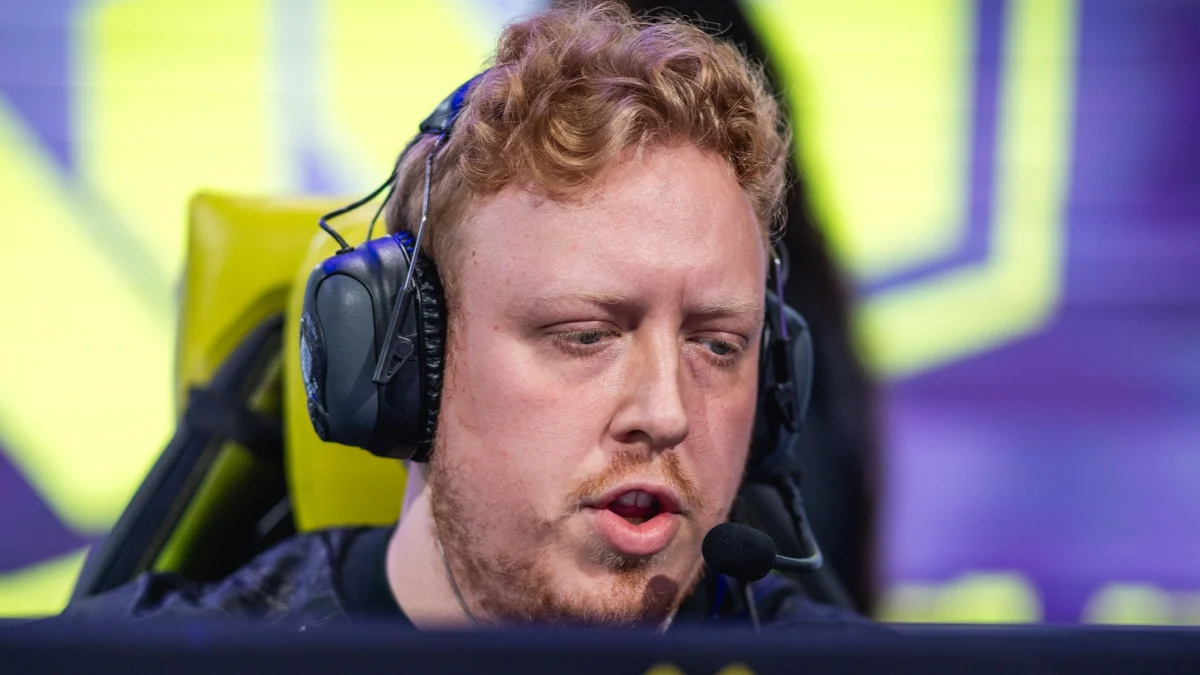
NAVI streamer and former professional Valorant player Ardis "ardiis" Svarenieks has issued a public apology after facing significant backlash for comments deemed transphobic during a co-stream of the Valorant Champions Tour (VCT) Game Changers tournament. The controversy erupted when clips of the stream, featuring Svarenieks and former Fnatic player Leo "Leo" Jannesson, circulated widely across social media platforms, prompting condemnation from various members of the Valorant community and calls for action from both Riot Games, the game’s developer, and NAVI, Svarenieks’ organization.
The incident occurred during a co-stream of a VCT Game Changers match. During their commentary, Svarenieks and Jannesson reportedly used the term "Bumblebees" to refer to certain players. A substantial portion of viewers interpreted this term as a derogatory and coded reference to transgender competitors. This interpretation was further fueled by Svarenieks’ subsequent remarks, where he stated, "I don’t want to get banned, but we need a nickname for them, bro," before making a jest about changing his own gender to compete in the league.
The comments were met with immediate and widespread criticism. Many viewers accused the pair of employing transphobic language and expressed outrage at the perceived disrespect towards transgender athletes. The sentiment online quickly escalated, with a significant number of fans demanding that Riot Games take disciplinary action, including potential removal from future Game Changers broadcasts, to uphold the inclusivity and integrity of the circuit.
Chronology of Events and Backlash
The controversy began to gain traction on social media platforms, particularly X (formerly Twitter), on or around July 22, 2026. Clips of the offensive remarks, accompanied by screenshots and user commentary, quickly proliferated. The Valorant community, known for its active engagement on social media, responded with a mixture of dismay and anger. Hashtags related to the incident and calls for accountability began trending within gaming circles.
Initially, Svarenieks appeared to engage with the criticism on stream, attempting to defend his remarks. He claimed that several women had privately thanked him for "speaking out" and suggested that his comments were inadvertently drawing more attention to the Game Changers scene. "Do you know how many women have messaged me saying ‘I can’t go public, but thank you’? Minimum five," he reportedly stated. "I’m the only one putting eyes on the Game Changers scene." This defense, however, did little to quell the outrage, with many viewing it as a deflection and an attempt to legitimize discriminatory speech.
Further exacerbating the situation, Svarenieks made additional controversial statements during the same period. In one instance, he posited that individuals with a "normal upbringing" could not be transgender. He elaborated, stating, "I think if [you have] a normal upbringing, with a good family tree, and you’re a loving mother and daughter with no family trauma, trans is not an option." He then went on to suggest that transgender identity in the community might stem from childhood trauma, abusive parental figures, or seeking acceptance within online communities. "I think trans in this community happens if you have like some trauma in your childhood, or maybe you have like an abusive father or abusive mother, or some sh*t like this. Then you feel alone as a child, you go into a community online that is this trans, whatever community. They accept you, they mold you, they say ‘oh we love you, we do this, you’re not really a boy who’s 10 years old, you’re really called Amelia.’" These statements were widely perceived as deeply offensive, inaccurate, and harmful generalizations about transgender individuals and their lived experiences.
The public outcry intensified, with many questioning the sincerity of any potential apology. Compounding these doubts, further clips emerged purportedly showing Svarenieks during the process of composing his apology. In these clips, he is seen smiling and audibly questioning, "what do I say sorry for, genuinely?" This behavior was interpreted by many as a sign of his lack of remorse and a strategic, rather than genuine, attempt to mitigate the damage to his reputation and career.
The Apology and Its Reception
Following the escalating backlash and the emergence of clips questioning his sincerity, Ardis "ardiis" Svarenieks posted a public apology on X on July 22, 2026. The statement read: "Hey everyone, The comments I made on stream about the transgender community were unacceptable. Even for me it was too much. I’m so sorry to everyone I offended; it won’t happen again. Peace and love to everyone."
While the apology addressed the core issue, its reception was mixed. Some members of the community acknowledged the apology as a necessary step, while others remained skeptical, citing his earlier defensive remarks and the alleged on-stream questioning of what he was apologizing for. The brevity of the apology and the continued presence of the problematic clips online meant that the controversy did not dissipate immediately. Many felt that a more comprehensive explanation and a clearer commitment to education and understanding would be required to truly rebuild trust.
Background: VCT Game Changers and Inclusivity in Esports
The VCT Game Changers circuit was established by Riot Games as a significant initiative to foster a more inclusive and equitable environment for women and gender-diverse individuals in competitive Valorant. The program aims to create dedicated opportunities and pathways for these players, who have historically been underrepresented in the esports landscape.
According to Riot Games’ VCT Game Changers rulebook for 2026, eligibility for participation is clearly defined: "Eligible players must identify as women or gender diverse." This rule underscores the tournament’s explicit purpose of providing a platform for marginalized genders. The existence of such a program highlights the industry’s growing awareness of the need for diverse representation and the creation of safe spaces within competitive gaming. Comments that undermine or mock the identities of participants in such circuits are therefore seen as a direct affront to the principles these initiatives are built upon.
The "Bumblebee" comment, coupled with Svarenieks’ subsequent rationalizations, touched upon a sensitive issue within esports and broader society: the identity and inclusion of transgender individuals. The use of derogatory nicknames and the harmful stereotyping of transgender identities as being solely a product of trauma or a lack of "normalcy" are recognized as significant barriers to creating truly inclusive spaces.
Analysis of Implications and Broader Impact
The incident involving Ardis "ardiis" Svarenieks carries several significant implications for the Valorant esports ecosystem and the broader gaming community:
- Brand Reputation and Sponsorships: For NAVI, as a prominent esports organization, such controversies pose a direct threat to their brand reputation and their appeal to sponsors. Organizations are increasingly held accountable for the conduct of their employees and streamers, particularly when their actions contradict stated values of inclusivity. Sponsors often have strict codes of conduct that prohibit discriminatory behavior.
- Riot Games’ Stance on Inclusivity: The pressure on Riot Games to respond is substantial. The organization has invested considerable resources and effort into the Game Changers program, positioning itself as a leader in promoting diversity. A weak or delayed response could undermine the credibility of these efforts and signal a lack of commitment to protecting its marginalized player base. This incident tests the robustness of their policies and enforcement mechanisms.
- Player Conduct and Accountability: The case highlights the ongoing challenge of ensuring appropriate conduct from professional players and streamers, even in non-official capacity co-streams. While co-streaming offers creative freedom, it does not exempt individuals from the responsibility of adhering to ethical standards and avoiding harmful rhetoric. The public’s expectation is that prominent figures in the esports scene will act as positive role models.
- Impact on Transgender Players and Community: For transgender players and allies within the Valorant community, such incidents can be deeply disheartening and alienating. The comments contribute to a hostile environment and can discourage participation and visibility. The Game Changers initiative aims to combat this, but public figures making transphobic remarks can undo progress made in fostering a welcoming atmosphere.
- The Role of Co-Streaming: The incident also raises questions about the responsibility of platforms and organizations that facilitate co-streaming. While co-streaming is a popular way for creators to engage with audiences and provide alternative perspectives on major events, it also means that the conduct of co-streamers can impact the perception of the event and the game itself.
Looking Forward: Towards Genuine Inclusivity
The controversy surrounding Ardis "ardiis" Svarenieks’ comments serves as a stark reminder of the continuous work required to cultivate genuinely inclusive environments in esports. While his apology is a step, the path forward for both Svarenieks and the broader community involves more than just issuing statements. It requires a commitment to education, empathy, and a consistent demonstration of respect for all individuals, regardless of their gender identity.
The Valorant Game Changers circuit represents a crucial effort to rectify historical imbalances and provide equitable opportunities. For this initiative to succeed, it must be protected from divisive rhetoric and discriminatory behavior. The Valorant community, Riot Games, and organizations like NAVI all share a collective responsibility to ensure that the competitive landscape is a safe and welcoming space for everyone. The repercussions of this incident will likely continue to be felt, influencing future discussions about player conduct, content moderation, and the true meaning of inclusivity in the evolving world of esports.