


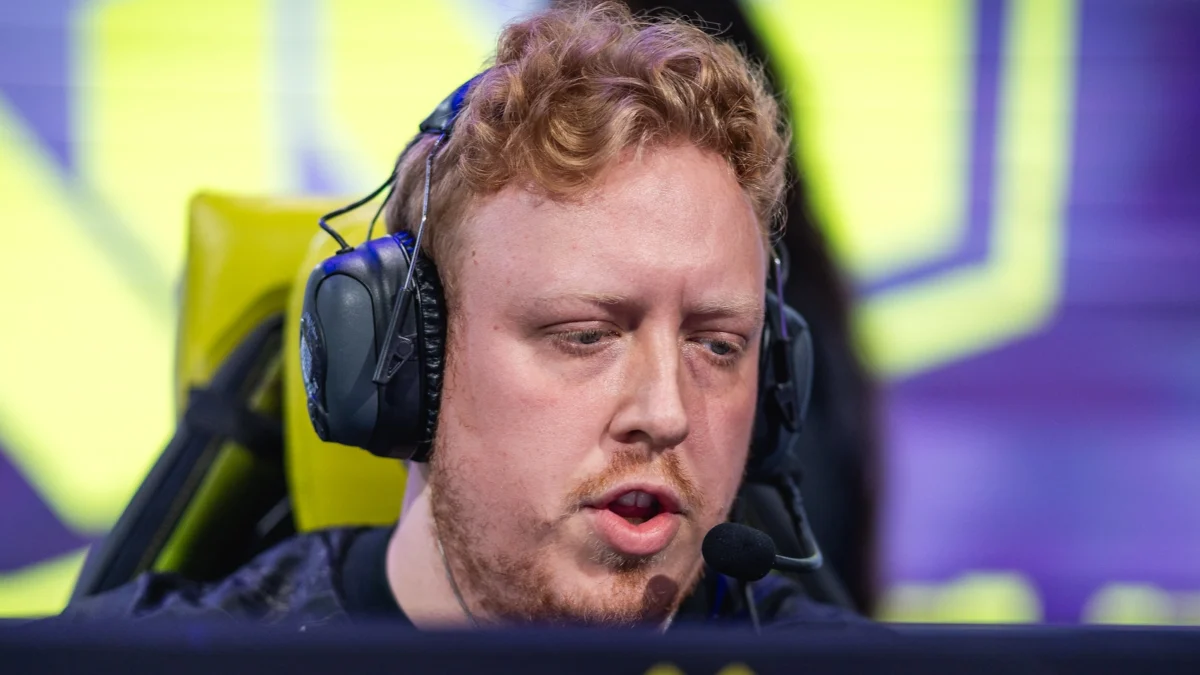
NAVI streamer and former professional Valorant player Ardis “ardiis” Svarenieks has issued a public apology following significant backlash stemming from comments made during a co-stream of the Valorant Champions Tour (VCT) Game Changers series. Viewers widely condemned the remarks, describing them as transphobic and discriminatory, leading to calls for action from both Riot Games and NAVI. The controversy erupted after clips of the stream circulated rapidly across social media platforms, sparking widespread criticism within the Valorant esports community.
The incident occurred during a co-stream of a VCT Game Changers match, where ardiis, alongside former Fnatic player Leo “Leo” Jannesson, employed the term “Bumblebees” to refer to certain competitors. This terminology was interpreted by a substantial portion of the audience as a derogatory and veiled reference to transgender participants. Further fueling the controversy, ardiis was heard on stream stating, “I don’t want to get banned, but we need a nickname for them, bro.” He then proceeded to make a remark suggesting he could change his own gender to be eligible to compete in the Game Changers league, a statement perceived as mocking and dismissive of transgender identities.
Community Outcry and Initial Defenses
The comments quickly ignited a firestorm of condemnation. Many viewers and community members accused ardiis and Jannesson of perpetuating harmful stereotypes and employing transphobic language. The sentiment was strong enough that explicit calls were made for Riot Games, the publisher of Valorant and organizer of the VCT, to take disciplinary action, including potentially removing the streamers from future Game Changers broadcasts.
In the immediate aftermath of the backlash, ardiis initially attempted to defend his statements on stream. He claimed that he had received private messages from women expressing gratitude for his “speaking out,” and asserted that his actions were, in fact, bringing more attention to the Game Changers scene. “Do you know how many women have messaged me saying ‘I can’t go public, but thank you’? Minimum five. I’m the only one putting eyes on the Game Changers scene,” he stated, suggesting a perceived lack of visibility for cisgender women in the competitive scene and framing his controversial remarks as a means to address this.
Furthermore, in a separate clip that surfaced, ardiis articulated a highly controversial and unfounded perspective on gender identity. He suggested that individuals with a “normal upbringing,” characterized by positive familial relationships and absence of trauma, could not be transgender. He elaborated, “I think if [you have] a normal upbringing, with a good family tree, and you’re a loving mother and daughter with no family trauma, trans is not an option. I think trans in this community happens if you have like some trauma in your childhood, or maybe you have like an abusive father or abusive mother, or some sh*t like this. Then you feel alone as a child, you go into a community online that is this trans, whatever community. They accept you, they mold you, they say ‘oh we love you, we do this, you’re not really a boy who’s 10 years old, you’re really called Amelia.’” This statement was widely criticized for its deeply offensive and inaccurate assertions about the origins of gender dysphoria and transgender identity, reducing it to a consequence of trauma and external influence rather than an intrinsic aspect of a person’s identity.
Adding further scrutiny to the sincerity of his eventual apology, video evidence emerged showing ardiis appearing to smile and question the grounds for his apology while composing his statement. In one clip, he is heard asking, “what do I say sorry for, genuinely?” This visual and auditory evidence led many to question whether the apology was a genuine expression of remorse or a strategic move to mitigate further damage to his reputation and career.
The Formal Apology and its Context
Following the sustained criticism and the evident disconnect between his initial defenses and the community’s expectations, ardiis posted a formal apology on X (formerly Twitter) on July 22, 2026. The statement read: “Hey everyone, The comments I made on stream about the transgender community were unacceptable. Even for me it was too much. I’m so sorry to everyone I offended; it won’t happen again. Peace and love to everyone.”
This apology, while a necessary step, has been met with mixed reactions. Some in the community have accepted it as a sign of potential growth and understanding, while others remain skeptical given his prior defensive remarks and the perceived lack of genuine introspection during the drafting of the apology. The timing of the apology, several days after the initial controversy erupted and after significant pressure had mounted, also plays a role in how it is being received.
Understanding VCT Game Changers and Riot Games’ Policy
The VCT Game Changers program was established by Riot Games with the explicit aim of creating new opportunities and increasing the visibility of women and other marginalized genders within the professional Valorant esports ecosystem. The program is designed to foster a more inclusive environment and provide a platform for talent that has historically been underrepresented in competitive gaming.
Riot Games’ official rulebook for the 2026 VCT season clearly outlines the eligibility criteria for Game Changers participants. According to the document, eligible players must identify as women or gender diverse individuals. This policy underscores Riot Games’ commitment to the program’s foundational principles of inclusivity and representation. The controversy surrounding ardiis’s comments directly challenges these principles and raises questions about the enforcement of codes of conduct within the VCT ecosystem.
Analysis of Implications and Future Considerations
The incident involving ardiis has several significant implications for the Valorant esports scene and beyond. Firstly, it highlights the ongoing need for education and awareness regarding LGBTQ+ issues within the gaming community, particularly among prominent figures and streamers. The use of derogatory terms, even if initially disguised, can have a profound negative impact on the individuals targeted and the broader community’s sense of safety and belonging.
Secondly, the incident puts pressure on organizations like NAVI and Riot Games to have robust policies in place not only for player conduct but also for content creators and co-streamers associated with their events. The expectation is that all individuals involved in broadcasting official competitions should uphold the values of inclusivity and respect promoted by the VCT. The response from NAVI, beyond ardiis’s personal apology, is keenly anticipated, as is any official statement or action from Riot Games regarding the co-streamers’ conduct.
Thirdly, the controversy underscores the power of social media in holding public figures accountable. The rapid dissemination of clips and the subsequent organized community response demonstrate the influence that viewers and fans can wield in shaping the discourse and demanding accountability within the esports industry.
The events of the VCT Game Changers co-stream serve as a stark reminder that while progress has been made in fostering inclusivity in esports, the journey is far from over. Continued dialogue, education, and decisive action from stakeholders will be crucial in ensuring that competitive gaming spaces are truly welcoming and equitable for all participants, regardless of gender identity or any other protected characteristic. The focus now shifts to how NAVI and Riot Games will address this issue internally and what measures, if any, will be implemented to prevent similar incidents from occurring in the future, thereby reinforcing their commitment to the VCT Game Changers initiative and its core values. The long-term impact on the perception of the Game Changers scene and the trust placed in its broadcasters will depend heavily on the transparency and effectiveness of the responses from all involved parties.