


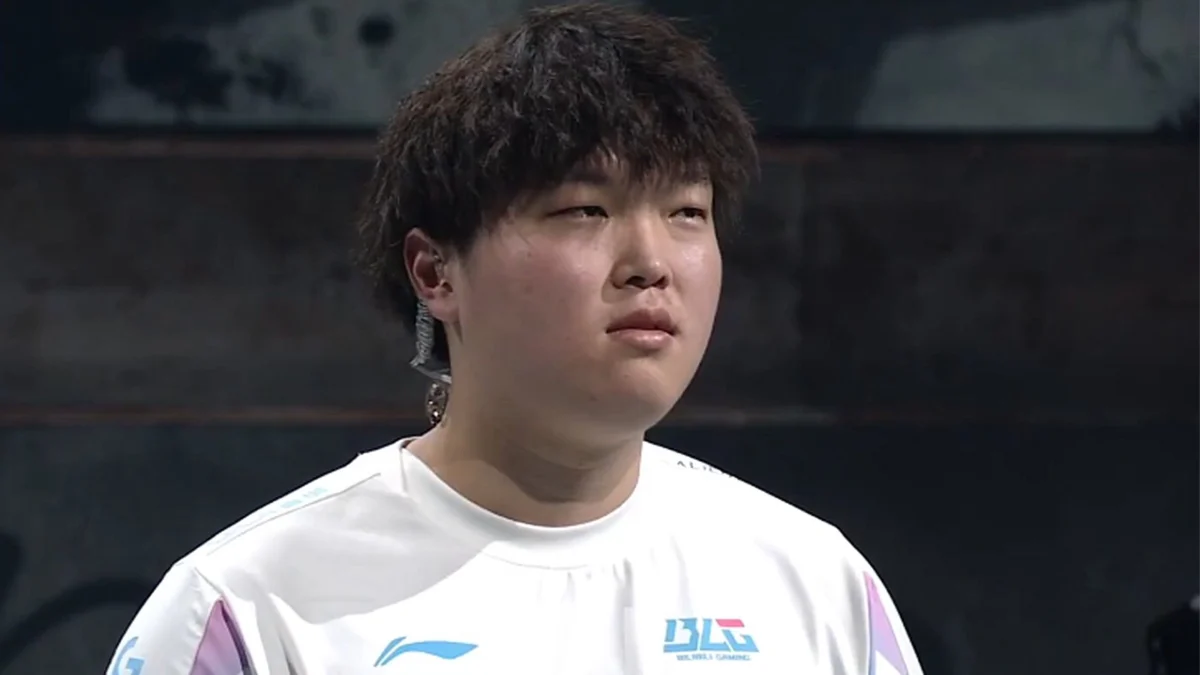
In a development that has sent ripples through the professional League of Legends scene, the League of Legends Pro League (LPL) has levied significant fines against top-tier player Chen “Bin” Zebin and his team, Billibilli Gaming (BLG), for a post-match infraction during their recent series against EDWard Gaming (EDG). The penalty, announced following an investigation, centers on Bin’s alleged failure to fulfill mandatory on-stage fan interaction obligations, specifically the act of giving high-fives, after BLG secured a decisive 3-0 victory. This incident highlights the league’s increasing emphasis on player conduct and the contractual responsibilities that extend beyond in-game performance.
The controversy unfolded on Wednesday, June 3, immediately after Billibilli Gaming’s dominant performance against EDG. According to an official statement released by the LPL, Bin’s actions were deemed a violation of his contractual duties as a professional player. The league’s assessment was stark: Bin’s refusal to engage in the customary high-five exchange with fans present at the venue not only breached his obligations but also “disrupted the match” and “negatively impacted the viewing experience and enthusiasm of the audience.” This statement underscores the LPL’s perspective that player behavior on stage is an integral part of the overall fan experience and a key component of their professional responsibilities.
A Deeper Look into the Incident and LPL’s Investigation
The LPL’s investigation into the matter extended beyond Bin’s individual actions to scrutinize the management practices of Billibilli Gaming. The league’s findings indicated that the team’s oversight and preparation of their players regarding pre-match and post-match conduct were “inadequate.” The official statement pointed to a failure by BLG management to “effectively fulfill its supervisory and management responsibilities,” suggesting a systemic issue rather than an isolated lapse in judgment by the player alone. This broader accountability placed a significant portion of the penalty on the organizational level.
As a consequence of these findings, Billibilli Gaming was subjected to a substantial fine of ¥50,000 (approximately $7,300 USD) and received a public reprimand. Player Chen “Bin” Zebin, identified as the primary individual at fault, faced an even more severe financial penalty of ¥150,000 (approximately $22,000 USD). Beyond the monetary sanctions, Bin was also subjected to public criticism and mandated to undergo “relevant training and education.” This multi-faceted punishment reflects the LPL’s intent to address both the immediate infraction and the underlying organizational and player development aspects.
The LPL’s statement articulated a clear set of expectations for all league personnel. “Players should strictly adhere to professional conduct and maintain a positive attitude both on and off the field, respecting the competition and the audience,” the league declared. The statement further emphasized the need for organizational improvement: “Clubs need to comprehensively improve their management mechanisms to prevent similar incidents from recurring. We hope that all league personnel will learn from this incident, adhere to professional standards, and cherish every viewer.” This indicates a league-wide initiative to reinforce professional ethics and fan engagement as core tenets of the LPL.

Chronology of Events and LPL’s Response
The incident occurred on Wednesday, June 3, during the LPL match between Billibilli Gaming and EDWard Gaming. Following the conclusion of the series, which BLG won decisively with a 3-0 scoreline, player Bin reportedly failed to engage in the customary high-five interaction with fans in the designated on-stage area.
- June 3, 2024: Billibilli Gaming defeats EDWard Gaming 3-0 in an LPL match. Post-match, player Bin allegedly bypasses fan high-five interactions.
- Post-Match Investigation: The LPL initiates an investigation into the reported breach of player conduct and contractual obligations.
- Announcement of Penalties: The LPL releases an official statement detailing its findings and imposing fines and reprimands on both Bin and Billibilli Gaming. The statement outlines the specific reasons for the penalties, citing contractual violations and negative impact on the fan experience.
- Fan Reaction: Online discussions and social media platforms emerge, with fans expressing a range of opinions on the severity of the penalties and the player’s actions.
- Current Status: As of the reporting date, neither Bin nor Billibilli Gaming has issued a public response to the LPL’s disciplinary actions.
Broader Implications for Esports Professionalism and Fan Engagement
The LPL’s stringent response to Bin’s actions and BLG’s managerial shortcomings carries significant implications for the burgeoning esports industry. In an era where fan engagement is increasingly recognized as a critical factor in the growth and sustainability of professional esports leagues, such incidents serve as a potent reminder of the expectations placed upon players and organizations. The financial penalties, particularly the substantial sum imposed on Bin, signal that the league views adherence to contractual obligations and maintaining a positive public image as non-negotiable aspects of professional play.
The LPL’s emphasis on “contractual obligations” suggests a formalization of fan interaction as a performance metric. In many professional sports, post-game ceremonies, autograph sessions, and direct engagement with supporters are standard practices. The LPL appears to be moving towards a similar level of structured fan engagement within its contractual framework for players. This can be seen as a proactive measure to ensure that the spectacle of esports extends beyond the digital arena and fosters a strong connection between players, teams, and their passionate fanbase.
Furthermore, the inclusion of BLG in the disciplinary action underscores the league’s commitment to holding organizations accountable for their player management and conduct. The finding that BLG’s oversight was “inadequate” suggests that teams are expected to proactively educate and guide their players on professional conduct, including on-stage etiquette. This could lead to more robust player development programs within esports organizations, focusing not just on in-game skills but also on soft skills, media training, and understanding the importance of fan relations.
The fan reactions, as evidenced by online commentary, reveal a spectrum of opinions. While some fans expressed bewilderment at the severity of the fines for what might be perceived as a minor infraction, others acknowledged the importance of fulfilling contractual duties, especially for those who may have paid premium prices for VIP experiences. The mention of VIP ticket sections in some fan comments points to the potential for tiered fan experiences, where specific interactions are part of the purchased package, adding another layer of contractual obligation to the situation. This highlights the complex ecosystem of fan expectations and commercial arrangements within professional esports.
The LPL’s statement, urging all personnel to “cherish every viewer,” serves as a broad directive to the entire league. It suggests a strategic vision where the fan remains at the center of the esports experience. For leagues like the LPL, which operates in a highly competitive global market, cultivating a positive and engaging fan environment is crucial for long-term success and for attracting new audiences. This incident, therefore, can be interpreted as a significant step in the LPL’s ongoing efforts to professionalize its operations and elevate the fan experience to a standard comparable to traditional sports. The lack of immediate response from Bin or BLG is also noteworthy, as it leaves the interpretation of their stance on the matter open, though the league’s disciplinary action is definitive. The league’s firm stance sets a precedent for future conduct and reinforces the understanding that professional esports players are not just athletes, but also public figures with responsibilities extending to the broader community that supports them.