


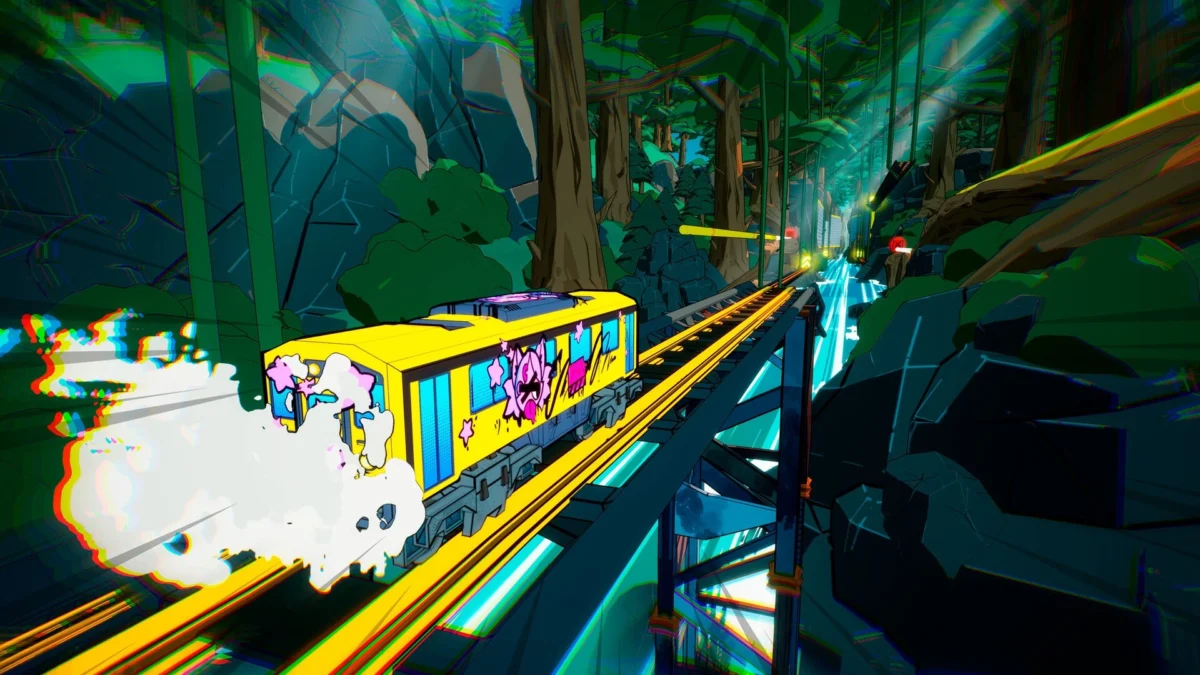
The indie gaming sphere frequently witnesses unexpected triumphs, and July 2026 marked one such occasion with the launch of Denshattack! on Xbox Game Pass. Dubbed by many as "Tony Hawk but you’re a train," the vibrant, genre-bending title quickly captivated players and critics alike, becoming a significant day-one release for Microsoft’s subscription service. In a recent interview with AUTOMATON, David Jaumandreu, Game Director at Undercoders, the studio behind Denshattack!, reflected on the game’s journey and unequivocally stated that launching on Game Pass proved to be "a very positive experience" that substantially lowered development risks for the small team. His insights offer a valuable perspective on the evolving dynamics between independent developers and major subscription platforms, particularly as Game Pass itself navigates a period of strategic adjustments.
Critical Acclaim and a Fresh Take on Extreme Sports
Denshattack! burst onto the scene with a unique premise and an instantly recognizable, yet refreshingly distinct, aesthetic. The game masterfully fuses the high-flying, combo-driven mechanics of classic extreme sports titles like Tony Hawk’s Pro Skater and SSX with the distinctive urban flair and rebellious spirit reminiscent of Jet Set Radio Future. This audacious blend, which sees players performing gravity-defying tricks and grinding through urban environments as a customizable train, resonated deeply with both genre veterans and newcomers.
Upon its release, Denshattack! garnered widespread critical acclaim. Reviewers lauded its innovative gameplay, vibrant art style, catchy soundtrack, and surprisingly deep trick system. The consensus quickly established it as a standout title of the year, a sentiment solidified by its impressive Metacritic score of 88. This places Denshattack! firmly within Metacritic’s top 15 games of 2026, a remarkable achievement for an independent studio and a testament to its quality and originality. This critical reception was undoubtedly amplified by its immediate availability to millions of Game Pass subscribers, allowing it to bypass some of the typical discoverability hurdles faced by indie titles.
The Game Pass Partnership: A "Very Positive Experience"
The decision to launch Denshattack! as a day-one title on Xbox Game Pass was a strategic move that, according to Jaumandreu, yielded significant benefits for Undercoders. He elaborated on the process, explaining that discussions with Microsoft began early in the game’s development cycle. "From the very beginning, we presented the game to Microsoft, and they liked it," Jaumandreu recounted. "We continued discussions for a long time until we were invited to be part of Game Pass."
For a small team like Undercoders, the opportunity presented by Game Pass was immense. The primary appeal lies in the unprecedented exposure it offers. With millions of active subscribers worldwide, Game Pass acts as a colossal distribution channel, placing games directly in front of a vast and engaged audience that might otherwise never encounter them. "Of course, for a small team like ours, that’s a very good opportunity because it puts the game in front of a lot of people," Jaumandreu affirmed. "A lot of people get to play it, and if they like it, they can recommend it to others. So for us, it’s been a very positive experience. A lot of people have played the game thanks to Game Pass, so we’re glad we did it." This sentiment echoes a common refrain from independent developers who find themselves struggling for visibility in an increasingly saturated digital marketplace. Game Pass, by removing the initial purchase barrier, encourages experimentation and broadens a game’s reach exponentially.
Navigating Financial Risks and Creative Pressures
While the benefits of Game Pass are clear, the question of whether such deals truly alleviate the financial pressures on developers, particularly regarding the need to break even, is a nuanced one. Jaumandreu provided a candid perspective on this, acknowledging that while a Game Pass agreement offers significant financial security, it doesn’t entirely eliminate the inherent stresses of game development and market performance.
"Yeah, it gives you a little bit of air, so to speak, because there’s some amount that’s guaranteed even before you hit the market," Jaumandreu stated. This upfront financial commitment from Microsoft is a critical lifeline for many indie studios, providing a stable foundation that can cover a substantial portion of development costs. This "guaranteed amount" acts as a crucial buffer, "lower[ing] the risk you’re taking compared with not having a deal, so of course that’s always a good thing." For studios operating on tight budgets, this security can mean the difference between completing a project and having to abandon it due to financial strain.
However, Jaumandreu was quick to temper expectations, emphasizing that the pressure to deliver a high-quality product remains. "But I wouldn’t say it takes away the pressure," he clarified. "You still need to deliver a very good game, and I don’t think Microsoft would release something that doesn’t meet its standards, even if you’ve already signed a deal, so you still have that pressure." This highlights a crucial aspect of such partnerships: while financial risk is mitigated, the bar for quality remains high. Microsoft’s reputation and the integrity of the Game Pass library depend on curating a collection of engaging and well-made titles. Developers, even with a deal in hand, must still meet stringent quality assurance and performance benchmarks.
Furthermore, Jaumandreu pointed out that even with a Game Pass deal, studios often still need to achieve a certain level of success to ensure long-term sustainability. "You also still need to sell a certain number of copies to recoup the development costs, etc." This implies that while the Game Pass payment provides a strong base, additional revenue streams, whether from sales on other platforms or ongoing engagement within Game Pass, are often necessary for a studio to thrive and fund future projects. "But it does take away some of the financial stress because when you launch, you know you’re getting at least a certain amount of money," he concluded, summarizing the delicate balance of reduced financial anxiety versus persistent creative and commercial expectations.
The Broader Landscape of Xbox Game Pass
Jaumandreu’s comments arrive at a pivotal moment for Xbox Game Pass, a service that has been lauded for its disruptive potential but is also undergoing a period of significant experimentation and strategic recalibration. Since its launch in June 2017, Game Pass has grown exponentially, evolving from a curated library of older Xbox titles into a comprehensive subscription offering that includes day-one releases from both first-party studios and a growing number of independent and third-party developers. Its subscriber base has steadily climbed into the tens of millions, solidifying its position as a cornerstone of Microsoft’s gaming strategy.
However, 2026 has seen Xbox Game Pass implement several notable changes. In April, Microsoft adjusted its monthly subscription fees, a move that sparked considerable discussion among subscribers and industry analysts regarding the long-term pricing strategy of such services. More recently, in September, Xbox officially announced new time limits on Cloud Gaming access for Game Pass members, signaling an ongoing effort to optimize resources and potentially tier service offerings. These adjustments underscore the dynamic nature of the subscription model, as platform holders continually seek to balance value for consumers with profitability and sustainability for both the platform and its content providers.
Despite these internal shifts, the core value proposition of Game Pass for independent developers appears to remain largely intact. It continues to serve as a powerful launchpad, capable of catapulting niche titles into mainstream consciousness. For studios like Undercoders, the ability to get their game into the hands of millions of players without the traditional upfront cost of purchase remains a compelling draw, fostering discoverability and community engagement on an unprecedented scale.
Indie Development in the Subscription Era
The experience of Undercoders with Denshattack! offers a microcosm of the opportunities and challenges facing independent game developers in the era of subscription services. For many years, discoverability has been one of the most formidable obstacles for small studios. With thousands of games released annually across various digital storefronts, standing out from the crowd requires significant marketing budgets and often, a stroke of luck. Subscription services like Game Pass offer a partial solution to this dilemma.
By integrating games directly into a widely adopted service, Game Pass effectively transforms a potential niche title into a readily accessible experience. This dramatically lowers the barrier to entry for players, encouraging them to try games they might otherwise overlook. For developers, this means a guaranteed audience, which can translate into critical mass for reviews, social media buzz, and word-of-mouth recommendations. The "Tony Hawk but you’re a train" elevator pitch for Denshattack! is compelling, but its presence on Game Pass ensured that countless players could experience that premise firsthand without financial commitment.
However, the model is not without its critics. Some argue that while Game Pass provides upfront funding, it might depress long-term sales figures for games that would have performed well as standalone purchases. The ongoing debate revolves around whether the increased exposure and upfront payment sufficiently compensate for potential lost revenue from individual sales. Jaumandreu’s comments, acknowledging the need to "sell a certain number of copies to recoup the development costs, etc.," suggest that even with a Game Pass deal, diversified revenue streams and continued engagement remain crucial for a studio’s overall financial health and independence. This highlights a delicate balance developers must strike when evaluating subscription service partnerships.
Undercoders’ Vision for Independence and Future
Looking ahead, David Jaumandreu concluded his interview by reiterating Undercoders’ commitment to remaining an independent studio. The success of Denshattack! and the positive experience with Game Pass have clearly bolstered their confidence and provided a strong foundation for future endeavors. The studio aims to capitalize on the current momentum, hoping that Denshattack! will gain even wider recognition during the upcoming Tokyo Game Show later this month.
Events like Tokyo Game Show provide invaluable platforms for independent studios to showcase their work to a global audience, engage with fans, and forge new industry connections. For Denshattack!, this exposure will serve to reinforce its critical standing and potentially attract new players who may not yet be Game Pass subscribers, thereby broadening its commercial appeal beyond the subscription service. This strategic approach—leveraging Game Pass for initial exposure and financial stability, then augmenting it with traditional marketing and showcase events—demonstrates a pragmatic path for indie studios seeking both reach and sustained independence in today’s complex gaming landscape.
The story of Denshattack! and Undercoders serves as a compelling case study for the evolving relationship between indie developers and subscription gaming services. While platforms like Xbox Game Pass offer unparalleled opportunities for discoverability and financial de-risking, they also introduce new layers of expectation and strategic considerations. Undercoders’ success underscores that with a unique vision and a strong partnership, independent studios can not only thrive but also deliver some of the most surprising and critically acclaimed titles in the industry.