



Twenty-five years after Master Chief Petty Officer John-117 first graced the gaming world in Halo: Combat Evolved, a groundbreaking title that redefined the first-person shooter genre and served as the flagship for the original Xbox console, a new iteration of his inaugural adventure has arrived. Halo: Campaign Evolved is not merely a graphical facelift; it is a meticulously crafted reimagining of the seminal campaign, built from the ground up to honor its legacy while embracing modern technological advancements. This release heralds a potential new era for the beloved franchise, with hopes that it signals a comprehensive remaking of the entire original trilogy.
A Return to the Foundations of a Legend
Halo: Campaign Evolved is, by its very name, an evolution of the campaign that launched alongside the original Xbox in November 2001. This undertaking represents a significant departure from previous remastering efforts such as Halo: Combat Evolved Anniversary and Halo 2: Anniversary. While those titles primarily focused on visual enhancements and optimization, Campaign Evolved is presented as a more comprehensive, ground-up remake, aiming for a level of fidelity and depth that respects the source material while leveraging the capabilities of contemporary gaming hardware.
At its core, Campaign Evolved is a one-to-one recreation of the original game’s narrative campaign. However, this faithfulness is elevated by a dramatic overhaul of its visual and auditory presentation. Developed using Unreal Engine 5, the game boasts breathtaking visuals that render the familiar landscapes of Installation 04 and beyond with unprecedented detail. The reviewer notes the striking visual fidelity, particularly when experienced on platforms like the PlayStation 5 Pro, a sentiment that underscores the game’s impressive graphical prowess. This commitment to modernization extends to the audio experience, with all dialogue having been re-recorded. This deliberate choice ensures that Campaign Evolved feels like a genuine remake, rather than a simple upscale of existing assets.

The developers have exercised a delicate balance, introducing enhancements without fundamentally altering the core gameplay that resonated with millions of players. This approach aims to assuage the concerns of purists while offering welcome refinements. Notable among these are optimizations to certain combat encounters and enemy spawn points, designed to maintain the challenge and surprise of the original. A significant gameplay addition is the inclusion of a sprint function, a staple in more recent Halo titles, which can be toggled on or off by players who prefer the original pacing. Furthermore, nine new weapons from across the Halo franchise have been integrated into the campaign, including iconic armaments such as the Battle Rifle and the Energy Sword. These additions are particularly beneficial given the game’s structure, which often necessitates weapon swapping due to ammunition constraints across its ten missions.
Enemy artificial intelligence has also undergone a substantial revamp, with foes now exhibiting more reactive and adaptive behaviors. The game dynamically scales the number of enemies encountered based on the number of players participating in co-operative play. Supporting up to four players in co-op, the challenge intensifies proportionally with each additional Master Chief on the battlefield, and encounters have been subtly redesigned to foster a sense of freshness and engagement for veteran players.
Despite these modernizations, the essence of Halo 1 remains intact. Players will still navigate the same missions, experience the familiar vehicle segments, and confront the infamous "Library" level, a testament to the enduring design of the original. The primary distinction lies in the vastly improved visual fidelity, transforming these beloved (and sometimes reviled) environments into stunningly realized digital landscapes. This silver anniversary celebration of Halo: Combat Evolved also fuels speculation and anticipation for potential remakes of Halo 2 and Halo 3, games that many consider to possess even stronger narrative campaigns than their predecessor, which relied heavily on its initial mystery and simplicity before the series evolved into more complex and action-packed sequels.
Replayability is further enhanced through the inclusion of Skulls, collectible modifiers that alter gameplay in the original. Campaign Evolved introduces 28 new Skulls, offering players the ability to further tailor the difficulty, from making challenges more accessible to introducing entirely new layers of complexity. A particularly intriguing addition is a Skull that allows players to experience the campaign from a third-person perspective, a nod to the original development phases of Halo: Combat Evolved and a unique way to revisit familiar scenarios. These features, alongside the narrative additions, aim to justify the game’s $50 launch price.
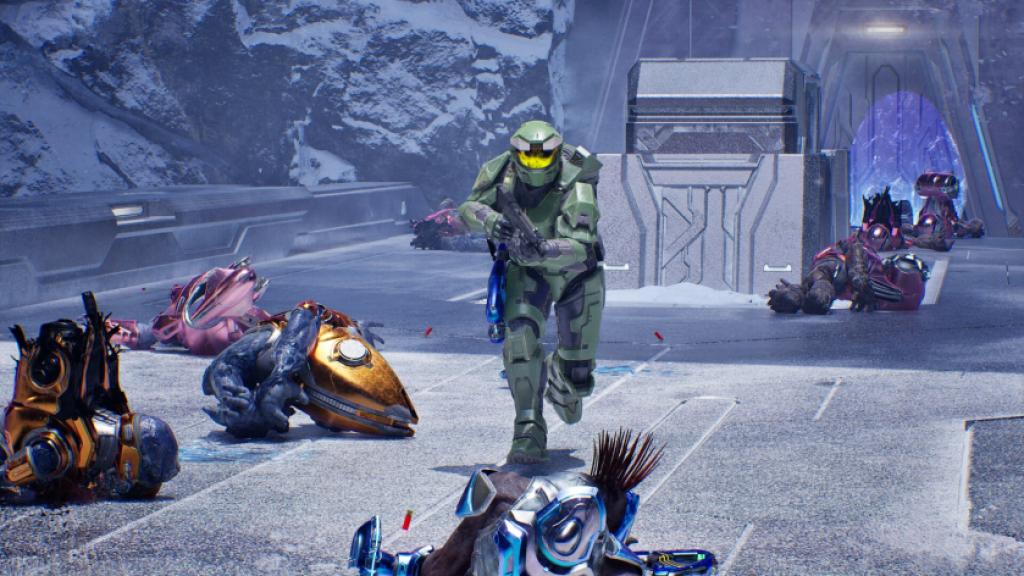
Operation: Meteorite – A Precursor to Galactic Conflict
A significant distinguishing feature of Halo: Campaign Evolved, beyond its exclusive focus on campaign content, is the introduction of "Operation: Meteorite." This new segment comprises three original missions that bridge the gap between the game’s narrative and its prequel events, taking place approximately one year before the main campaign’s storyline. These missions place Master Chief and Sergeant Avery Johnson at the forefront, offering a fresh perspective on the escalating conflict with the Covenant.
The Operation: Meteorite missions have been lauded for their quality and their effectiveness as a narrative prologue. They deliver the signature Halo blend of cheesy military dialogue, intense enemy ambushes, and bombastic combat, all set within environments that, while occasionally mundane, offer moments of striking visual beauty. The narrative thrust of these missions centers on Chief and Johnson infiltrating a Covenant agriculture ship in pursuit of critical intelligence. However, as is often the case in Halo lore, plans are subject to change, leading to dynamic and engaging combat sequences. While Chief and Johnson are the central figures, these missions also provide opportunities to highlight the bravery and resilience of ancillary UNSC Marines, further enriching the lore and setting the stage for the events to come.
The standout element of Operation: Meteorite is undoubtedly a climactic space combat sequence within a Covenant Seraph fighter. This particular mission offers a glimpse into the potential of vehicular combat within the Halo franchise, a gameplay element that has historically been underutilized. The reviewer expresses strong hope that such dynamic and engaging aerial combat will become a more prevalent feature in future Halo titles. This mission, with its blend of frantic infantry action and thrilling space dogfighting, is cited as a highlight of the entire Campaign Evolved experience.
While Operation: Meteorite does not introduce any earth-shattering lore revelations that would fundamentally alter the established Halo universe, its addition is considered a welcome one for both newcomers to the series and long-time fans who have followed Master Chief’s journey across multiple consoles for decades. It serves as a compelling narrative appetizer, effectively whetting the appetite for the main campaign while showcasing innovative gameplay possibilities.
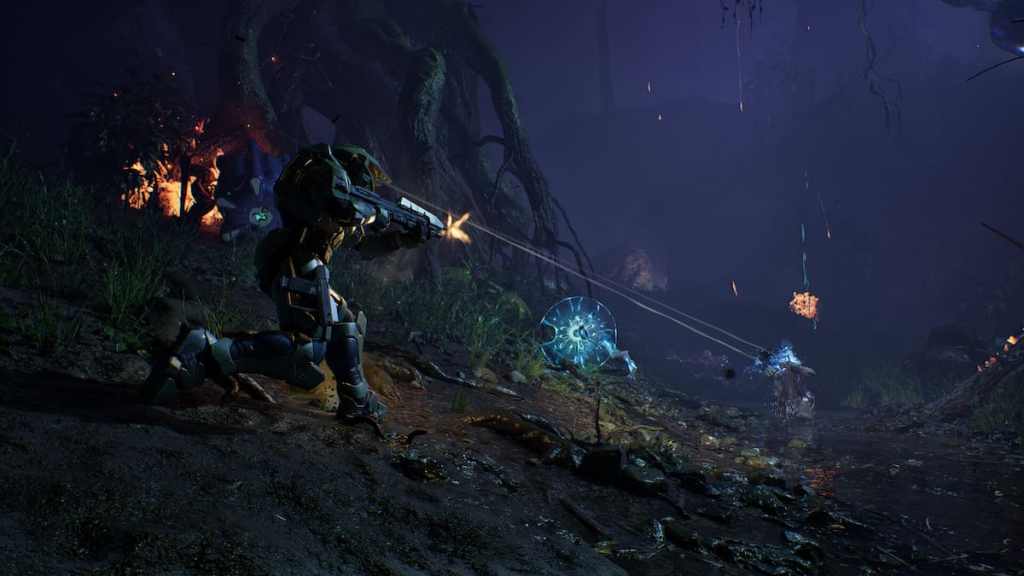
The Shadow of Multiplayer’s Absence
Xbox has been transparent about the scope of Halo: Campaign Evolved, explicitly stating that the release focuses solely on the campaign and does not include multiplayer components, a fact reflected in its title. Nevertheless, the omission of the classic competitive multiplayer experience remains a notable point of contention for many, especially considering the legacy of the Halo series.
For a significant portion of the Halo fanbase, the franchise has always been synonymous with its robust multiplayer offerings – the adrenaline-fueled firefights, the strategic capture-the-flag matches, and the intense battles for coveted power weapons alongside friends. While the Master Chief Collection provides access to these classic multiplayer modes on other platforms, its absence in this dedicated remake is keenly felt, particularly by players on the PlayStation ecosystem. The lack of competitive multiplayer in Campaign Evolved can be perceived as a substantial void, detracting from the completeness of an experience that, for many, defined a generation of gaming.
Broader Implications and Future Prospects
The release of Halo: Campaign Evolved arrives at a pivotal moment for the Halo franchise. Following a period of mixed reception for recent installments and a shift in development leadership, this remake signals a potential recommitment to the foundational elements that made the series a global phenomenon. The meticulous approach taken in remaking Combat Evolved, particularly the ambition behind Operation: Meteorite, suggests a forward-thinking strategy that respects the past while exploring new avenues for gameplay and narrative expansion.
The success of Campaign Evolved will likely serve as a critical barometer for future projects. If this ambitious remake resonates with players, it could pave the way for similarly comprehensive remakes of Halo 2 and Halo 3, fulfilling the hopes of many fans for a complete reimagining of the original trilogy. Furthermore, the innovative vehicular combat showcased in Operation: Meteorite could influence the design philosophy for entirely new Halo titles, potentially ushering in an era of more dynamic and diverse gameplay experiences.

The $50 price point, while standard for premium remakes, underscores the expectation of substantial content and high production values. The inclusion of extensive replayability options, such as the vast array of new Skulls and the third-person perspective toggle, aims to provide players with significant value.
However, the decision to exclude multiplayer remains a significant talking point. While the focus on a polished campaign experience is understandable, it sidesteps a core pillar of the Halo identity. The long-term impact of this decision will depend on how effectively Xbox and 343 Industries can integrate multiplayer elements into future Halo releases or if they opt for a continued campaign-centric approach for specific projects. The ongoing evolution of the Halo universe, both in terms of narrative and gameplay, will be closely watched by its dedicated global fanbase.