


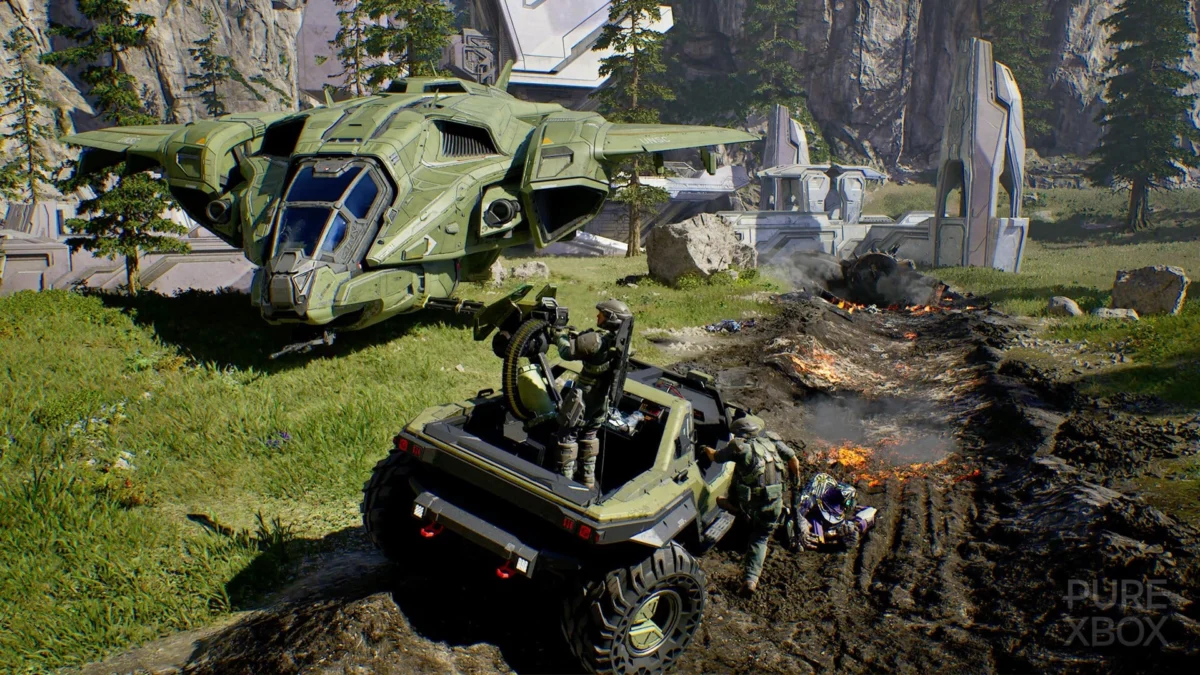
The release of Halo: Campaign Evolved has officially signaled a new era for the Halo intellectual property, serving as the debut project under the rebranded Halo Studios. Formerly known as 343 Industries, the developer has transitioned from its proprietary Slipspace Engine to Unreal Engine 5, utilizing this remake as a foundational "reimagining" of the 2001 classic, Halo: Combat Evolved. This release, arriving in the first half of 2026, represents more than a simple visual upgrade; it is a structural overhaul designed to test the capabilities of modern hardware while addressing long-standing criticisms regarding the franchise’s development velocity and technical stability. The title focuses exclusively on a single-player and cooperative campaign experience, introducing "remixed" levels, expanded environments, and a sophisticated suite of difficulty modifiers that aim to bridge the gap between nostalgic purists and a new generation of players.
A Chronology of Transformation: From Infinite to Evolved
The path to Halo: Campaign Evolved began shortly after the launch of Halo Infinite in December 2021. While Infinite was praised for its core gameplay loop, the title faced significant hurdles regarding its live-service delivery and the complexities of the Slipspace Engine. By 2023, Microsoft’s gaming division underwent a series of structural reorganizations, leading to a shift in leadership at 343 Industries. Pierre Hintze took the role of Studio Head, with Elizabeth Van Wyck as COO and Bryan Koski as Franchise General Manager.
In late 2024, the studio officially rebranded as Halo Studios, a move intended to signify a "clean slate." During this period, the studio showcased "Project Foundry," a technical demonstration built in Unreal Engine 5 that featured iconic Halo biomes—the Pacific Northwest, the Blightlands, and the Coldlands—rendered with unprecedented fidelity. This research and development phase directly informed the production of Halo: Campaign Evolved. The decision to lead with a remake rather than a direct sequel to Infinite allowed the team to refine their pipeline in Unreal Engine 5 while leveraging the established narrative framework of the original Master Chief story.
Technical Specifications and Gameplay Innovations
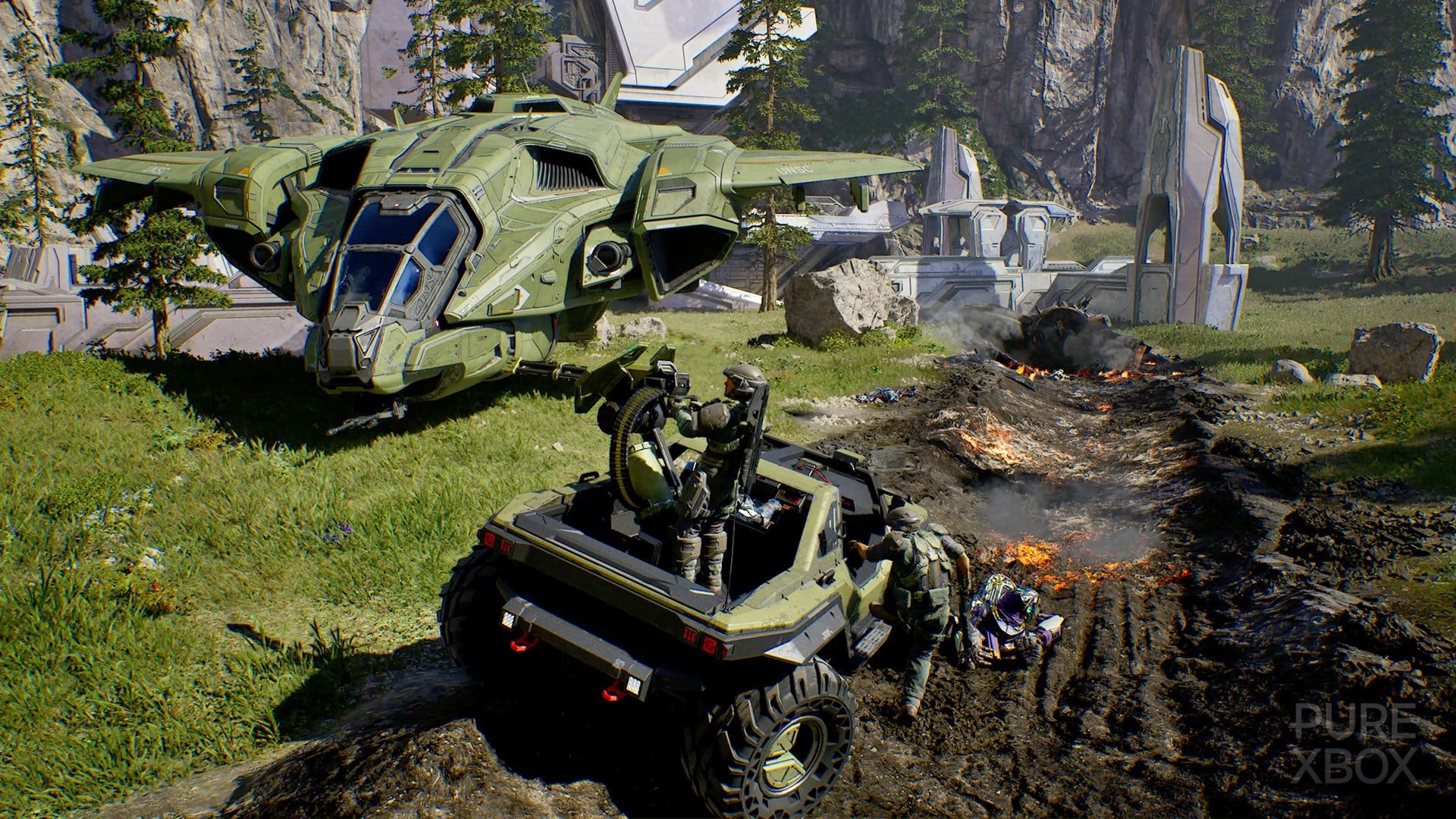
Halo: Campaign Evolved utilizes the latest iteration of Unreal Engine 5, employing Nanite virtualized geometry and Lumen dynamic global illumination to modernize the aesthetics of Installation 04. Unlike the 2011 Halo: Combat Evolved Anniversary, which layered new graphics over the original 2001 engine code, Campaign Evolved is built from the ground up. This allows for expanded level geometry, where areas that were previously static backdrops are now traversable zones.
The gameplay experience is defined by several key pillars:
- Remixed Levels: While the mission structure follows the original 10-level arc, the internal layouts have been modified to include new encounters, verticality, and environmental storytelling.
- Dynamic AI Scaling: The "evolved" AI utilizes a system that adapts to player skill in real-time, providing a more rigorous challenge on Legendary and LASO (Legendary All Skulls On) difficulties.
- Expanded Skulls and Modifiers: Beyond traditional modifiers like "Grunt Birthday Party," new Skulls have been introduced that alter gravity, enemy weaponry, and vehicle physics, encouraging multiple playthroughs.
- Cooperative Integration: The game features seamless drop-in/drop-out four-player online co-op, a feature that was notably absent at the launch of Halo Infinite.
Market Reception and Comparative Data
Initial data from the Xbox ecosystem suggests that Halo: Campaign Evolved has achieved high engagement levels, particularly within the Xbox Game Pass subscriber base. Preliminary reports indicate that the game reached over 5 million unique players within its first ten days of release. Review aggregators have placed the title in the mid-to-high 80s, with praise focused on the visual fidelity and the "remixed" content that provides a fresh experience for veteran players.
However, the reception has not been universally positive. A segment of the community has expressed disappointment regarding the lack of a dedicated multiplayer Player-vs-Player (PvP) component. Historically, Halo releases have been dual-pronged, offering both a narrative campaign and a competitive suite. By omitting PvP, Halo Studios has signaled that Halo Infinite will remain the primary platform for competitive multiplayer for the foreseeable future, a strategy that mirrors the "platform" approach seen in other long-running franchises.
According to internal surveys conducted by gaming analysts, 65% of players cited the "nostalgia factor" as their primary reason for purchase, while 40% expressed that the lack of PvP influenced their decision to wait for a sale or play via Game Pass rather than a full-price retail purchase.
Stakeholder Responses and Official Vision
In a recent press briefing, Halo Studios leadership emphasized that Campaign Evolved is a "stepping stone" rather than a final destination. Pierre Hintze stated that the move to Unreal Engine 5 was necessary to "democratize" development, allowing the studio to hire talent who are already proficient in industry-standard tools rather than spending months training them on proprietary software.
"Our goal with Halo: Campaign Evolved was to prove to ourselves and the fans that we could capture the soul of Halo in a new technical environment," a studio spokesperson commented. "The feedback regarding the campaign focus has been noted, and it informs how we balance our resources between narrative experiences and the ongoing live-service needs of the Halo Infinite multiplayer ecosystem."
Microsoft Gaming CEO Phil Spencer has also commented on the release, noting that the "Halo" brand remains a cornerstone of the Xbox portfolio. He highlighted that the 2026 release window was strategically chosen to bolster the first-party lineup alongside other major titles like Gears: E-Day, ensuring a consistent flow of high-quality content for the Xbox Series X|S and PC platforms.
Broader Impact on the 2026 Gaming Landscape
The success or failure of Halo: Campaign Evolved is being closely watched by industry analysts as a litmus test for the "remake-as-foundation" strategy. With development costs for AAA sequels exceeding $200 million and taking upwards of six years, many studios are turning to remakes to maintain brand relevance and test new technology.
The release of Campaign Evolved creates a unique competitive dynamic in 2026. With Gears: E-Day scheduled for later in the year, Microsoft is positioning its two "pillar" shooter franchises as bookends for the fiscal year. While Gears: E-Day is expected to be a new narrative entry, the success of Campaign Evolved may encourage Halo Studios to apply the "Evolved" treatment to Halo 2 and Halo 3, potentially creating a "remastered trilogy" that serves as a bridge until the next mainline Halo title is ready for market.
Furthermore, the transition to Unreal Engine 5 by one of the industry’s most prominent "in-house engine" holdouts marks a significant shift in the software landscape. If Halo Studios can maintain the "feel" of Halo—the specific physics of the Warthog, the jump height of the Master Chief, and the rhythm of the "Golden Triangle" of gameplay (guns, grenades, and melee)—within Unreal, it may signal the end of the era of highly specialized, proprietary engines for many large-scale developers.
Implications for the Future of the Franchise
Looking forward, the implications of Halo: Campaign Evolved are twofold. First, it establishes a high bar for environmental detail and lighting that the franchise has previously struggled to achieve. The use of Lumen and Nanite has effectively removed the "flat" look that some critics noted in the early builds of Halo Infinite. Second, it confirms that Halo Studios is willing to deviate from the traditional "all-in-one" release model.
The focus on the campaign experience suggests a move toward modular releases, where the narrative and multiplayer components are treated as distinct products with their own development cycles and target audiences. While this has caused some friction among the fanbase, it may lead to more polished, bug-free launches for individual components.
As 2026 progresses, the long-term player retention of Halo: Campaign Evolved will depend on the studio’s ability to support the game with post-launch content, such as additional Skulls, Forge integration for campaign environments, and perhaps even the long-rumored "Firefight" mode expansion. For now, the title stands as a successful proof of concept for the new Halo Studios, proving that the Master Chief remains a potent force in the gaming industry, even as the technology behind him undergoes a radical evolution.