


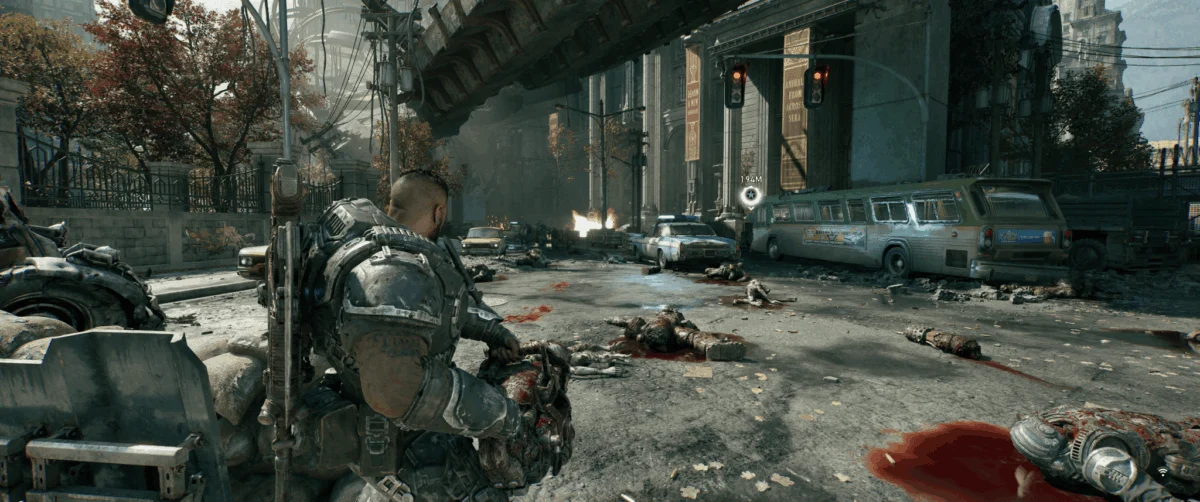
The release of Gears of War: E-Day marks a pivotal moment for Microsoft’s first-party development stable, effectively cementing The Coalition’s reputation as one of the premier studios in the global gaming industry. Moving away from the post-war narratives of the previous two entries, this prequel returns to the franchise’s roots, offering a meticulously crafted campaign characterized by its visceral grit, emotional resonance, and technical spectacle. The title serves as a definitive exploration of "Emergence Day," the catastrophic event that saw the subterranean Locust Horde rise to annihilate human civilization. By focusing on a condensed three-day timeline, the game provides a harrowing account of the fall of humanity, blending high-octane action with an uncharacteristically intimate character study.

Historical Context: The Fragile Peace of Sera
To understand the weight of Gears of War: E-Day, one must look at the state of the planet Sera immediately preceding the invasion. Set 14 years before the events of the original 2006 title, the world of E-Day is one exhausted by nearly a century of conflict. For approximately 79 years, the Union of Independent Republics (UIR) and the Coalition of Ordered Governments (COG) waged the Pendulum Wars—a brutal global struggle for control over Imulsion, a high-energy fluid discovered beneath the planet’s surface.

The game begins in the city of Kalona, a metropolitan hub that reflects a 1970s-era New York aesthetic. The peace is barely six weeks old, and the millions of lives lost in the Pendulum Wars have left a societal void. Veterans of the COG, many of whom have known nothing but trench warfare, are seen attempting to reintegrate into a civilian life that feels alien to them. This backdrop of "exhausted victory" provides the emotional foundation for the tragedy that follows; just as humanity begins to heal, the ground literally opens up to swallow them whole.

Chronology of a Collapse: Three Days in Kalona
The narrative structure of E-Day is remarkably focused, eschewing the globe-trotting nature of previous sequels for a localized, chronological descent into chaos. The campaign spans approximately eleven hours of gameplay, meticulously documenting seventy-two hours of the invasion.

- Day One: The Shattering: The game opens in the mundane setting of a local bar. The initial tremors are first dismissed as seismic aftershocks or infrastructure failure before the full scale of the Locust Emergence becomes clear. Players witness the immediate panic as the COG military, despite being at the height of its conventional power, finds itself utterly unprepared for an enemy attacking from below.
- Day Two: The Siege: As the city of Kalona is carved into sectors by massive sinkholes, the narrative follows Beta Squad—comprised of series icons Marcus Fenix and Dominic Santiago, alongside veteran Mags Carter and the inexperienced rookie Lucas Reyes. This segment focuses on the COG’s desperate attempts to establish a "Hammer of Dawn" uplink while the Locusts deploy heavy-duty siege beasts like the Corpser and Brumak.
- Day Three: The Retreat: The final act deals with the realization that Kalona cannot be held. The focus shifts to civilian evacuation and the tactical "scorched earth" decisions that would eventually define the COG’s controversial reputation throughout the rest of the series.
Technical Analysis: Unreal Engine 5 and Visual Benchmarking
Gears of War: E-Day represents the most comprehensive realization of Unreal Engine 5’s capabilities to date. The Coalition has historically served as a technical vanguard for Epic Games’ engine, and E-Day pushes this partnership to its limit.

On high-end PC hardware, specifically utilizing the NVIDIA GeForce RTX 5080, the game maintains a stable frame rate while pushing unprecedented levels of geometric detail via Nanite and global illumination through Lumen. The fidelity of character models is particularly noteworthy; facial animations capture subtle micro-expressions, conveying trauma and fatigue in a manner previously reserved for pre-rendered cinematics. The model for Mags Carter, based on high-resolution scans of her voice actress, sets a new industry standard for digital human representation.

Environmental destruction is not merely cosmetic but integrated into the gameplay loop. The "Wide Linear" design of Kalona allows for real-time building collapses triggered by the movement of massive Locust entities. These seismic shifts alter the cover-based landscape during firefights, forcing players to adapt to a constantly evolving battlefield. Texture work on the city’s neoclassical architecture provides a sense of "lived-in" history that makes its subsequent destruction feel genuinely impactful.

Gameplay Evolution: Modernizing the Tactical Cover Shooter
While the core identity of Gears of War remains a tactical cover-based shooter, E-Day introduces significant mechanical refinements that modernize the experience. The "tank-like" movement of the 360-era has been replaced with a more fluid, responsive system.

- Agility and Verticality: Characters are now capable of jumping and sliding with greater momentum. The "Roadie Run" has been refined to reduce screen shake while maintaining the sense of weight.
- The Prototype Lancer: A narrative highlight is the introduction of the "Prototype Lancer." Early in the campaign, players use the MK1 Lancer, which features a traditional bayonet. The transition to the iconic chainsaw-bayonet version is depicted as a field-expedient necessity—a desperate invention born from the need to cut through the thick hides of the Locust.
- Advanced Cover System: A new contextual cover system allows for smoother transitions between varying heights and materials. This is complemented by the "Incinerator" shotgun, a new mid-range weapon that utilizes corrosive bile, providing a strategic counter to the Locust’s heavy armor.
Strategic Multiplayer: Horde Siege and PvP Ecosystem
The Coalition has expanded the game’s longevity through a revamped multiplayer suite, headlined by "Horde Siege." This mode evolves the classic wave-based defense into a dynamic, extraction-style experience reminiscent of modern cooperative shooters like Helldivers 2.

In Horde Siege, players drop into the ruins of Kalona to complete specific objectives—such as retrieving R.I.G. data or assassinating high-value Locust targets—before extracting. The mode features "rolling servers" where multiple squads can influence the larger battlefield. Success in these missions yields "Weapon Parts," a meta-currency used to unlock weapon mods and character specializations that carry over into the campaign and competitive modes.

The competitive PvP remains a 4v4 arena experience, focusing on high-skill movement and Gnasher-heavy combat. While the core mechanics remain traditional to satisfy the series’ long-term fans, the improved netcode and dedicated server infrastructure aim to mitigate the performance hiccups observed during the game’s late-summer beta phase.

Audio Engineering and Soundscapes
The auditory experience of E-Day is designed to emphasize the horror elements of the franchise. The sound design utilizes ray-traced audio to accurately simulate how gunfire and dialogue echo through Kalona’s varying environments, from cramped subway tunnels to vast, open plazas. The roar of the Locust is deeper and more guttural than in previous entries, reinforcing their role as a terrifying, unknown threat rather than a familiar foe.

While the game lacks the "doubled-up" dialogue recording for different physical states (running versus standing) found in some other AAA titles, the quality of the voice acting—particularly the chemistry between Liam Garrigan and Carlos Ferro—elevates the script above the "dude-bro" archetypes of the original trilogy.

Industry Implications and Official Reception
Industry analysts suggest that Gears of War: E-Day is a "Last of Us" moment for The Coalition—a transition from a studio that maintains a franchise to one that defines the medium’s potential. In a brief statement following the review embargo, Xbox Game Studios leadership noted that the project represents the "single largest investment in the Gears franchise history," aimed at revitalizing the brand for a new generation of hardware.

The broader implications for the industry are clear: E-Day serves as a showcase for Microsoft’s vertical integration of hardware and software. By optimizing the game for the Xbox Series X and the high-end PC market simultaneously, The Coalition has produced a title that functions as both a commercial product and a technical demonstration of 2026’s hardware capabilities.

Conclusion: A New Standard for the Prequel Format
Gears of War: E-Day succeeds by respecting the legacy of its predecessors while refusing to be limited by their technical or narrative constraints. It provides a definitive answer to the origins of the COG-Locust war, trading the sprawling epic for an intimate, brutal, and visually stunning three-day window into the end of the world. With its peerless execution of Unreal Engine 5, refined gameplay mechanics, and a hauntingly effective story, E-Day stands as a masterpiece of the genre and a benchmark for all future first-party titles. The Coalition has not only saved the franchise; they have elevated it to the pinnacle of modern gaming.