


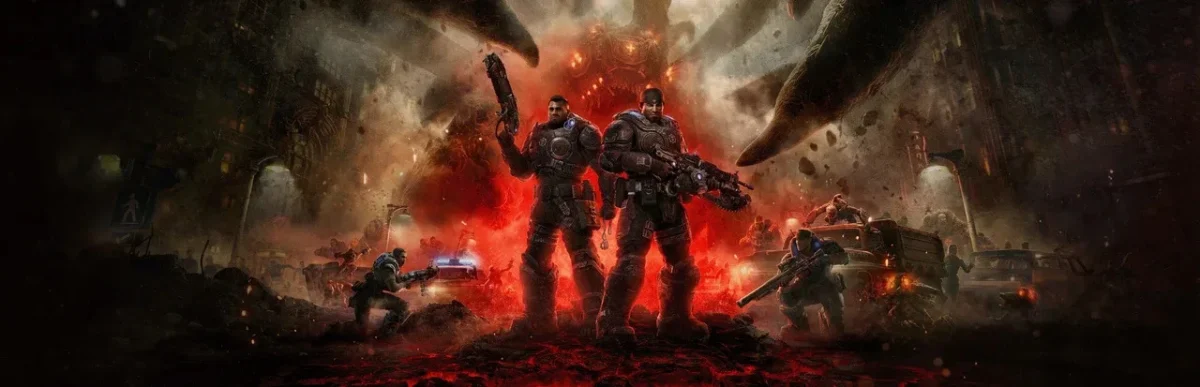
The eagerly anticipated prequel, Gears of War E-Day, has launched, immersing players in the harrowing genesis of the Locust War. Developed by The Coalition, the game is largely lauded for its successful return to the grimdark tone and "band of brothers" camaraderie that defined the original 2006 title, earning praise for its narrative depth and character development. However, critical reception also highlights a familiar challenge for the long-running franchise: while gameplay refinements offer a more fluid and visually stunning experience, the title largely adheres to established mechanics, leading some to question its capacity for genuine innovation within the modern third-person shooter landscape. The game effectively leverages its prequel setting to re-establish foundational lore, yet its campaign design, particularly the pervasive inclusion of collectibles, has been noted as occasionally detracting from the otherwise intense combat experience, making Gears of War E-Day a competent and fan-pleasing entry, but one that perhaps shies away from truly reshaping the series’ future.
The Genesis of a War: E-Day’s Narrative Foundations
Gears of War E-Day meticulously reconstructs the cataclysmic event known as Emergence Day, providing an unprecedented look into the initial moments of the Locust invasion that forever altered the planet Sera. Set a mere 14 years before the original Gears of War, the narrative unfolds against a backdrop of tentative peace, following the cessation of the brutal 79-year-long Pendulum Wars. This preceding conflict, a global struggle for Imulsion – Sera’s primary energy source – had left humanity’s military forces depleted and its populace weary. The unexpected and simultaneous emergence of subterranean monsters from vast sinkholes across Sera’s major cities thus catches the exhausted Coalition of Ordered Governments (COG) completely off guard, plunging the world into an existential crisis.

The campaign centers on iconic series protagonists Marcus Fenix and Dominic Santiago, depicting their initial struggle for survival and their nascent understanding of the overwhelming threat. Joining them are newly introduced characters Jacob Reyes and Mags Carter, whose impromptu alliance forms in the chaotic aftermath of the initial attacks. This assembly of disparate individuals, united by circumstance in a local bar as the world collapses around them, swiftly transforms into the formidable Bravo squad, a crucial unit in the COG’s desperate defense. The game’s co-operative focus, allowing up to four players to tackle the campaign, serves as a welcome return to the series’ roots, emphasizing teamwork and shared struggle amidst overwhelming odds.
The narrative excels in portraying the sheer dread and despair of a civilization on the brink. Unlike later games where the Locust threat was an established, if persistent, enemy, E-Day captures the horror of an unknown, seemingly unstoppable force. Players witness entire city blocks vanish into the earth, and the dawning realization that the Locust are not merely mindless beasts but an organized, intelligent swarm instills a profound sense of being "behind the curve." While players familiar with the broader Gears canon understand the ultimate trajectory of this conflict, the game skillfully evokes the initial hopelessness and the valiant, albeit ultimately futile, struggle of the early days. This "band of brothers" ethos, characterized by moments of grim humor juxtaposed with brutal sacrifice, resonates deeply, successfully recapturing the dark, visceral tone that defined the series’ initial appeal.
Two Decades of Carnage: The Gears of War Legacy
The Gears of War franchise boasts a remarkable two-decade legacy, largely attributed to its groundbreaking impact on the third-person cover-shooter genre. When the original Gears of War debuted in 2006 on the Xbox 360, it was not merely a new game; it was a technological showcase for Epic Games’ Unreal Engine 3 and a masterclass in refined gameplay mechanics. Its innovative cover system, emphasizing tactical positioning and fluid movement between defensive points, became a blueprint for countless games that followed. The series established itself as a flagship intellectual property for Microsoft’s Xbox division, celebrated for its intense action, distinctive art style, and memorable characters.

Following a highly successful trilogy developed by Epic Games, including Gears of War 2 (2008) and Gears of War 3 (2011), alongside the prequel Gears of War: Judgment (2013), the franchise transitioned developers. In 2014, Microsoft acquired the Gears of War IP outright, subsequently entrusting its future development to The Coalition, an internal studio formed specifically to carry the torch. This strategic move underscored Microsoft’s commitment to nurturing its first-party exclusives and ensuring the longevity of one of its most recognizable brands. The Coalition’s first project was Gears of War: Ultimate Edition (2015), a critically acclaimed remaster of the original, followed by new mainline entries Gears of War 4 (2016) and Gears 5 (2019).
While Gears 4 and Gears 5 maintained the series’ core gameplay, they introduced new narrative directions and characters, including Kait Diaz, exploring complex familial connections to the Locust leadership. These narrative shifts, while ambitious, were met with mixed reactions from some segments of the fanbase, who felt they occasionally deviated from the simpler, more focused "humanity vs. monsters" premise of the originals. Despite critical praise for Gears 5‘s technical prowess and expanded gameplay elements, the franchise’s overall popularity experienced a perceived waning compared to its early peaks. However, a dedicated core fanbase remained fiercely loyal, consistently expressing a desire for a return to the series’ foundational storytelling and gameplay philosophy. This fervent loyalty, combined with the enduring appeal of its iconic characters and visceral combat, set the stage for The Coalition’s decision to revisit the franchise’s origins with E-Day.
The Coalition’s Vision: Balancing Nostalgia and Modernity
The development of Gears of War E-Day by The Coalition represents a deliberate and calculated strategic move to reinvigorate the franchise by returning to its roots. The studio’s decision to set the game as a prequel to the 2006 original directly addresses the expressed desires of many long-time fans who longed for a narrative focus on the core "band of brothers" dynamic and the raw, unadulterated grimdark tone that defined the series’ inception. This approach implies a clear vision from The Coalition: to leverage the foundational lore of Emergence Day to craft a story that feels both familiar and fresh, capitalizing on nostalgia while modernizing the presentation.

The success of this strategy is evident in the game’s critical reception regarding its narrative and atmosphere. Reviewers consistently praise E-Day for "righting the ship" on the story front, delivering a compelling and emotionally resonant portrayal of humanity’s initial struggle against the Locust. The re-establishment of the "band of brothers" vibe, particularly between Marcus Fenix and Dom Santiago, is a significant draw, reminding players of the strong character bonds that were central to the original trilogy’s appeal. The game effectively balances the somber reality of a world under siege with moments of desperate heroism, instilling a sense of dread and existential horror that elevates the narrative beyond mere monster-hunting.
However, The Coalition also faced the inherent challenge of balancing this return to foundational elements with the need for modern gameplay expectations. While the studio has made significant strides in graphical fidelity and audio design, enhancing the visceral combat experience, the core gameplay loop remains largely consistent with previous entries. This conservative approach, while ensuring familiarity for veterans, raises questions about the franchise’s potential to truly innovate. The developers’ inferred intention to refine rather than revolutionize the formula, while perhaps a safe bet for fan appeasement, has led to a critical discussion about whether Gears can reclaim its mantle as a genre innovator or if it is content to be a master of its established domain. This tension between honoring a beloved legacy and pushing creative boundaries is a defining characteristic of E-Day‘s design philosophy.
Gameplay Refinements and Lingering Concerns
Gears of War E-Day presents a refined evolution of the franchise’s signature gameplay, meticulously updating its core mechanics for a contemporary audience while largely adhering to the established formula. The most immediately striking improvements are the stellar graphics and immersive sound design, which breathe new life into Sera’s ravaged landscapes and the grotesque visages of the Locust horde. The insectoid creatures are rendered with unprecedented detail, their leathery skins and fanged maws more disturbing than ever, making the act of dismembering them with high-powered rounds a viscerally satisfying experience, underscored by the "meaty crunch" of successful hits.

Among the notable gameplay enhancements is a significant alteration to the cover system. Players can now utilize low cover more dynamically, with characters automatically adjusting to a prone position behind smaller obstacles and seamlessly sinking lower as cover degrades under enemy fire. This fluid animation and responsive character movement enhance the immersion and tactical possibilities on the battlefield, making firefights feel more natural and intuitive. While some additions, such as a new slide mechanic for traversing gaps, show promise, their inconsistent execution in the heat of battle can occasionally lead to frustration. Similarly, the mantling system, despite improvements, still struggles with environmental interaction, often preventing players from climbing seemingly accessible walls.
A particularly controversial, yet potentially significant, change is the complete removal of the rapid "cover bouncing" technique—a high-skill movement strategy that allowed veteran players to rapidly traverse the battlefield between cover points. While this decision will undoubtedly disappoint long-time multiplayer enthusiasts who had mastered the technique, it is posited to make the game’s competitive modes more accessible to newcomers, leveling the playing field and lowering the barrier to entry. This change reflects a broader design philosophy that seeks to streamline gameplay while retaining its core intensity.
However, the campaign’s structure introduces a point of contention: its reliance on numerous collectibles. Spread across large, semi-open environments within the five-act campaign, these hundreds of hidden items range from lore-enriching set dressings to crucial arsenal upgrades. While the upgrades are vital for combating the increasingly formidable Locust threat, their acquisition often necessitates tedious backtracking and exploration of otherwise empty urban ruins. The lack of clear indicators for inaccessible areas, requiring players to repeatedly search for entrances that may only become available later, further exacerbates this issue, disrupting the pacing and momentum of the narrative. The most memorable and action-packed sequences, by contrast, occur in linear environments, where the focus remains squarely on relentless combat and survival, demonstrating the game’s strength when unburdened by exhaustive scavenger hunts.
Innovation’s Horizon: Where Gears Stands in the Modern Shooter Landscape

Gears of War E-Day positions itself as a robust and technically accomplished entry in the long-running franchise, yet it also squarely faces the ongoing debate regarding innovation within established series. While the game successfully modernizes its presentation and refines existing mechanics, it largely refrains from introducing truly groundbreaking gameplay hooks that might redefine the third-person shooter genre, as its progenitor did two decades ago. In a landscape now saturated with cover-based shooters that have adopted and evolved the principles Gears pioneered, E-Day risks feeling like a highly polished, albeit familiar, offering rather than a revolutionary one.
The implication of The Coalition’s decision to return to the beginning of the timeline with Emergence Day might suggest a conscious choice to prioritize narrative grounding and nostalgic appeal over radical gameplay overhauls. This approach caters directly to the desires of a dedicated fanbase yearning for a return to the series’ core identity, a strategy that carries less risk than venturing into untested mechanical territory. For The Coalition, this signifies their capability to manage a legacy IP with reverence, delivering on fan expectations for character, tone, and visceral action.
However, for the broader Gears of War franchise, the long-term implications are less clear. While E-Day solidifies the foundational lore and provides a compelling origin story, it also highlights the challenge of maintaining relevance and pioneering new experiences. The absence of significant environmental interactivity beyond scripted events, or a fresh arsenal of weapons that reflect its unique post-war setting, leaves some critics wishing for a bolder vision. The question remains whether the series can evolve beyond refining its established formula to once again set a "new gold standard."
For Xbox and Microsoft, Gears of War E-Day‘s success in captivating its core audience reinforces the value of its first-party exclusives. The game serves as a strong showcase for the power of current-generation hardware and The Coalition’s technical prowess. However, the critical discussion around innovation suggests that while E-Day is a competent and enjoyable action game for series veterans, it may not be the entry that dramatically expands the franchise’s appeal to new audiences seeking novel gameplay experiences. The game’s strength lies in its ability to evoke the past, but its future will depend on whether The Coalition can eventually push beyond mere refinement and rekindle the innovative spirit that once defined the very essence of Gears of War.