


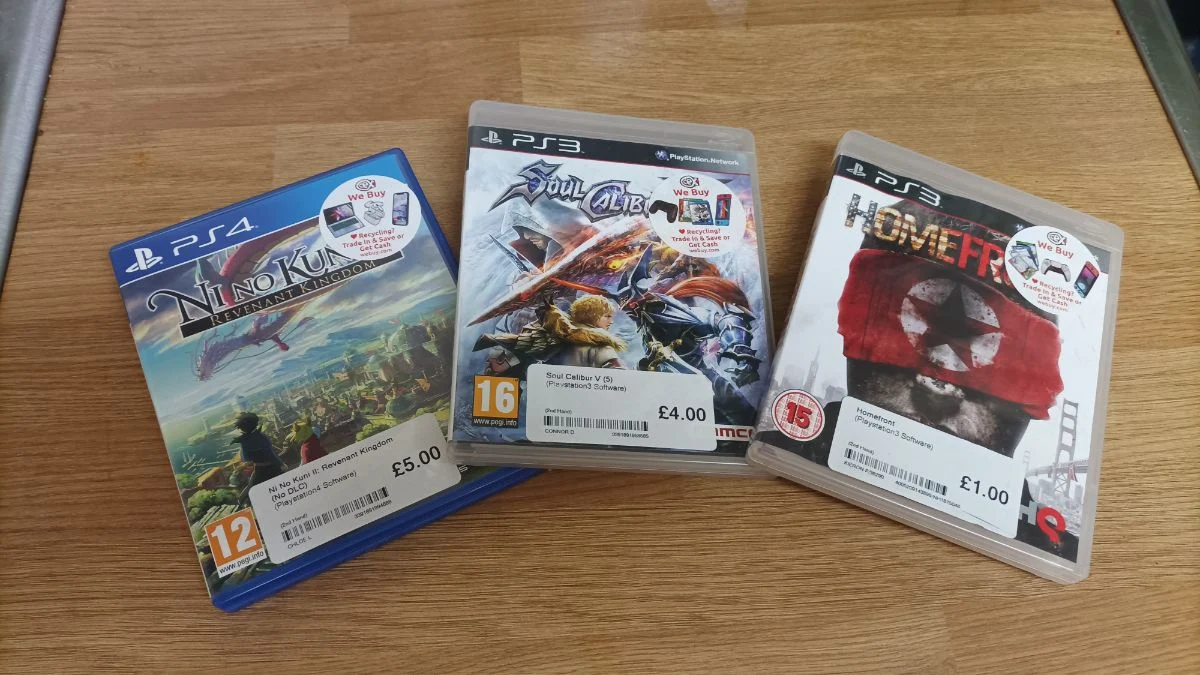
The weekend rush at a Milton Keynes CeX store, with its bustling aisles filled with eager customers hunting for pre-owned games spanning generations of consoles from the PlayStation 2 to the PlayStation 5, stands in stark contrast to the often-empty GameStop locations observed in North America. This divergence in customer engagement and inventory management is at the heart of GameStop’s recent strategic shift, as the struggling retailer attempts to emulate the thriving used-game culture fostered by companies like CeX in the United Kingdom. The initiative, dubbed "GameStop Retro," represents a significant gamble for a company that has faced considerable challenges in adapting to the evolving landscape of video game consumption and retail.
The genesis of this strategic pivot can be traced back to a series of internal decisions and market observations. For years, GameStop has grappled with declining foot traffic and sales, a trend exacerbated by the increasing digital distribution of games and the rise of direct-to-consumer sales by game publishers. While the company has experimented with various initiatives, including the sale of collectibles and merchandise like Funko POP figures, these have not been enough to offset the core business’s decline. The announcement on August 28, confirmed by various industry sources and later indirectly acknowledged through employee communications and limited store experiments, indicated a move towards a retro gaming focus in select locations. This announcement, as reported by channels such as Spawn Wave, suggested a hurried implementation, with store employees reportedly having limited lead time to adapt to the new operational model.
The stark contrast between the vibrant CeX stores in the UK and the often-desolate GameStop outlets in North America is not merely anecdotal. CeX, which has established a pervasive presence across the United Kingdom over the past three decades, has cultivated a unique ecosystem built around the buying, selling, and trading of pre-owned media and technology. Its business model, which encompasses not only video games but also films, music, mobile phones, and other electronics, creates a consistent flow of inventory and a diverse customer base. This comprehensive approach has allowed CeX to become a cultural fixture, particularly among gamers and tech enthusiasts seeking value and a treasure-hunt experience.
"Time and time again, I see lines build up at CeX stores all across the United Kingdom, especially in more dense cities like Milton Keynes and London," recounts an individual with extensive experience living in both Canada and the UK. "That’s because, for the past three decades, this store has built a culture around trading your stuff for decent money and getting great technology, movies, or recent video games." This sentiment is echoed by a burgeoning online community of content creators who regularly document their findings and experiences at CeX. YouTube channels like Retro Ghetto and TVM dedicate significant effort to producing vlogs showcasing the diverse array of retro games and other items available, underscoring the genuine appeal and community engagement that CeX has successfully fostered. This engagement translates into a palpable excitement for shoppers, a "rush to go to a CeX and see what’s available," despite the company’s somewhat quirky branding, such as its "Unprotected CeX" free Wi-Fi service.
In contrast, the North American market presents a different challenge for retro game enthusiasts. While independent game stores do exist in some communities, their prevalence is significantly lower. This leaves consumers largely reliant on online marketplaces like eBay and Amazon, where prices can be inflated by resellers and compounded by substantial shipping costs. The author’s personal experience in Canada highlights this difficulty: "While I lived in Canada, I barely bothered to build a retro game collection because I could never afford the prices that resellers wanted for their catalog." This frustration points to a significant unmet demand for accessible and affordable retro gaming options.
The introduction of GameStop Retro aims to directly address this gap. By focusing on pre-owned games, the company is attempting to leverage a segment of the market that has proven resilient and, in many ways, more engaged than the new game market. The success of CeX suggests that a well-executed retro gaming strategy can indeed create a loyal customer base and a sustainable business model.
GameStop Retro: Early Indicators and Potential Advantages
Initial observations from select GameStop Retro locations offer some promising signs. According to Spawn Wave’s assessment, the pricing at these new retro-focused stores is "not terrible" and appears competitive when compared to online resellers and convention prices. This competitive pricing strategy is crucial for attracting and retaining customers who are accustomed to searching for deals. If GameStop can consistently offer attractive prices, it could significantly disrupt the current landscape of retro game acquisition in North America.
Furthermore, the operational transparency demonstrated by CeX’s website could serve as a valuable blueprint for GameStop. CeX provides real-time information on store stock levels and detailed trade-in valuations, empowering customers with knowledge and facilitating smoother transactions. This level of transparency is often absent in the GameStop experience, where the inventory and trade-in process can feel opaque and unpredictable. Implementing a similar system could significantly enhance customer trust and satisfaction.
The potential benefits of a successful GameStop Retro initiative extend beyond mere profitability. It could revitalize a segment of the retail industry that has been largely overlooked by major players, providing a much-needed alternative for gamers seeking to connect with their gaming past. For a company like GameStop, which has faced significant headwinds, this strategic redirection could represent a critical lifeline, allowing it to tap into a dedicated and passionate community.
The Broader Implications and Challenges
While the GameStop Retro model holds promise, its success is far from guaranteed. The company faces several significant challenges, including ingrained consumer perceptions, the complexities of sourcing and managing a diverse retro inventory, and the inherent difficulties of competing with established online marketplaces. Moreover, GameStop’s corporate reputation, particularly in light of recent controversial decisions such as the shutdown of Game Informer and the subsequent layoffs of its staff, could pose an additional hurdle in building consumer goodwill and support for this new venture.
The shift to a retro-focused model also necessitates a fundamental change in GameStop’s operational infrastructure and employee training. Managing a vast catalog of older games, each with varying degrees of rarity and condition, requires specialized knowledge and a robust system for grading, pricing, and stocking. This is a departure from the company’s traditional focus on new releases and current-generation hardware.
The historical context of GameStop’s struggles is also important. The company’s stock performance has been notoriously volatile, with significant surges driven by coordinated online efforts, such as the GameStop short squeeze of early 2021. While these events brought the company unprecedented attention, they also highlighted the underlying financial vulnerabilities and the disconnect between its stock market valuation and its fundamental business performance. The move towards retro gaming can be seen as a pragmatic attempt to address these fundamental issues by focusing on a market segment with proven demand and a less volatile supply chain compared to new game releases.
The timeline for this transition is also a critical factor. The announcement in late August suggests an accelerated rollout, which, as noted by Spawn Wave, may have left employees with insufficient preparation time. The effectiveness of this rollout will depend on the speed and efficiency with which GameStop can implement its retro strategy across a significant number of its stores.
Analyzing the CeX Model: Key Success Factors
CeX’s enduring success can be attributed to several key factors that GameStop Retro could aim to replicate:
- Ubiquity and Accessibility: CeX has a vast network of physical stores, making it convenient for a large portion of the UK population to access their services. This physical presence fosters a sense of community and allows for immediate transactions.
- Comprehensive Trade-In Program: The generous and transparent trade-in values offered by CeX are a significant draw. This encourages customers to cycle their old games and media, providing a consistent and diverse inventory for the store.
- Diverse Product Offering: By trading in and selling a wide range of used electronics and media, CeX appeals to a broader customer base beyond just gamers. This diversification provides multiple revenue streams and foot traffic drivers.
- Community Engagement: The existence of dedicated online communities and content creators who actively engage with CeX’s offerings demonstrates the cultural impact and brand loyalty the company has cultivated.
- Online Integration: CeX’s website, which provides detailed stock information and trade-in valuations, offers a seamless online-to-offline experience. This transparency builds trust and reduces friction for customers.
If GameStop Retro can successfully integrate these elements into its strategy, it stands a much better chance of carving out a sustainable niche in the North American market. The potential for GameStop to become a more accessible and affordable avenue for retro gaming, mirroring CeX’s success, is significant. However, the company must navigate the inherent challenges of retail transformation, market competition, and consumer perception with strategic precision. The coming months will be crucial in determining whether GameStop’s bold pivot to retro gaming will prove to be a salvaging maneuver or a further misstep in its ongoing retail evolution. The gaming community will be watching closely to see if this ambitious strategy can breathe new life into a company striving to redefine its place in the modern entertainment landscape.