


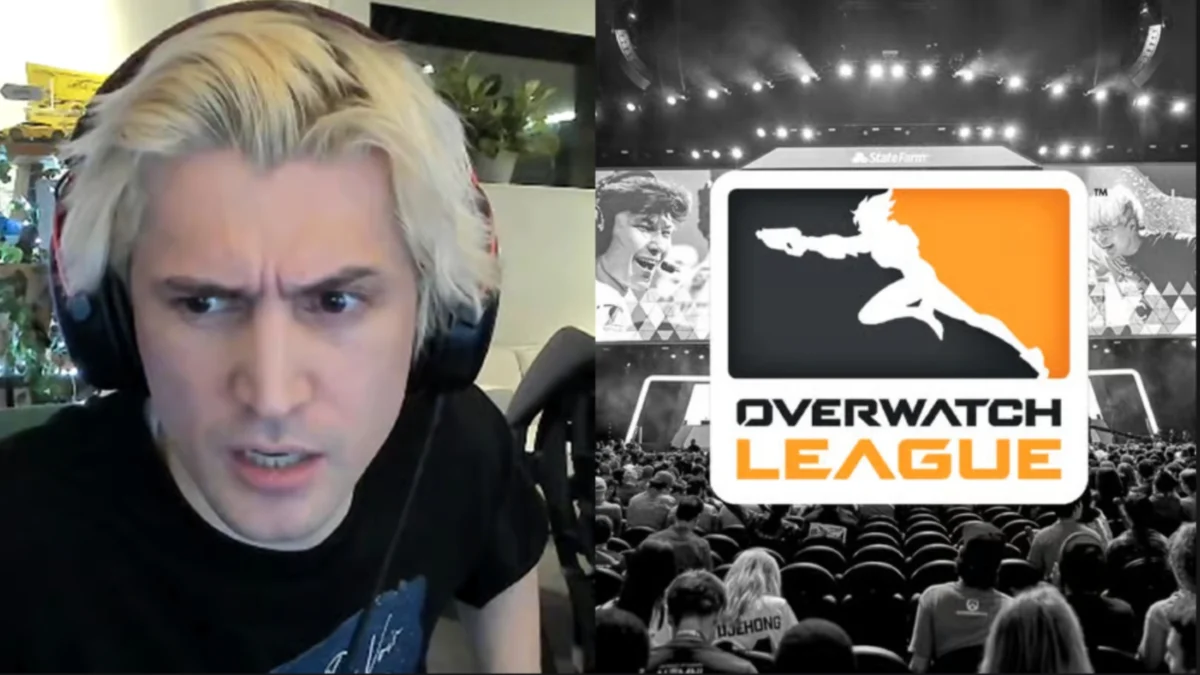
Felix "xQc" Lengyel, a prominent figure in the esports and streaming community, has leveled serious accusations against the Overwatch League (OWL), alleging that the league artificially inflated its viewership figures through the use of viewbots. These claims, made during a recent stream, suggest that this perceived dishonesty regarding viewership numbers was a significant factor in his decision to step away from professional Overwatch play. Lengyel’s statements have ignited a debate about transparency and the integrity of viewership metrics within the burgeoning esports industry.
The genesis of Lengyel’s assertions can be traced back to a 2019 video featuring Mark Cuban, co-founder of the Dallas Mavericks and a notable investor in esports. In the video, Cuban cited an impressive concurrent viewership peak of 300,000 for the Overwatch League. Lengyel, however, vehemently contested these figures, proposing that the actual viewership was dramatically lower, potentially around 14,000. He characterized the reported numbers as "comical" and suggested a concerted effort by the league to obscure the true engagement levels for several years.
"These numbers were so botted," Lengyel stated, his voice conveying a sense of exasperation. "These numbers were so botted, it’s comical. Brother, for multiple years, they tried to hide the numbers."
xQc’s Allegations of Inflated OWL Numbers
Lengyel elaborated on his claims by referencing an alleged insider source who provided him with viewership data during the league’s early testing phase on Major League Gaming (MLG). He described a specific instance where the Overwatch League was reportedly tested on MLG TV during its preseason.
"They ran a test on MLG," Lengyel explained. "For the preseason, they said, ‘we’re going to run Overwatch League on MLG TV.’ And I had an insider whistleblower that was talking to me. I’m not going to say who. And he told me the numbers of how many people were actually watching. And I went, ‘Yo!?’"
Despite the gravity of his accusations, Lengyel did not present concrete evidence to substantiate his claims, nor did he disclose the identity of the alleged whistleblower. This lack of verifiable proof leaves his assertions in the realm of strong allegations rather than definitively proven facts.
Background and Chronology of the Overwatch League and xQc’s Involvement
The Overwatch League, launched by Blizzard Entertainment in 2018, was conceived as a premier global esports league for its flagship title, Overwatch. Modeled after traditional professional sports leagues, it featured franchised city-based teams and aimed to establish a sustainable and lucrative ecosystem for professional Overwatch players and organizations. The league’s ambition was to attract significant viewership, investment, and mainstream recognition.
Felix Lengyel, known for his aggressive playstyle and charismatic personality, was an integral part of the Overwatch League’s inaugural season. He played as a tank player for the Dallas Fuel. However, his tenure was marked by a series of controversies and suspensions, leading to his eventual release from the team in early 2018. Despite his turbulent start in the OWL, Lengyel remained a prominent figure in the Overwatch community, transitioning to a highly successful streaming career on Twitch, where he amassed a massive following.
Lengyel’s decision to leave professional Overwatch play predates his most recent public statements about alleged viewbotting. His departure from the Dallas Fuel in 2018 effectively ended his professional career in the league. However, his recent comments suggest that the perceived dishonesty regarding viewership figures, which he believes were artificially inflated during the league’s existence, contributed to a broader disillusionment with the professional esports landscape and its underlying business practices.
The Impact on xQc’s Career Decisions
Lengyel stated that his awareness of the alleged viewership inflation significantly influenced his perspective on his own future within the league, particularly concerning the balance between professional play and his burgeoning streaming career. He indicated that even before fully committing to professional play in the OWL, the alleged inflated numbers played a role in his strategic considerations.
"I had already signed the contracts to play in the Overwatch League," he recalled. "When I heard that, I was like… I’m already starting to organize my exit. How am I going to market myself as a 10k Andy to a 14k Andy stream?"
The term "10k Andy" and "14k Andy" likely refer to the number of concurrent viewers a streamer typically attracts. Lengyel’s question highlights a fundamental concern: if the league’s reported viewership was a fabrication, how could players and content creators accurately assess their own market value and potential earnings within such an environment? The discrepancy between perceived and actual viewership could lead to misallocated resources, inaccurate sponsorship valuations, and a general erosion of trust.
Furthermore, Lengyel pointed to specific restrictions imposed by Overwatch League contracts as a significant deterrent to his participation. These restrictions often limited players’ ability to stream during official matches or engage in other content creation activities that could potentially detract from the league’s primary broadcast.
"Why would I take days off to practice? Go to the office, practice. Do scrims. Do matches," Lengyel articulated. "I can’t stream, I can’t make videos, I can’t vlog. I wasn’t even allowed to stream when the games were live. So why would I lose everything with nothing to gain? It’s just about the exchange of value."
This statement underscores a perceived imbalance in the "exchange of value" for professional players. Lengyel suggests that the opportunity cost of dedicating oneself to professional play – in terms of lost streaming revenue, content creation opportunities, and personal brand building – was not adequately compensated, especially when coupled with his belief that the league’s reported success was built on a foundation of manufactured numbers.
Supporting Data and Industry Context
The esports industry, while experiencing exponential growth, has often faced scrutiny regarding the accuracy and transparency of its viewership data. Viewbotting, the practice of artificially inflating viewer counts through automated bots, is a known issue across various streaming platforms, including Twitch, which hosts a significant portion of esports content.
While specific data on viewbotting within the Overwatch League remains unconfirmed and largely speculative, the broader context of the esports industry provides a backdrop for such concerns. Major esports organizations and leagues often report impressive viewership numbers to attract investors, sponsors, and media attention. This pressure to demonstrate high engagement can create incentives for less scrupulous practices.
In 2023, industry reports indicated that the global esports market was valued at over $1.3 billion, with projections for continued growth. This financial stake makes accurate viewership metrics crucial for the economic health of the industry. Organizations that can credibly demonstrate large audiences are better positioned to secure lucrative sponsorship deals, media rights, and advertising revenue.
The Overwatch League, in particular, has faced challenges in consistently maintaining high viewership figures compared to some of its esports counterparts. While it achieved notable peaks, particularly in its early stages, sustaining those numbers over time has been a persistent goal for Blizzard Entertainment. Lengyel’s claims, if true, would suggest a deliberate strategy to maintain an illusion of success rather than address underlying engagement issues.
Potential Implications and Industry Reactions
Lengyel’s allegations, even without concrete proof, carry significant weight due to his status as a former professional player and a highly influential streamer. His perspective offers a glimpse into the internal workings and potential disillusionment felt by some within the competitive gaming sphere.
If the Overwatch League did engage in viewbotting, the implications would be far-reaching. It would undermine the integrity of the league, damage its reputation among fans and potential investors, and raise serious questions about the validity of its historical performance metrics. Such practices could also lead to legal repercussions and regulatory scrutiny, particularly if they misled sponsors or advertisers.
Reactions from other parties involved in the Overwatch League, including Blizzard Entertainment, the teams, and other players, have not been publicly documented in response to Lengyel’s specific allegations. Typically, organizations in such situations adopt a policy of not commenting on ongoing speculation or unsubstantiated claims. However, the broader esports community often engages in discussions about transparency, and Lengyel’s statements are likely to fuel further debate.
Broader Impact and Analysis
The controversy surrounding Lengyel’s claims highlights a critical juncture for the esports industry. As it continues to mature and attract mainstream attention, the demand for transparency and ethical business practices will only increase. The pressure to perform and demonstrate growth can be immense, but relying on artificial inflation of metrics is a short-sighted and ultimately damaging strategy.
The "exchange of value" that Lengyel references is a fundamental principle in any professional endeavor. For esports, this exchange involves the dedication of players, the investment of organizations, the engagement of fans, and the revenue generated through various channels. When any part of this equation is based on deception, the entire ecosystem suffers.
Lengyel’s decision to leave professional play, influenced by these perceived ethical shortcomings, underscores the importance of trust and integrity. For the Overwatch League and other esports organizations to thrive sustainably, they must build their success on genuine engagement and transparent reporting. The future of professional esports hinges on its ability to uphold these principles, ensuring that the passion of its fans and the dedication of its athletes are met with a commitment to authenticity. The ongoing discussion initiated by Lengyel’s allegations serves as a reminder that the pursuit of growth must not come at the expense of ethical conduct.