


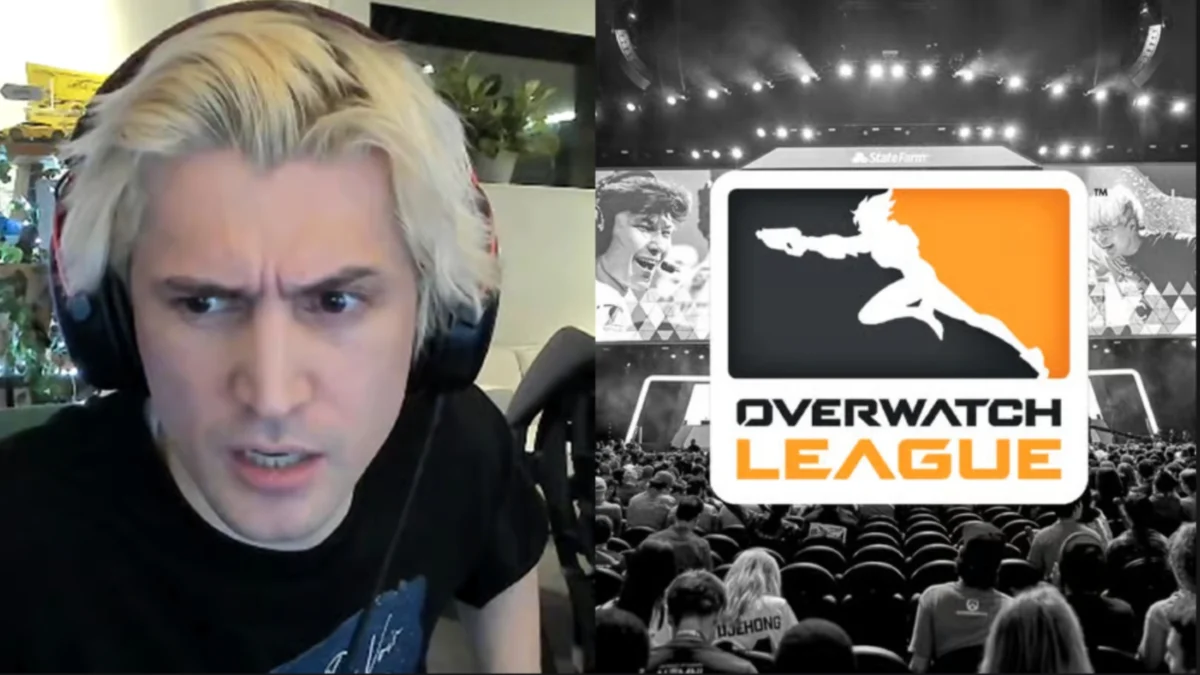
Felix "xQc" Lengyel, a prominent figure in the streaming and esports community, has leveled serious accusations against the Overwatch League (OWL), alleging that its viewership figures were artificially inflated through the use of viewbots. Lengyel, who transitioned from professional Overwatch to a full-time streaming career, stated that this alleged deception was a significant contributing factor to his decision to step away from competitive play in the league.
The controversy ignited when Lengyel was reacting to a 2019 video featuring Mark Cuban, co-owner of the Dallas Mavericks and a notable figure in the tech and sports industries, who claimed the Overwatch League had achieved a peak concurrent viewership of 300,000. Lengyel vehemently challenged these figures, asserting that they were "so botted" as to be "comical." He suggested that the actual viewership was far lower, estimating it to be closer to 14,000, and implied a deliberate effort by the league to conceal these discrepancies for several years.
"These numbers were so botted, it’s comical," Lengyel stated during his stream. "Brother, for multiple years, they tried to hide the numbers."
xQc’s Allegations of Inflated OWL Viewership
Lengyel elaborated on his claims by referencing information he received during the league’s early testing phases, particularly its utilization of Major League Gaming (MLG) platforms. He detailed an instance where the OWL reportedly conducted a preseason test run on MLG TV. According to Lengyel, he was privy to information from an unnamed "insider whistleblower" who provided him with what he described as the "actual" viewership numbers from this test.
"They ran a test on MLG," Lengyel explained. "For the preseason, they said, ‘we’re going to run Overwatch League on MLG TV.’ And I had an insider whistleblower that was talking to me. I’m not going to say who. And he told me the numbers of how many people were actually watching. And I went, ‘Yo!?’"
Despite the gravity of his accusations, Lengyel did not present concrete evidence to substantiate his claims, nor did he identify the source of his information. This lack of verifiable proof leaves the allegations in the realm of hearsay, though they carry weight given Lengyel’s former professional standing within the Overwatch scene.
The Impact on Lengyel’s Professional Career Decisions
Beyond questioning the integrity of the league’s viewership metrics, Lengyel indicated that these alleged discrepancies profoundly influenced his perspective on his own future within the Overwatch League. The conflict between the demands of professional play and the lucrative opportunities presented by full-time streaming became a central dilemma.
"I had already signed the contracts to play in the Overwatch League," Lengyel revealed. "When I heard that, I was like… I’m already starting to organize my exit. How am I going to market myself as a 10k Andy to a 14k Andy stream?"
His sentiment suggests a calculated assessment of his personal brand and earning potential. The prospect of dedicating significant time and effort to a league he perceived as having artificially inflated viewership, thereby potentially limiting his own streaming growth and revenue, was a significant deterrent.
Furthermore, Lengyel highlighted contractual restrictions imposed by the Overwatch League as a crucial element in his decision-making process. These restrictions, he argued, severely curtailed his ability to engage in streaming activities, particularly during official match days.
"Why would I take days off to practice? Go to the office, practice. Do scrims. Do matches. I can’t stream, I can’t make videos, I can’t vlog. I wasn’t even allowed to stream when the games were live," he elaborated. "So why would I lose everything with nothing to gain? It’s just about the exchange of value."
This statement underscores a pragmatic approach to his career, emphasizing the need for a clear return on investment of his time and effort. The perceived limitations on his personal brand development and income streams, coupled with doubts about the league’s foundational metrics, ultimately tipped the scales towards his departure from professional Overwatch.
Historical Context of Overwatch League Viewership
The Overwatch League, launched by Blizzard Entertainment in 2018, was envisioned as a premier global esports league with a city-based franchise model. The league aimed to replicate the success of traditional sports leagues, with teams representing major metropolitan areas and a structured season culminating in playoffs and a Grand Finals. Early on, the league garnered significant attention and investment, with many anticipating it would become a dominant force in esports.
However, throughout its operational years, the OWL faced consistent scrutiny regarding its viewership figures. While official statements often touted impressive growth and engagement, independent analyses and community discussions frequently painted a different picture. Critics pointed to the discrepancy between the reported numbers and the perceived live audience engagement on platforms like Twitch, often suggesting that viewer counts were being padded or misrepresented.
The league’s reliance on its own proprietary broadcast platform, in addition to Twitch, also led to fragmentation of the audience, making it harder to ascertain a unified viewership metric. While the intention may have been to control the viewing experience and monetize directly, it also created a barrier for some potential viewers accustomed to the ubiquity of Twitch.
The allegations of viewbotting, if true, would represent a significant breach of trust and a potentially unethical practice designed to mislead stakeholders, including investors, sponsors, and the player base itself. Viewbotting involves using automated bots to artificially inflate the number of concurrent viewers for a stream, creating an illusion of popularity and engagement that does not reflect genuine audience interest. Such practices are often against the terms of service of streaming platforms and can have severe reputational and financial consequences.
Supporting Data and Industry Trends
When evaluating claims of inflated viewership in esports, it’s important to consider the broader landscape of online content consumption. The esports industry has experienced exponential growth over the past decade, with viewership figures for major tournaments often reaching millions. However, this growth has also been accompanied by challenges related to accurate data collection and the potential for deceptive practices.
According to reports from Newzoo, a leading games market intelligence firm, the global esports market generated significant revenue, with advertising, sponsorship, and media rights forming the largest segments. The credibility of these revenue streams is directly tied to the accuracy of viewership data. If a league consistently overstates its audience, it can undermine the trust of advertisers and sponsors, potentially leading to a decline in investment and a destabilization of the market.
For instance, while specific historical data for the OWL’s internal metrics is not publicly available in detail, general trends in esports viewership can provide context. Major esports titles like League of Legends and Dota 2, with their established professional circuits, often report peak concurrent viewership in the hundreds of thousands, and sometimes even exceeding a million for their flagship events. The discrepancy highlighted by xQc—between a claimed 300,000 and an estimated 14,000—is a substantial margin, suggesting a fundamental issue if his claims hold any water.
The financial implications of such a discrepancy would be considerable. Sponsors invest in esports properties based on the reach and engagement their brands can achieve. If the audience size is misrepresented, sponsors are not receiving the value they paid for, which can lead to contract disputes and a loss of confidence in the league. Similarly, media rights deals, which are a growing source of revenue for many esports leagues, are negotiated based on projected and historical viewership.
Potential Reactions and Industry Implications
While no direct official response from Blizzard Entertainment or the Overwatch League has been issued regarding xQc’s specific claims, the nature of these accusations would typically prompt an internal investigation if they were to gain significant traction and be backed by more concrete evidence. In the past, when similar allegations have surfaced in the broader streaming and esports community, platforms and organizations have sometimes issued statements emphasizing their commitment to data integrity and fair play.
The implications of confirmed viewbotting within a league as high-profile as the Overwatch League would be far-reaching. It could lead to:
- Erosion of Trust: A significant loss of trust among fans, players, sponsors, and investors. This could be difficult, if not impossible, to regain.
- Legal and Financial Repercussions: Potential lawsuits from sponsors or investors who feel defrauded, and financial penalties from regulatory bodies if such practices are deemed to violate advertising standards.
- Damage to the Game’s Ecosystem: The Overwatch franchise itself could suffer reputational damage, impacting player engagement, community morale, and the long-term viability of the game as an esports title.
- Increased Scrutiny on Esports Data: A heightened level of skepticism towards viewership claims across the entire esports industry, leading to more rigorous auditing and verification processes.
Lengyel’s decision to leave professional play, influenced by these concerns, highlights the complex interplay between competitive integrity, personal career aspirations, and the business realities of the esports landscape. His candidness, even without providing direct proof, opens a dialogue about transparency and accountability within the burgeoning esports industry. As the industry continues to mature, the demand for verifiable data and ethical practices will likely intensify, shaping the future of competitive gaming for all involved. The Overwatch League, which has undergone significant structural changes and pivots in its operational model over the years, would face immense challenges in addressing such accusations, particularly if they are perceived to be substantiated. The narrative around its viewership has always been a sensitive topic, and xQc’s statements, regardless of definitive proof, contribute to a persistent undercurrent of doubt.