


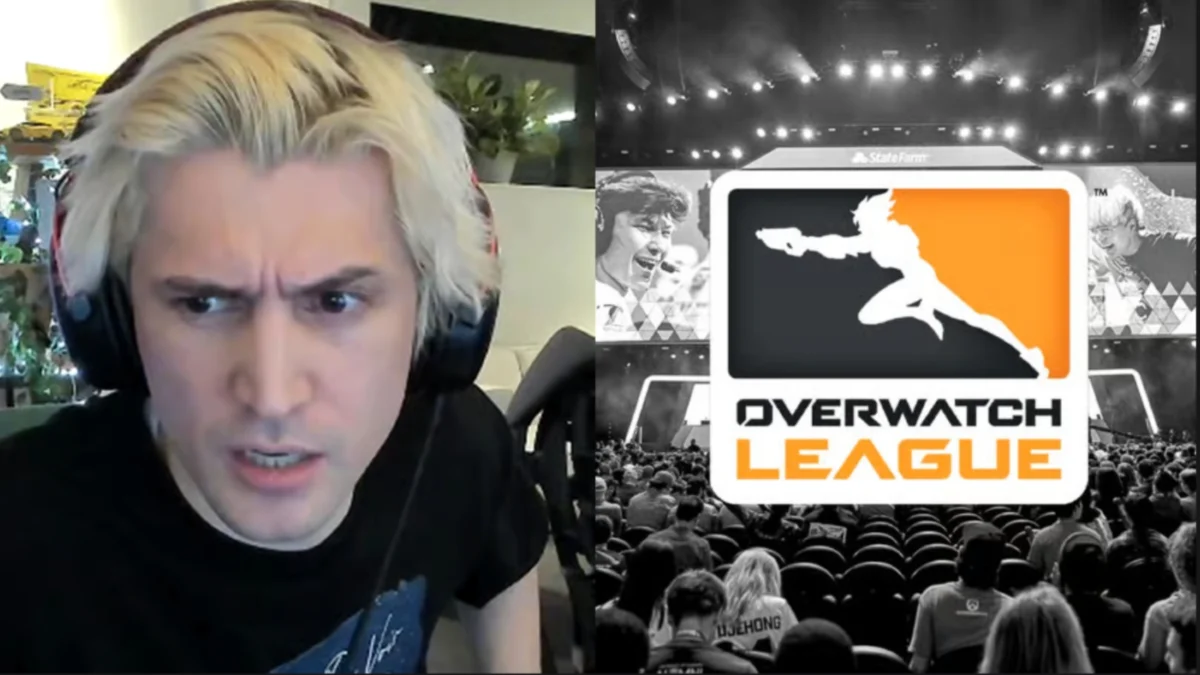
Felix "xQc" Lengyel, a prominent figure in the streaming and esports community, has leveled serious accusations against the Overwatch League (OWL), claiming that its viewership figures were artificially inflated through viewbotting. These allegations, he asserts, played a significant role in his decision to step away from professional Overwatch competition. Lengyel’s statements emerged in response to a 2019 remark by entrepreneur Mark Cuban, who cited the OWL’s concurrent viewership peak at 300,000. Lengyel directly challenged these numbers, suggesting that the true audience was substantially smaller, estimating it to be closer to 14,000, and characterized the reported figures as "comical."
The former Overwatch professional elaborated on his claims by referencing an alleged insider source who provided him with viewership data during the league’s early testing phase on Major League Gaming (MLG). According to Lengyel, the league conducted a test run of its broadcasts on MLG TV for its preseason. He stated that a "whistleblower" shared the actual viewership numbers with him, which were significantly lower than publicly reported figures. While Lengyel did not provide concrete evidence to substantiate these claims nor reveal the identity of his alleged source, his assertions have ignited discussion within the esports ecosystem regarding the transparency and accuracy of viewership metrics.
Background of the Overwatch League and Viewership Concerns
Launched in 2018 by Blizzard Entertainment, the Overwatch League aimed to establish a premier global esports league with a franchise-based model, mirroring traditional sports leagues. The league featured city-based franchises and a structured season culminating in playoffs and a grand finals. From its inception, maintaining and demonstrating high viewership numbers was crucial for the league’s credibility, investor confidence, and long-term sustainability.
However, throughout its operational years, the OWL faced scrutiny regarding its audience engagement and the reported viewership figures. While official statements often highlighted impressive growth and peak viewership numbers, independent analyses and community discussions frequently questioned the authenticity of these metrics. The reliance on third-party platforms and the complexities of measuring viewership across different regions and platforms often contributed to a lack of transparency. Mark Cuban’s 2019 statement, which Lengyel referenced, was one such instance where official figures were presented, sparking debate about their accuracy.
Lengyel’s Account of Alleged Viewbotting
Lengyel’s specific allegations of viewbotting suggest a deliberate effort by the Overwatch League to artificially inflate its audience numbers. Viewbotting involves using automated programs to create fake viewer accounts, thereby increasing the apparent viewership of a stream or broadcast. This practice is a form of deception often employed to mislead sponsors, investors, or the public about a product’s or platform’s popularity.
"These numbers were so botted," Lengyel stated emphatically during a recent broadcast, "it’s comical. Brother, for multiple years, they tried to hide the numbers." This sentiment indicates a belief that the discrepancy between reported and actual viewership was not a minor oversight but a sustained, intentional effort to misrepresent the league’s reach. He further elaborated on the supposed revelation he received: "They ran a test on MLG. For the preseason, they said, ‘we’re going to run Overwatch League on MLG TV.’ And I had an insider whistleblower that was talking to me. I’m not going to say who. And he told me the numbers of how many people were actually watching. And I went, ‘Yo!?’" This personal anecdote, while unsubstantiated, underscores the profound impact this alleged information had on his perception of the league.
Impact on Lengyel’s Professional Career
The alleged viewership inflation and the broader issues surrounding the Overwatch League’s transparency profoundly impacted Lengyel’s professional trajectory. He revealed that these concerns were a significant factor in his decision to leave professional play, even after having already committed to contracts with an OWL team.
"I had already signed the contracts to play in the Overwatch League," Lengyel explained. "When I heard that, I was like… I’m already starting to organize my exit. How am I going to market myself as a 10k Andy to a 14k Andy stream?" This statement highlights the conflict between the league’s purported success and his own perceived market value. The ability to attract and retain a substantial audience is critical for streamers and professional players seeking lucrative opportunities through sponsorships, endorsements, and content creation. If the foundation of the league’s popularity was built on artificial numbers, it would devalue the individual contributions and potential earnings of its players.
Furthermore, Lengyel pointed to contractual restrictions within the Overwatch League that limited his ability to engage in his core streaming activities during official match days. "Why would I take days off to practice? Go to the office, practice. Do scrims. Do matches. I can’t stream, I can’t make videos, I can’t vlog. I wasn’t even allowed to stream when the games were live," he lamented. This lack of flexibility, coupled with the perceived dishonesty regarding viewership, created a scenario where he felt there was "nothing to gain" by continuing. His decision-making process was fundamentally based on a calculation of "the exchange of value," and the perceived lack of genuine value and transparency in the OWL environment led him to seek opportunities elsewhere.
Chronology of Events and Lengyel’s Involvement
Felix Lengyel’s professional Overwatch career began in 2017, where he quickly established himself as a highly skilled and charismatic player. He played for various teams, including the Dallas Fuel and the Los Angeles Gladiators, before moving to the Shanghai Dragons. His tenure in the Overwatch League officially began with its inaugural season in 2018.
- 2017-2018: Lengyel gains prominence in the Overwatch esports scene, eventually signing with the Dallas Fuel for the inaugural Overwatch League season.
- 2018-2019: Throughout the early seasons of the OWL, Lengyel experiences both successes and controversies, becoming one of the league’s most recognizable personalities. During this period, he reportedly hears the alleged insider information regarding viewership numbers.
- 2019: Mark Cuban makes a public statement referencing the OWL’s peak viewership of 300,000. This statement becomes a catalyst for Lengyel’s public questioning of the league’s reported metrics.
- Post-2019: Lengyel’s dissatisfaction with the league’s practices and his own career prospects within it culminates in his decision to step away from professional Overwatch play. He intensifies his focus on his streaming career, which has already grown significantly in parallel with his professional esports activities.
- Present: Lengyel continues to be a dominant force on streaming platforms like Twitch, with a massive following. His recent allegations against the OWL bring renewed attention to the league’s historical viewership data and its operational transparency.
Supporting Data and Industry Context
The debate surrounding esports viewership metrics is not unique to the Overwatch League. Across the competitive gaming landscape, challenges in accurately measuring and reporting audience numbers have persisted. Factors such as the fragmentation of streaming platforms (Twitch, YouTube Gaming, etc.), the prevalence of regional broadcasts, and the potential for botting or artificial inflation all contribute to a complex measurement environment.
While specific, independently verified figures for the OWL’s true viewership remain elusive, general trends in esports viewership provide context. For example, major esports events like the League of Legends World Championship or The International for Dota 2 consistently report hundreds of millions of hours watched and peak concurrent viewers in the millions. These figures, when compared to the reported numbers for OWL, highlight the significant disparity that Lengyel’s claims address.
The financial success of esports leagues is heavily dependent on attracting sponsors and advertisers, who rely on audience data to justify their investments. Inflated numbers can lead to misallocation of resources, potentially harming legitimate stakeholders and undermining the long-term health of the industry. The accusations leveled by Lengyel, if proven true, would represent a significant breach of trust within the esports community.
Potential Reactions and Implications
Blizzard Entertainment and the Overwatch League, as of the time of this reporting, have not issued a formal public statement directly addressing Felix Lengyel’s specific allegations of viewbotting. However, in the past, when questions about viewership have arisen, the league has typically reiterated its commitment to transparent reporting and highlighted its partnerships with established data analytics firms.
The implications of Lengyel’s claims are multifaceted:
- For the Overwatch League: If the allegations gain traction and are supported by further evidence, it could significantly damage the league’s reputation, potentially impacting future sponsorship deals, franchise values, and its relationship with its player base. It might also prompt a more rigorous internal review of its viewership tracking and reporting mechanisms.
- For Esports Transparency: Lengyel’s statements contribute to a broader conversation about the need for greater transparency and accountability in esports viewership reporting. It underscores the importance of independent auditing and clear methodologies for measuring audience engagement.
- For Players and Content Creators: The situation highlights the precarious position of professional players and streamers who rely on accurate audience metrics for their careers. It emphasizes the need for fair and honest reporting to ensure that talent is properly valued and compensated.
- For Fans and the Community: Such allegations can erode trust between fans and the leagues they support. A perception of deception can lead to disillusionment and a decrease in engagement.
Lengyel’s outspokenness, while lacking direct proof in this instance, is consistent with his persona as a candid and often critical commentator on the gaming industry. His influence as a massively popular streamer means his words carry significant weight and are likely to be scrutinized by many within the esports and streaming communities, prompting further examination of the practices within major esports organizations. The discourse initiated by his claims is likely to persist, pushing for greater clarity and integrity in how esports viewership is measured and communicated.