


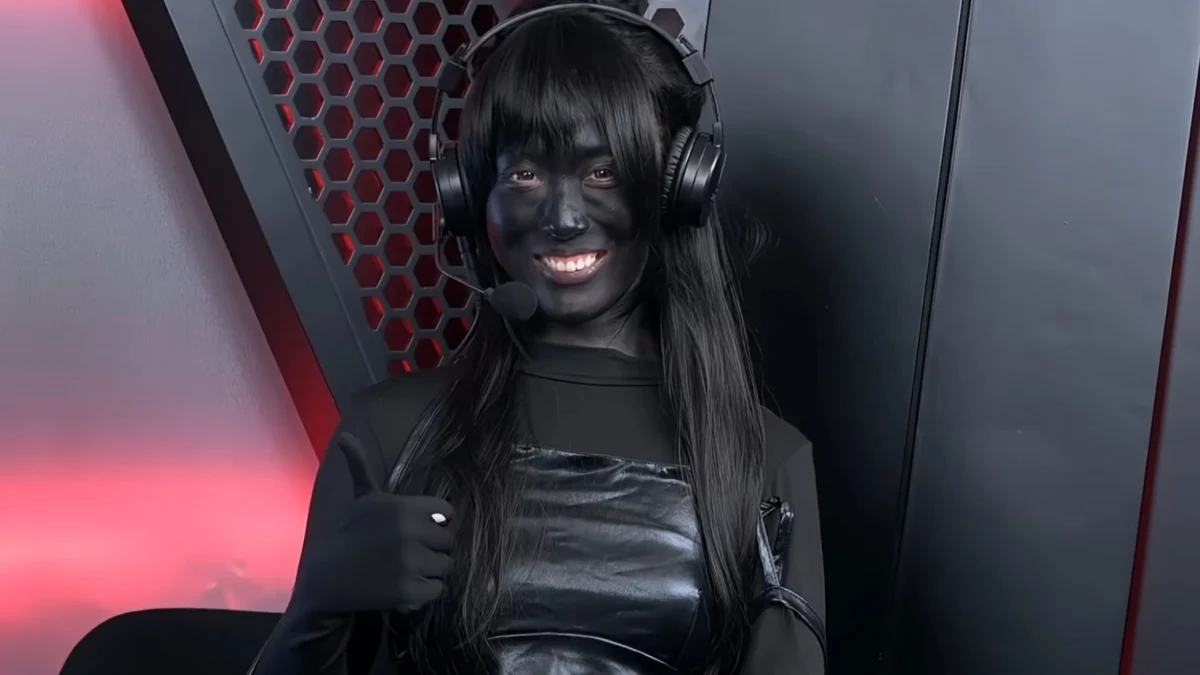
A prominent esports host in China, known by her moniker Zhazha, has captured widespread attention and ignited a fervent online discussion after a striking and unconventional response to criticism regarding her on-air attire. Zhazha, who has become a familiar face in the competitive Naraka: Bladepoint scene, appeared for a recent broadcast adorned in a full-body black outfit and intricate face paint, a stark contrast to the shorter skirt that had previously drawn ire from a segment of the viewership. This bold statement has not only gone viral across Chinese social media platforms but has also reignited debates surrounding professional presentation, viewer expectations, and the scrutiny faced by women in the esports industry.
The controversy initially stemmed from Zhazha’s appearance during a previous Naraka: Bladepoint broadcast. Her choice of a short skirt, a common fashion item in many professional settings, unexpectedly became a focal point of negative commentary. Critics, often anonymous or using pseudonyms online, accused her of dressing in a manner intended to provoke or attract undue attention from a predominantly male audience. Further speculation suggested that broadcast organizers might have encouraged or mandated such attire to boost viewership figures, a common, albeit often unsubstantiated, accusation leveled in the digital entertainment space.
These accusations, amplified on platforms like Weibo, prompted Zhazha to issue a direct and public response. Rather than issuing a simple apology or reiterating her professional intent, she opted for a visually arresting demonstration. For her subsequent broadcast, Zhazha presented herself alongside her male co-hosts, but in an ensemble that completely concealed her form. The outfit was an all-encompassing black garment, from head to toe, complemented by dramatic black face paint that obscured her features. This deliberate visual statement was widely interpreted as a form of sartorial protest and satire, designed to directly address and challenge the criticisms she had faced.
The Genesis of the Controversy and Zhazha’s Defense
The initial backlash against Zhazha’s attire surfaced in the days leading up to her viral response. While the exact date of the initial broadcast remains unconfirmed in publicly available reports, the online discourse surrounding her outfit gained significant traction, leading to her decision to address the matter head-on. The criticisms, broadly categorized, centered on two main points: the perceived "inappropriateness" of her clothing for a professional broadcast and the insinuation that her fashion choices were driven by external pressures or a desire for specific kinds of audience engagement.
In a translated statement shared on Weibo, a leading Chinese microblogging platform, Zhazha unequivocally refuted the accusations of external coercion. She stated, "No one has ever arranged for me to wear a short skirt. As a commentator, my outfits have always been chosen by myself." This assertion directly countered the speculation that organizers had dictated her wardrobe. She further elaborated on her personal agency in selecting her on-air appearance, emphasizing that her choices were her own and aligned with her professional judgment.
Zhazha also addressed the broader implications of the criticism, which seemed to extend beyond her individual choices to a general critique of female casters’ presentation. She stated, "No one has ever forced me to wear inappropriate clothing on official broadcasts to appear in public." Her explanation for wearing a short skirt in the first instance was framed as a professional decision aimed at enhancing her on-camera presence: "The reason I chose a short skirt was to present a better on-camera look for viewers." This suggests a perception that certain fashion choices can contribute to a more engaging visual experience for the audience, a common consideration in broadcast media.
The Viral Response: A Statement of Satire and Self-Expression
Zhazha’s decision to wear a full-body black outfit and face paint was not merely a passive reaction but an active and deliberate act of commentary. She described her subsequent attire as an "extreme choice meant as a form of satire." This phrasing indicates that she intended her appearance to be a pointed and ironic response to the criticisms, highlighting the absurdity of the scrutiny she had faced. By covering herself entirely, she effectively neutralized the very aspects of her appearance that had drawn criticism, while simultaneously drawing attention to the disproportionate focus on her clothing.
"I have never opposed so-called clothing freedom or the idea of women dressing more revealingly," Zhazha clarified in her statement. "The outfit I wore on today’s broadcast was an extreme choice meant as a form of satire in response to those comments." This statement underscores her belief in personal choice and freedom of expression in fashion, while simultaneously using her own choice to make a statement about the nature of the criticism. Her satirical approach aimed to expose the perceived double standards and the often-unreasonable expectations placed upon women in public-facing roles, particularly within the burgeoning esports industry.

The visual impact of her all-black ensemble, combined with the face paint, was profound. It transformed her from a recognizable on-air personality into an almost anonymous figure, emphasizing her role as a commentator rather than an object of visual appraisal. This choice effectively shifted the focus back to her professional responsibilities – her commentary and analysis of the Naraka: Bladepoint matches. The visual transformation was so striking that clips and images of her appearance quickly circulated across social media, generating millions of views and extensive discussion.
Broader Implications for the Esports Industry
Zhazha’s situation sheds light on several critical issues within the esports ecosystem, particularly concerning gender dynamics and professional conduct. The intense scrutiny of female casters’ appearances is not unique to Zhazha’s case; it is a recurring theme across various competitive gaming leagues and broadcast platforms globally. Such criticism often stems from a combination of traditional societal expectations about female presentation, a perceived lack of understanding of the professional demands of broadcasting, and the often-toxic undercurrents found in online gaming communities.
The incident also raises questions about the responsibility of esports organizations and broadcast platforms in fostering a respectful and professional environment. While Zhazha asserted her autonomy in choosing her attire, the fact that she felt compelled to make such a drastic statement suggests a potential disconnect between viewer expectations and professional standards. The speculation about organizers influencing dress codes, even if unfounded in this specific instance, points to a need for clearer guidelines and a commitment to professionalism that transcends subjective aesthetic preferences.
Furthermore, Zhazha’s response highlights the power of creative expression and social commentary within online spaces. Her viral moment demonstrates how individuals can leverage their platform to address societal issues and challenge prevailing norms. Her call for rational discourse and an end to "unnecessary controversy" underscores a desire for a more mature and respectful engagement with broadcast talent.
Navigating the Online Landscape: A Plea for Reason
Following the widespread dissemination of her story and images, Zhazha made a further appeal to her audience, urging them to approach the situation with a degree of maturity and critical thinking. She implored viewers to avoid taking information out of context or exacerbating the situation with further inflammatory remarks.
"I hope everyone can look at this rationally," she stated. "Please don’t take things out of context or stir up unnecessary controversy." Her plea suggests a concern that her satirical response might be misinterpreted or used to fuel further negativity. She emphasized her primary role and intention: "I am just a regular staff member who wants to focus on commentary and do my job well. Thank you all for your understanding."
This statement reinforces her commitment to her professional duties and her desire to be recognized for her skills as a commentator rather than for her appearance. Her wish for understanding reflects a broader aspiration for individuals in the public eye to be judged on their professional merits, free from the pressures of undue scrutiny regarding their personal presentation.
The incident involving Zhazha serves as a compelling case study in the complexities of public perception, professional identity, and the evolving landscape of esports broadcasting. Her viral response, while unconventional, effectively brought attention to the often-unspoken pressures and biases faced by women in the industry, prompting a necessary conversation about respect, professionalism, and the true spirit of competitive gaming. The long-term impact of her statement will likely contribute to ongoing dialogues about fostering a more inclusive and equitable environment within the global esports community.