


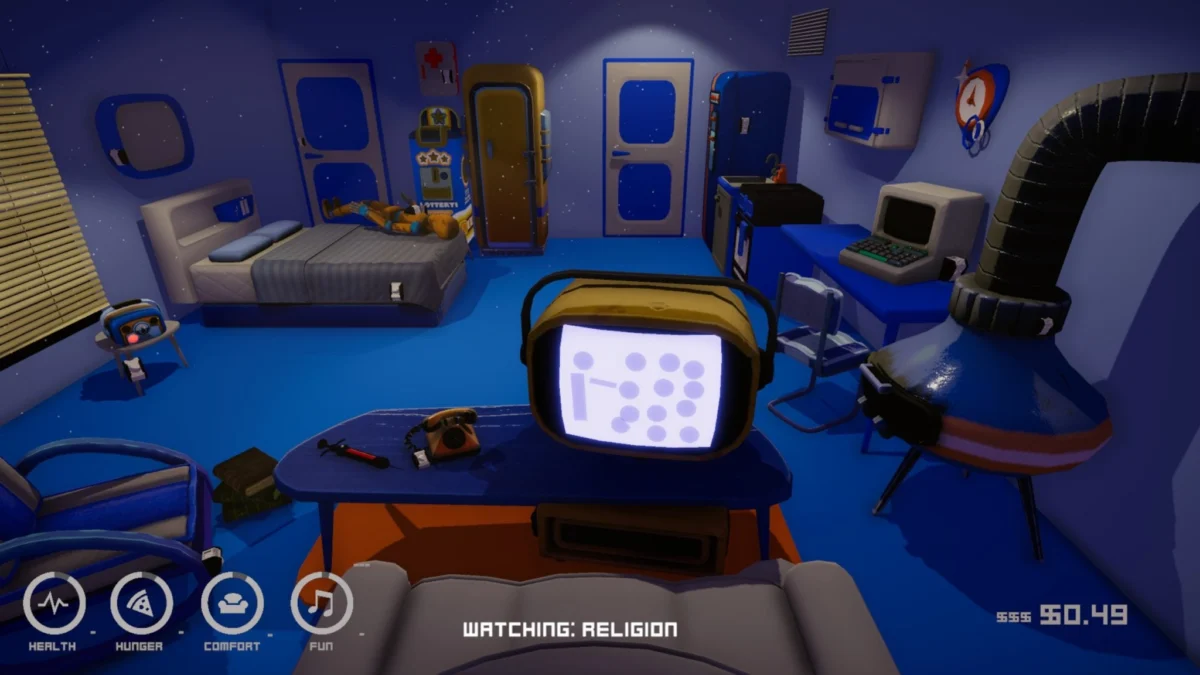
The independent gaming landscape has recently seen a surge in titles that utilize minimalist mechanics to convey complex socio-political critiques, and the latest entry from developer Palitroque, titled Dystopicon, serves as a poignant example of this trend. Set in a world overseen by a pervasive administrative body known as "The Trinity," Dystopicon challenges players to navigate a claustrophobic existence where the primary source of income is derived from the passive consumption of television broadcasts. This simulation title merges the "clicker" genre with survival management, forcing players to balance their biological needs against the exorbitant costs of basic living amenities in a society that has commodified every aspect of human existence.
Core Gameplay Mechanics and Economic Framework
At the heart of Dystopicon is a stark economic simulation. Players assume the role of a numerically-registered citizen residing in "approved living spaces" provided by the state. The central loop of the game revolves around the television set, which functions as both the player’s employer and their primary source of indoctrination. Upon activating the device, players earn currency by the second. However, this income is immediately offset by the high cost of survival.

The game tracks four primary vitals: Health, Hunger, Comfort, and Fun. Maintaining these meters requires financial expenditure; for instance, opening a refrigerator to access food or using a sink to wash hands incurs a direct cost to the player’s balance. This creates a high-pressure environment where financial mismanagement leads to a rapid "game over" state. If any of the four vital meters reach zero, the simulation terminates, requiring the player to restart from their last established story checkpoint.
Narrative Structure and The Trinity Ministry
Dystopicon is structured around a 28-day in-game cycle. During this period, the player’s objective is to maintain a high "Citizen Rating" while navigating the narrative prompts delivered by The Trinity. The ministry serves as the primary antagonist and governing body, providing "helpful tips and tricks" through a printing device located beneath the television. These messages often emphasize that "everything is fine," even as the player’s living conditions and mental state deteriorate.
The narrative progression is tied to the player’s social mobility within the state. Starting as a working-class citizen, players can be "upgraded" to more expansive or technologically advanced abodes by maintaining their health and Citizen Rating. This rating is volatile and can be negatively impacted by "unauthorized" behaviors, such as investigating strange noises outside the living space or neglecting state-mandated broadcasts.

Analytical Breakdown of Media Consumption
The television in Dystopicon is not merely a background object but the primary interface for player interaction. The game features several distinct channels, each serving a specific mechanical and narrative purpose:
- The Religion Channel: Statistically the most lucrative channel, providing the highest rate of income per second. This reflects the game’s satirical take on the intersection of faith and state-sponsored capitalism.
- The Politics Channel: Essential for maintaining and raising the Citizen Rating. Players must frequently watch this channel to avoid "re-education," a state-sanctioned penalty for low-rated citizens.
- The Entertainment/Porn Channel: Represented by crude geometric shapes (circles and trapezoids), this channel serves as a primary source for the "Fun" meter. However, its use is risky, as patrolling police units can remove the channel from the set, reflecting the regime’s control over vice and pleasure.
The gameplay requires players to identify which activities can be performed simultaneously with television viewing. Because certain actions automatically turn off the TV, players must optimize their routines to ensure that the flow of income is rarely interrupted.
Aesthetic and Visual Design Philosophy
Palitroque has utilized a specific visual language to reinforce the game’s dystopian themes. The art style is characterized by a "retro-futuristic" aesthetic, employing a palette of muted colors and antiquated hardware designs. One of the most striking visual elements is the representation of other citizens and neighbors as mannequins. This design choice serves to dehumanize the population, emphasizing the isolation of the player character and the madness that has permeated the society.

The environmental storytelling in Dystopicon is dense. The living spaces are filled with ironic contrasts—frozen foods are presented as healthier alternatives to refrigerated ones, and "suicide chambers" or Sarco pods are presented as mundane household appliances. These elements contribute to an atmosphere of "absurdist horror," where the mundane and the terrifying are inextricably linked.
Chronology of the 28-Day Simulation
The player’s journey through Dystopicon follows a specific chronological path:
- Days 1-7 (The Induction): Players learn the basic mechanics of survival and the necessity of constant TV consumption. The initial struggle is purely financial, as the cost of amenities often exceeds early earnings.
- Days 8-14 (The Social Climb): If the Citizen Rating is maintained, the player is moved to a new apartment. This phase introduces more distractions and "helpful" state interventions that complicate the daily routine.
- Days 15-21 (The Psychological Decline): Narrative events begin to trigger more frequently. The irony of the state’s messages becomes more apparent as the player witnesses the "madness" of the mannequins through their windows or via news reports.
- Days 22-28 (The Final Threshold): The player must navigate the ultimate consequences of their choices. The game features over ten distinct endings, ranging from successful integration into the higher echelons of the ministry to more grim, terminal outcomes.
Technical Performance and Accessibility
Dystopicon was tested on various platforms, including Windows 11 and Bazzite-based PC systems (Steam Deck/Linux-based handhelds). The game’s low-fidelity graphics ensure stable performance across a wide range of hardware. The controls are primarily mouse-driven (or touch-driven on handhelds), emphasizing the "clicking simulation" aspect of the genre.

For players seeking a purely mechanical experience, Palitroque has included a "Challenge Mode." This mode strips away the narrative checkpoints and story distractions, focusing entirely on room maintenance, hygiene, and state-pleasing through optimized clicking and resource management.
Market Context and Genre Implications
The release of Dystopicon arrives at a time when "job simulators" and "bureaucracy simulations" have carved out a significant niche in the indie market. Titles like Papers, Please and Not For Broadcast established a precedent for using repetitive, mundane tasks to tell stories of systemic oppression. Dystopicon iterates on this by focusing on the role of the consumer rather than the worker or the bureaucrat.
Industry analysts suggest that the game’s critique of "passive income" and digital indoctrination resonates with contemporary concerns regarding the attention economy and social credit systems. By forcing the player to literally watch a screen within a screen to survive, Dystopicon creates a meta-commentary on the nature of modern entertainment consumption.

Critical Analysis of Gameplay Limitations
While the presentation and satirical depth of Dystopicon have been praised, the core gameplay loop has faced scrutiny for its repetitive nature. Once a player identifies the "optimal" strategy for survival—knowing exactly when to eat, wash, and switch channels—the tension of the simulation can diminish.
The transition from high-stakes survival to a repetitive routine is viewed by some as an intentional design choice, reflecting the "boredom" of life under a totalizing regime. However, from a traditional gaming perspective, this can result in a experience that feels "uninteresting" or "boring" after the initial three-hour mark. The challenge for the player becomes not one of skill, but of endurance, mirroring the plight of the citizen they portray.
Conclusion and Broader Impact
Dystopicon stands as a stark portrayal of a collapsing authoritarian regime viewed through the lens of a single, isolated citizen. It successfully utilizes irony and dark humor to mask a terrifying premise: a world where breathing has a price tag and television is the only lifeline. While its gameplay may lack the long-term engagement found in more traditional simulators, its visual impact and narrative themes offer a significant contribution to the genre of political satire in gaming.

As the indie scene continues to experiment with minimalist mechanics, Dystopicon serves as a reminder of the power of aesthetic and atmosphere in storytelling. The game’s portrayal of "The Trinity" and the commodified life of its citizens offers a chilling, if absurd, reflection of societal anxieties regarding technology, control, and the erosion of the individual. For those willing to endure the monotony of the state-mandated routine, Dystopicon provides a unique, albeit haunting, perspective on the cost of "fine" living in a dystopian future.